Sign up for Weekly Writes Vol. 6 is now closed. Please add your email here to hear when our next Weekly Writes program opens!

EMILY EVERETT interviews XOCHITL GONZALEZ

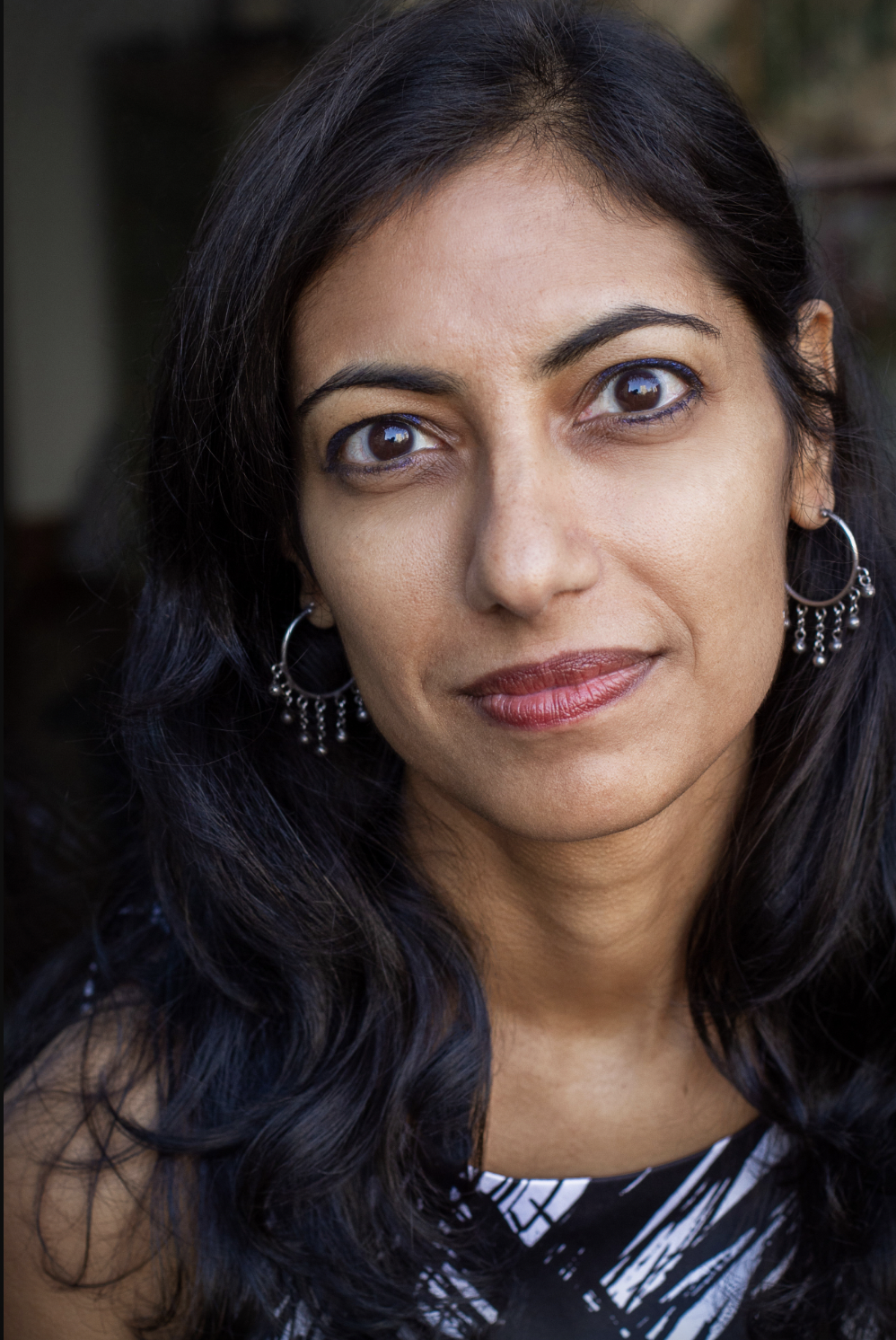
Xochitl Gonzalez has an MFA from the University of Iowa Writers’ Workshop, where she was an Iowa Arts Fellow and recipient of the Michener-Copernicus Prize in Fiction. She was the winner of the 2019 Disquiet Literary Prize, and her work has been published in Bustle, Vogue, and The Cut. She is a contributor to The Atlantic, where her weekly newsletter Brooklyn, Everywhere explores gentrification of people and places. Her debut novel Olga Dies Dreaming is out now from Flatiron Books. Prior to beginning her MFA, Xochitl was an entrepreneur and strategic consultant for nearly 15 years.
I knew Vega Baja like the hairs on my feet. I used to work part-time en Tortuguero BBQ before landing in Florencia with the mongers. I walked and walked. It would be days until I reached Memoria, but I knew someone dear that still lived in Vega Baja, so I figured it fine to stop and visit my old friend.
St. Paul, Minnesota

R is for raw sewage, riverine wetland, rubbish, rookery of herons and egrets, rusting barrels of toxic waste. I try to imagine all of this at Pig’s Eye Lake. Surrounding it, marsh, cottonwoods, floodplain, bluffs above the great river. It’s a place the Dakota consider sacred, James Rock says. Čhokáŋ Taŋka, the Dakota call it: the big middle. I try to imagine the burial mounds that were blown up with dynamite, and railyards, locks and dams, dredging, and all the household trash that was dumped in the marsh, the industrial debris: lead-acid batteries, solvents, electrical transformers, burnt sludge. Eight million cubic yards, some of it fluorosurfectants—the so-called forever chemicals needed to make non-stick frying pans, stain-repellent for couches and rugs—the PFOS that have spread everywhere, now taint my blood, and yours, and every creature’s.
As 2021 comes to an end, we want to celebrate the pieces our readers loved! Below, you can browse our list of 2021’s most-read pieces to see the writing that left an impact on our readers.
Story collection by KRISTINA GORCHEVA-NEWBERRY
Review by JULIA LICHTBLAU
There are two Russias in Kristina Gorcheva-Newberry’s passionate and accomplished debut short-story collection, What Isn’t Remembered, winner of the 2021 Raz/Shumaker Prairie Schooner Book Prize. The geographical country, where many of the stories take place, and the mental state of Russianness, which characters carry with them in the diaspora. There is also America, an alluring, often disappointing exile—and there are Americans, mostly well-meaning, who struggle to live with their mercurial Russian lovers, spouses, friends, or children, whose Russianness comprises the psychic ramifications of political and historical traumas going back multiple generations—World War II, Soviet rule, the chaotic break-up of the USSR, or the Armenian genocide, to name a few.
Transcript: Mary O’Donoghue Podcast.
Mary O’Donoghue speaks to managing editor Emily Everett about her story “Safety Advice for Staying Indoors,” which appears in The Common’s fall issue. Mary talks about crafting a story that explores two points of view within the same Irish family, both stuck inside during a strong storm, both coping with loss. She also discusses her work translating Irish-language poets, her interest in stories that require the reader to connect their own dots, and what it’s like to edit fiction for AGNI while writing her own short stories, too.


Dispatch from New Hampshire Motor Speedway
The track is too slick, too cold. As the preacher intones Let us drive fast and cheer hard in Jesus’ name amen, the mist is already falling over us, the drivers, the life flight helicopter at rest on its helipad over the rise. Engines fire and the air goes thick with pressure. In minutes the leaders spin into the wall’s invisible give. Unlike Daytona or Talladega, where drivers shimmy from the windows of their wrecks, walking bruises at best—this is a minor crash. Its smolder mingles with exhaust, burning rubber, spent fireworks, cigarette smoke sent into the low cloudbank by a man ten paces past the No Smoking sign. This is New Hampshire: live free or die.
NATHAN MCCLAIN interviews JOHN MURILLO

In this interview, Nathan McClain’s mode of inquiry evokes substantial and insightful responses from John Murillo. The ultimate craftsman, Murillo understands the value of writing from a space, from a feeling, instead of toward a subject. In other words, he does not make an event of writing a poem. His practice is uncorrupted by a chase for validation. Instead, we understand the time and dedication necessary to achieve Murillo’s exquisite lyricism and masterful use of form.
John Murillo’s most recent book, Kontemporary Amerikan Poetry, won the Kingsley Tufts Poetry Award and was a finalist for the PEN/Voelcker Award for Poetry and the NAACP Image Award. He is an assistant professor of English and director of the creative writing program at Wesleyan University.
Curated by ELLY HONG
For our December round of Friday Reads, we spoke to two of our contributors from Issue 22. Read on for recommendations that strike a unique balance between comedy and tragedy.
Recommendations: Interior Chinatown by Charles Yu, The Mirror & the Light by Hilary Mantel, and Dark Lies the Island by Kevin Barry