Translation

Chupacabra

By RODRIGO URQUIOLA FLORES
Translated by SHAINA BRASSARD

Story appears below in English and the original Spanish.

Translator’s Note
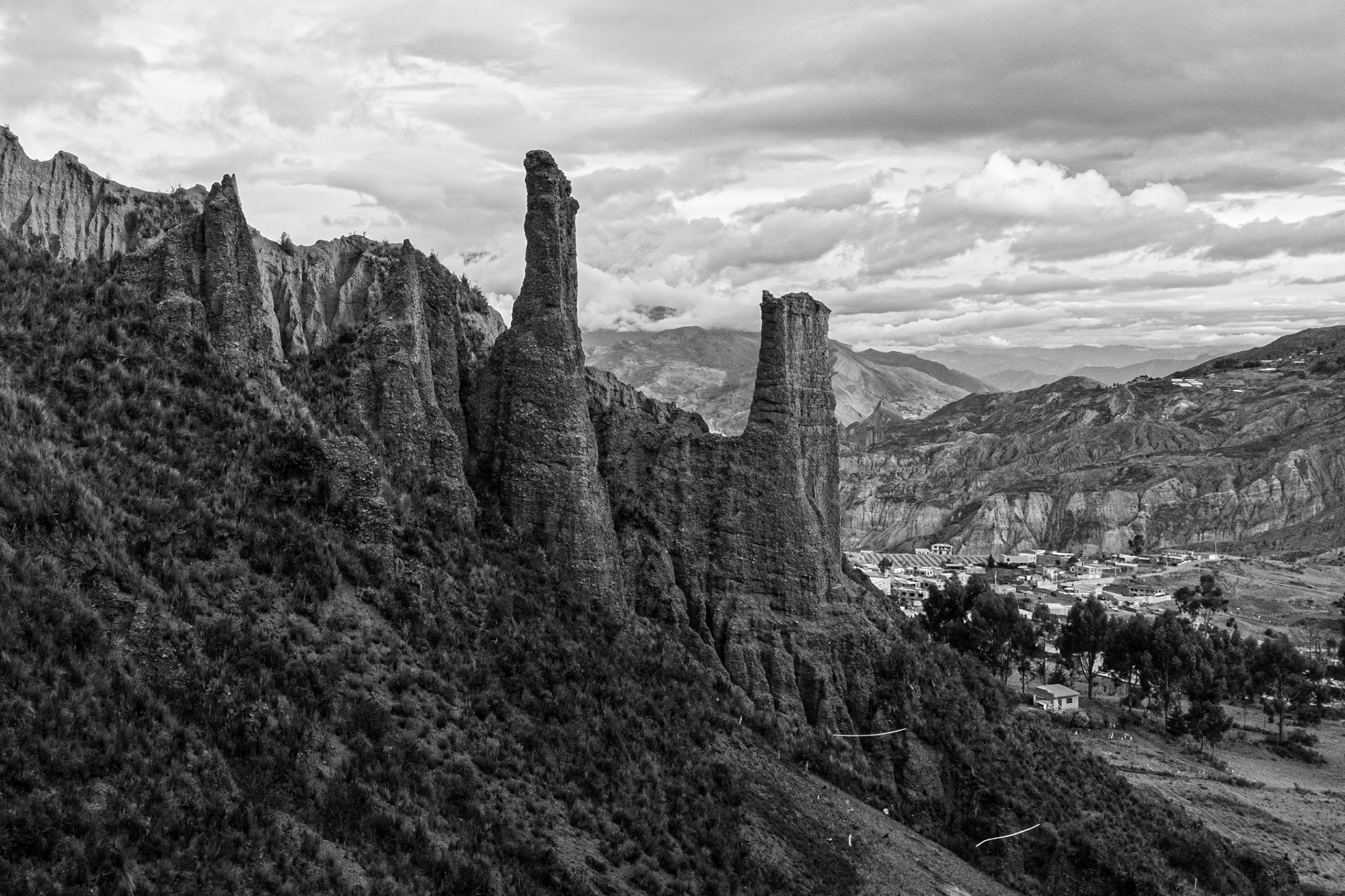
It is a pleasure to share my translation of this short story from contemporary Bolivian author Rodrigo Urquiola Flores. This semi-autobiographical work of fiction transports the reader to the windswept edges of the city of La Paz during the early and mid-1990s, when young children like the author and myself were cognizant of the mysterious and feared chupacabra as a topic of conversation and media coverage.

The story is part cataloging of the author’s first significant experiences and memories. Thrillingly, the narrator takes us on a journey from the neglect and loneliness of his spare, dusty home to the high drama of the soccer stadium. It is nothing short of a revelation. In this third space, he finds seemingly all the raw materials of life: effort, teamwork, luck, heartbreak, agony, triumph, relief. 

Through the storytelling of his Aymara grandmother, Urquiola also takes us back in time to the Ocobaya hacienda, a site of subjugation and domination. I have resisted translating – and therefore decontextualizing – pongo, patrón, and amo, the unique terms of racialized power associated with this social and economic system. Curious readers are invited to learn more about haciendas, a significant feature of not-so-distant Latin American history with meaningful connections to the plantation system of the United States.

Chupacabra
Read more...

Baleia

By GRACILIANO RAMOS
Translated by MILA MASSAKI GOMES

Translator’s Note
In Portuguese, “Baleia” means whale. Baleia… how funny it had seemed to me when I first encountered Graciliano Ramos’s work — a dog named “Whale.” It isn’t, of course, a simple or even silly name. In this short story, excerpted from the famous Brazilian novel Vidas Secas (1938), we follow a dog as she lives out her last miserable, heart-wrenching moments. Starved, thirsty, and rabid, Baleia is no more than a limping bag of bones to an outsider’s eyes. It is ironic: a skinny, limping dog, easily killed, named after an enormous, powerful, and beautiful animal. The deserted, scorched, barren land is home to a dog named after a sea creature. The end of her life, though brutal, is an act of mercy out in the arid backlands where she lives. While canid, Baleia is a reflection of her human family — migrants, alone in the backlands, fighting hunger, drought, sickness, and the threat of a gun held by an authority that sees people in the vast, desert lands as no more than sick animals to be killed. As she dies, Baleia dreams of an abundance she lacks, an abundance of care, joy, love, and food. Many people feel empathy for dying dogs — their deaths are hard and painful to read. With “Baleia,” I imagine Graciliano Ramos turning this empathy around to the Brazilian elite living near the coast. His story asks, “What would be of the world if we felt the same empathy we feel for dogs for the people who share this land with us?”

Baleia
Read more...

Excerpts from Khanandihi

By SHATADAL MITRA
Translated by BISHNUPRIYA CHOWDHURI

Piece appears below in English. Click here to read the original in Bengali.


Translator’s Note

I believe what makes stories great is their ability to surprise and hearten their readers simultaneously. The tale of Khanandihi, which revolves around a quintessential Bengal village as it lives through generations of transformation— social, economic, and ethical—does so with an unparalleled efficacy that deserves a global readership. The narrative defies linearity, both in its language and in its structure. As a result, past and present run interwoven into each other, endowing even the smallest characters with a cosmic expanse and scope. The text resists rushed reading—its layers of long, winding sentences and subtle subtextual nuances unlock only when savored.

Excerpts from Khanandihi
Read more...

The Kestrel

By ERNESTO PÉREZ ZÚÑIGA
Translated from the Spanish by OLIVIA BAES

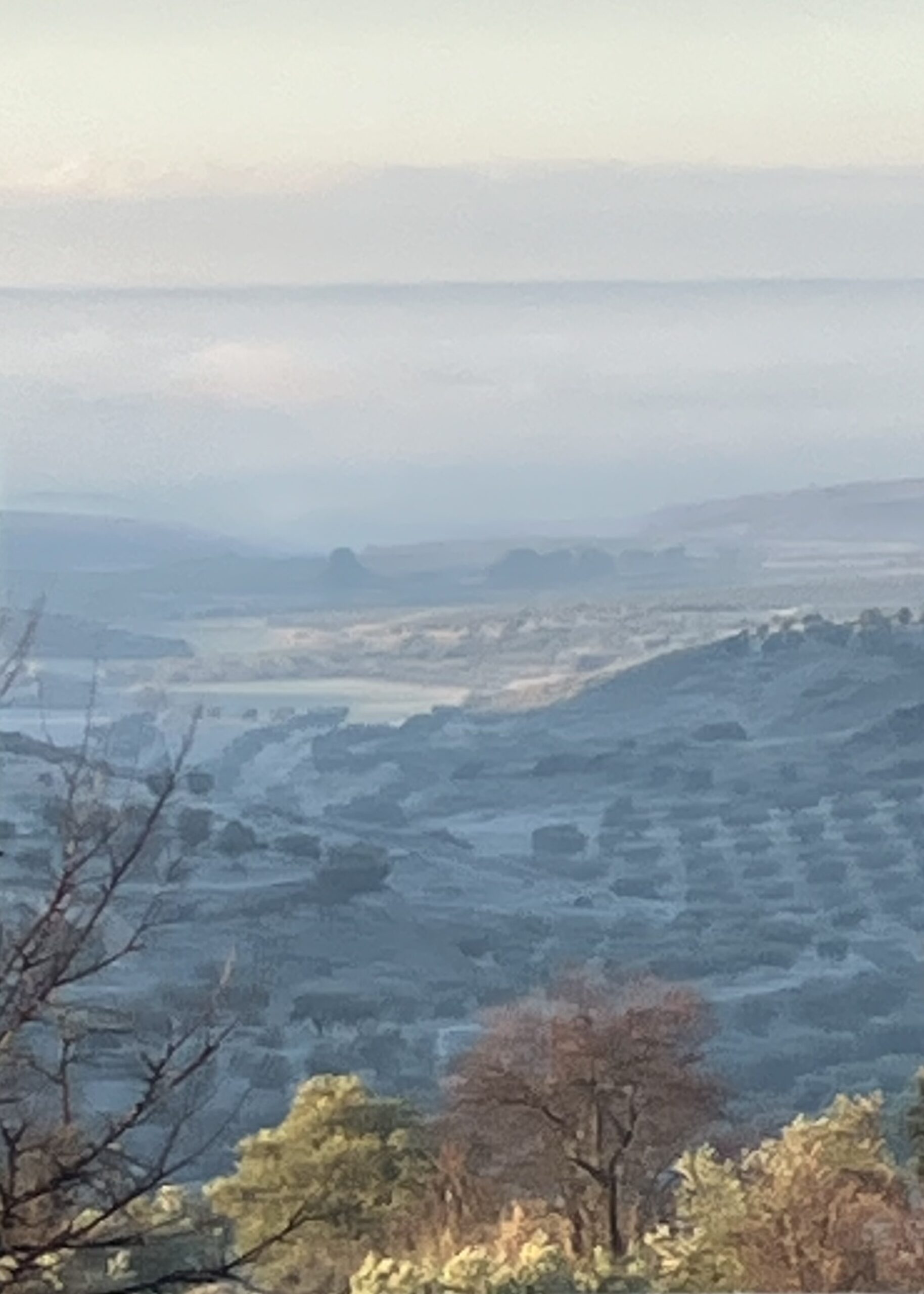
Valle_de_la_Salceda

Photo courtesy of the author.

Salceda Valley, Colmenar de Oreja, Madrid

I hear it sing after the solstice. A bird of prey, the little falcon with the beautiful song. A crystal line rising from the tree where it perches to the sky then plunging down abruptly. This is how the kestrel precedes its own flight to the zenith, as if it first needed to trace a path of fierce bells.

I am not the only one to hear it: the small birds flee to faraway trees.

This is the sound of winter, when the year begins in slumber, damp with secret rains in the dawn and combed by the blizzards which wait for the sun to set through a crack in the clouds.

It is during the day that the kestrel attacks the few sparrows cowering from the cold on the roof. Huddled together and silent, as if awaiting an airbus, they disperse in a daze as talons strike from somewhere in the sky.

The Kestrel
Read more...

Self-Portrait in The Caribbean

By PAOLA ASSAD BARBARINO
Translated by MAGDALENA ARIAS VÁSQUEZ

Poems appear below in English and the original Spanish.

Translator’s Note:
Paola’s poetry, which I have been translating for a while now, is fundamentally Venezuelan and has to be understood in that context. The challenge for me is to render this context as best as I can from my position as an outsider. “Autorretrato en el caribe” or “Self-Portrait in the Caribbean” was a particularly challenging poem to translate keeping this in mind. It’s also one of my favorites of hers. It relies heavily on Venezuelan history and an understanding of their political context. The most prevalent example of this is the quotation, “¡Entonces yo tampoco quiero mando!” which is a historical allusion to Capitán Emparán, who, in the face of the Spanish crown’s decaying power in Venezuela, famously used the words to renounce his position in government, granting Venezuela independence from Spain. It directly translates to “Then I too do not want to be led” or “Then I too do not want to lead.” The double sense of the phrase in Spanish is particularly interesting in the context of the poem. I chose to keep it in Spanish to keep this double meaning, and also to assert the phrase’s origin as Venezuelan, whose context may not be readily available to an Anglophone reader. The final stanza of the poem is one of my favorite lines that Paola has ever written. Speaking from the position of someone living through exile, Paola’s poetry is politically and personally charged and speaks to the complicated space she inhabits.

Self-Portrait in The Caribbean
Read more...

Feltspade

Poem by ELIAS SADAQ, translated from the Danish by DENVER DAVID ROBINSON.
The piece appears in both English and Danish below.

Translator’s Note

I bought a copy of Elias Sadaq’s debut poetry collection DJINN on a windy December morning in Copenhagen in 2024. Although I’m not Danish, Moroccan, or Muslim, I’ve spent over half my life going between the United States and a small seaside village in Denmark not so far―in kilometers―from where Sadaq grew up. I was curious to know what it’s like to be of Danish and Moroccan descent, queer and Muslim, and come from one of (highly homogenous) Denmark’s most ethnically diverse districts, a place I had visited occasionally with my father. Sadaq’s work enchanted me immediately. There was much I recognized, and more I did not, including incantations to punish and protect. As I read, I scribbled a rudimentary translation in pencil next to his lines. Eventually, I reached out to Sadaq, who gave me permission to translate and seek American publishers for his work. Now, after several months of collaboration and getting to know one another, I have finished my translation of DJINN. I’ve learned so much in my work with Elias, who is one of Denmark’s most versatile and exciting new artists. For one, my understanding of modern street Danish has improved. More importantly, his generosity and playful curiosity have inspired me in this time of increasing discord. His work opens doors, welcoming all who care or clamor to enter―strangers, DILFs, saints, and demons―while narrowing the gap between the sacred and profane.

A felt spade is a military entrenching tool, a survival shovel, but also carries a derogatory connotation employed to infer one is an idiot. I considered translating the title with an English colloquial equivalent, such as blunt instrument, dull blade, or simply tool. In the end, I chose to keep the literal translation to allow readers to sit with the original title’s ambiguity.

― Denver David Robinson


Feltspade
Read more...

How to Cry in Public Places

By EMILIA DŁUŻEWSKA

Translated from the Polish by KLAUDIA CIERLUK

Translator’s Note

I first encountered Emilia Dłużewska’s How to Cry in Public Places (Jak płakać w miejscach publicznych) three years ago, when it was shortlisted for the Joseph Conrad award—the most important Polish prize for a debut work. I was immediately captivated by its strong and unique voice: if you’re looking for a somber work about depression, this is not what you’ll find here. Instead, Dłużewska navigates her experiences with mental illness, the structural inequalities that fuel it, and the grey reality of post-Soviet Poland with unusual grace and humor, smoothly moving between disparate tones and registers. Playful vignettes, to-do lists, and shrewd word plays are just a few of the elements that comprise this genre-defying work. Set in contemporary Warsaw, with the lingering shadows of the Soviet era still shaping everyday life, How to Cry in Public Places nevertheless attests to the universality of the experience of depression, exploring how private suffering is deeply connected to the social and political contexts that surround it. The book’s intelligent deconstruction of mental illness affixes it to the vibrant vein of modern, English-language classics that approach similar issues through an equally dark and funny perspective, such as Ottessa Moshfegh’s My Year of Rest and Relaxation and Juliet Escoria’s Juliet the Maniac—the key reason in my belief that Dłużewska’s prose will appeal to readers on the other side of the ocean as well. 

How to Cry in Public Places
Read more...

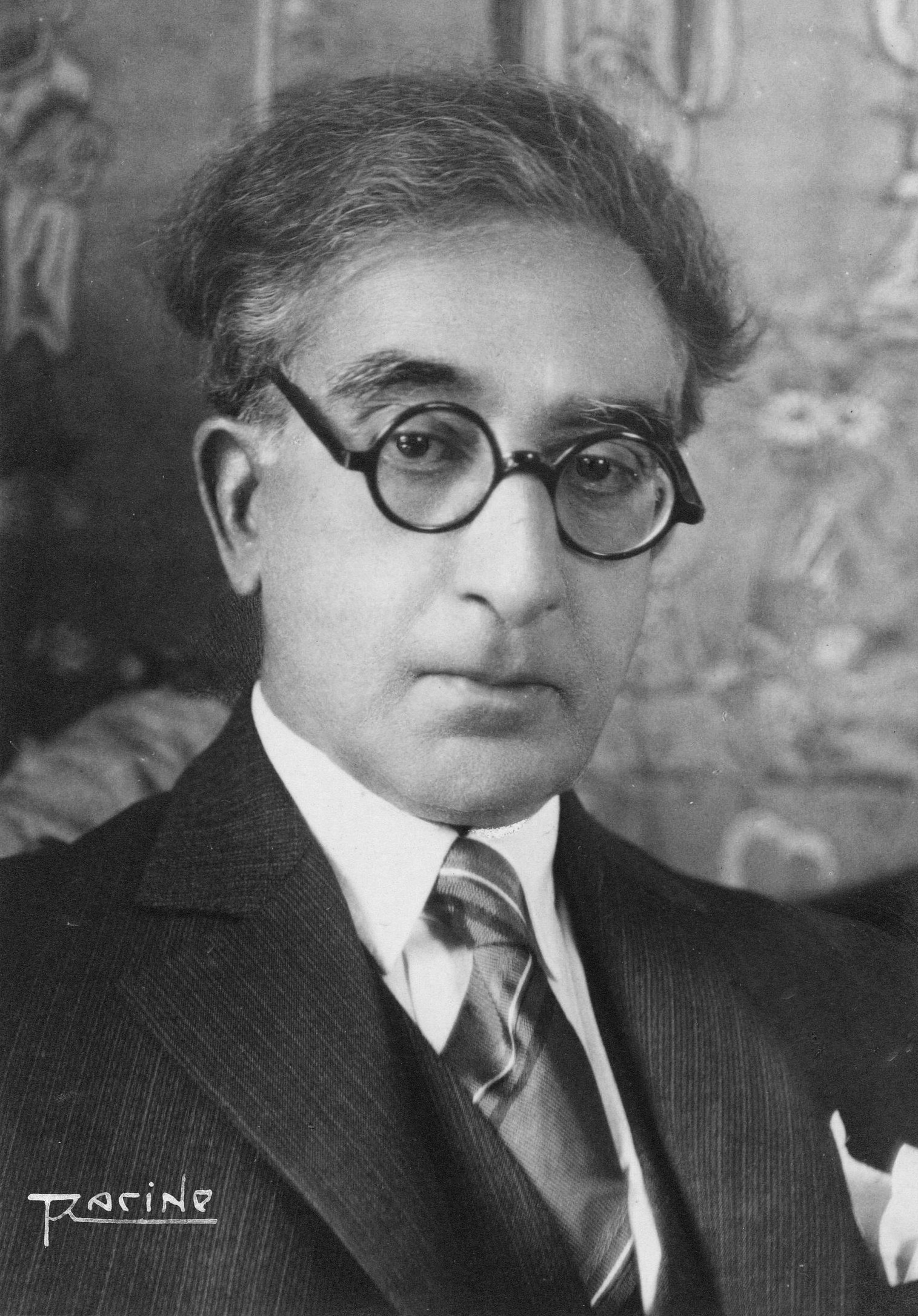
They Could Have

By CONSTANTINE P. CAVAFY
Translated from the Greek by CONSTANTINE CONTOGENIS

Poem appears in both English and Greek below.


Translator’s Note:
In translating Cavafy I was most absorbed and, at times, confused by his irony. People make ironic points—no confusion. But some of Cavafy’s irony does not come to a sharp point. I call this unresolved irony, which adds to but doesn’t settle the semantic and emotional atmosphere. The experience of reacting to the irony in the context of its poem can be frustrating. Instead of crystalizing our understanding, or, as a kind of compass, leading us to the author’s side, the irony works within a poem to help create an experience of widening awareness, giving us a touch of wisdom.
              — Constantine Contogenis

They Could Have
Read more...

Surveilled Terrain

By THOMAS EMPL 
Translated by ISABEL FARGO COLE

The ferryman wrenched the gangplank out of its mount, heaved a breath and hooked it between the boat and the dock. During the brief ride we didn’t say a word; he didn’t recognize us. On the coast, to the east of the town, a military jet took off and dipped straight into a breakneck loop to head the other way, trailing its sonic boom.

I’d shaved the night before. Mouth open, I fingered my smooth skin. Rough lines ran from my nostrils to the corners of my mouth, like incisions. My ears looked huge. When I got up in the morning, my mirror image startled me. It was as if someone had hung up one of those photos I never looked at, showing that out-of-place apprentice, expressionless at the joiner’s bench. I didn’t recognize myself until I heard my voice.

Surveilled Terrain
Read more...

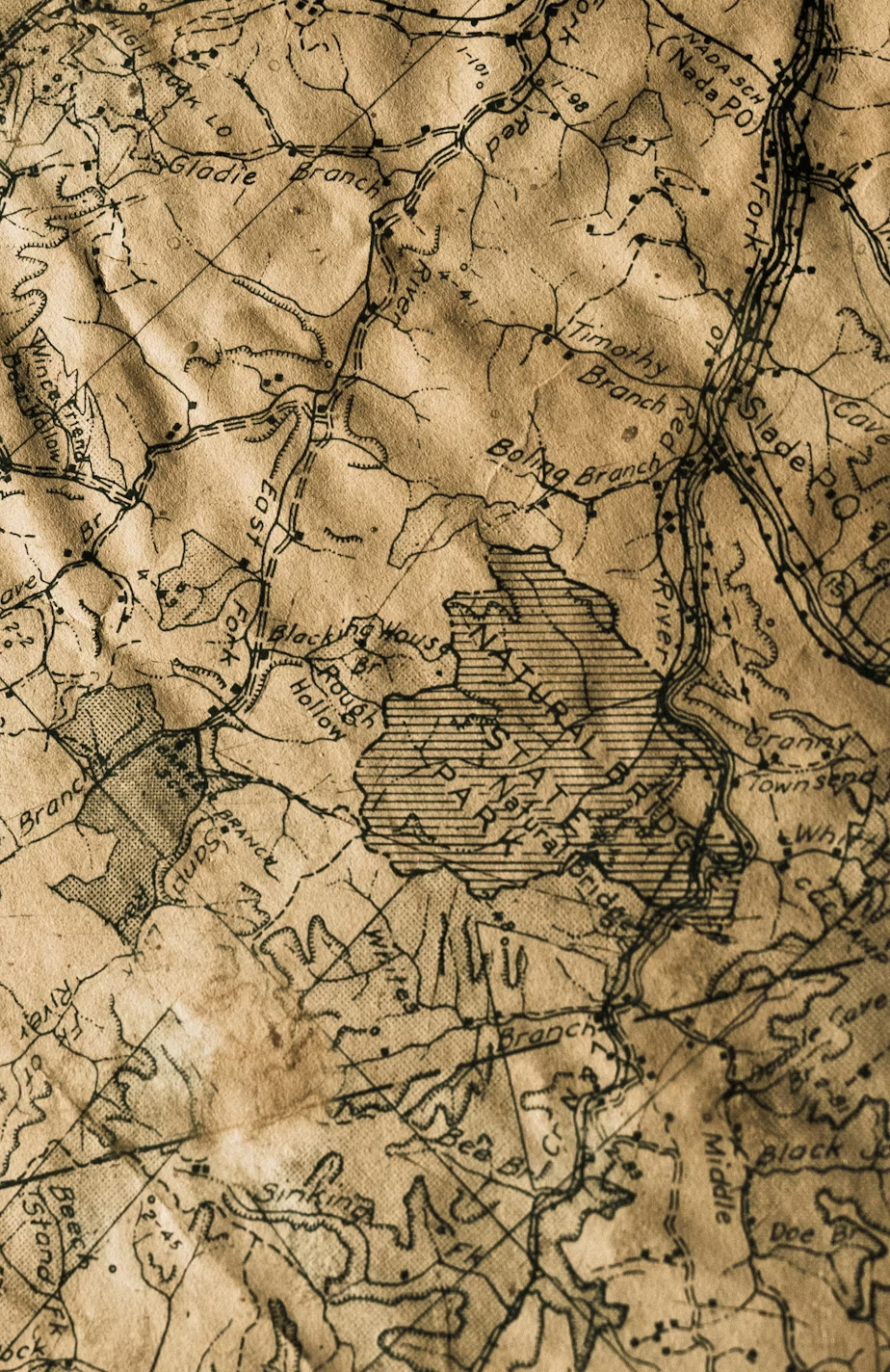
Map

By MARIN SORESCU

Translated by DANIEL CARDEN NEMO


Translator’s note

Marin Sorescu, despite being one of the most translated Romanian writers, is one of the literary world’s best kept secrets. The reason for it, to my mind, lies squarely in the quality of existing English translations, as many of them have failed to capture his poetic essence. Twice nominated for the Nobel Prize in Literature, he never received the award based on his translated work.

Like many of his poems, “Map” reveals Sorescu’s depth of thought and highly associative mind, and above all his ability to convey the most complex emotions and contemplations into a multi-layered poetry that remains accessible to all. The challenge in the translation here comes from the ability to convey an intimate, almost didactic exploration of the body, revealing the speaker’s vulnerability as he opens himself up for in(tro)spection. The body becomes a cartographic landscape, with known and uncharted areas, while the self is a terrain molded by time, animated by the soul, and inevitably oriented toward death. The poem blends stark physicality with cosmic metaphysics, suggesting that human identity, just like the Earth’s geography, contains vastness, complexity, and the unknowable. It is consciousness which imbues the world with dynamism. Without internal life, and perhaps without poetry, existence becomes static, ornamental.

Map
Read more...