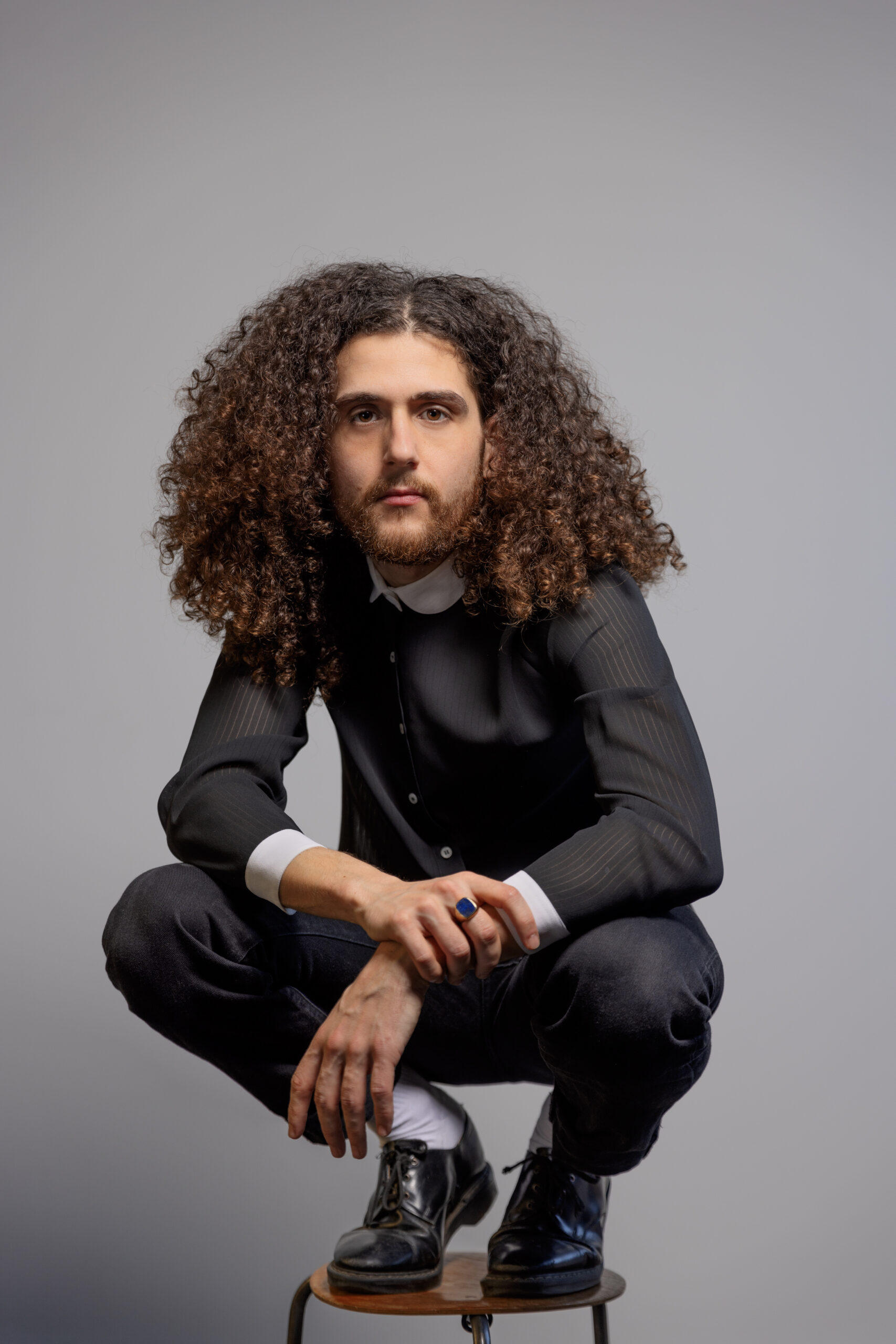
Poem by ELIAS SADAQ, translated from the Danish by DENVER DAVID ROBINSON.
The piece appears in both English and Danish below.
Translator’s Note
I bought a copy of Elias Sadaq’s debut poetry collection DJINN on a windy December morning in Copenhagen in 2024. Although I’m not Danish, Moroccan, or Muslim, I’ve spent over half my life going between the United States and a small seaside village in Denmark not so far―in kilometers―from where Sadaq grew up. I was curious to know what it’s like to be of Danish and Moroccan descent, queer and Muslim, and come from one of (highly homogenous) Denmark’s most ethnically diverse districts, a place I had visited occasionally with my father. Sadaq’s work enchanted me immediately. There was much I recognized, and more I did not, including incantations to punish and protect. As I read, I scribbled a rudimentary translation in pencil next to his lines. Eventually, I reached out to Sadaq, who gave me permission to translate and seek American publishers for his work. Now, after several months of collaboration and getting to know one another, I have finished my translation of DJINN. I’ve learned so much in my work with Elias, who is one of Denmark’s most versatile and exciting new artists. For one, my understanding of modern street Danish has improved. More importantly, his generosity and playful curiosity have inspired me in this time of increasing discord. His work opens doors, welcoming all who care or clamor to enter―strangers, DILFs, saints, and demons―while narrowing the gap between the sacred and profane.
A felt spade is a military entrenching tool, a survival shovel, but also carries a derogatory connotation employed to infer one is an idiot. I considered translating the title with an English colloquial equivalent, such as blunt instrument, dull blade, or simply tool. In the end, I chose to keep the literal translation to allow readers to sit with the original title’s ambiguity.
― Denver David Robinson