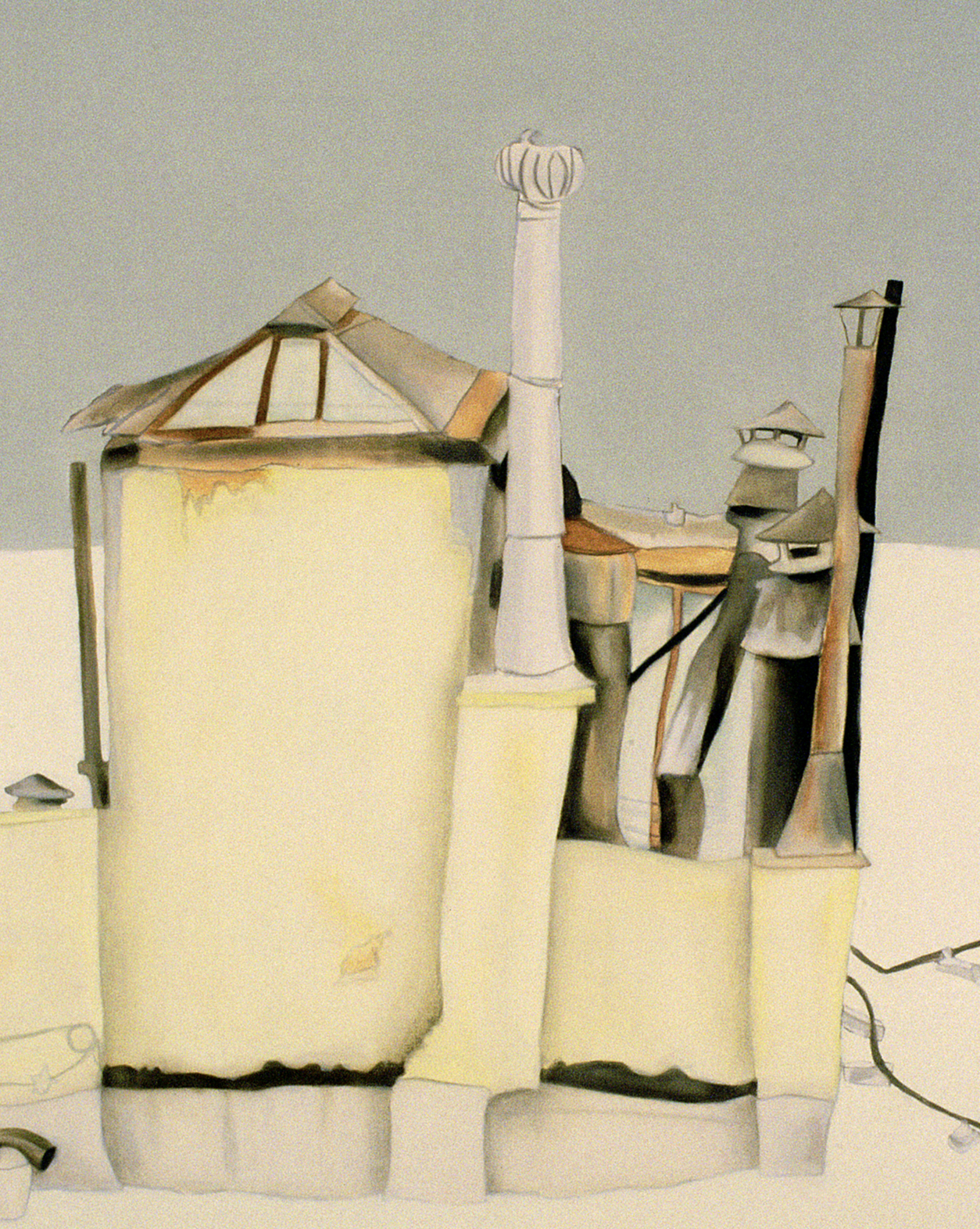
The Balkan

By CRALAN KELDER

The Balkan in my neighborhood, I give him small amounts of money a few
times a week, it’s not what you think. A lot of people do this. About his wife,
he tells me he has none. My daughter, he sees her smile a flash flood,
always gives her a cookie. His word is börek, translates as ‘savory pastry’
pronounced “boo-wreck”. For this I gladly give him money. Spinach and feta.
Bigger than your hand, hot from the oven. With meat or cheese, pasta layers,
flaky dough. He works 6 days a week. He was taking a nap in the park a few
years ago, we were there eating homemade sticky cake. I offer him some, he
rigorously declines. Does he recognise me? Was it inappropriate?

In Istanbul, I am delighted to find a bakery with the legend ‘Salon du Börek’
painted over the door, where fresh börek is the only fare. Back in Amsterdam, I tell
the Balkan about my excitement at finding börek salons in Zagreb and Istanbul. He
regards me politely.


Cralan Kelder was born in 1970 and grew up between California and The Netherlands. An anthropologist by training, he has edited numerous literary magazines, including Full Metal Poem and Retort. Previous books include: Lemon Red (Coracle 2005), and City Boy (Longhouse 2007). He lives in Amsterdam with his wife, the evolutionary biologist Toby Kiers, and their children.

From the beginning, The Common has brought you transportive writing and exciting new voices. We are committed to supporting writers and maintaining free, unrestricted access to our website, but we can’t do it without you. Become an integral part of our global community of readers and writers by donating today. No amount is too small. Thank you!

The Balkan

Related Posts

art by jonathan ehrenberg

Two Poems by Erica Ehrenberg

ERICA EHRENBERG
Nearby, / women came out of the rubble / still pregnant years after / the children were conceived. / I kept you in, the women said, / because you were the pin / holding down the world

Two Poems by Heather Bourbeau

This forest is named for the first head of the National Forest Service, who warned of assuming natural resources were inexhaustible, who said without conservation we pay the price of misery, degradation, and failure, who asked if these resources were for the benefit of us all or for the use and profit of a few? He was also a leading eugenicist.

I/Teh Ran

SARVIN PARVIZ
We were celebrating a friend’s birthday in our group chat, signing his birthday card, together apart, when Israel launched the strikes. Now we are on the call, and someone says she was making Adaspolo, preparing the lentils when she heard the strike. She could stop, she thought to herself, that she should.