
By CLAIRE KEYES
Some can write poetry
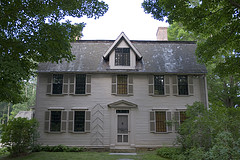
on glass windows like Sophia Hawthorne
at the Old Manse with her wedding ring.
I’m told this was common in the 19th century.
But, for me, reading it was like finding a note in a bottle
picked up on the beach. I felt a kind of awe.
Granted, Sophia was the wife
of you know who and could commit
what is, in essence, graffiti. With no repercussions.
And granted, she must have been godawful bored
when he took off the morning after the snowstorm
to visit Thoreau. And left her alone with the baby!
But still, scratching on the window
of a rented house in the room where his imagination
played with dark things. So like him
to face his desk to the wall. She stood looking out
the window. Snowy fields, icy river.
Was it really just being overwhelmed
by the pretty view, the trees all glass
chandeliers as she wrote? After coining
the metaphor, she incised it with gusto.
And like most mothers she had to brag
about her kid, Una, only ten months old,
and named for Spenser’s Fairie Queene heroine.
Did posterity really have to know
she stood on the window sill?
So we record the minutia
of our lives, gambling that significance
rests in our homely dramas. Thus Sophia
got down on her knees, diamond in hand,
proud mother, yes, but incidental
no more, a someone to a somebody.
And signed her name with a flourish.
Claire Keyes is the author of two poetry collections: The Question of Rapture and the chapbook, Rising and Falling.
Photo from Flickr Creative Commons