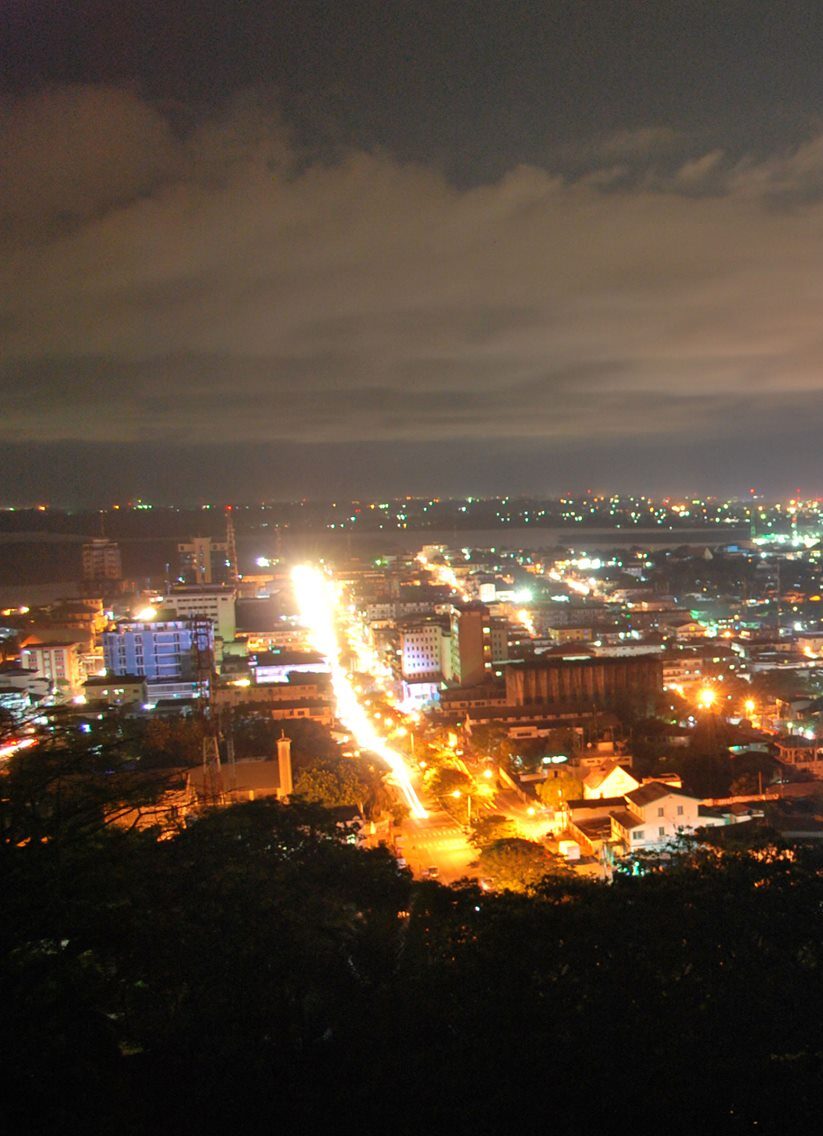

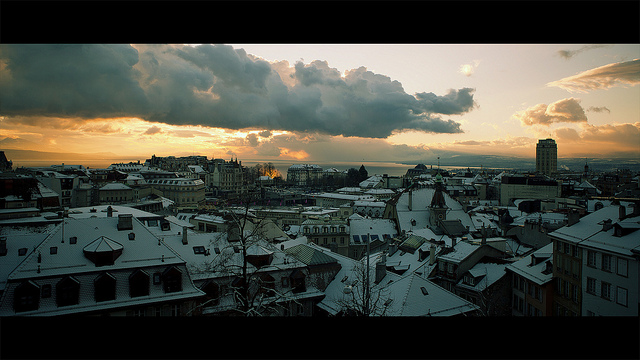
Our grey Swiss building has ceiling moldings in the shape of flowers. These were white once. Before we immigrants took over most of its floors. The only natives who remain are very old. They have no children or pensions large enough to help them flee our foreign invasion. Like Madame Belet, who lives one floor down from us and gives me old, melted chocolates when I run errands for her.
We children have one bedroom where we are twinned in each of the two narrow beds. We take turns sleeping on them because one of the mattresses hurts our backs. We have no pillows. The window is barred by a dry log nailed into place; the maimed forest’s testament to the impossibility of us growing tall. We are a curiosity to the Swiss boy who looks down on us from his balcony across the street when we lean out of the screenless window. His building, our only horizon, is white and clean and blocks our little sun. Like the highrises that took away abuela’s stars, back in Galicia.
The living-room has parquet floors, which my mother treasures and defends against the trampling of our young feet. Though she will let us dance on them without restriction when she plays her Spanish records and we sing along in the tongue that is now only spoken at home.
The small bathroom is our only reprieve from the suffocating space where all of our breaths and terrors mingle. Our parents fear not making enough money to go back to our Spanish home, the distant dream that keeps them going and united. We fear our parents’ wrath and not fitting in at school.
The dank stairwell is our passage back to interrupted dreams of belonging in this new world. The light switches on at our touch, revealing the full extent of the landing’s sweaty walls for two minutes at a time.
The lobby downstairs is lined with peeling mailboxes, like our skins after a public pool sunburn that never quite makes it to tan and that our mother doctors with Nivea cream.
Once outside, our lungs welcome the fresh morning light as we join the throng of adults going to work and children to school, and we are free to strive for the brass ring of education or the carrot of acceptance that might or might not be within our reach.
Until evening.
Eva Roa White was born in A Coruña, Spain and raised in Lausanne, Switzerland. She is at work on her memoir, Back to Galicia: The Immigrants’ Daughter.
Photo by Flickr Creative Commons user Daniel Pereira