All posts tagged: February 2026

Mountain, Stone

By LENA KHALAF TUFFAHA

This poem is republished from Water & Salt by Lena Khalaf Tuffaha, a guest at Amherst College’s eleventh annual literary festival. Register and see the full list of LitFest 2026 events here.

Do not name your daughters Shaymaa,
courage will march them
into the bullet path of dictators.
Do not name them Sundus,
the garden of paradise calls out to its marigolds,
gathers its green leaves up in its embrace.
Do not name your children Malak or Raneem,
angels want the companionship of others like them,
their silvery wings trailing the filth of jail cells,
the trill of their laughter a call to prayer.

Mountain, Stone
Read more...

Poems from suddenly we by Evie Shockley

By EVIE SHOCKLEY

These poems are republished from suddenly we by Evie Shockley, a guest at Amherst College’s eleventh annual literary festival. Register and see the full list of LitFest 2026 events here.

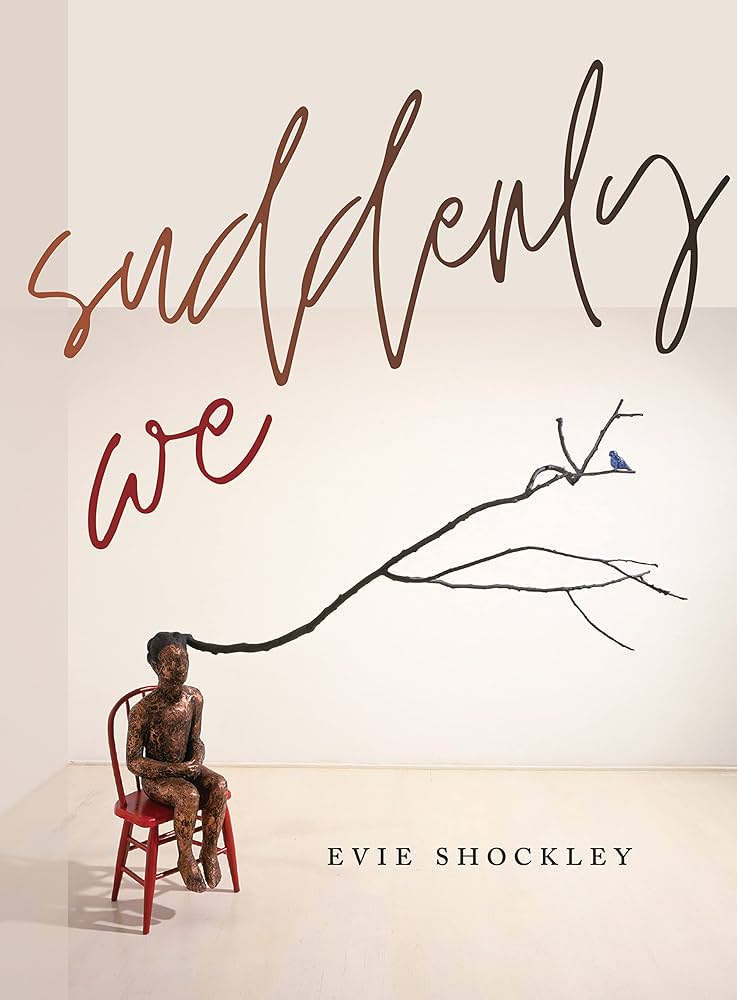
Book cover of suddenly we

perched

i am black, comely,
a girl on the cusp of desire.
my dangling toes take the rest
the rest of my body refuses. spine upright,
my pose proposes anticipation. i poise
in copper-colored tension, intent on
manifesting my soul in the discouraging world.

under the rough eyes of others, i stiffen.

if i must be hard, it will be as a tree, alive
with change. inside me, a love of beauty rises
like sap, sprouts from my scalp
and stretches forth. i send out my song, an aria
blue and feathered, and grow toward it,
choirs bare, but soon to bud. i am
black and becoming.

after alison saar’s blue bird


women’s voting rights at one hundred (but who’s counting?)

eenie meenie minie moe
   catch a voter by her toe
if she hollers then you know
got yourself a real jane crow

                  ~ ~ ~

one vote is an opinion
with a quiet legal force ::
a barely audible beep
in the local traffic, & just
a plashless drop of mercury
in the national thermometer.
but a collectivity of votes
/a flock of votes, a pride of votes,
a murder of votes / can really
make some noise.

                  ~ ~ ~

one vote begets another
if you make a habit of it.
my mother started taking me
to the polls with her when i
was seven :: small, thrilled
to step in the booth, pull
the drab curtain hush-shut
behind us, & flip the levers
beside each name she pointed
to, the Xs clicking into view.
there, she called the shots.

                ~ ~ ~

rich gal, poor gal
hired girl, thief
teacher, journalist
vote your grief

               ~ ~ ~

one vote’s as good as another
:: still, in 1913, illinois’s gentle
suffragists, hearing southern
women would resent spotting
mrs. ida b. wells-barnett amidst
white marchers, gently kicked
their sister to the curb. but when
the march kicked off, ida got
right into formation, as planned.
the tribune’s photo showed
her present & accounted for.

                  ~ ~ ~

one vote can be hard to keep
an eye on :: but several / a
colony of votes / can’t scuttle
away unnoticed so easily. my
mother, veteran registrar for
our majority black election
district, once found—after
much searching—two bags
of ballots / a litter of votes /
stuffed in a janitorial closet.

                  ~ ~ ~

one-mississippi
two-mississippis

                  ~ ~ ~

one vote was all fannie lou
hamer wanted. in 1962, when
her constitutional right was
over forty years old, she tried
to register. all she got for her
trouble was literacy tested, poll
taxed, fired, evicted, & shot
at. a year of grassroots activism
nearly planted her mississippi
freedom democratic party
in the national convention.

                  ~ ~ ~

one vote per eligible voter
was all stacey abrams needed.
she nearly won the georgia
governor’s race in 2018 :: lost by
50,000 / an unkindness of votes /
to the man whose job was purg
maintaining the voter rolls.
days later, she rolled out plans
for getting voters a fair fight.
it’s been two years—& counting.


Excerpted from suddenly we by Evie Shockley. Copyright, © 2023 Evie Shockley. Reprinted with permission from Wesleyan University Press.


Evie Shockley thinks, creates and writes with her eye on a Black feminist horizon. Her books of poetry include Suddenly We (NAACP Image Award; National Book Award finalist), semiautomatic (Hurston/Wright Legacy Award; Pulitzer Prize finalist), and the new black (Hurston/Wright Legacy Award). Her literary criticism includes Renegade Poetics: Black Aesthetics and Formal Innovation in African American Poetry and numerous essays. Most recently, she is editor of the Norton Library edition of Harriet Jacobs’ Incidents in the Life of a Slave Girl. Among the honors for her body of work in poetry are the Academy Fellowship for Distinguished Poetic Achievement, the Shelley Memorial Award, the Lannan Literary Award for Poetry, the Holmes National Poetry Prize and the Stephen Henderson Award. Her joys include participating in poetry communities such as Cave Canem and collaborating with artists working in various media. Shockley is the Zora Neale Hurston Distinguished Professor of English at Rutgers University.

Poems from suddenly we by Evie Shockley
Read more...

Review of Pastorals by Rachel Hadas

By RACHEL HADAS

Reviewed by REEVE LINDBERGH

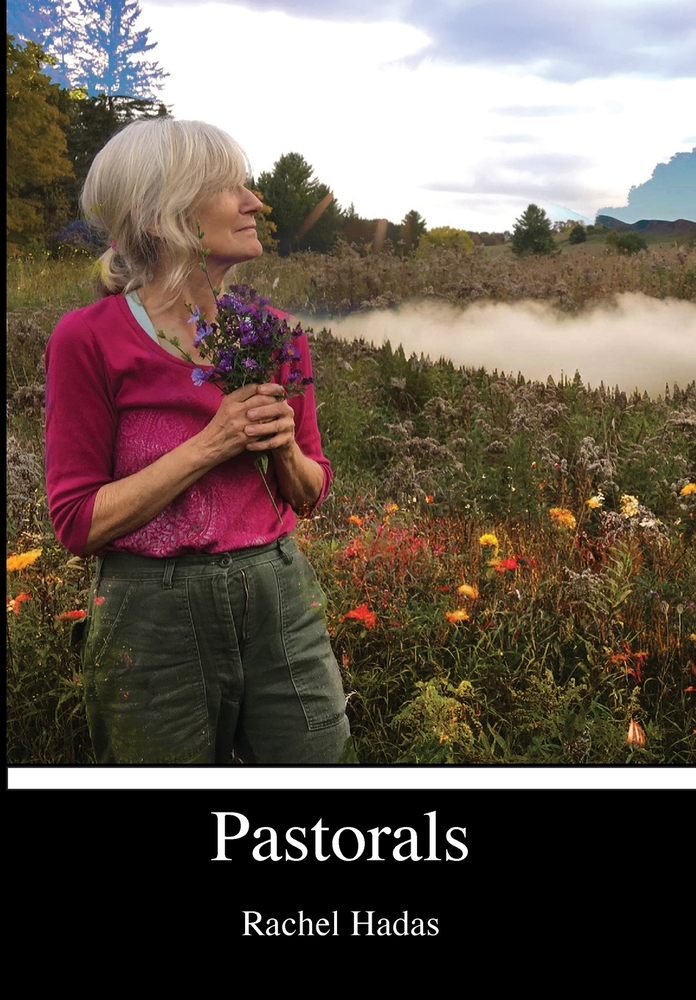
Book cover of Pastorals by Rachel Hadas

Rachel Hadas is a close friend, someone I have known since the early 1970’s, and a summer neighbor in rural Vermont. She lives in a house that has belonged to her family, one generation following the other for many decades. Her new book, Pastorals, is an exquisitely written collection of brief reflections and meditations essentially but not exclusively centered on the house.

“Can one feel nostalgic for the present, especially when it’s layered so palpably over the past?” The writer asks herself this at the beginning of the book. Within the present as she lives and writes are the unseen presences of those who have visited or inhabited the same dwelling in the same place. They are not exactly ghosts but instead “the presence of an absence,” something Hadas feels at odd moments indoors or out: while going up the stairs; in the midst of picking blackberries on the hill; on the way down the dirt road to the mailbox. She likens these “seasonal phantoms” in her summer house to the ghosts in Walter De La Mere’s poem “The Listeners,” a poem that had puzzled but did not frighten her when she read it as a child. Readers of Pastorals will learn quickly that Hadas’s memory is filled with the poetry and prose of every age and nation along with her own beloved family ghosts.

Review of Pastorals by Rachel Hadas
Read more...

Biography of a Dress

By JAMAICA KINCAID

This story is reprinted in honor of Amherst College’s eleventh annual literary festival, which features Jamaica Kincaid as a guest author. Register and see the full list of LitFest 2026 events here.
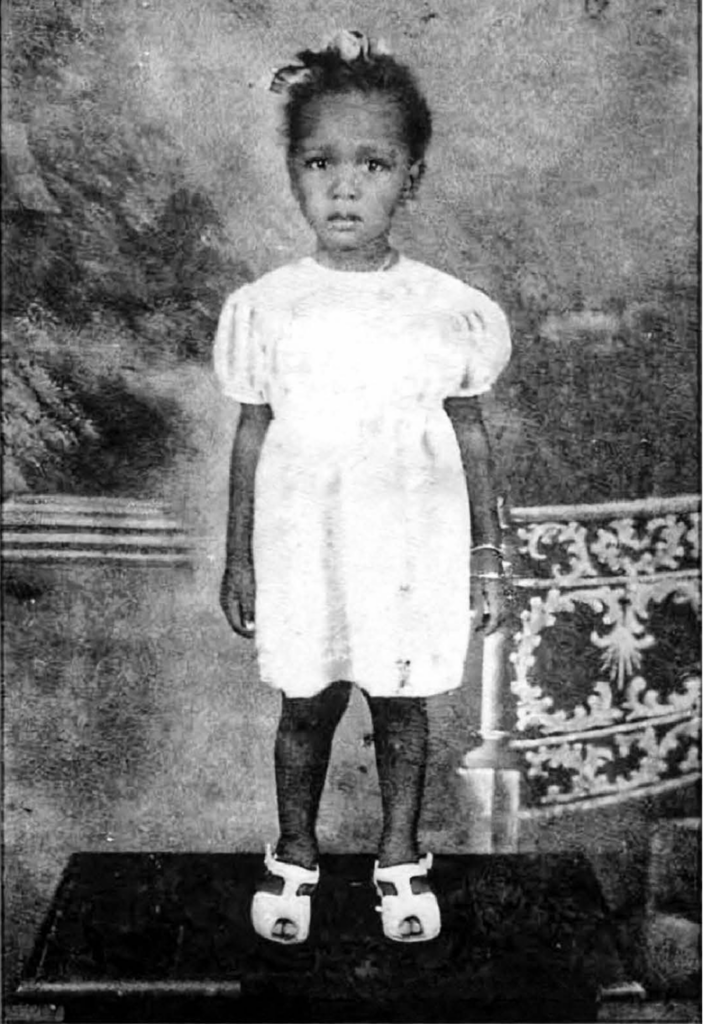
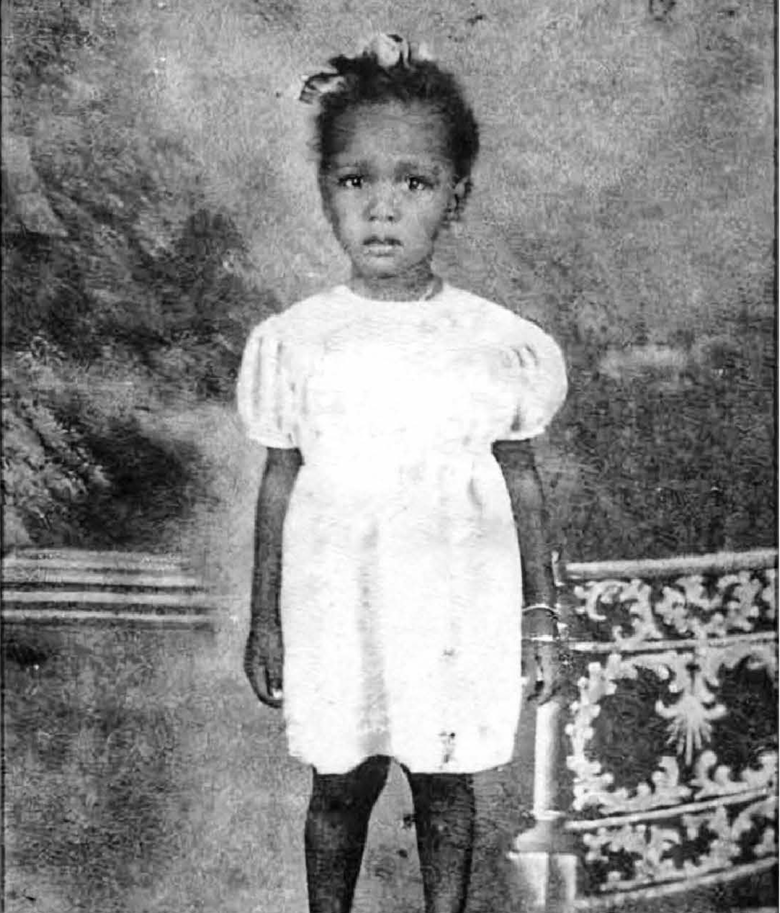
Early photograph of the author in a light-colored dress.

Image courtesy of the author.

The dress I am wearing in this black-and-white photograph, taken when I was two years old, is a yellow dress made of cotton poplin (a fabric with a slightly un-smooth texture first manufactured in the French town of Avignon and brought to England by the Huguenots, but I could not have known that at the time), and it was made for me by my mother. This shade of yellow, the color of my dress that I was wearing when I was two years old, was the same shade of yellow as boiled cornmeal, a food that my mother was always eager for me to eat in one form (as a porridge) or another (as fongie, the starchy part of my midday meal) because it was cheap and therefore easily available (but I did not know that at the time), and because she thought that foods bearing the colors yellow, green, or orange were particularly rich in vitamins and so boiled cornmeal would be particularly good for me. But I was then (not so now) extremely particular about what I would eat, not knowing then (but I do now) of shortages and abundance, having no consciousness of the idea of rich and poor (but I know now that we were poor then), and would eat only boiled beef (which I required my mother to chew for me first and, after she had made it soft, remove it from her mouth and place it in mine), certain kinds of boiled fish (doctor or angel), hard-boiled eggs (from hens, not ducks), poached calf’s liver and the milk from cows, and so would not even look at the boiled cornmeal (porridge or fongie). There was not one single thing that I could isolate and say I did not like about the boiled cornmeal (porridge or fongie) because I could not isolate parts of things then (though I can and do now), but whenever I saw this bowl of trembling yellow substance before me I would grow still and silent, I did not cry, that did not make me cry.

Biography of a Dress
Read more...

Excerpt from The Salt Stones: Seasons of a Shepherd’s Life

By HELEN WHYBROW

Book cover of The Salt Stones by Helen Whybrow


This piece is excerpted from the memoir The Salt Stones: Seasons of a Shepherd’s Life by Helen Whybrow, a guest at Amherst College’s eleventh annual literary festival. Register and see the full list of for LitFest 2026 events here.

A bird is not born knowing how to fly. Not exactly. Leaping off a rafter and opening two perfectly constructed aerodynamic wings will get a fledgling only so far—usually to another rafter, or a spot on the ground, or sometimes to a confusing corner of a window where an invisible cobweb will wrap its sticky strands around a beating wing and mangle the delicate microzippered fibers ever so slightly so that the wing no longer beats at all.

Excerpt from The Salt Stones: Seasons of a Shepherd’s Life
Read more...

Excerpt from A Return To Self

By AATISH TASEER

Book cover for A Return to Self

This piece is excerpted from the memoir A Return To Self by Aatish Taseer, a guest at Amherst College’s eleventh annual literary festival. Register and see the full list of for LitFest 2026 events here.                                                                                              

At 9:05 a.m. on the tenth of November, 2020, a hush fell over the leaden turbulence of the Bosporus. All activity on the strait ceased. Coast Guard ships, ferries, and caïques, like the younger members of a tribe of large marine mammals, drew close in a circle. Behind them, a Turkish destroyer kept vigil, the blue of its gunmetal merging with the strait’s frigid waters. A red-bottomed freighter marked with the words iraqi line hulked in the background. That cityscape of sea-blackened buildings, broad panes glazed silver in the daytime darkness, was no ordinary Left Bank, no mere farther shore. The silhouette of low domes and pencil-thin minarets piercing a nimbus of pale sky above was the continent of Asia. The wonder of looking at it, with my feet still planted on the shores of Europe, was not lost on me. I had been in Istanbul for less than seventy-two hours. The air grew heavy with anticipation, and then, low and deep and melancholy as whale song, came the first moan of a ship’s horn.

Excerpt from A Return To Self
Read more...

I/Teh Ran

By SARVIN PARVIZ

woman holding a sheet in front of the mountains

Photo courtesy of the author.

Tehran, Diaspora

I moved to the U.S. for a creative writing program with a luggage full of must-haves and gifts, to survive the at-once costs with one paycheck, memorabilia from each friend and close relatives to hold, on days of unbelonging and loss, to feel the connection to the ground back to a place. The largest collection of belongings is in my phone. More than twenty thousand photos of food on the table (always more than one plate), streets of Tehran at night through the car window, wet and bright after rain, harmonious, unlike the dust and chaos of the day. My daisy covered shoes on the curb, friends singing, tapping on the table, hugging, running all the way to the top of a hill. When I moved, the photos became similar, screen shots of Facetime or Zoom calls, us in squares next to each other, our joy breaking out of the frame, heart emojis flying, everyone laughing.

I/Teh Ran
Read more...