This month we welcome SHANE MORAN to our pages for the first time, and we welcome back FATIMAH ASGHAR; both poets have poems forthcoming in the print journal. Gratitude to both poets from all of us at TC.
Table of Contents:
—Fatimah Asghar: “[madness]” and “[pagamento]”
—Shane Moran: “Cedar of Lebanon” and “Les Docks / Chatelet”
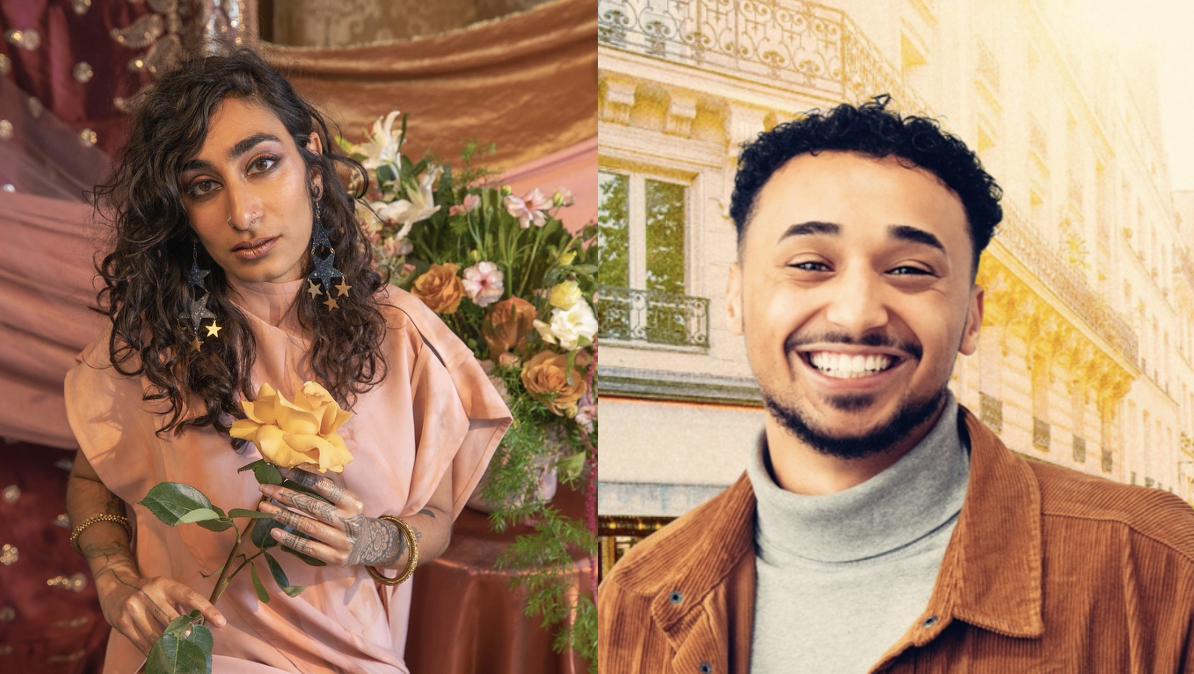
Fatimah Asghar (by Mercedes Zapata) pictured left, and Shane Moran pictured right
[madness]
By Fatimah Asghar
a land cleaved from her mother neighbors who loved
neighbors before killing them a train of blood talwaar
& kirpan the sikh gurdwara burnt cleaved as in
ripped apart as in a body stretched & ragged unnatural
teeth tingling the ghost of your soul always following
children playing soccer in sand behind them, the buddha
sculpture torn down an outline of what was
the outline as big as a mountain the children play
in the shadow of a forgotten prophet my father knew
all his hindu neighbors when they left they gave
my grandmother their plates asked her to keep them
safe for years she did waiting until she realized
they were never coming back when my mom died
my father’s sister in a land across the world kept her
wedding dress for us her girls waiting for when we’d return
in their graves my ancestors roll their eyes when i cry
about colonization what was lost what about
what we left for you? the broken buddha still a buddha
by his outline the children still play in his shadow
what can’t be erased even when it is erased what
neighbor still remembers my name what village
soiled my grandmother & sprouted her what river bows
to man what birds sing the anthem my song is older
than a nation my people lived longer than the flag & walked
through mountain & tribe & river & sand they moved like silk
like snake they watered they buried they waited they lost
they fell they ran they new-ed they bloomed they grew
[pagamento]
By Fatimah Asghar
i cursed the frog
that found its way into
my house. murderous, i laid
poison for the ants. i threw
my moon in the trash.
when he cheated, i wished
him a hall of mirrors.
doomed to endless versions
of him. i prayed they’d undo
each other. & they did. i took
from the earth without permission.
unkind, i ate the fruit
before it was ready.
demanded it bend to my time.
the root of the word evil—unripe.
the older man touched my body
unripe, before it was ready. i put myself
in a paper bag. i wanted to grow
up quick. i wanted to be ripe.
then, i demanded it all slow down.
i got annoyed at the dog. that fluffy
poof, just a baby. gone, i miss him
terribly. playing in my hair.
running to the door. a puppy-shaped
hole in my throat. i argued
when i could’ve listened.
i scoffed when someone confessed
their pain. i cussed out the fire for its roar.
demanded it be watered. thought
i knew better than the earth. me,
small peanut. me, easily crushed & building
a fort in bed, refusing to emerge.
me, too much salt. not enough water.
payment to the spirits. my awful awful.
my rooms of muck, closeted in my body-sack.
the noodles in my mind, worms, eating
the lettuce. me, at the altar of earth,
handing over my catalogue of hurts,
every soft dimple on my skin.
Les Docks / Châtelet
By Shane Moran
Five British men after a rugby match are drunk
on the 85, playing monkey bars on the handrails,
seeing who can dangle the longest.
A young Black woman grips a stanchion,
caught inside their roar of laughter
and boydom. She stays silent.
After a “watch this,” I see a grown man
pull himself off the floor by a grab handle
and hear the bars prepare to give.
Then she erupts, asking if they could
actually not do that—that she’s had a long day—
and she begins to list her day’s strife:
I spoke in four languages today
to over a hundred angry people
since seven this morning—
I’ve worked. And now
I have to deal with you?
Can you imagine that?
After she’s done,
they apologize, explaining:
they’re English.
She jokes, reduces them—
says she didn’t notice.
They joke back with her,
get her to crack a smile
then one guy asks her to dinner—
she says she has cold pizza waiting at home
Polite, they call her. Then there’s quiet
until she gets off, and I hear them,
louder—joking again,
one asks: how do you even pronounce Parisian?
Par-is-sian? Pair-i-zjan? Par-ee-zhun?
Par-is-si-an, they decide, nodding.
But how do Americans say it?
Americans can’t speak English.
Fucking Americans—
Pft. Venezuela.
Then the quietest one:
at least we’ve still kept the Falklands.
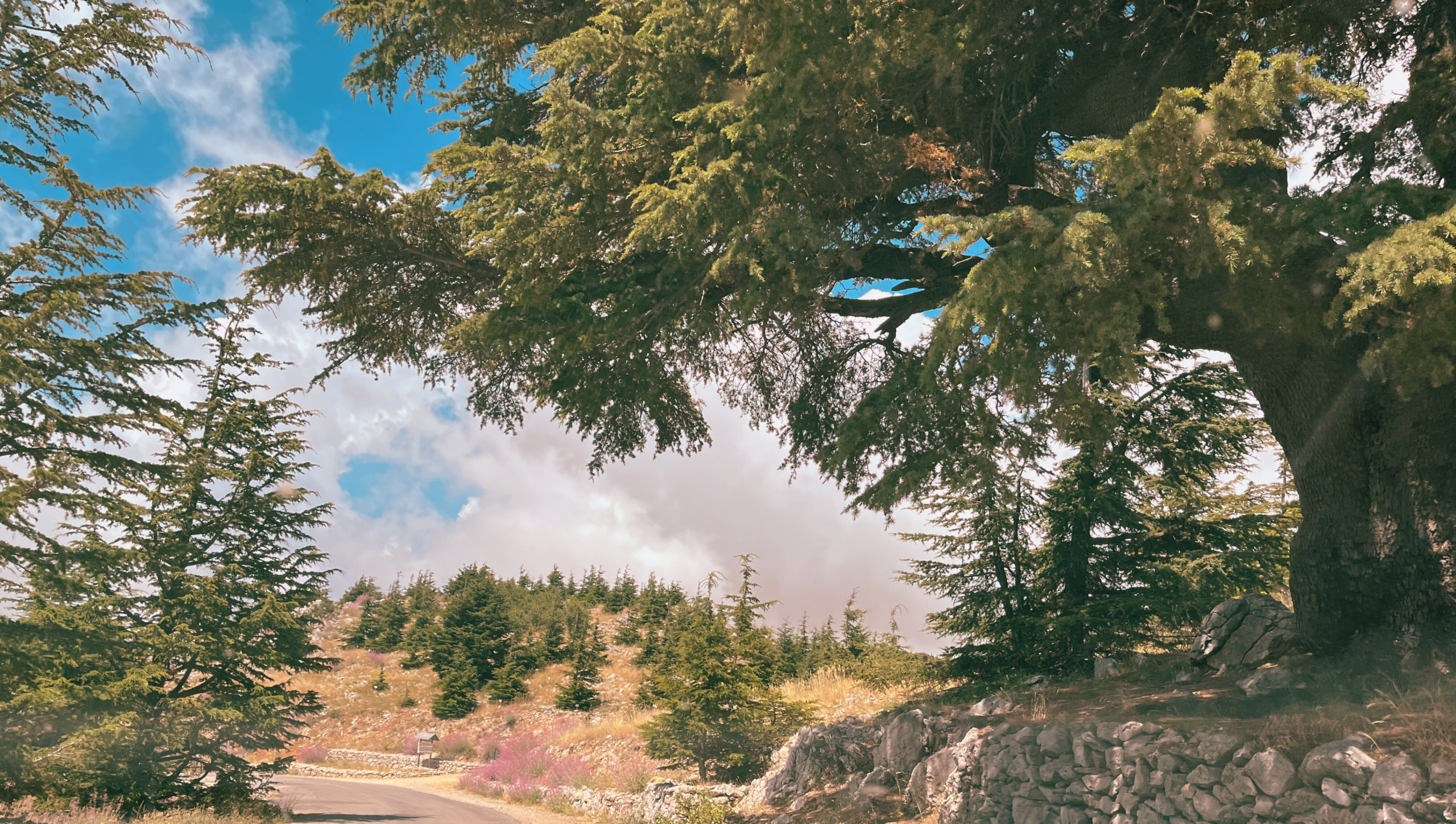
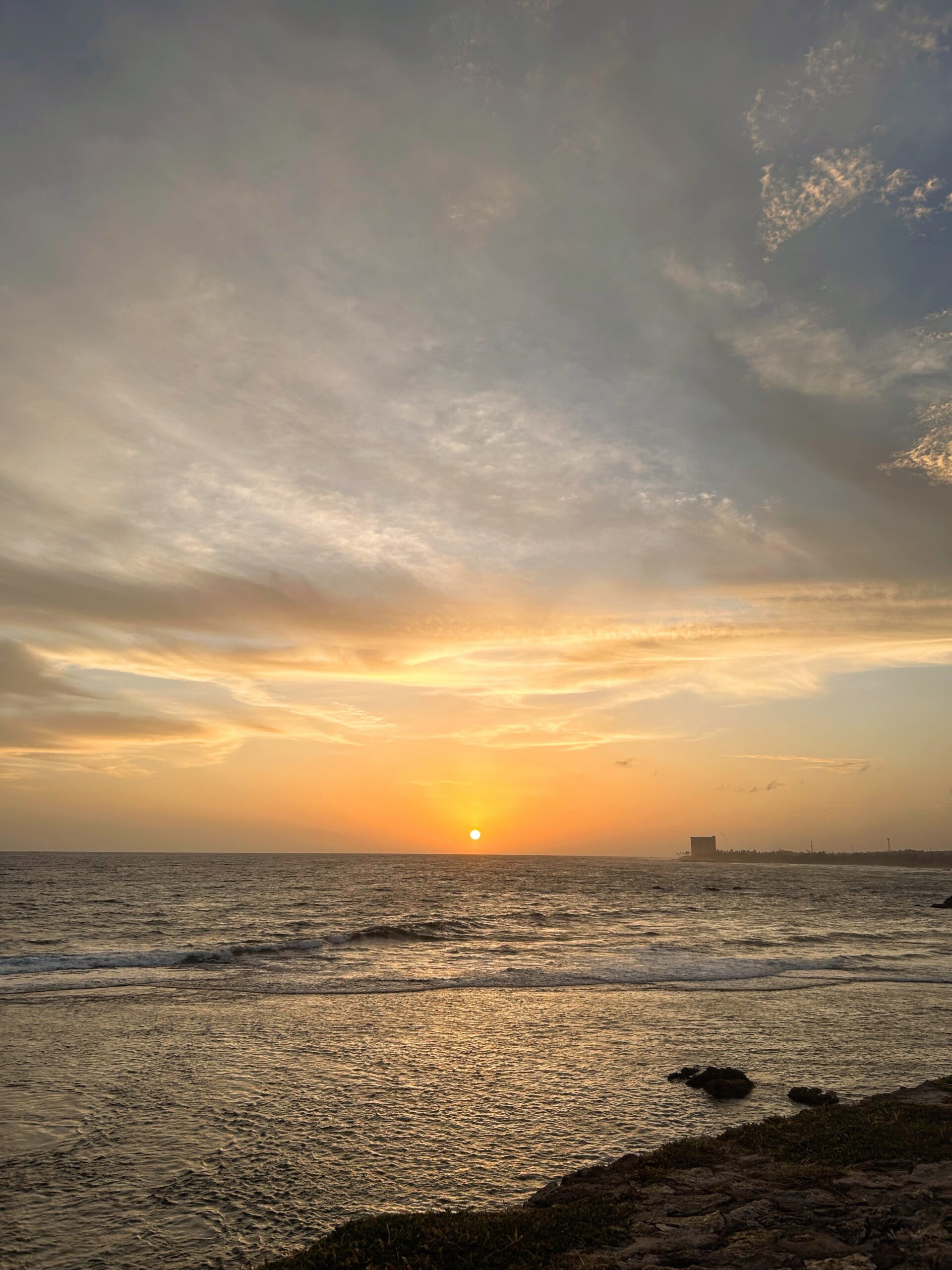
Photo courtesy of the author
Cedar of Lebanon
By Shane Moran
There will be a spring
Bright green needles will cover the shoots
Eyes will unknot into arms
Children will swing
Children will sing around the trunk
When autumn comes Cedar seeds will fall
A new Lebanon will rise
with the planting of silent fruit
We will say “never again”
after one more butchery in the cradle
We will say “never forget” after only after
It is easiest to remember then after
In the summer
maybe the 60 foot wood will make for great shade again
and we will begin the forgetting
But for now we’re headed to coldest winter
and by that I am talking this coming February
and by that I’m reminding you of the thousands dead
and being killed in the Levant
and by that I’m asking if you’ve forgotten
Reims and Geneva
Kigali and Mexico City
Paris and Dayton
and Dili
asking if you’ve forgotten
the promises ever evergreen
to love thy neighbor
Fatimah Asghar is an artist who spans across different genres and themes. They have been featured in various outlets such as TIME, NPR, Teen Vogue and the Forbes 30 Under 30 List. Their first book of poems If They Come For Us explored themes of orphaning, family, the violence of the 1947 Partition of South Asia, the legacy of colonization, borders, shifting identity, and violence. Their debut novel, When We Were Sisters, from One World/ Random House, was longlisted for the National Book Award and won the inaugural Carol Shield’s Prize. Along with Safia Elhillo they co-edited an anthology for Muslim people who are also women, trans, gender non-conforming, and/ or queer, Halal If You Hear Me, which was built around the radical idea that there are as many ways of being Muslim as there are Muslim people in the world. They are the writer and co-creator of the Emmy-nominated Brown Girls, a web series that highlights friendship among women of color that was in a development deal with HBO, and wrote and directed Got Game, a short film that follows a queer South Asian Muslim woman trying to navigate a kink party after being single, and wrote, directed and starred in Retrieval, a lyrical short film that follows the process of a soul retrieval in the aftermath of sexual assault. They are also a writer and co-producer on Ms. Marvel on Disney +, and wrote Episode 5, Time and Again.
Shane Moran is a poet and writer whose work explores memory, place, and devotion. He was shortlisted for the 2025 Vallum Chapbook Award and is a recipient of an American Poets Prize. A graduate of William & Mary, he is currently studying at NYU’s Low-Residency MFA Writers Workshop in Paris. He divides his time between Richmond, New York City, and Paris.