By GRACILIANO RAMOS
Translated by MILA MASSAKI GOMES
Translator’s Note
In Portuguese, “Baleia” means whale. Baleia… how funny it had seemed to me when I first encountered Graciliano Ramos’s work — a dog named “Whale.” It isn’t, of course, a simple or even silly name. In this short story, excerpted from the famous Brazilian novel Vidas Secas (1938), we follow a dog as she lives out her last miserable, heart-wrenching moments. Starved, thirsty, and rabid, Baleia is no more than a limping bag of bones to an outsider’s eyes. It is ironic: a skinny, limping dog, easily killed, named after an enormous, powerful, and beautiful animal. The deserted, scorched, barren land is home to a dog named after a sea creature. The end of her life, though brutal, is an act of mercy out in the arid backlands where she lives. While canid, Baleia is a reflection of her human family — migrants, alone in the backlands, fighting hunger, drought, sickness, and the threat of a gun held by an authority that sees people in the vast, desert lands as no more than sick animals to be killed. As she dies, Baleia dreams of an abundance she lacks, an abundance of care, joy, love, and food. Many people feel empathy for dying dogs — their deaths are hard and painful to read. With “Baleia,” I imagine Graciliano Ramos turning this empathy around to the Brazilian elite living near the coast. His story asks, “What would be of the world if we felt the same empathy we feel for dogs for the people who share this land with us?”
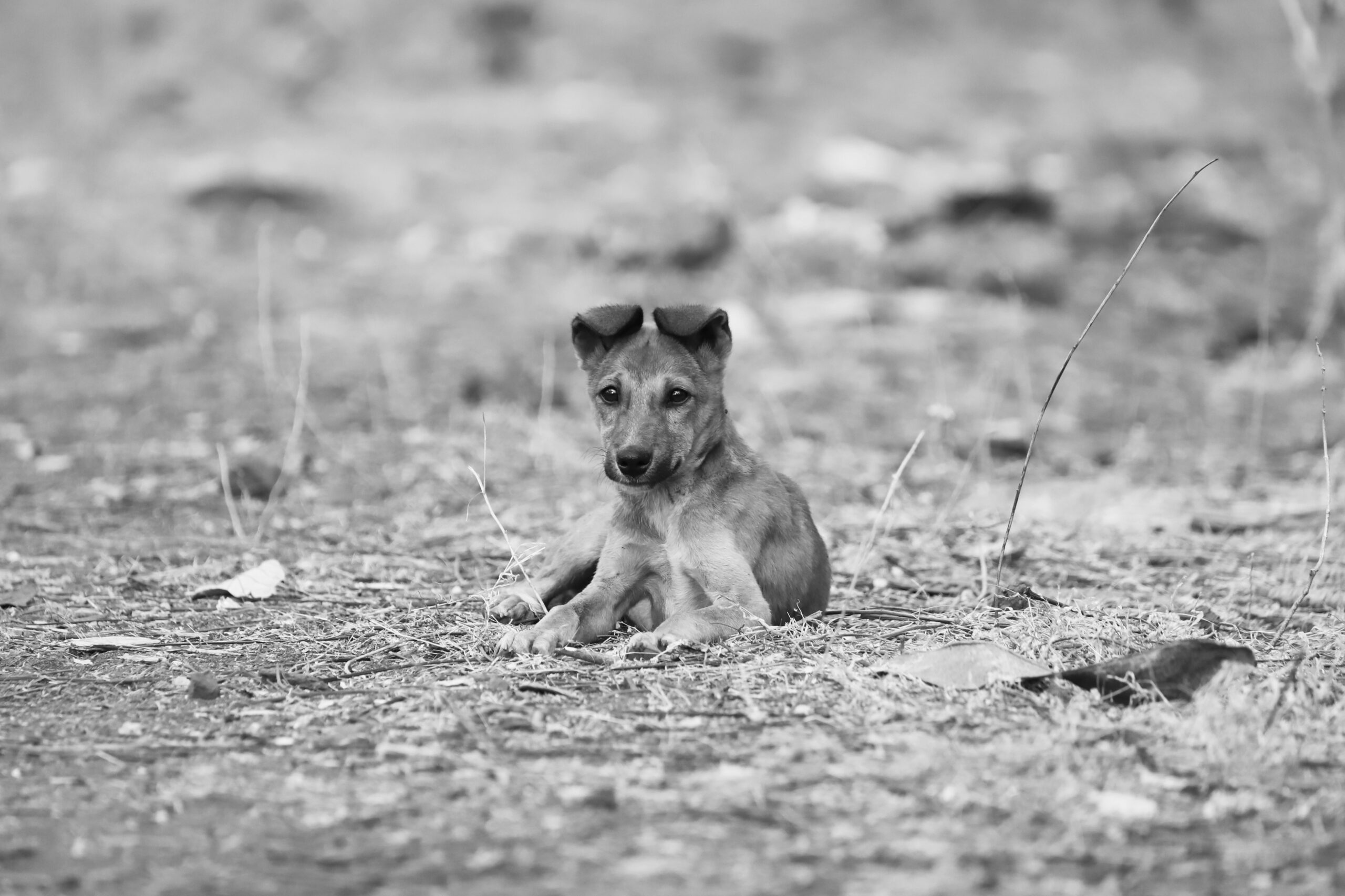
Baleia, the dog, was going to die. She had thinned out, her fur fell in scattered patches, and her ribs loomed over the pinkish skin, where dark spots festered and bled, covered in flies. The sores in her mouth and the swelling of her lips made it hard to eat and drink.
Fabiano suspected the dog was developing hydrophobia and tied a burnt-corn-cob rosary around her neck. But Baleia, moving constantly from bad to worse, rubbed herself against the fence of the animal pens or cut through the brushes, impatient, shaking her limp ears to swat the mosquitoes away, wagging her short, naked tail, thick at its base, swarmed in flies, just like the tail of a rattlesnake.
So Fabiano decided to kill her. He reached for his flintlock pistol, polished it, cleaned it with a rag rod, and made sure it was fully loaded so the dog wouldn’t suffer too much.
Sinhá Vitória locked herself in the small bed chamber, also cooping up her scared boys, who could only guess that misfortune was near and never tired of asking the same question:
“Will they mess with Baleia?”
They’d seen the shot-pouch and the gunpowder. Fabiano’s moods afflicted them, led them to suspect that Baleia was in deep trouble.
She was like a member of the family: the three of them played together, and truthfully, they weren’t much different, the way they all rolled around in the river’s sand and the soft manure that gathered around the farm, threatening to cover up the goat pen.
The boys fiddled with the latch, hoping to open the door for Baleia, but Sinhá Vitória took them to their wooden cot, laid them down, and strained to cover their ears: she trapped the older boy’s head between her thighs and flattened her palms over the other boy’s ears. She grew exasperated as the boys fought against her hold and set about subduing them, grumbling vigorously.
She carried a heavy heart, too, but resigned herself to the situation: naturally, Fabiano’s decision was necessary and fair. Poor Baleia.
She listened to the murmur of gunpowder being poured down the barrel, the dull thudding of the rod against the bushing. She sighed again. Poor little Baleia.
The boys kicked and screamed. And because Sinhá Vitória had relaxed her muscles, the more rugged of the two went about setting himself free from her legs, and she cursed:
“Little devil!”
In the battle she waged to take hold of her rebellious son, she grew very cross. Naughty boy. She landed a sharp rap against his skull, his body still twisted between the red blanket and her pleated skirt.
Little by little, the anger subsided, and Sinhá Vitória, rocking her children, grew sick of the ailing bitch, and spat out tskings and ugly names. Ugly, slobbering thing. It was senseless to let the crazy dog roam freely around the house. But she knew she was being too stern; she found it hard to believe that Baleia had gone crazy, and lamented that her husband hadn’t waited one more day to see if the execution was really necessary.
Just then, Fabiano walked around the porch, clicking castanets between his fingers. Sinhá Vitória shrank her neck and tried reaching her shoulders to her ears. As this wasn’t possible, she raised her head a bit.
Fabiano circled the veranda, looking out at the barauna trees and the fencing. He tried to trick the dog into appearing by enticing her to herd invisible animals:
“Come-by! Come-by!”
Then he went into the living room, crossed the hallway, and crouched by the low kitchen window. He examined the front yard, saw Baleia scratching her skinned flesh as she rubbed against the yellow Jerusalem thorn trees, and raised the pistol up to his face — fixing his aim on the dog. The dog watched her owner with suspicion, tangling herself around the tree trunk, dodging little by little until she found herself on the other side of the tree, crouching and feisty, showing nothing but her dark pupils. Irked by her movements, Fabiano jumped through the window, slipping close to the pen’s wall, and halted at the fence post where he raised the gun one more time. Fabiano paced a few extra steps forward as the animal faced him head-on, showing no good angles. As he reached the Caatinga trees, he fixed his aim and pulled the trigger. The load reached Baleia’s hindquarters, and she barked desperately.
Hearing the gunshot and the barking, Sinhá Vitória clung to her Virgin Mary, and the boys rolled in the mess of sheets, crying loudly. Fabiano withdrew.
And Baleia fled hastily, rounding the swampland, entering the small, left garden, grazing the carnations and the pots of wormwood, fitting herself down a small hole in the fence and gaining ground over the courtyard, running only three-legged. She headed for the porch, but in fear of finding Fabiano there, she withdrew towards the goat pen. She stalled for a few moments, half disoriented, then took off in little jumps, without a destination.
By the ox-cart, her hind leg gave way. She was losing a lot of blood and walked, almost human-like, on her two fore legs, dragging her hind legs with difficulty. She wanted to retreat, to hide under the car, but she was scared of the wheels.
She headed for the juazeiro trees — green over a sea of yellow dirt. Beneath the roots of one tree was a soft, deep hollow. She liked wallowing there: covering herself in dust, avoiding the flies and mosquitoes, and when she rose, leaves and sticks adhering to her wounds, she was a creature like no other. But she fell before she could reach this remote alcove. She tried rising, straightened her head, and stretched out her front legs, but the rest of her body lay on its side. In this twisted position, she moved with great effort, scraping her paws, digging her nails into the ground, clinging to the small pebbles of dirt. Eventually, her efforts subsided, and she quieted down next to the rocks where the boys would toss out dead snakes. A horrible thirst burned her throat. She looked down at her own legs, trying to make them out against the ground, but fog muddled her vision. She began barking and wished to bite Fabiano. She didn’t really yap, though; she howled softly, and her howls only grew softer, turning almost imperceptible, then silent.
As the sun dazzled her, she managed to inch forward and hide in a sliver of shade alongside the stones.
She looked at herself again, distressed. What was happening to her? The fog thickened and closed in.
She could smell the sweet scent of kavis as they made their way down the hills, but it was faint and tinged with particles from other wild things. The hills seemed to have removed themselves further away. She raised her snout, inhaling the air slowly, wanting to climb up the ridges and chase down the kavis, who leaped and ran with so much freedom.
She panted heavily, pretending to bark. She grazed her scorched lips with her tongue but felt no relief. Her sense of smell grew duller and duller: certainly, the guinea pigs had run away.
She forgot about them as her desire to bite Fabiano came over her again — Fabiano, who approached her with glassy eyes, holding a weird object in his hands. She didn’t know that object, but her body trembled, convinced that he had come to put an end to all these unpleasant surprises. She made an effort to dodge and hide her tail between her legs. She closed her heavy lids and judged that her tail was tucked in just enough. She couldn’t bite Fabiano: she had been born next to him, in a small bed-chamber, on top of the wooden cot, and had spent her entire existence in submission to him, yapping and barking to gather the cattle when the herder clapped his palms together.
The unknown object continued to threaten her. She held her breath, covered her teeth, and spied on her enemy from beneath her fallen lids. For a while, she held her stance, then quieted down. Fabiano and his mysterious object had vanished.
She opened her eyes with great effort. A great darkness took over now; the sun had surely left. The goats’ bells jingled in the direction of the river, and the stench of the pigsty wafted through the neighborhood.
Baleia was frightened. Why were those animals roaming about at night? Her duty was to get up and lead them to the watering trough. She flared her nostrils, trying to make out the boys. Their absence disturbed her.
She couldn’t recall Fabiano. There had been a disaster, but she didn’t attribute it to the sense of momentousness she felt right then, nor did she realize she had been discharged from her duties.
A certain anguish took hold of her little heart. She needed to stalk the goats: at that hour, the smell of cougars would be drifting by the riverbanks, prowling through distant thickets. Fortunately, the boys slept in their cots, beneath the small shelf where Sinhá Vitória kept the smoking pipe.
The winter night, frigid and foggy, cornered the small thing. A complete silence filled the air; no signs of life stirred the surroundings. The old rooster didn’t cackle at his perch, nor did Fabiano snore on his wooden bed. These sounds had always been of little interest to Baleia, but when the rooster clapped its wings and Fabiano stirred, familiar scents would reveal their presence to her. Now, it seemed as though the farm had been depopulated.
Baleia breathed hard and fast, her mouth open, her jaw slack, her tongue hanging and numb. She didn’t know what had happened. The bang, the blows she received in that strange space, and the labored trip across the muddy patch at the far end of the courtyard were fading from her mind.
She was probably in the kitchen, between the stones they used as burner grates. Before retreating for the night, Sinhá Vitória would grab coals and ash from there, sweep the scorched ground with a twig-broom, and turn it into the perfect place for a dog to rest. The heat scared off the fleas, and the dirt grew soft. Once rested, Baleia would wake to numerous kavis running and leaping; a swarm of kavis invading the kitchen.
The trembling rose, traveling from Baleia’s stomach to her chest. From her bosom to her back, everything was numbness and forgetting. But the rest of her body shuddered; mandacaru cacti thorns stuck to the flesh, half eaten by her disease.
Baleia rested her small, tired head against the stone. The stone was cold; Sinhá Vitória must’ve let the fire burn out early.
Baleia wanted to sleep. She’d wake up happy. She’d lick and lap at Fabiano’s hands, an enormous Fabiano. The kids would be sprawled near her, rolling around an enormous garden with her, an enormous barn. The world would be filled with kavis, fat, enormous.
Graciliano Ramos (1892-1953) was a modernist writer, politician, and journalist born in the state of Alagoas, Brazil. He is best known for his novel Vidas Secas, in which he writes about the precarious lives of those living in the Brazilian Sertão, the arid backlands of the tropical country.
Mila Massaki Gomes is an Editorial Assistant for The Common. She was born and raised in São Paulo, Brazil, and later moved to Miami, Florida. She is currently in her last year of undergraduate studies at Amherst College, pursuing a degree in English and Legal Studies as a Mellon Mays Undergraduate Fellow. Besides working at The Common, she also divides her attention among other campus publications: as a writer and editor at The Indicator and as the managing editor for Arts & Living at The Student newspaper.