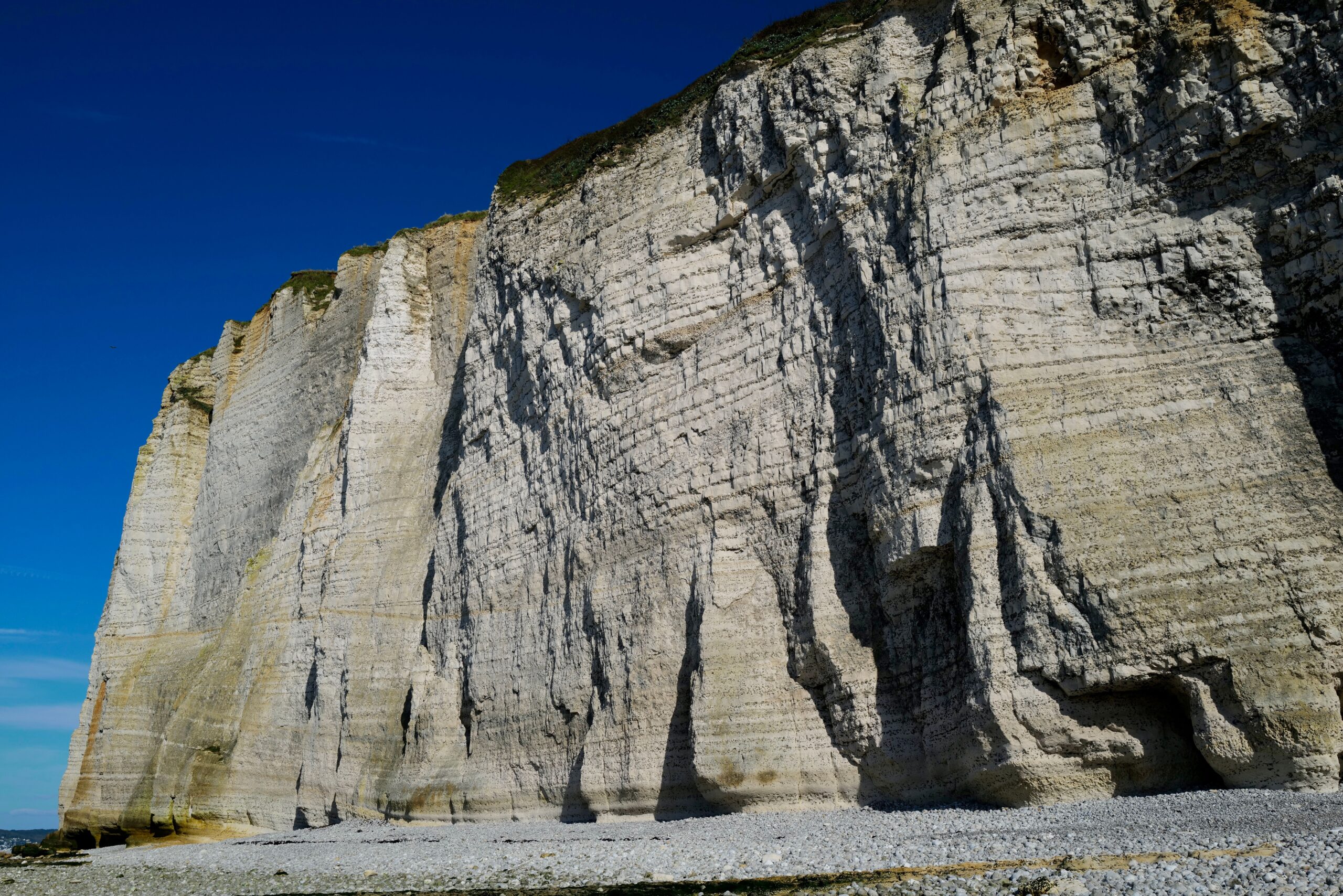
In the middle of the Mediterranean, 50 miles from Sicily, 200 miles from Libya, floats a country whose general character has been defined by centuries of accretion and erasure.
This is the island that played host to this spring’s newest reality dating show, Love Overboard, in which sixteen sculpted young people battle for connection and status on a luxury yacht. The yacht, and the people, mostly float off the coast, though the golden sandstone of capital city Valletta looms behind them. The guiding myth of such shows is that a beautiful locale—sunny, cloistered, preferably bare of culture—is conducive to love.
The reality of Malta is that it’s the loneliest place I’ve been.
On this arid soil—not a river to be found on the entire island—forces as mythic as Ottomans and Knights Hospitaller met to make their case for dominion; Byzantines came, Arabs, the French. The resulting language, born of this crossroads aesthetic, seems to blend the insistence of Italian and the lilt of Arabic, though most islanders also speak English, which feels—like the red telephone boxes dotting the capital—vestigial.
One gets the impression that, if given their druthers, the Maltese wouldn’t mind starting from scratch again. They have already eliminated much of the native flora, refashioning the climate into a quilt of agricultural patches. The resulting landscape, a collaboration between humans and nature, seems to have been scrubbed by a pumice stone.
Malta feels exceptional because it is: among countries in the European Union, it has the highest percentage of land covered by artificial surfaces—24%—almost twice that of the next country on the list. Only five percent of the land is covered by trees.
When I arrived for a week, almost a decade ago, I was thirty-one years old. I came on vacation as a single woman, not sculpted, not looking for love, merely drawn by what I perceived as oddness. The trip was tacked onto a monthlong research visit to Rome, where I studiously practiced Italian and interviewed aquatic scientists and art historians for a new novel. Farther in the rearview mirror was a failed relationship in which I had worked very hard just to feel my own worth. Malta symbolized none of that; when I booked the flight, I’d thought it would ask nothing of me. I might be able to exhale, finally. But things exit the body when you exhale. I left feeling more primeval—in the face of such an altered landscape, so crowded with human handprints—than I could’ve imagined. “The Mediterranean!” friends crooned. “Did you sunbathe every day?” No; I bushwhacked. I reverted to cavewoman. I lost language. I had to start over. If the contestants of Love Overboard abandoned their yacht for the thorny interior, could the island strip them too to their essential, singular selves?
I began innocently enough; the center of Malta’s civilization, Valletta, is laid out in the configuration of a ship’s prow, the northern tip of the city jutting out in a battlement. In the narrow streets, apartments are adorned with multicolored balconies enclosed in glass, each looking like it holds a captain’s quarters. Valletta appears to be eternally launching; this is not a place to rest.
On the stone prow, I bought two pastizzi from a street vendor for forty cents each, flaky dough wrapped around a hot filling of ricotta and peas. I tried washing it down with Kinnie, the national soda, which tastes as if someone has brewed orange rinds in a cauldron with the remnants of a flat tire.
My tourist itinerary was long—I wanted to see the sweeping cliffs of Dingli, the Ħal Saflieni hypogeum, and of course the still-extant movie set from Robert Altman’s Popeye. But October rains pummeled the island during my first few days, and by the time I made it to St. Peter’s Pool on the southeast coast, my bus card having been washed away on a violently flooded street, my shoes were soaked and my enthusiasm for further motion had flagged. I stood on the rocks overlooking the buffeting waves of a slate-gray sea and wondered if this ship of an island might topple. A handful of bathers bobbed in the turbid water, but I was the only human barnacled to the stones above. I felt my own smallness.
On another wet evening, I circled the peninsula surrounding my lodgings to the Forti Sant’ Anġlu, where I scampered on rocks as the tide came in and gaped at parked yachts large enough to grow gardens on board. Here’s where the wealthy and the fame-hungry youth converge, on these floating illusions. On Love Overboard, part of the appeal is being disconnected from land, distinct from—ironically—reality. The less they engaged with Malta, the more they fell in love. The formula is the same for almost any dating show, where this vacuum is rebranded as a way to focus on what matters. But to a solo traveler, all that matters is the raw material of her surroundings, and the self, and how they survive each other. Circling the bastions of Birgu, I stopped to buy a Fanta and pet a cat.
I like to communicate when I travel, but the Maltese language consistently baffled me; many of the words I picked up sounded like bastardized Italian (grazzi for thanks, skużi for excuse me, pjaċir for nice to meet you), but hello is bonġu, which is pronounced pretty close to bonjour, and then there’s the word for fire extinguisher, which is fajerestingwixer. I chose to remain as silent as possible.
By the time the sun returned and the land dried out, I was on a ferry to Gozo, Malta’s largest ancillary island (the other, Comino, is only inhabited by two farmers at the date of writing), and the human constructions began tilting even more medieval. I went from imagining myself a knight to imagining myself a serf.
In Victoria, Gozo’s capital, the Cittadella looms—the site of a Stone Age village, it’s been continuously inhabited since, growing from Bronze Age agricultural silos to Phoenician acropolis to 13th-century castle, which sturdied and refortified itself all the way into the present day. The still-intact portions of the medieval city have been transformed into little shops and museums, from which you can take in the entire circumference of the 26-square-mile island. I wended my way up and down stairs, into hidden courtyards, across ramparts, imagining, sensing, the vibrations of the past. How easy it was, a solo traveler losing her power of speech, to get swept back in time.
I stayed in a small apartment with too many beds and a toilet that didn’t flush, where every surface was washable and the hot water heater needed to be switched on an hour before bathing and switched off promptly afterward. It wasn’t a yacht, but it held me out of the deeps.
When I walked into a supermarket for the first time—the appropriately named Arkadia—I felt like a castaway emerging into overwhelming stimuli: fluorescent lights, escalator, an aisle composed entirely of English tea. What did I, a brute in search of water, know of tea? I bought a popsicle and thought I was discovering taste for the first time.
My clothes were overdue for laundering, but each daybreak, I put on the same shirt and pants, pushed back the hide over my cave, and set forth. Unlike in Rome, my appearance—my very self-image—stopped mattering to me here. I’m not sure if it was the death of that relationship, or perhaps simply rounding into my thirties, that blunted my self-consciousness. I had once felt so particular about how I was perceived, a particularity that made me feel smaller and smaller, atomized. Until Malta.
The first morning, I struck out north from the citadel and headed towards the salt pans, where a decade later, two of the dating contestants, amid the vast nothingness, would massage mud into each other’s major muscle groups. For me, the countryside was empty, populated only with wildflowers and low stone walls surrounding small barren fields. I didn’t see any other humans. Between the mesas, upon which the towns sat, presumably with humans inside, the dry land rustled with lizards, snails, sparrows, swifts, black snakes. I encountered the sea at Wied il-Ghasri, a gorge that comes tunneling in from the water and is only accessible from a narrow set of stairs. A half dozen bathers splashed in the shallows beside a small rocky beach; I kept my distance.
Back up along the coast, a broad sweep of limestone, I came upon the salt pans: a kilometer and a half of squares carved centuries ago to hold shallow basins of sea water, the evaporation of which leaves behind a harvestable residue of salt. Their function today is unchanging. A salt man, his teeth eroded by age and wind, sat on the side of the path with his wares bundled in burlap bags of various sizes; he pointed to the ingredients and recited them: “Shee, shuh, an’ wee.” Sea, sun, and wind. The cheese sandwich I ate on the deserted expanse tasted like the gods had plucked it from their own sandwich tree.
The waves pummeling the coast, leaping up the cliffside, sounded like sacks of flour being dropped from a skyscraper. Over the edge, in the roil, were all the creatures of the littoral zone, who were never, ever, ever still. I felt the most dreadful pity.
Inland, the heat dried the salt spray from my cheeks and the paths through the prickly pear and oleander led, sometimes, nowhere. When I finally returned to Victoria, twelve kilometers later, I crawled into a bar for a lemon popsicle, which I began to devour on the curb outside. The proprietor came out and redirected me to an empty chair, which she politely turned away from the other guests, so no one would have to watch a wild and filthy beet-faced animal consume an ice lolly.
The second day, unshowered and knotty-haired, uninterested in the impression I made on others, I rambled through Gozo’s lushest valley, Wied il-Lunzhiata, accompanied by a feral kitten; around the circumference of a hilltop town; along the cliffs again; past Gozo’s only pond, L-Għadira ta’ Sarraflu, where I paused to pack some nuts into my cheeks; through the posted NO ENTRY entrance to a limestone quarry; into a vast rocky wilderness, where one might film a parable of Moses; and finally out onto Dwejra Bay, a glorious collection of rock formations and tidal pools being exhilaratingly pummeled by waves that sent spray up 100, 150 feet. Watching the ocean encounter the land there was like watching the birth of the universe.
Having not held a conversation in nearly a week, I emerged into the parking lot of Gozo’s largest tourist attraction, the Azure Window, which had recently collapsed into the sea; judging by the number of foreign nationals crowded on the cliff’s edge, you wouldn’t guess anything was missing. I felt stunned, stunted. I wasn’t, like these color-coordinated figures with their crisp sun hats, a tourist; I was a geographical feature. I was astounded that they existed.
As I made my way through the tidal pools, I came upon a young woman trembling to cross one of the many gaps in the rock; it was a narrow space, not much wider than a single step, but you could see way far down below, and she had become paralyzed. My hand reached out—not from conscious charity but instinct—and even as I saw it extend to her, I thought, “She won’t want it; we’re strangers.” But she grabbed hold of it, tight. On the other side, she thanked me as if it were her life I’d saved, and I felt that uncontrollable warm swelling of humanity in my throat. What did it mean to be human, if one was alone?
At the end of the day, sun-battered, home in Victoria after however many kilometers, I slunk into Arkadia for an ice cream cone. I shared an elevator with a weary British couple—the woman was muttering, “Cup of tea, cup of tea,” and then looked at me and said, “I’m just gasping for a cup of tea! We’ve been out and about for five hours!”
On my final day, I forged out to the northeast, down the Victorian hill and up the Xaghran hill, to the Neolithic Ġgantija complex, where I stuck my head under a sink faucet in the public restroom and guzzled, wondering how Stone Age people—a petite folk, not more than 150 centimeters tall—not only climbed from hilltop to hilltop here, but pushed human-sized stones from lowland quarries up to temple sites. My body was weight enough. The temple complex is almost a thousand years older than Stonehenge; unlike the British site, humbling in its opacity, Ġgantija still feels somewhat functional: there are clear altars and niches and holes where doorposts hung, even some plaster with its red ochre still hanging on.
From Ġgantija, I stepped across five thousand years to Ta’ Kola, the island’s oldest windmill, whose last millkeeper died in 1987. His living quarters were also still functional: a little stone dining room, a little stone kitchen, two little stone bedrooms with chamberpots and a loom and a lace log with its bobbins, and little windows looking out onto the distant bays. A lovely life. Unless you lived here in the 1940s, when the Luftwaffe flew 3,000 raids over Malta, making it one of the most heavily bombed places in the war. A lonely life.
This country was showing me again and again how humans came together and fell apart, built and erased, coupled for television and consciously struck out alone.
My legs carried me down from Xaghra past fields and watercourses and a painted frog—Malta’s only amphibian!—to Ramla Bay, one of the few sandy beaches on the island. Having no sense of time, I couldn’t have told you it was Sunday, and that the beach would be populated: families and volleyballers and picnickers and naked ladies. Babies laughing in the waves, old Mediterranean grandpas playing soccer with their grandkids, British tourists arm in arm.
From the western edge of the beach, I clambered into the hills in search of Calypso’s Cave, where the nymph lured and kept Odysseus for seven years; I never found the opening, but from that vantage I could spy on the eastern edge of the beach a massive cave atop a high cliff, and inside were the tiny forms of people moving. I had thought my legs couldn’t move any more—I’d already been weighing the cost of a bus ride home—but a cave in a cliff? A cave in a cliff I could do.
I hopped up the rocks until I found a tiny path and soon the tell-tale red blazes of the coastal path, a path which would not be legal in America; I had limestone under my fingernails from clinging to the cliffside. But I pulled myself up to the cave lip and over and the vista opened into vastness—I felt expansive and powerful and connected and primeval. The handful of other humans with me were strangers, but they too were dumb with awe, or exhaustion. I no longer felt the awkward separation of self and tourist; our silence felt happy and earned. We adventurers stared out over the red sand beach and over to the far cliffs and up the valley and all the way out across the unknowable sea. I imagined the Neolithic builders traveling here to read their fortunes in the sunset.
Afterward, jelly-legged, I waited at the bus stop for an hour in the late afternoon sun, playing with pieces of grass, watching the stray dogs amble up and down the street. I don’t know how the bus swallowed so many people when it finally arrived, but we rode low all the way home, the front of the bus occasionally scraping in a dip; we were a clown car.
I stopped at Arkadia for juice, and shared the elevator this time with an old Gozitan woman who asked if I was here on holiday. She was pleased to hear how much I loved the island. Everything about me pointed to some cataclysm of faith—my knotted hair, sunburnt cheeks, reek of sweat, incapacity with language—but she smiled and nodded. Yes, it was a love she recognized. Not the kind that sprouts in thongs on yachts, offshore. The kind a person, alone, finds for herself.
Katy Simpson Smith is the author of five novels, most recently The Maltese Version. Her writing has appeared in The Washington Post, The Paris Review, the Los Angeles Review of Books, the Oxford American, and Granta, among other publications. She was a 2025–2026 fellow at the Harvard Radcliffe Institute and teaches in the Bennington Writing Seminars. Born and raised in Jackson, Mississippi, she lives in New Orleans.