By TRIIN PAJA
Review by ERICA GOSS
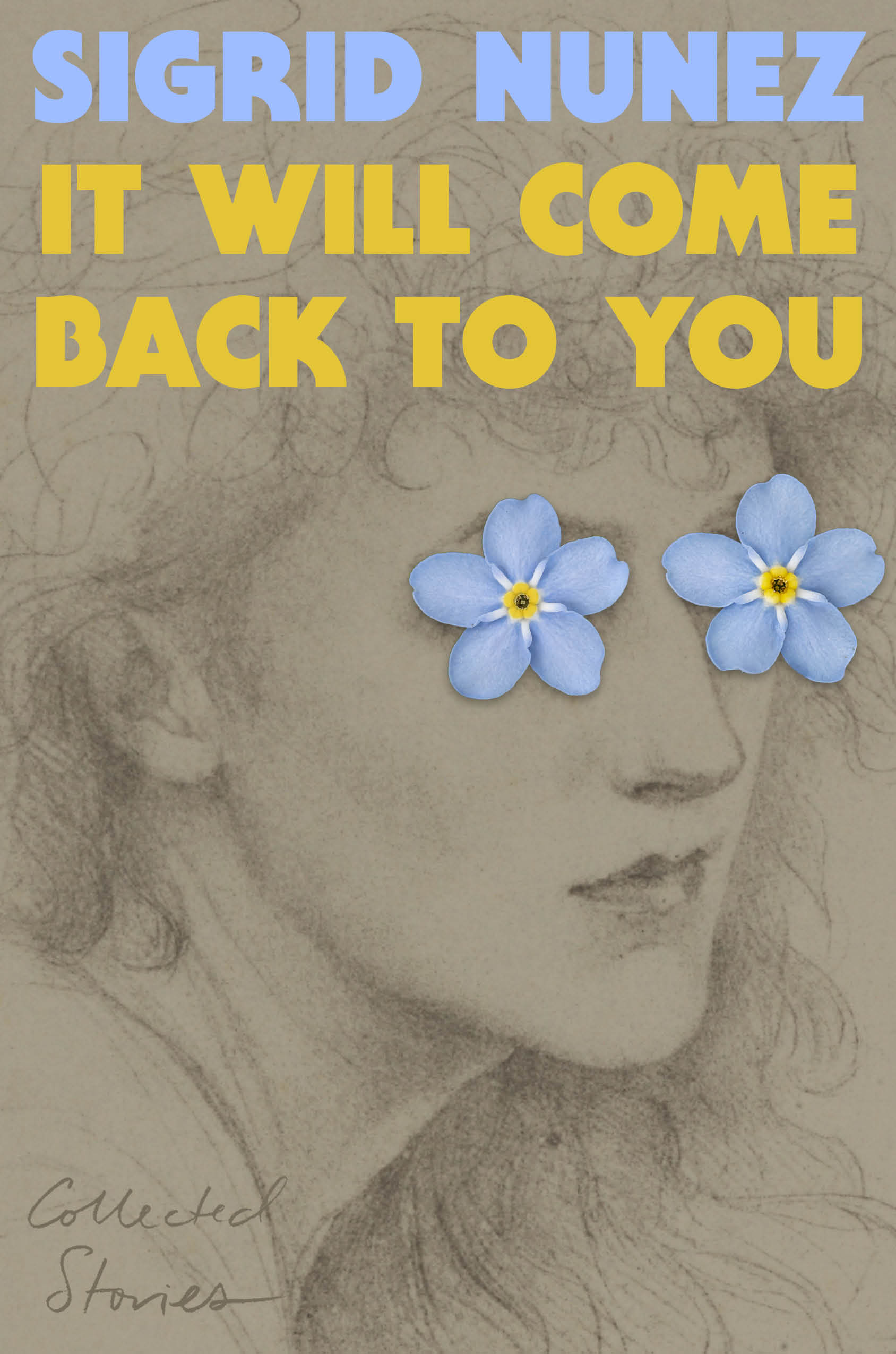
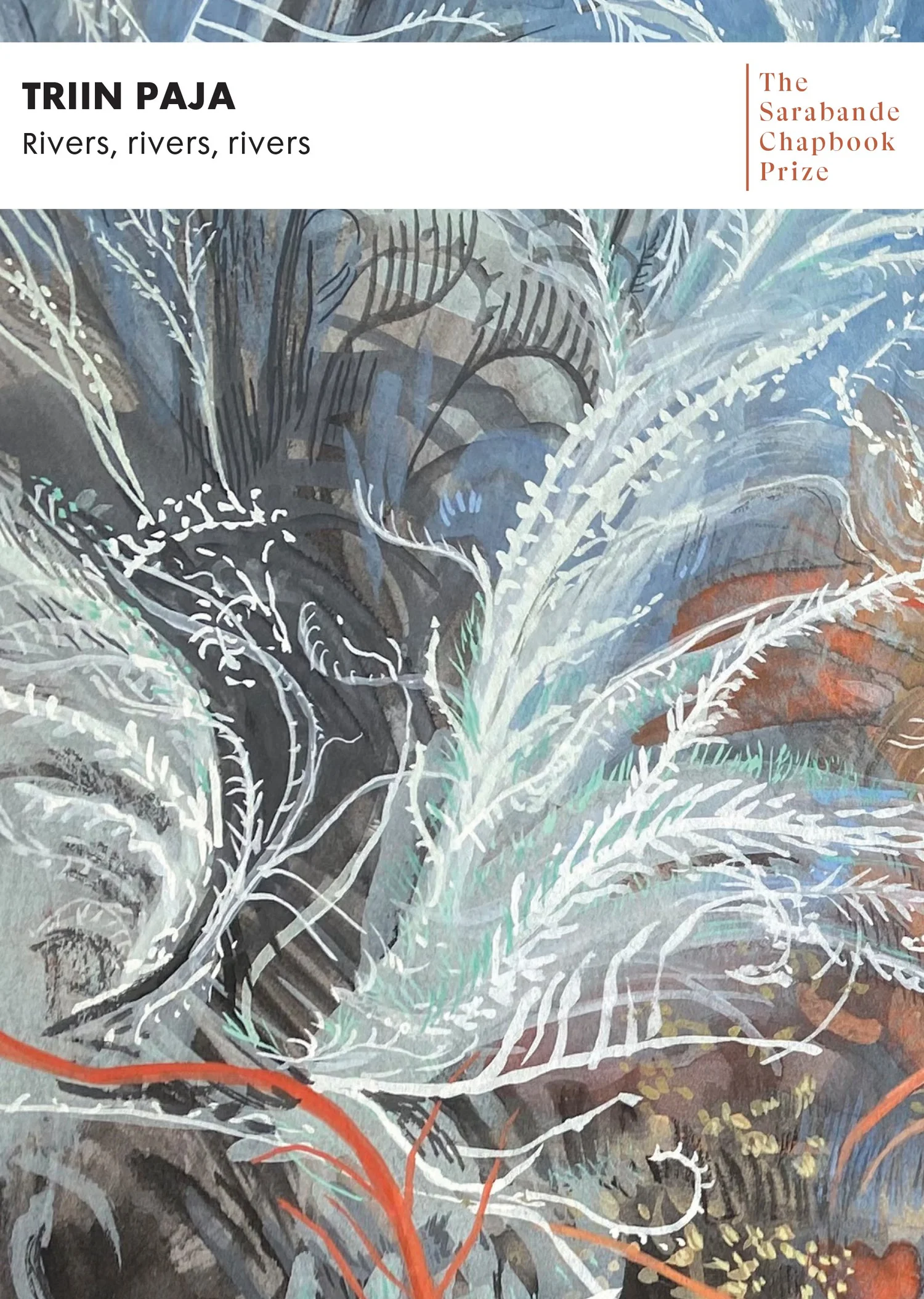
From the flowers placed over the eyes of the dead, to the soil those flowers grew in, the poems in Triin Paja’s Rivers, rivers, rivers reverberate with magic symbolism and dark forces of nature. Throughout this chapbook, the constant motion of water amplifies an atmosphere of barely suppressed emotions. Both dangerous and benign, an erratic energy infuses this small, powerful collection, Paja’s first in English after four collections in Estonian.
“Entering,” the book’s opening poem, establishes itself as both guide and muse:
I remember and forget your face.
it may be what Enheduanna,
Sumerian moon princess,
wrote:
my beautiful face is dust.
Phrases from this poem, such as “most have war stories,” “soil / for harvest / and burial,” and “the seashell of my ear,” foreshadow the book’s themes of beauty and decay. Innocents confront the world’s perplexing ways, as these lines from “Seven Flowers” illustrate:
there is a small, luminous stone within the body. When you
die, only the stone remains, though we will never find it.
In a state of awareness heightened by the recent death of a loved one, the speaker notices how nature mimics grief: “petals fall from a damson tree over larger things,” the petals suggesting tears, the “larger things” a life’s accumulation of losses. “The living swallow light and the grieving swallow water,” Paja writes, invoking the sensation of drowning we associate with overwhelming emotional pain. Drawing a line between the living and the grieving, she acknowledges heartache’s altered state.
“Seven Flowers” leads the reader through a landscape alive with connotations. “A sound is calcified light,” “the groundwater of insomnia,” and “language only those with their tongues cut out / may utter” feel both intentional and accidental, the products of amplified emotion and intense scrutiny. The poem’s division into seven sections reflects the structure and motifs of ancient stories, where numbers have an outsized significance: in the Bible, for example, after creating the world, God rested on the seventh day; in Buddhism, the number seven is associated with spiritual ascension.
A collection of random objects appears throughout the poem: aluminum cans, a ship, shoes, human bodies, and hair. Interpreting their significance, a task for both the speaker and the reader, creates openings into deeper levels of meaning, family secrets, and historical events. From “Seven Flowers,” we learn, “once, a man / found an entire Gallic ship in the Seine.” This flotsam, evidence of human incursion on the landscape, reminds us that nothing is ever truly lost; as Paja writes, “something of you can still be collected.”
A fluid band of mothers, daughters, and sisters inhabits the terrain of Rivers, rivers, rivers. In “Leena,” Paja portrays an old woman- “in a recording from 1973, you are ninety-one” – reflecting on her harsh existence: “you do not speak / of Siberia, of psikhushkas” (a Russian term for mental hospitals) “you can water // the names of the dead.” The poem’s tension comes from Leena’s miraculous survival (“no earth, no earth for you”) and the consequences of decades of bloodshed:
…I write because
it is less violent than speaking
but one is still burnt.
“A Hundred Fields” tells the story of the speaker’s grandparents. “In a barley field, a boy / flees the Holodomor” (the Holodomor, a Stalinist genocide against the Ukrainian people, occurred between 1932-33). The boy meets the speaker’s grandmother when both were children: “they lived a life of common cruelty.” Unimaginable hardships ensue; a daughter vanishes into a blizzard while “longing becomes / the language of the mother.” And, in “Urn of Nettles,” we return to Leena, who “gazed at the world // through the stained porthole / of schizophrenia.”
The poems of this collection inhabit a place as real as it is imagined, a country of familial ties and whiplash juxtapositions, where people trapped in ancient villages eke out uncertain existences. The past is always present, recurring in memories, dreams, and the constant presence of bodies of water. Paja sustains the poems’ momentum through varying patterns and textures, including couplets, numbered lines and paragraphs, and a lack of capitalization. All contribute to a sense of motion throughout the book, as embodied in its last poem, “Shelter:”
a fox jumps from the twig-sinewed forest.
winter gnaws on the ruins of stags, bone rags,
hoarse birdsong.
“Shelter” paints a picture of psychic damage, as the speaker’s father moves in and out of painful memories (“even saints were fed to bears”). The speaker has one choice: to sink into her father’s pain or to remove herself and save her life—“this is my father’s field. / my life is the distance from that field. / I love only rivers, rivers, rivers.”
Triin Paja weaves history, survival, and the natural world into this book, balancing one family’s inherited trauma with the indomitable force of the human spirit. Poem after poem, Paja uncovers moments of beauty amid harsh reality; as she writes in “About the Deer,” “birds deny death with singing.”
Erica Goss is the author of Landscape with Womb and Paradox (Broadstone Books 2026) and Night Court. She has received numerous Pushcart Prize and Best of the Net nominations, and a 2023 Best American Essay Notable. Publications include The Colorado Review, The Georgia Review, Creative Nonfiction, and The Indianapolis Review. Erica served as Poet Laureate of Los Gatos, California, from 2013-2016. She lives in Eugene, Oregon, where she teaches, writes, and edits the newsletter A Writer’s Homestead.