All posts tagged: reviews

What We’re Reading: May 2026

Curated by KEI LIM

With our spring issue hot off the press, check out these recommendations from three of the issue’s contributors: LIZ DEWOLF, ANDREW STEINER, and MARIA TERRONE.


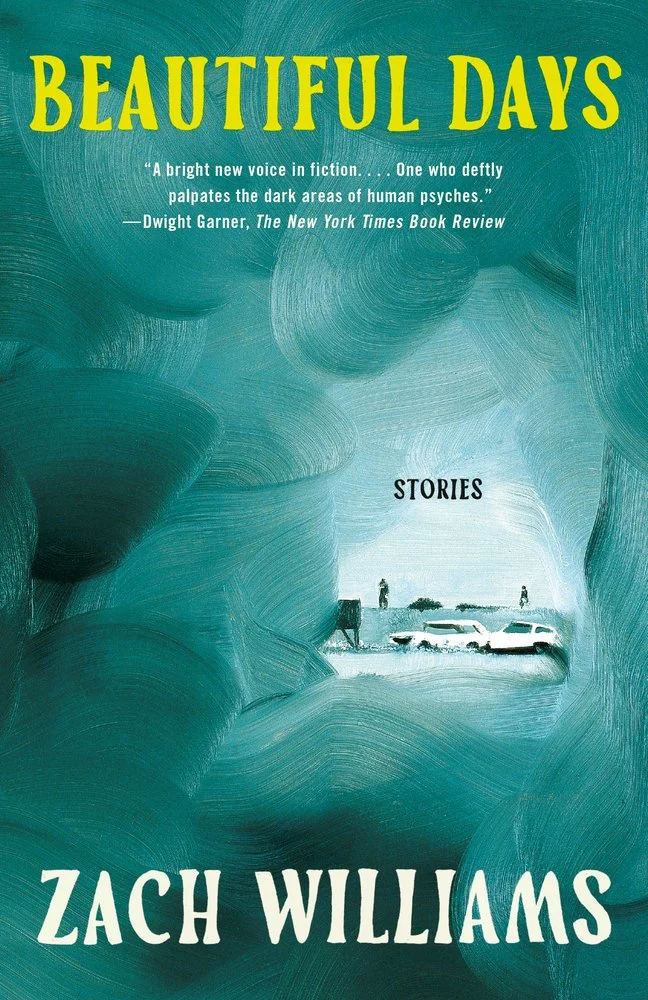
Book cover of Beautiful Days by Zach Williams

Zach Williams’ Beautiful Days, recommended by Issue 31 contributor Liz DeWolf

I first came across Zach Williams’ work when I read his 2022 story “Wood Sorrel House” in The New Yorker. The story, in which a family arrives at a rental cabin and then forgets everything about their lives before, including how they got there, deeply unsettled me. Something about Williams’ careful, straightforward prose makes each disturbing revelation—The baby doesn’t age while the parents do! Food mysteriously appears in the freezer!—all the more destabilizing.

I recently read Williams’ debut collection Beautiful Days, which came out in 2024 and includes “Wood Sorrel House” as well as nine other, equally unnerving stories. In “Trial Run,” an office worker gets sucked into an overly intimate dynamic a with a clingy colleague. The protagonist of the story “Neighbors” goes to check on the elderly woman next door and finds himself in a confusing standoff with a masked intruder. In “Mousetraps,” one of my favorites from the collection, a father goes to the hardware store looking for a humane way to get rid of mice only to be goaded into an existential crisis by the men who run the business. What makes these stories so compelling, beyond their dreamy logic and ability to reflect so many fears of contemporary life, is that they each contain some moment of connection, however unwelcome, that acts as a sort of escape hatch from the mundane. On the other side of each unpleasant encounter is a hint of excitement or possibility: the dull neighborhood is more lively than it seems, the identity crisis leads to a new start, the paranoid brother really does perceive something others can’t. There’s an unlikely tenderness—maybe even hopefulness, however slight—in this collection that echoes its title, drawn from the surprisingly optimistic final line of “Wood Sorrel House”: “There will be beautiful days.” The stories are as thrilling as they are terrifying, and this dissonance produces a haunting ambiguity that stayed with me long after I finished reading.


Book Cover of The Hill of Dreams


Arthur Machen’s The Hill of Dreams, recommended by Issue 31 contributor Andrew Steiner

Lucian Taylor, a parson’s son, grows up in the Welsh village of Caermaen. His childhood is ordinary — not abundant, but loving, secure. And then when he’s fifteen, everything changes.

Home for the summer holidays, he gets the itch to walk. The wind is up, the air charged with a violent heat. A strange light in the sky frames the ruins of the old Roman fort on the hill above the village. On hands and knees, he mounts the hill, pushes through the bracken, and there in the secret center of the ruin … something happens.

Divine showing? Demonic encounter? Guilty autoerotic experiment?

Whatever it is, Lucian climbs down changed, unable to share what has happened to him yet persuaded the dull scrim has been torn off the world and he has glimpsed a sublime and terrible reality.

He is determined to capture that reality in writing. The quest to do so will consume his life.

Arthur Machen began writing The Hill of Dreams in 1895, the dead center of the decade that produced Dracula, Dorian Gray, The Time Machine, and other seminal works of fantasy and horror. Unlike its contemporaries — and much of Machen’s own work, including The Great God PanThe Hill is not a work of fantasy. It’s a realist novel about the kind of person driven to write a work of fantasy.

The act of writing for Lucian is not a matter of discipline. Nor is it something sanctified like “a vocation.” It’s closer to damnation, a claim on his soul.

As the plot unfolds along the inevitable lines of tragedy, you watch him feed more and more of his life into the furnace of writing. Like a dark god, it demands ever dearer sacrifices — his health, his schooling, his relationship with his father, his prospects for any viable career whatsoever — until he has nothing left to give it but the last thing.

Machen’s vision is certainly extreme. Yet if you’ve ever found yourself years into a project that seems no closer to completion, his depiction of the ground-level experience of writing will be entirely legible:

“He had put away the old wild hopes of the masterpiece conceived and executed in a fury of inspiration, wrought out in one white heat of creative joy; it was enough if by dint of long perseverance and singleness of desire he could at last, in pain and agony and despair, after failure and disappointment and effort constantly renewed, fashion something of which he need not be ashamed.”

To date it’s the best book I’ve read about being a young, obsessive would-be writer drunk on language and in thrall to fantasy. It brought back all the dear, dark feelings Tolkien and Lewis, Lilith and A Voyage to Arcturus first quickened in me in adolescence. It showed me what it would have been like to tip over the edge and vanish entirely into dreams.

How did I not come across it then? Could I have survived it if I had?


Book cover of Delirium
 

Laura Restrepo’s Delirium, recommended by Issue 31 Maria Terrone

If I had never been the target of a scam literary impersonation, I would have never discovered the fascinating Colombian-born novelist Laura Restrepo.

For about five days, I exchanged long, friendly emails daily with “Laura,” whose initial subject line was “Connecting Over Writing, Inspiration, and Shared Passions.” I’d never heard of this author—my only knowledge of Latin American writing was limited to the magical realism of Gabriel García Márquez. Through research, I learned that Restrepo was originally a political journalist covering drug cartels and fled to Mexico following death threats. She now lives in Spain.

During our literary exchanges—before I learned through my own investigation that “Laura” was an AI-generated bot—I asked her which novel would best acquaint me with her work. Delirium was the immediate reply. It turned out to be, by far, one of the strangest and most mesmerizing books I’ve every read, winner of the prestigious Afaguara Novel Prize, which guaranteed its publication across Spain and Latin America.

Delirium opens in media res. Augustina, a beautiful woman from a wealthy Columbian family, is discovered alone, amnesiac, and incoherent in a 5-star Bogotá hotel after her husband returns from a short trip. How did she get there? What caused her madness? Why does this deeply disturbed young woman who always called herself a seer now rage against her husband, Aguilar? “The woman I love is lost inside her head and for fourteen days now I’ve been searching for her,” he laments early in his quest.

Mystery, love story, political exposé, Delirium delves deeply on both a psychological and journalistic level. The tale takes place against Columbia’s backdrop of corruption and political chaos in the 1980s, when the military, guerillas and drug dealers warred with one another. In a sense, Augustina’s breakdown mirrors that bedlam. Her ritualistic house-cleaning and demand that Aguilar confine himself to an increasingly smaller space against a wall in their apartment seems to be a desperate attempt to exert control over her own demons and, symbolically, over her beloved nation’s parallel breakdown.

The story is told from many characters’ voices and perspectives, shifting between past and present and back again. Writing clearly and vividly, Restrepo avoids confusing the reader despite the complexity of the narrative and her nonlinear approach. Gradually the roots of Augustina’s derangement are revealed, especially via the tragic, sometimes harrowing flashbacks to her dysfunctional family. At times I felt I was immersed in a gripping detective novel.

As I watched Aguilar struggle to investigate and understand his wife’s new persona, I appreciated the irony of my own search to discover the identity of the impersonator who approached me so warmly as Restrepo. Of course, the truth disappointed, but the unexpected gift resulting from my bizarre experience was my first exposure to Restrepo’s brilliant fiction. One novel down, eleven waiting.

What We’re Reading: May 2026
Read more...

Review of Pastorals by Rachel Hadas

By RACHEL HADAS

Reviewed by REEVE LINDBERGH

Book cover of Pastorals by Rachel Hadas

Rachel Hadas is a close friend, someone I have known since the early 1970’s, and a summer neighbor in rural Vermont. She lives in a house that has belonged to her family, one generation following the other for many decades. Her new book, Pastorals, is an exquisitely written collection of brief reflections and meditations essentially but not exclusively centered on the house.

“Can one feel nostalgic for the present, especially when it’s layered so palpably over the past?” The writer asks herself this at the beginning of the book. Within the present as she lives and writes are the unseen presences of those who have visited or inhabited the same dwelling in the same place. They are not exactly ghosts but instead “the presence of an absence,” something Hadas feels at odd moments indoors or out: while going up the stairs; in the midst of picking blackberries on the hill; on the way down the dirt road to the mailbox. She likens these “seasonal phantoms” in her summer house to the ghosts in Walter De La Mere’s poem “The Listeners,” a poem that had puzzled but did not frighten her when she read it as a child. Readers of Pastorals will learn quickly that Hadas’s memory is filled with the poetry and prose of every age and nation along with her own beloved family ghosts.

Review of Pastorals by Rachel Hadas
Read more...

What We’re Reading: August 2025

Curated by KEI LIM

The summer months for The Common’s staff have been filled with wandering, around Western Massachusetts and beyond. Throughout this wandering, we’ve carried books which roam themselves, where relationships parallel the movements of the landscapes they traverse. Editorial Assistants BEN TAMBURRI, LUCHIK BELAU- LORBERG, and CLARA CHIU, and Applefield Fellow AIDAN COOPER recommend three novels and a poetry collection which brought them solace during these long, sweltry days.

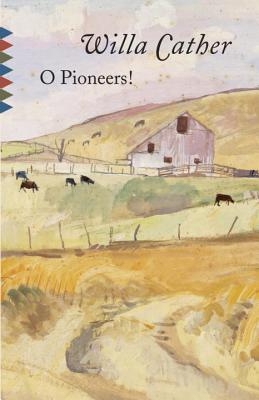
Cover of Willa Cather's O Pioneers!

Willa Cather’s O Pioneers!, recommended by David Applefield ’78 Fellow Aidan Cooper 

Anyone who knows me knows I can’t stand audiobooks. There’s something about the pace or the performances that irks me, or maybe it’s something about being slightly insoluble in the story, while I drive, or fold laundry, or task my hands with whatever it is that isn’t turning a page. For me, reading has always been about following and, more importantly, re-following where the words before me lead; I flip here and there, underline and annotate, and generally meander through and indulge in the language’s turns. But because this summer has been one interwoven with travel, tugged along by the two yellow lines in our potholed New England roads, I decided (betraying my brand) to put O Pioneers! by Willa Cather through my car radio.

What We’re Reading: August 2025
Read more...

What We’re Reading: July 2025

Curated by KEI LIM

This July, ELIZABETH METZGER, NINA SEMCZUK, and SEÁN CARLSON bring you ruminations on what it feels like to return—to home, to memory, to oneself. As they make sense of their own lives through a poetry collection, novel, and essay collection, their recommendations invite us to contemplate what it means to exist within both change and stillness, and how time itself can wander and fragment.

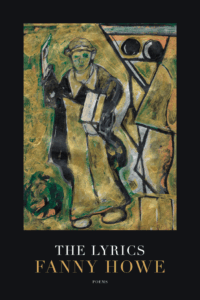
Cover of The Lyrics by Fanny Howe

Fanny Howe’s The Lyrics, recommended by Issue 24 Contributor Elizabeth Metzger

It’s early July, and I’m in the middle of moving back to the East Coast. Right now, a few days after the death of the poet Fanny Howe, I am reading her collection The Lyrics, on a screened porch in the late afternoon in the Berkshires, watching geese gather on a tiny red dock. I can hear the voices of parents across the pond teaching their children to fish, to let the fish go. I’m appreciating the element of air as I remember it from childhood, a sort of thickening all around me that feels wearable, welcoming, at times oppressive, a return to an old life from the other side.

What We’re Reading: July 2025
Read more...

What We’re Reading: April 2025

Curated by SAM SPRATFORD

The long New England winter is finally thawing, and here at The Common, we’re gearing up to launch our newest print issue! Issue 29 is full of poetry and prose by both familiar and new TC contributors, and a colorful, multimedia portfolio from Amman, Jordan. To tide you over, Issue 29 contributors DAVID LEHMAN and NATHANIEL PERRY share some of their recent inspirations, and ABBIE KIEFER recommends a poetry collection full of the spirit of spring.


portrait of henry james

Henry James’ short works; recommended by Issue 29 contributor David Lehman

I’ve been reading or rereading Henry James’s stories about writers and artists: “The Real Thing,” “The Lesson the Master,” “The Death of the Lion,” “The Tree of Knowledge,” “The Figure in the Carpet,” “The Aspern Papers,” et al. His sentences are labyrinthine, and you soon realize how little happens in a story; the ratio of verbiage to action is as high as the price-earnings ratio of a high-flying semiconductor firm. Yet we keep reading, not only for the syntactical journey but for the author’s subtle understanding of the artist’s psyche—and the thousand natural and artificial shocks that flesh and brain are heir to.

What We’re Reading: April 2025
Read more...

What We’re Reading: March 2025

Curated by SAM SPRATFORD

In this special edition of the column, JAY BOSS RUBIN shares a mini review of ABDULRAZAK GURNAH’s Theft, freshly released on Tuesday, March 18. JEANNE BONNER follows him with a novel that bears witness to the modern world from a very different angle, at the close of Nazi rule in France. 


cover of theft

Abdulrazak Gurnah’s Theft; recommended by TC Online Contributor Jay Boss Rubin

The new novel by Abdulrazak Gurnah, Theft, is his first since he received the phone call informing him he’d been awarded the 2021 Nobel Prize in Literature. Its titular theft is open to interpretation. The plot turns decisively on an accusation of stealing. Many references to historical thievery are woven into the narrative. But the book’s most unforgettable thefts may be the central characters’ encroachments—those committed and those just contemplated—on one another’s dignity.  

What We’re Reading: March 2025
Read more...

What We’re Reading: February 2025

Curated by SAM SPRATFORD

This month, contributors KATHARINE HALLS, THEA MATTHEWS, and OLGA ZILBERBOURG take your reading lists to Prague, Damascus, and New York City with four poetry and fiction recommendations that are wholly absorbing, in their stories and settings alike.

Bohumil Hrabal’s I Served the King of England, trans. Paul Wilson; recommended by TC Online Contributor Olga Zilberbourg Cover of I Served the King of England

What We’re Reading: February 2025
Read more...

A Tyranny of Dreams: Review of Proper Imposters

Reviewed by SAM SPRATFORD

Cover of Proper Imposters.
 
In Proper Imposters, Panhandler Books compiles four novellas from authors who are attuned to the mystical nature of doubles, a timeless form, and who hold them up to the contradictions of our moment, the paradoxes and counterparts on which our societies rest. MAURICIO MONTIEL FIGUEIRAS, JEFF PARKER, CHAYA BHUVANESWAR, AND JASON OCKERT each spin gripping tales of doppelgangers, pairs whose likeness in body or spirit fades in and out of focus. These are stories of concealment, intentional or not, and revelations of often melodramatic proportions. When the authors align these pieces just right, it resembles the dazzling effect of a hall of mirrors. Each author manages, at various times, to pierce through narrative’s typical strictures into the world of dreams, where fantastical images diagnose with overwhelming clarity the ills of our time.
A Tyranny of Dreams: Review of Proper Imposters
Read more...