Kei Lim

Prelude

By KWAME OPOKU-DUKU

Was it all simply adornment,
watching the rain fall from the sun, 
or the mourning dove that carried
the wallet-sized photo in its beak?
Looking back, it was true—
I had stopped seeing the beauty in it all,
living from moment to moment, 
looking to be granted some small sense 
of pleasure, as if by respite or charity.

Prelude
Read more...

Tramsa, Tromsa, Tramso

By MÒNICA BATET
Translated by MARIALENA CARR and JULIA SANCHES

Sometimes this is my story, others it’s not. They used to bring it up at home whenever the room fell silent. They’d talk about her, about a city with a strange name, Sokołowsko. They’d talk about that evening.

There are still pages and pages with tracings of her hands sitting in a drawer. Some are just of hands, while others have words written on the palms or along the fingers. Run away, Get out, Air air, Disappear…. Now and then I place my hand in one of the outlines to see if we have this one thing in common. If, maybe, I too will see all those people someday.

Tramsa, Tromsa, Tramso
Read more...

Memories of the Rise and Fall of VICE China, 2015-2022

By RUONAN ZHENG

This piece is part of a special portfolio featuring new and queer voices from China. Read more from the portfolio here.


1. May 2021

At an assignment in Xinjiang, I am covering a rising female photographer, club-hopping with her and her boyfriend. Amidst glittering disco balls, fast drum beats, and fake US dollars tossed around by a random rapper, I am introduced to a guy who used to work for Vice China, making short documentaries. His exact greeting was: “Send my best regards to the bosses; I too graduated from there.” We exchanged our WeChats, and he pulled off some crazy dance moves on the floor afterward. I didn’t hear from him again but have enjoyed the hikes and mountain scenery posted on his WeChat Moments ever since.

“Graduated” is a word many ex-employees of Vice China use to describe their experience after leaving the company. Our time there felt as if we were a bunch of undergrads taking wacky tequila shots in the office, then still coming in hungover the next morning because there was nowhere better to go. Near the end of Vice China’s existence, Simon, one of the OGs who had worked for them since the beginning, reminisced about an end-of-the-year company cruise party, recalling those times as a dream. Back then, he did a little bit of everything—editorial, commercial, social media. There was always stuff to do, partnerships to form, and, of course, money from advertisers to spend. All the alcohol we ingested and the battles we fought with clients were preparing us for life after, in the cruel outside world.

The allure of working at Vice was very real for a twenty-something, especially for a Chinese kid. The Western influence took root and prospered at Vice China, which opposed everything a normal job in China entailed. To be recruited meant becoming part of a cool-kid club, access to a social currency, a guaranteed adventurous time.

Memories of the Rise and Fall of VICE China, 2015-2022
Read more...

Missile Sequence

By MOHAMMAD IBRAHIM NAWAYA

Translated by KATHARINE HALLS


Piece appears below in English and the original Arabic.


Missile One

A straw basket hangs from the side of a vehicle parked at the corner of your street. You assume it’s displaying fresh parsley, or strawberries, and you approach the man you assume is the vendor. His eyes repel you like blazing heat as he trains his Kalashnikov on you; you falter, want to explain why you have come toward him, you look at the basket and are stunned to see that it contains RPG missiles, arrayed with delightful geometry, and now you need to apologise to him for your inquisitive staring otherwise he’s going to empty that rifle into your head. But it’s pointless attempting to do anything because you’re rooted to the spot, which is what always happens when you’re scared, so you take hold of your eyes with your hands and scrape out the pupils with your thumbs, then hand them to him with an I’m sorry, because it’s the pupils specifically that have got you tangled up with him. He looks at you and swiftly loads his launcher ready to fire it at you. You dodge right and left, crashing into the walls around you, you duck into buildings one after another, and then you find yourself in your own quiet home, your wife beside you laying the lunch, and there in the centre of the magnificent dish of rice is a home-cooked RPG grenade.

Missile Sequence
Read more...

Podcast: Maria de Caldas Antão on ”My Freedom”

Apple Podcasts logo

Listen on Apple Podcasts.

Spotify Logo Green

Listen on Spotify.

Transcript: Maria de Caldas Antão

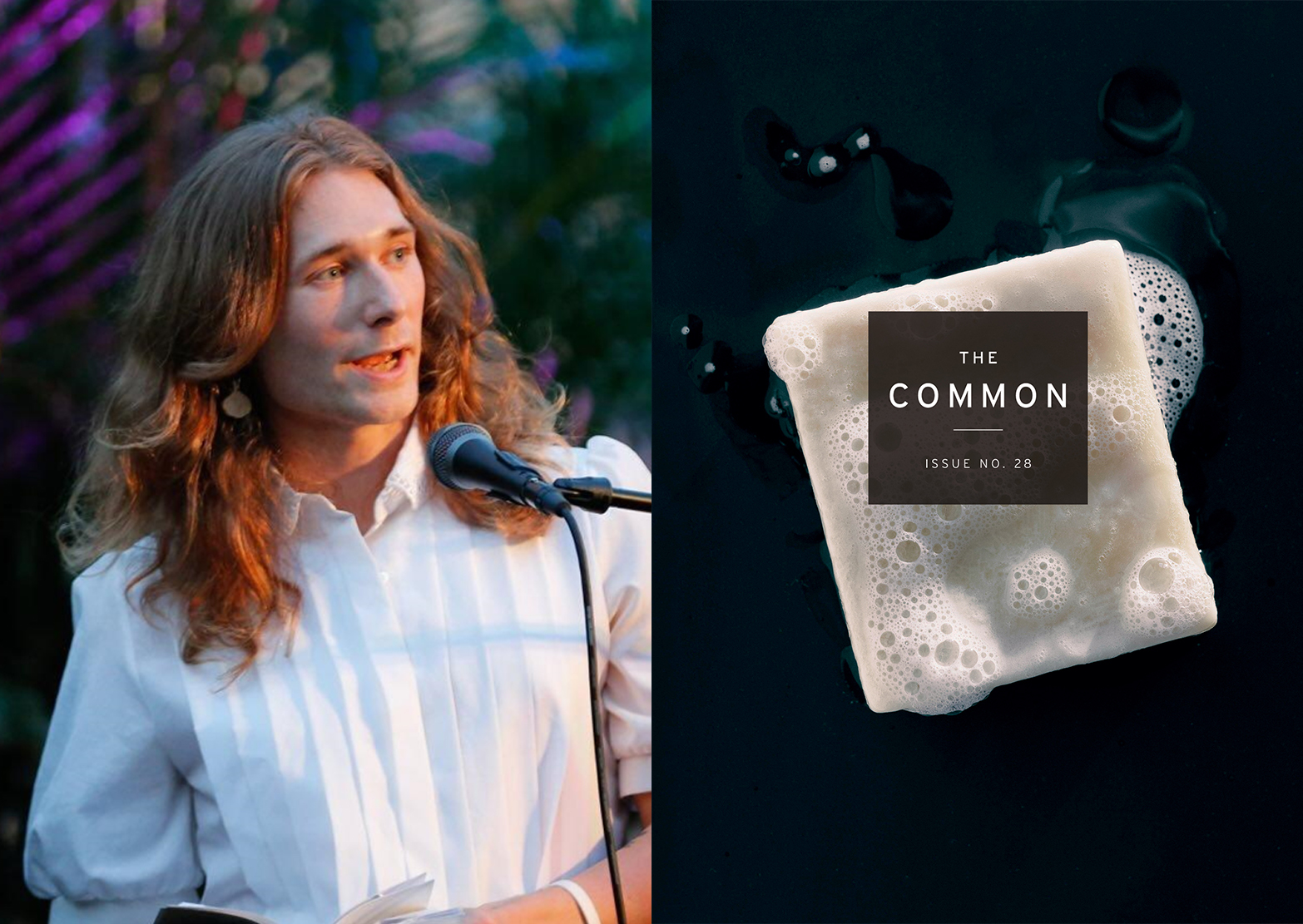
Maria de Caldas Antão speaks to managing editor Emily Everett about her poem “My Freedom,” which appears in The Common’s most recent issue. Maria talks about how a casual comment inspired this poem, which explores the idea of freedom, and what it might mean to be free: personally, politically, physically, philosophically. Maria also discusses how she hears a sort of music when writing new poetry, and then chooses words, sounds, rhythms, and line breaks to put that musicality on the page.

image of the author and issue cover

Podcast: Maria de Caldas Antão on ”My Freedom”
Read more...

August 2024 Poetry Feature: New Poems By Our Contributors

New Poems by Our Contributors NICOLE COOLEY, DUY ĐOÀN, and JOHN KINSELLA.


Table of Contents:

  • Nicole Cooley, “Covanta, A Detail”
  • Duy Đoàn, “Norepinephrine — “Suicides in Fiction Say Goodbye”
  • John Kinsella, “Before Eurydice Was Bitten”


Covanta, A Detail
By Nicole Cooley

The incinerator smoke an incision in the sky.
My daughter no longer small yet still I want to swallow her back into my body.
Sky a scalding.
My daughter asks me to stop saying, I wish this wasn’t the world you have to live in.
In my dream my girl is the size of a thumb I catch between my teeth.
Sky all smoke.
In the morning, men wearing masks drag our cans out to their truck.
In the morning, out the kitchen window, I wish the wide street rivered.

August 2024 Poetry Feature: New Poems By Our Contributors
Read more...

The Common Magazine Announces 2024-25 David Applefield ’78 Fellow

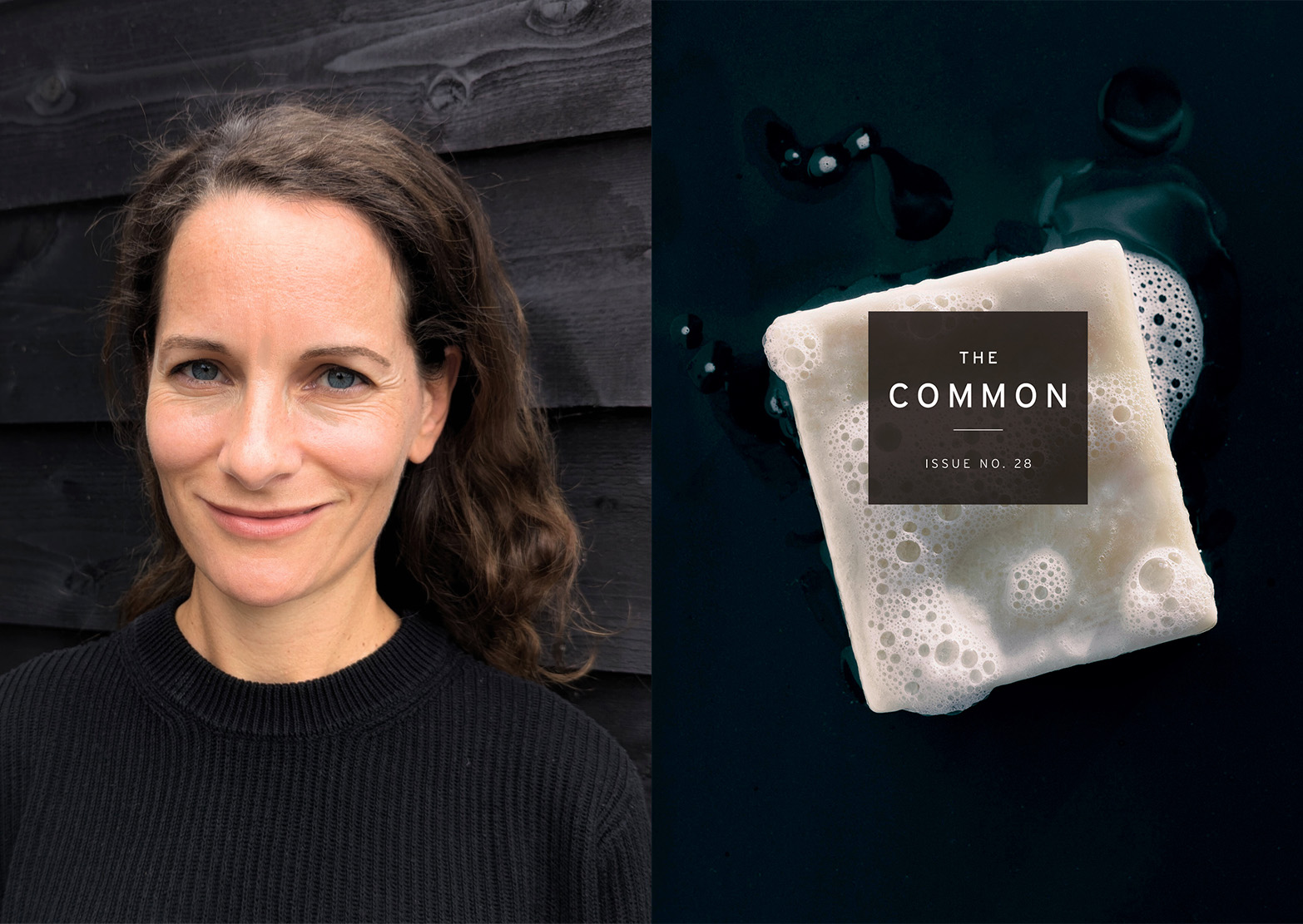
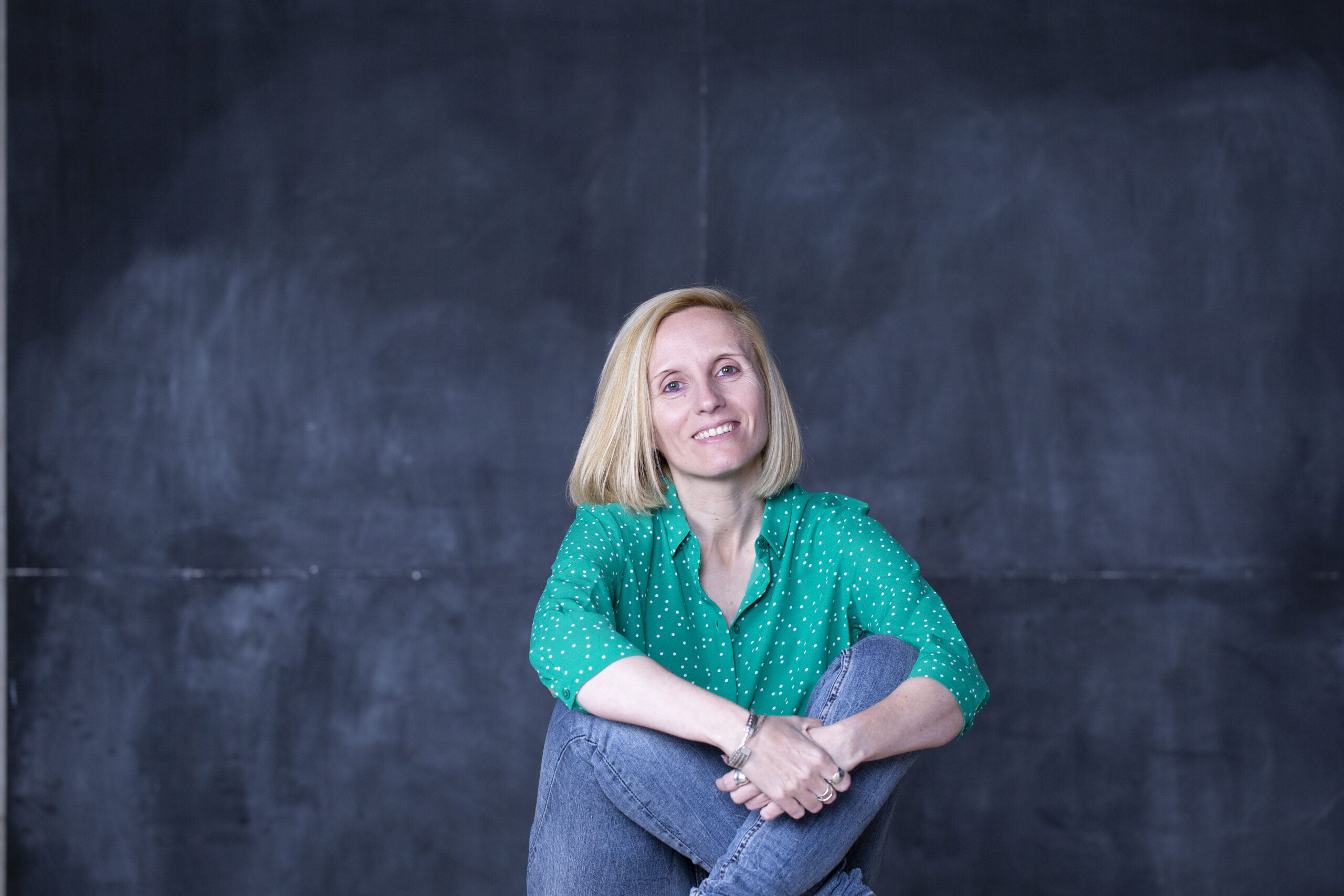
(Amherst, Mass. August 19, 2024)—Award-winning, international literary journal The Common announced today that Kei Lim ’25 will be the second recipient of the David Applefield ’78 Fellowship. The fellowship, the magazine’s first endowed student internship, was established in 2022 by a group of friends and family of David Applefield, a literary polymath who attended Amherst College and founded Frank, an eclectic English-language literary magazine based in Paris. The David Applefield ’78 Fellowship funds one student intern annually who possesses exceptional editorial and leadership skills. 

Among other responsibilities, the Applefield Fellow coordinates the Weekly Writes Accountability program, leads the Level I section of the Young Writers Program for high school students, and provides research and production support for podcasts. In addition, the Applefield Fellow trains and mentors other interns, and organizes events for the Amherst College community. 

Kei Lim ’25 arrives at the position following two years as an editorial assistant for The Common. They are also Co-Editor-in-Chief of Amherst’s student-run newspaper, The Amherst Student, an instructor for the creative writing nonprofit Cosmic Writers, and have worked in the houses and collections of the Emily Dickinson Museum. Their poem “Evergreen” was published online at The Common.

Lim thanks the more than 50 friends, classmates, and family of David Applefield who contributed to the fellowship fund for their generosity and trust, as well as the magazine’s staff for their continuous mentorship. “I am grateful to continue supporting the wonderful literary community and mission The Common fosters,” Lim said.

The Common Magazine Announces 2024-25 David Applefield ’78 Fellow
Read more...

Podcast: A.J. Rodriguez on “Papel Picado”

Apple Podcasts logo

Listen on Apple Podcasts.

Spotify Logo Green

Listen on Spotify.

Transcript: A.J. Rodriguez

A.J. Rodriguez speaks to managing editor Emily Everett about his story “Papel Picado,” which appears in The Common’s most recent issue. A.J. talks about the process of writing and revising this story, which explores a fraught moment in the life of a Latino high schooler struggling under the pressures of family, friendship, and expectation in Albuquerque, New Mexico. A.J. also discusses how his writing has changed over time, and why he’s always writing toward not just a specific character’s experience but also the complex community of a place.

portrait of author and issue cover

Podcast: A.J. Rodriguez on “Papel Picado”
Read more...

Translation: to and back

By HALYNA KRUK 
Translated by LADA KOLOMIYETS

Poem appears below in English and the original Ukranian.

Translator’s note

Since February 2022, the metaphorics of Halyna Kruk’s poetry have undergone transformation on the way to nearing the genre of testimony. Kruk explains in her speech at the poetry festival in Berlin in June 2022 that metaphors have lost their power in front of what is actually experienced (Kruk, Halyna. “Krieg ist keine Metapher.” Zeit Online, June 18, 2022). The voice of the diarist of wartime has become the most important feature of literary expression. In her Berlin speech—just as in the poem to and back, written in spring 2022—Kruk warns the prosperous western world against erecting an emotional wall between Ukraine and itself. While addressing the Western audience, she tries to explain a painful feeling of irreparable loss—in our souls, in our culture, science, economy, industry, society —of men and women, someone’s parents, someone’s children, who were killed by Russia: “War creates a gap between those who have experienced it and those who are far from it; with each passing day of the war, I see that it is more and more difficult to explain to people from the outside what we feel here, on the inside. … Poetry acquires very peculiar forms—a spontaneous prayer, a stingy testimony, a lament or even a curse to the enemy. These are not the forms of poetry to which modern European culture is accustomed, they are functional and ritualistic, too primeval in their emotional coloring, too subjective, too pathetic, and intolerant” (Kruk, “Krieg ist keine Metapher”; my translation).

In her poem to and back Kruk writes about the unfitting of war in the eyes of Western world, even if the words for war may be found by survivors and those who have experienced it. Incompatibility of war and peace, of poetry and war calls for the memory to work in place of creativity. The healing power of poetry—as a witness of war crimes in Ukraine—is encoded in Kruk’s poems, written in the spring and summer of 2022.

—Lada Kolomiyets

Translation: to and back
Read more...

Podcast: Mayada Ibrahim on “Symphony of the South”

Apple Podcasts logo

Listen on Apple Podcasts.

Spotify Logo Green

Listen on Spotify.

Transcript: Mayada Ibrahim

Mayada Ibrahim speaks to managing editor Emily Everett about her translation of “Symphony of the South,” a short story by Tahir Annour that appears in The Common’s most recent issue, in a portfolio of writing in Arabic from Chad, South Sudan, and Eritrea. Mayada talks about the process of translating this piece, including working with the author and TC Arabic Fiction Editor Hisham Bustani. She also discusses gravitating toward translation as a way to reintegrate Arabic into her life, after years of studying and learning in English. Her translation of Forgive Me, a novel set in Zanzibar and co-translated with her father, will be out in the UK this year.

portrait of author and issue cover

Podcast: Mayada Ibrahim on “Symphony of the South”
Read more...