By PAOLA ASSAD BARBARINO
Translated by MAGDALENA ARIAS VÁSQUEZ
Poems appear below in English and the original Spanish.
Translator’s Note:
Paola’s poetry, which I have been translating for a while now, is fundamentally Venezuelan and has to be understood in that context. The challenge for me is to render this context as best as I can from my position as an outsider. “Autorretrato en el caribe” or “Self-Portrait in the Caribbean” was a particularly challenging poem to translate keeping this in mind. It’s also one of my favorites of hers. It relies heavily on Venezuelan history and an understanding of their political context. The most prevalent example of this is the quotation, “¡Entonces yo tampoco quiero mando!” which is a historical allusion to Capitán Emparán, who, in the face of the Spanish crown’s decaying power in Venezuela, famously used the words to renounce his position in government, granting Venezuela independence from Spain. It directly translates to “Then I too do not want to be led” or “Then I too do not want to lead.” The double sense of the phrase in Spanish is particularly interesting in the context of the poem. I chose to keep it in Spanish to keep this double meaning, and also to assert the phrase’s origin as Venezuelan, whose context may not be readily available to an Anglophone reader. The final stanza of the poem is one of my favorite lines that Paola has ever written. Speaking from the position of someone living through exile, Paola’s poetry is politically and personally charged and speaks to the complicated space she inhabits.
Self-Portrait in The Caribbean
SOMETIMES I LOSE MYSELF
Because I feel I am a country
And not a person.
I no longer have legs,
now they are the frontiers
of two different tropics.
In the hallways
people recognize me
as the sister of another lost war.
What I have to the north is not the sea
it is blood;
yet it wets just the same.
I can’t figure out how to repress my murderous regions,
this ungovernable fire without morals
that dances in my entrails.
Sometimes I am emboldened,
I decide to stand in the people’s balcony
I decide it is Maundy Thursday
I decide to place a priest behind me that can speak to the people behind
my back
I decide to put out the fire and light my throat
scream
“¡Entonces yo tampoco quiero mando!”
and feel the phlegm of the people on my face
like the gunpowder that lulled me to sleep as a child.
My yearning to exile myself from my self
without even having
asylum approved.
Autorretrato en El Caribe
A VECES ME PIERDO
Porque siento que soy un país
Y no una persona.
Ya no tengo piernas
ahora son fronteras
de dos trópicos distintos.
En los pasillos
la gente me reconoce
como la hermana de otra guerra perdida.
No es mar lo que tengo al norte
es sangre;
pero moja igual.
No hallo cómo reprimir mis regiones asesinas,
este fuego ingobernable y sin moral
que me baila en las entrañas.
A veces me envalentono,
decido ponerme en el balcón del pueblo
decido que sea jueves santo
decido colocar un cura detrás de mí que le hable a la gente a mis
espaldas
decido apagar el fuego y encenderme la garganta
gritar
“¡Entonces yo tampoco quiero mando!”
y sentir la flema del pueblo en mi cara
como la pólvora que me arrullaba de niña.
Mis ansias de exiliarme de mí
sin tener siquiera
asilo aprobado.
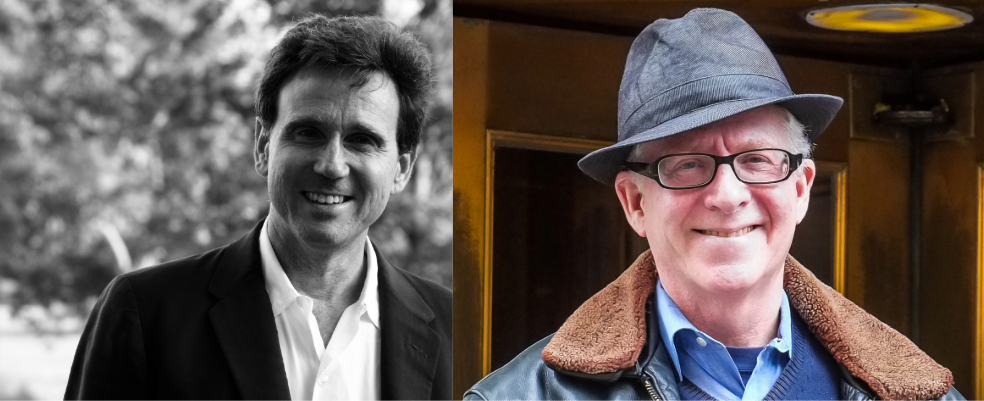
Paola Assad Barbarino (Caracas, 1999) is a poet and visual artist based in New York. Her work explores diasporic pain and its transformations. She was a finalist in the 3rd Rafael Cadenas Young Poetry Contest (La Poeteca, Caracas, 2017) for her poem “El Rapto.” Her writing has been published in Liberoamericanas, 140 Poetas Latinoamericanas, and UBICUO. Her debut book, Todo Menos Invierno, received a Special Mention in the Ida Gramcko International Poetry Prize and has been presented in Madrid, San Juan, Chicago, and New York City. In 2026, she was awarded the DREAMing Out Loud Fellowship granted by PEN America and was the winner of the 6th Juana Goergen Poetry Prize (DePaul University, Chicago). Her visual and poetry work has been featured at festivals such as the Kerouac Festival NYC, FuerzaFest, and the New York City Poetry Festival (2024 and 2025), held on Governors Island. She is part of the Poetry Fighters collective, led by Marcos de La Fuente and based at the Bowery Poetry Club in Manhattan. She mourns every book she left behind in Caracas.
Magdalena Arias Vásquez is a writer and translator from Panama City, Panama. She was a finalist for an American Literary Translators Association (ALTA) fellowship and her translations have been published Revista Anfibia in Argentina and Asymptote Journal. In early 2026, she translated the Pulitzer and T.S. Eliot-winning poet Paul Muldoon into Spanish for Under the Volcano’s Bilingual Poetry Reading held at Casa Museo Pellicer in Tepoztlán, Mexico. Her Spanish-language poetry has been published in the Antología V del Festival Internacional del Libro de Nueva York (FILNYC), while her English-language poems have been published in AGNI, Poetry Northwest, among others. She’s lived in many places but always goes back to the isthmus and the two oceans.