All posts tagged: 2026

January Poetry Feature #2: Words and Music(ians)

New poems by ALEKSANDAR HEMON and STEFAN BINDLEY-TAYLOR

This month we bring you new work by writers who also have careers in music.

 TOC: 
—Aleksandar Hemon, “Snipers”
—Stefan Bindley-Taylor, “Naming the Wind” and “At our first house”


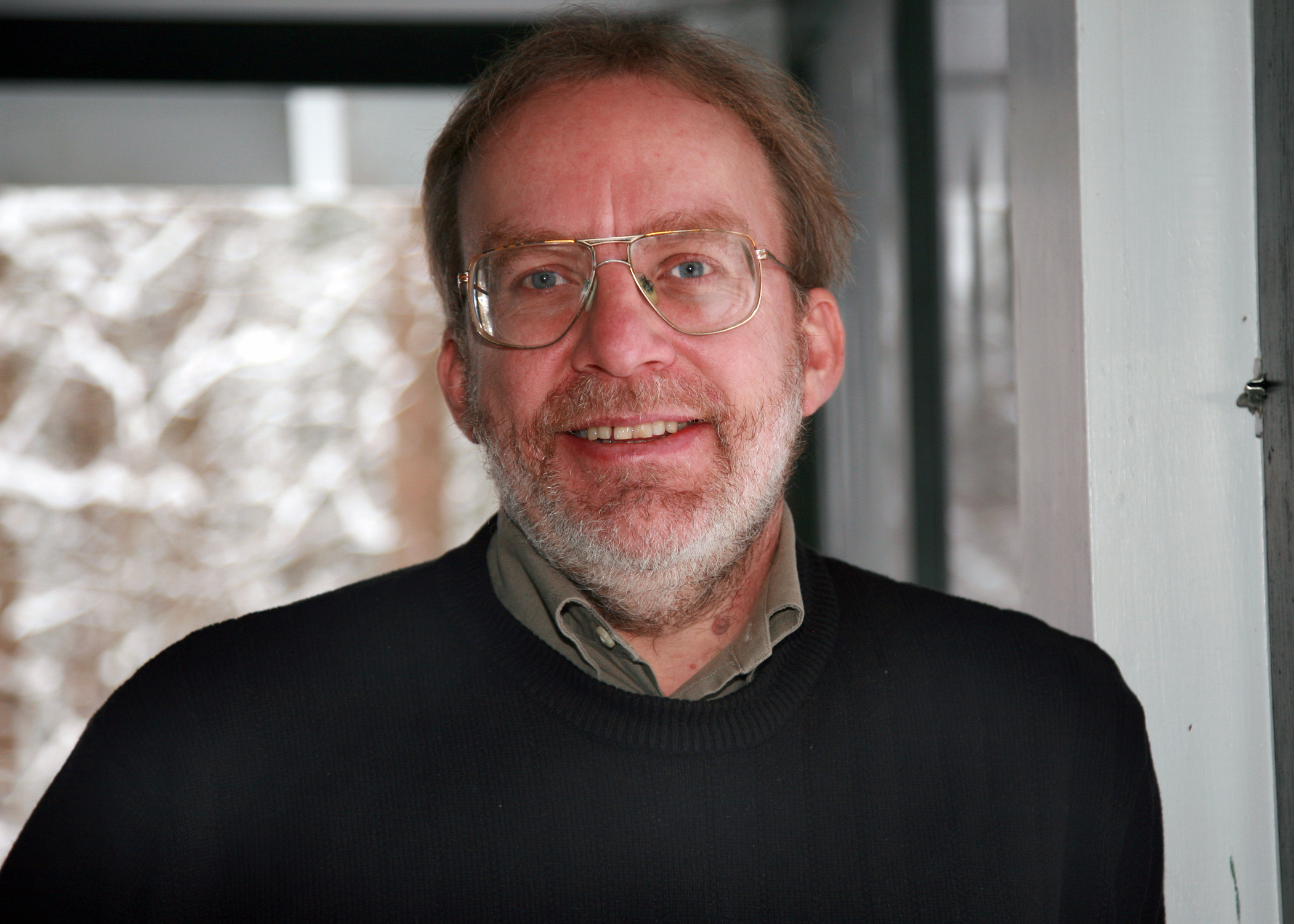
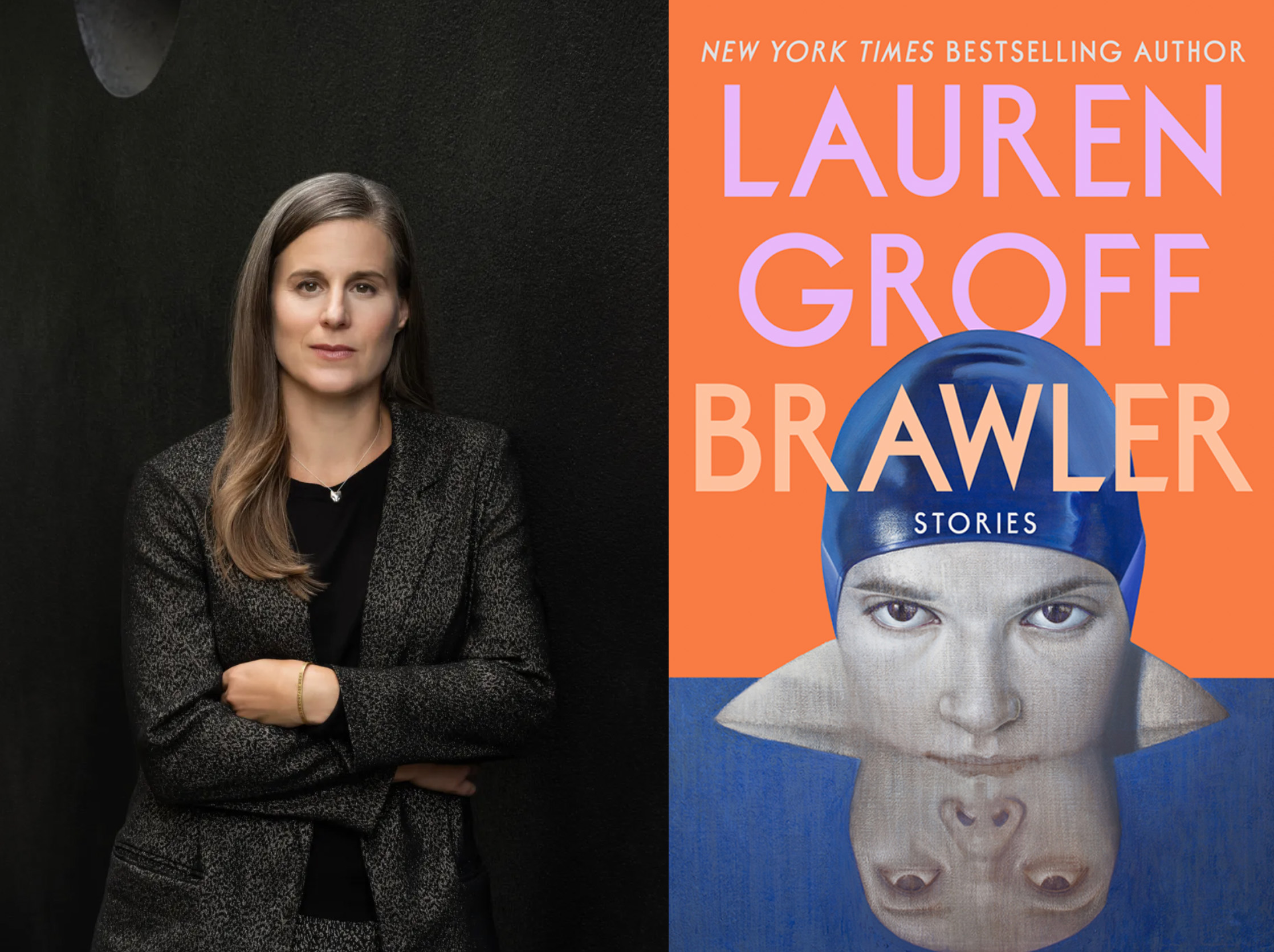
Aleksandar Hemon and Stefan Bindley-Taylor's headshot

Aleksandar Hemon (left) and Stefan Bindley-Taylor (right)

Snipers
By Aleksandar Hemon

Do you ever walk down an empty street
stopping, looking up and around to see
what position would a smart sniper pick?

Do you notice plants and pane refractions,
curler-haired ladies leaning out on the sills,
watching for what will surely come to pass?

Do you ever scan a room full of good people,
read their faces and elaborate frowns to guess
who among them thinks you ought to be shot?

Do you ever have a sense this is never ending
until all that is destructible is finally perished,
and you depart armed with the long memories

of yourself strolling down an empty street to look
up at the silver-haired ladies leaned on the sills,
waving to tell you your new life will be splendid? 


Naming the Wind
By Stefan Bindley-Taylor

And it was then that it came, that thing without a name, a quick caress across the check, careening from the nothing and back into the nothing it went. Whipping, I thought, but no that would never do, for whipping is a word that describes a real hell, not an imagined one, and one that I know somewhere in my blood is imprinted; though, I am so far from it as to be genuinely embarrassed.

So how to describe it then? Sight? Useless! For it was the color of air, which sounds like the title of a movie that would gain enough accolades to make it revolting to me. Is there then, the element of smell to turn to? But this too fails,  if only because I do not possess a strong sense of smell. I never have. My tongue was still too sopped in dessert wine to taste anything else, and all I could hear was that cork somewhere in the sea, floating or sinking, floating or sinking. In fact, I’m not sure I am led by my senses much at all, only by the gears in my head, so flat and mechanical, grinding everything into a thick paste.

And now that you are gone, I am sure I will never get a name for the thing, the memory of which still sits at a peculiar tilt in my chest, in a way that feels different than when I think of my birthday, or my father coming home. It is the feeling that reminds you that there is unconditional love in the world, and it is all yours if you want.

The world, in its unconditional love, has already given it so many names. Yet these are imperfect to me, like a chipped moon. The Solano for example, feels like something that goes on the sandwich. The Bora sounds like an uncontacted people, the Squall like an undiscovered sea beast, the Sirocco like a flavored vodka, and for god’s sake, The Haboob.  Not to mention the spin-off adjectives, psithurism, susurration, all experimental, all horrific.

Still, for a long time, this lack of name, the thing unnamed—not the thing itself but the unnamedness of the thing—has haunted me, and I have occupied myself trying to conjure it forth like a friendly specter. I want to pull an ancient monument from the sand, to stand before it, Herculean, to say this is your name, take it, take it and dance. Sometimes, at night, the crinkles of the pillow case comes close to naming it, scratching out a blurb a few syllables, maddeningly short, a long dash through some mysterious missing diphthong that should slot in just right, but is somewhere out there eluding, misshaping itself, deforming itself as to never return to where it belongs, or where others would have it belong. Though perhaps all I really want, if I think about it, which I try not to, is to ask you to name it. A task made impossible, and that is why it is the only task left that is worth anything. For I know that if you said it, somewhere from wherever you are, I’m sure I could hear, could feel, could touch, could, could see it, again, and I would think yes, that is it, that is the perfect one.


At our first house
By Stefan Bindley-Taylor

I came home to find your wings
could not fit under the bed.
So you had no choice
but to open the roof.

It was better that way.
When rain slicked the floor,
I picked bushels of mint that rose
beneath our bedsheets.

You threshed flowers to make
them go down easy.
But I wanted the dirt, the stems, the stone.
I brought my teeth to the edge of a field
and I chewed

until things became silent. At night
you pointed to the hole
above us, towards the stars you navigated so well.

I knew then nothing
could feel like your touch.
I fell silent and things became
still, like a comet or a current.
I said it.

And things became.
I say it again.
To see if they remain so.


Stefan Bindley-Taylor is a Trinidadian-American author, musician, and educator born and raised in Maryland. His stories balance absurdist humor with real emotion to showcase characters from the Caribbean diaspora through a nuanced, humorous, and humane lens. His recent and forthcoming work can be found in several outlets including Chautauqua, Adda, Brooklyn Rail, and NY Carib News. He is the winner of the 2025 Chautauqua Janus prize, the 2025 DISQUIET Flowers fellowship, a 2025 Kimbilio Fellowship, the 2024 Brooklyn Caribbean Literary Festival Prize, a short-lister for the 2024 Commonwealth Foundation Short Story Prize, and a finalist for the PEN 2023 Emerging Voices Fellowship. Outside of writing, Stefan has been a performing musician for over a decade. He writes and performs in a punk project called FISHLORD and an alternative hip-hop project called Nafets. He has amassed over 8 million streams worldwide between the two projects and landed sync placements with Netflix, HBO, Hulu, BET+, The CW, and more. He currently splits his time between New York City and Virginia and is pursuing his M.F.A at the University of Virginia.

Aleksandar Hemon’s poem is from his forthcoming collection, Godspotting, which includes work published in The New Yorker, The Yale Review, Harvard Review, and The Common. He is the author of The World and All That It Holds, The Lazarus Project, which was a finalist for the 2008 National Book Award and the National Book Critics Circle Award, and three books of short stories: The Question of Bruno; Nowhere Man, which was also a finalist for the National Book Critics Circle Award; and Love and Obstacles. He was the recipient of a 2003 Guggenheim Fellowship and a “genius grant” from the MacArthur Foundation, and the 2020 Dos Passos Prize. As a screenwriter he has worked on the Netflix show Sense8 and Lana Wachowski’sThe Matrix Resurrections. He produces music and DJs as Cielo Hemon, and Godspotting has a sonic equivalent as an album of the same name, already released: https://tidal.com/album/449872410/u. He has been Professor of Creative Writing at Princeton University since 2018.

January Poetry Feature #2: Words and Music(ians)
Read more...

The Art of Unsettling: The Complexities of Freedom and Fidelity in Edy Poppy’s Anatomy. Monotony.

By EDY POPPY

Reviewed by BRITTA STROMEYER


“For my husband, who has given me everything, even what I didn’t want. (He’s now my ex-husband.)” reads the dedication in Edy Poppy’s award-winning and spicy debut novel Anatomy. Monotony. It’s an irresistible hook, inviting the reader into a novel that explores the author’s experiences in an open marriage, the evolving sense of place as a search for identity, and the adventure and challenges inherent in the act of writing itself:

“I want to write about the people, the loneliness, and the language here. I feel at home but I’m a stranger, don’t belong, can’t express what I truly feel.”

The Art of Unsettling: The Complexities of Freedom and Fidelity in Edy Poppy’s Anatomy. Monotony.
Read more...

Juiced

By NEYSA KING

This piece is an excerpt from the novel How to Be Loved.


Cláudia’s eyeliner is dark as earth and heavy as her parrot-red lipstick. As she bends over to speak to me in low tones, her blouse falls open. I don’t know what it means to be attracted to her; I just want to be near her body. But she’s a college student from Rio, and I’m five years old. For the last year she’s been my nanny—dressing me, feeding me while Mom and Dad work. Every other Friday, if I’m good, she shucks me into my two-piece bathing suit with frills on the bottom and a pink butterfly on top and takes me to Singing Beach, where I can play with the skinny-legged sandpipers that the ocean is lava. Run, chase, run, chase, run, chase—my long, dark curls wet and heavy, and my suit bottom sliding down my straight hips—until the sunlight stretches as long and pale as a skeleton across the sand.

Juiced
Read more...

Cape May, midsummer

By EVELYN MAGUIRE

A horseshoe crab

Photo by Hannah Stone

Cape May, NJ

Some things we understand before we’ve ever touched them. I swallowed a poppyseed and saw you in my dreams. Summer sweltered. Sweat marked round my ribs, beating with two hearts. Boiled eggs, sharp chives, mayo, cayenne, dill, salt. Summer of salt: we retreat to the seaside of my childhood, rocky and full of my mother’s egg salad.

Cape May, midsummer
Read more...

January 2026 Poetry Feature #1: U-topias

By JILL PEARLMAN

I
Wondrous, the emptiness so close, close to an absent sea,
only sea-fields, wheat-fields, golden stubble,
though we were walking together on a path to find the sea.

Wandering together under a wide horizon. 
On a road called Pas de l’Assassin.

January 2026 Poetry Feature #1: U-topias
Read more...

Playing Chicken

By MAR GÓMEZ GLEZ

Translated from the Spanish by SARAH THOMAS

Translator’s Note:

In the two decades that I have known Mar Gómez Glez, she has established herself as one of the most memorable and unique voices of her generation of Spanish writers. Mar’s output is impressive in its creativity, complexity, and the diversity of its genres and subjects: three novels, more than twice as many plays, a children’s book, and two non-fiction books (a study of Saint Teresa of Ávila and a cultural history of blood). These works treat a wide variety of topics ranging from pressing political themes to the deeply personal autobiographical content of her novel in vignettes La edad ganada, from which this text is drawn. What all her work shares in common is a deep ethical concern with human experience, the connections forged and broken between us, and our responsibility to others. 

Among these diverse works, La edad ganada is one of the most experimental and personal. It brings fresh form to the bildungsroman: standalone chapters offer snapshots of an unnamed protagonist’s coming of age from two to thirty, their sequential numeric titles indicating her age (in the original, this text is titled “veinticuatro” or “twenty-four”). Across the stories, the narrative point of view constantly shifts, at times in daring or surprising ways, but the protagonist’s experience and voice remain at the center of the text. While deeply personal, the work also speaks to deeper ethical and relational imperatives. This chapter, which I have called “Playing Chicken” in the translation, is rooted in cultural specificity—the bureaucracy of Spanish universities, the classic winter stew cocido madrileño—but also explores a story that is all too familiar and universal: of power imbalance, the unspoken expectations articulated just below the surface of what is explicitly said, and the potentially devastating consequences of playing along.

—Sarah Thomas


Playing Chicken

They had arranged to meet in the park at 2 pm sharp. The student arrived at quarter to, and sat on a bench, watching the children play to entertain herself. The air was strangely cold, a springtime chill that came and went.

Playing Chicken
Read more...

A Kind of Mythic Convenience: A Conversation Between July Westhale and Daisy Atterbury

Daisy Atterbury and July Westhale

Daisy Atterbury (left) and July Westhale (right)

DAISY ATTERBURY’s book The Kármán Line poses a question about speculative futures, queerness and space, and ‘a hope for a shared present.’ The Kármán line is defined by Atterbury as “the altitude at which the Earth’s atmosphere ends and outer space begins. The Kármán line is the edge of space, as opposed to near space, the high altitude region of the atmosphere. When they say altitude, they’re thinking in terms of the human. What is measurable from the ground. Beyond the Kármán line, the Earth’s atmosphere is too thin to support an object in flight.”

A Kind of Mythic Convenience: A Conversation Between July Westhale and Daisy Atterbury
Read more...

Danish Dispatch

By ALEX BEHM

Copenhagen, Denmark

Copenhagen, Denmark

My grandfather sits in a recliner and watches infomercials on television. It is 2:57 in the afternoon on an American Sunday and a man wearing a cheap suit tries selling him the New King James Version Bible in twelve parts on CD.

I call from Copenhagen where the time is 8:57pm and the sun has already set. An electronic operator speaks words in Danish I cannot decipher before the static spindles through air and across several oceans until my grandfather picks up his landline.

Harmony Presbyterian Church, he says into the phone. This is his greeting. No Hello or Can I help you? He has no caller ID and does this to defend himself against telemarketers. He tells me, If you answer with the name of a church, they are not allowed to sell you anything, and then purses his lips and nods his head one time, each time he says this.

Danish Dispatch
Read more...