All posts tagged: Book Review

Egana Djabbarova’s My Dreadful Body: Exploring the Wounded Self and Belonging in Azerbaijani Diaspora Literature

By EGANA DJABBAROVA
Review by BRITTA STROMEYER

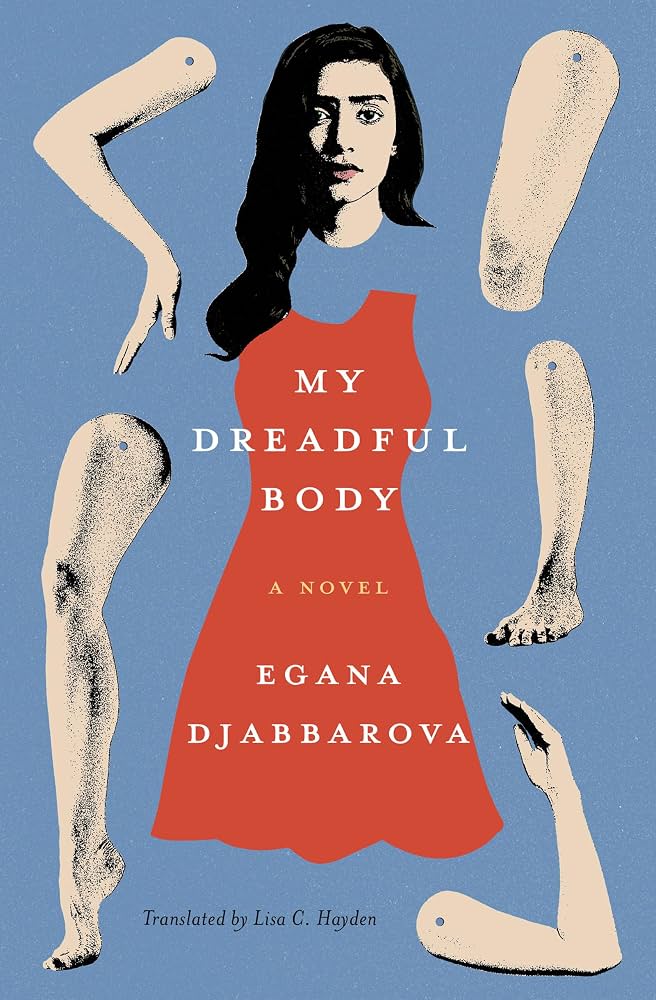
My Dreadful Body


Every now and then, a book is spawned that renders you speechless, demanding recognition for its searing vulnerability and astute cultural criticism. Egana Djabbarova’s My Dreadful Body, translated by Lisa C. Hayden, stands as one of those. The novel traces the lacerations of its largely unnamed narrator’s pain and grief bleeding into the suffering of an entire people by mapping a lineage of women—mothers, grandmothers, and aunts—whose identities are confined to roles as wives and caretakers, illustrating how societal expectations shape their lives and the lives of generations that follow.

Set in post-Soviet Yekaterinburg, Russia, the story follows the narrator’s upbringing within an Azerbaijani family, charting the cultural and societal challenges of life in the diaspora: “I don’t remember who it was and I don’t remember how long we ran; the only thing I remember is how much my shoulders ached from the heavy backpack, how the backpack hit my lower back, how I lost my breath, and how terrified I was. That was the first time I felt true primal danger and the proximity of death with my own skin. That was when I realized that being a stranger means being hated, being a vessel for rage.” The narrator’s toil with dystonia, a neurological movement disorder, serves as a visceral metaphor for this history; the illness not only robs her of speech and physical autonomy but mirrors the cultural constraints that have long stifled the women in her family. At its core, My Dreadful Body offers a piercing feminist critique of the systemic silencing and erasure of women’s agency, particularly within the context of the Azerbaijani diaspora.

Egana Djabbarova’s My Dreadful Body: Exploring the Wounded Self and Belonging in Azerbaijani Diaspora Literature
Read more...

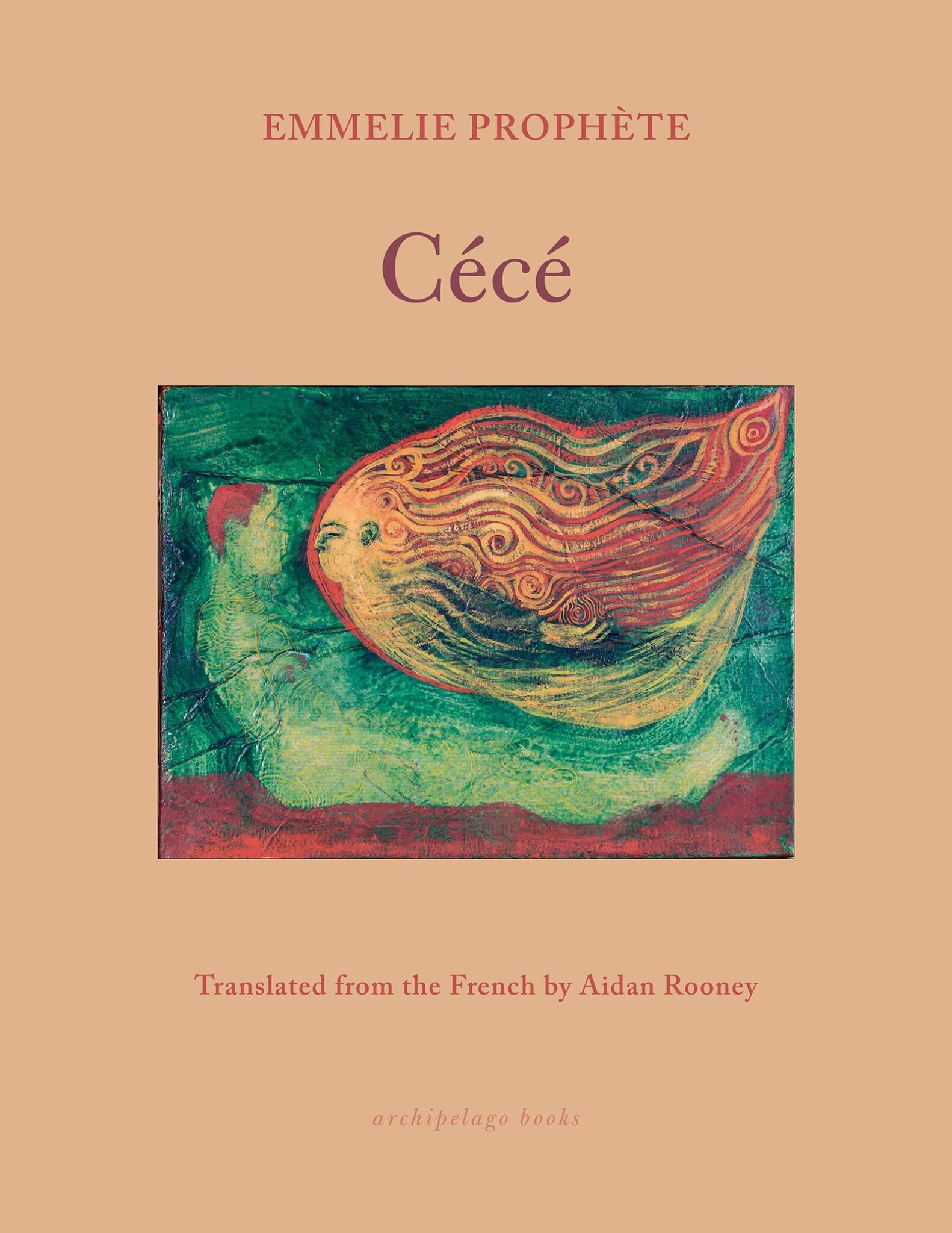
Review of Cécé by Emmelie Prophète

Review by SAM SPRATFORD

Book by EMMELIE PROPHÈTE 
Translated from the French by AIDAN ROONEY

Book cover of Cece

Uncle Frédo lies in the dark, water dripping through the sheet-metal roof. His American Dream crushed by the reality of existence as a non-white, non-citizen in the U.S., he returns to Haiti for the remainder of his life. He rarely speaks and is nearly always drunk. He spends his days in a dreamless twilight zone between sleep and wakefulness.

Cécé, his 20 year old niece and the inheritor of his psychic burden, is our real protagonist.

Cécé was born into a slum outside Port-au-Prince, a place fractured by violence. It is the recent past, in the heady early days of the digital age. Facebook was still the social platform of choice and capitalism had not yet made an industry of influencer marketing. Abandoned by a kleptocratic state, the Cité of Divine Power and its counterpart, Bethlehem, have seen gangs step in to provide structure for residents by claiming a monopoly on violence. Unlike the Hobbesian Leviathan, there is no law underwriting the circumstances under which violence can be applied. It is a lawless place—but not without an order of its own.

Review of Cécé by Emmelie Prophète
Read more...

Book Review: Exemplary Humans

By JULIANA LEITE
Translated by ZOË PERRY

Reviewed by JAY BOSS RUBIN
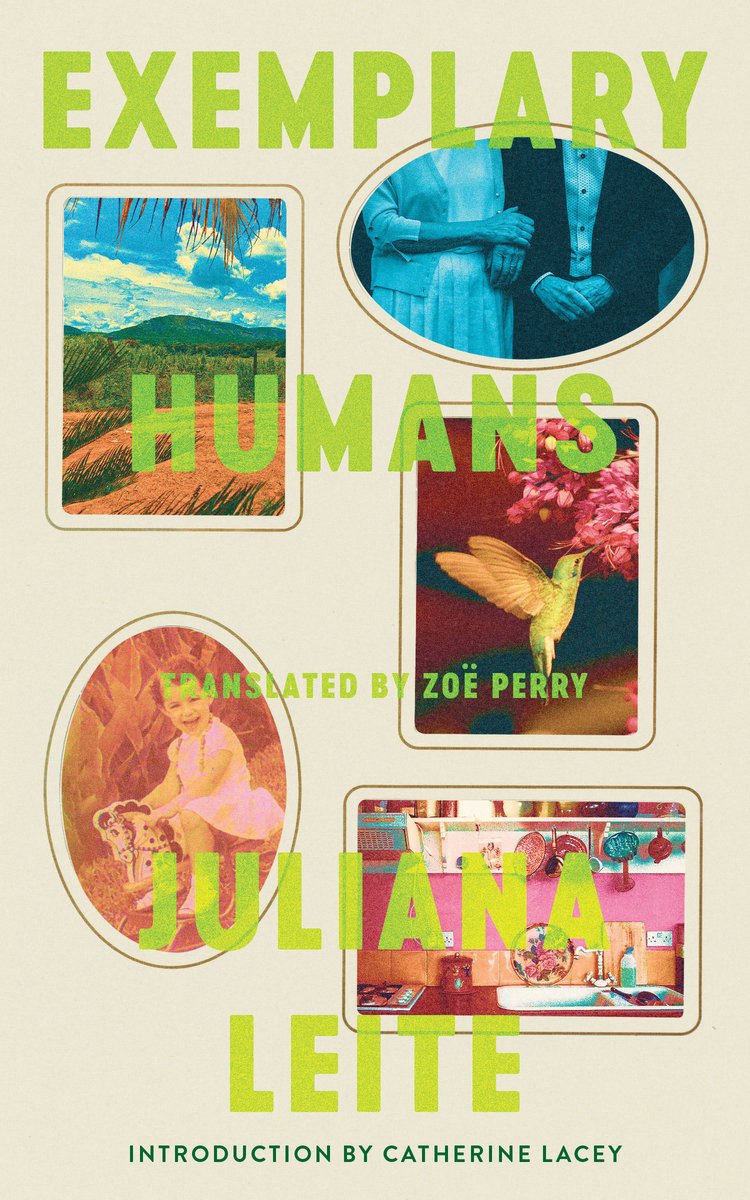
Book cover of Exemplary Humans

In the opening chapter of this subtle epic, the centenarian narrator Natalia confides: “At this point in life, I’d say that going on forever or for too long is a bad decision, a very bad one; what’s nice is to exist and then stop existing, to exist for a while and then be able to change the subject.” In other words, if the transition between life and death is an abrupt one, then so be it. “[L]et’s be done with it,” she says, “though it would be nice to have the time to spritz on some perfume beforehand.”

When I first encountered this sentiment in Juliana Leite’s Exemplary Humans, translated from the Portuguese by Zoë Perry, I took it be a bit of a bluff. It reminded me of a bumper sticker I saw a couple of years ago in Portland, Oregon, that read: “I ♥ AGING & DYING” (which I interpreted as an existentialist rejoinder to proclamations of commercial allegiance—“I ♥ Mr Plywood” and so on—so common in my hometown). But by the end of Leite’s novel, which takes place primarily in Rio de Janeiro and Petrópolis, Brazil, and spans that country’s lengthy dictatorship, I was convinced that Natalia’s breezy acceptance of her own mortality was absolutely serious. It is not only possible, but strongly advised to love aging and dying. It isn’t easy, though. To transcend dread, and transform it into something more palatable, a unique kind of emotional intelligence is required, and so is a talent for adjusting one’s perspectives. Natalia is the novel’s exemplar of both these qualities.
Book Review: Exemplary Humans
Read more...

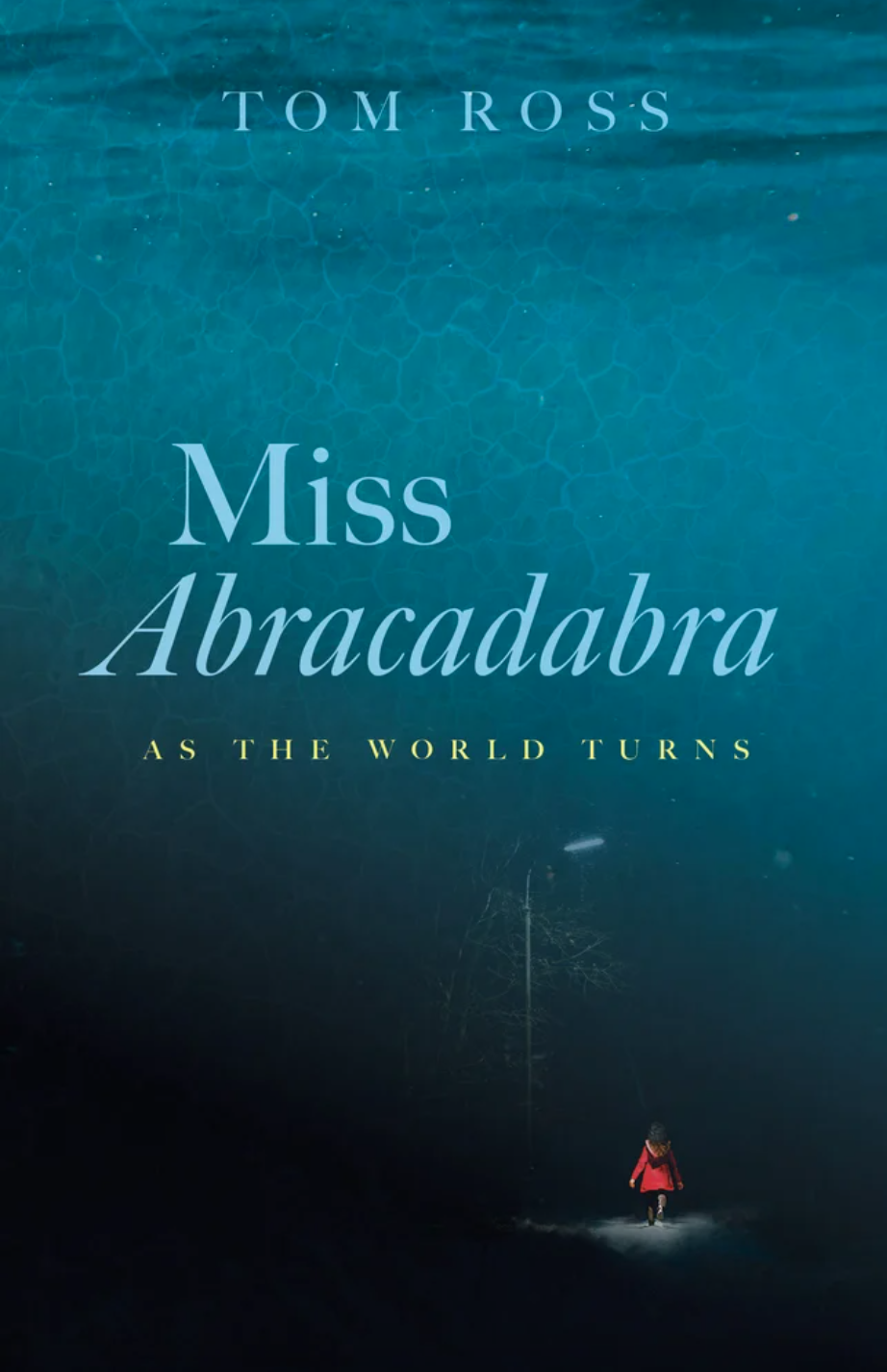
Magic Sentences: A Review of Miss Abracadabra

By TOM ROSS
Review by TERESE SVOBODA

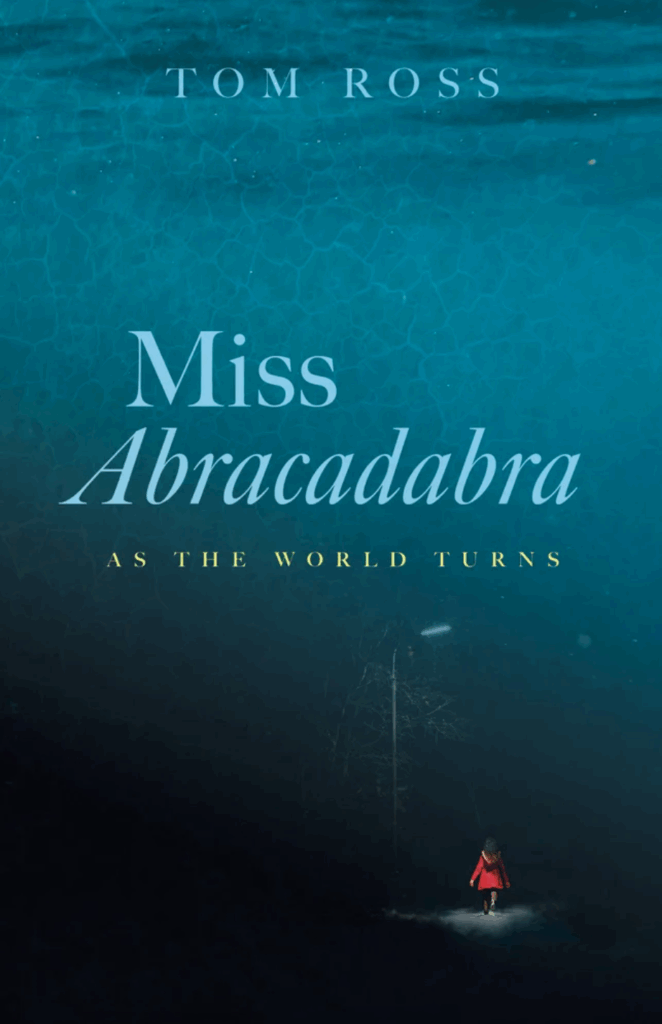
Cover of Tom Ross's Miss Abracadabra

My copy of Miss Abracadabra is appallingly dogeared in my attempt to mark its most exquisite parts. Although amazed to discover that this is Tom Ross’ debut novel, I am not surprised that the venerable Deep Vellum published it. Miss Abracadabra is only the second novel they’ve taken on in twelve years that’s not a translation. What magic did Miss Abracadabra conjure to convince them?

Magic Sentences: A Review of Miss Abracadabra
Read more...

Main Character Syndrome: A Review of Stranger Than Fiction

By JULIA LICHTBLAU

Book cover of Stranger than fiction by Edwin Frank

I picked up Stranger Than Fiction, Edwin Frank’s relay race through the twentieth century novel, immediately after rereading Madame Bovary, only to encounter Emma Bovary, who came into the literary world in 1856, in the first chapter.

Frank isn’t simply paying obligatory homage to Flaubert’s importance to the nineteenth-century novel. He’s pointing out the cinematic modernity of the famous agricultural fair scene which splices the full-of-himself aristocrat Rodolphe seducing Emma, the country doctor’s bored wife, with pompous local officials making speeches. He’s also showing that the nineteenth century novel, with its formidable, reality-affirming scenic machinery, was still in full flower when Fyodor Dostoevsky’s radical and baffling Notes from Underground, which Frank pegs as the first twentieth century novel, emerged barely a decade later. If the nineteenth-century novel “attempts to maintain a dynamic balance between the self and society,” the exterior world barely seems to exist for Dostoevsky’s narrator, whose mind churns through semantic and philosophical problems for much of the text. Yet, the book was anchored in reality—the political and social problems of Russia and the personal torment of its writer—in a new way.

Main Character Syndrome: A Review of Stranger Than Fiction
Read more...

Review: The South by Tash Aw

By TASH AW
Reviewed by BRITTA STROMEYER

Book Cover: "The South a novel by Tash Aw" over a river landscape.
 

Readers familiar with Tash Aw know that the power of Aw’s writing lies in the intricate layering of complex themes, brought to life through nuanced characters. His latest novel, The South, the first of a four-part saga, is no exception. It is an ambitious portrayal of a family navigating profound transformation and the complexities of identity and belonging within Malaysia’s rich and challenging political context of the late 1990s.

Following his grandfather’s passing, sixteen-year-old Jay journeys southward with his family to inspect their inherited failing farm. Blighted trees and drought-stricken fields greet them upon arrival. Told in rotating third- and first-person perspectives over a few weeks, the novel introduces Jay, his mother Sui, and farm manager Fong as they grapple with identity and belonging within fractured family dynamics. The novel, both broad in its scope and delicate in its intimacy, explores the repercussions when personal lives intersect with wider societal currents. It unfolds with a quiet yet remarkable sense of pacing, each moment carefully weighted, drawing the reader deeper into the rich inner lives of its characters.

Review: The South by Tash Aw
Read more...

Review: Theory and Practice by Michelle de Kretser

By MICHELLE DE KRETSER
Reviewed by AMBER RUTH PAULEN


Cover of Theory & Practice by Michelle de Krester


One of the brilliances of Michelle de Kretser’s newest novel Theory and Practice is how the author lassoes life’s “messy truths” into a neat and slim book. To do so, de Kretser asks many questions at once: How does shame lead to silence? Why write? What to feel when an idol falls from grace? How do you break free from your mother (the Woolfmother included)? How do class and race determine your place in the world? What to do when life doesn’t fit your ideas about it? Additionally, de Kretser remains flexible in form: fiction blends with essayistic, academic, and autobiographical elements. Even the cover of the Australian edition features a young de Kretser, as if to say, this book might be about things that have actually happened. With so much going on, it might seem like the book would fall apart, but it is a concise and searing portrait of what it’s like to be alive in a certain place and time and body.

Review: Theory and Practice by Michelle de Kretser
Read more...

What We’re Reading: April 2025

Curated by SAM SPRATFORD

The long New England winter is finally thawing, and here at The Common, we’re gearing up to launch our newest print issue! Issue 29 is full of poetry and prose by both familiar and new TC contributors, and a colorful, multimedia portfolio from Amman, Jordan. To tide you over, Issue 29 contributors DAVID LEHMAN and NATHANIEL PERRY share some of their recent inspirations, and ABBIE KIEFER recommends a poetry collection full of the spirit of spring.


portrait of henry james

Henry James’ short works; recommended by Issue 29 contributor David Lehman

I’ve been reading or rereading Henry James’s stories about writers and artists: “The Real Thing,” “The Lesson the Master,” “The Death of the Lion,” “The Tree of Knowledge,” “The Figure in the Carpet,” “The Aspern Papers,” et al. His sentences are labyrinthine, and you soon realize how little happens in a story; the ratio of verbiage to action is as high as the price-earnings ratio of a high-flying semiconductor firm. Yet we keep reading, not only for the syntactical journey but for the author’s subtle understanding of the artist’s psyche—and the thousand natural and artificial shocks that flesh and brain are heir to.

What We’re Reading: April 2025
Read more...

A Tyranny of Dreams: Review of Proper Imposters

Reviewed by SAM SPRATFORD

Cover of Proper Imposters.
 
In Proper Imposters, Panhandler Books compiles four novellas from authors who are attuned to the mystical nature of doubles, a timeless form, and who hold them up to the contradictions of our moment, the paradoxes and counterparts on which our societies rest. MAURICIO MONTIEL FIGUEIRAS, JEFF PARKER, CHAYA BHUVANESWAR, AND JASON OCKERT each spin gripping tales of doppelgangers, pairs whose likeness in body or spirit fades in and out of focus. These are stories of concealment, intentional or not, and revelations of often melodramatic proportions. When the authors align these pieces just right, it resembles the dazzling effect of a hall of mirrors. Each author manages, at various times, to pierce through narrative’s typical strictures into the world of dreams, where fantastical images diagnose with overwhelming clarity the ills of our time.
A Tyranny of Dreams: Review of Proper Imposters
Read more...

What We’re Reading: January 2025

Curated by SAM SPRATFORD

As we’re finding our footing in 2025 and, in the U.S., shoring up against new political realities, January has been pervaded by a sense of uncertainty. The books our community is reading right now seem to respond to this feeling, in areas of life spanning from assimilation to cooking anxiety. Read on for recommendations from our contributors AFTON MONTGOMERY, HEMA PADHU, and ADRIENNE SU that just might help to stabilize your spirits—or, at the very least, provide some quality distraction.


Cover of "You Gotta Eat". Displays the title in black bubble letters against a periwinkle background, framed by cartoon illustrations of various simple foods.

Miriam Ungerer’s Good Cheap Food and Margaret Eby’s You Gotta Eat: Real-Life Strategies for Feeding Yourself When Cooking Feels Impossible; recommended by Issue 28 Poet Adrienne Su

When working on my last book of poems, Peach State (2021), I often wrote my way to the kitchen: writing about a dish made me want to cook it. These days, I’m cooking my way to the proverbial typewriter. I read about food. Then I cook something I’ve read about, and the process nudges me to fill a page.

What We’re Reading: January 2025
Read more...