This month we are happy to bring you “the decorations,” a meditation on Monet at Giverny, by long-time TC-contributor PETER FILKINS.

Peter Filkins

This month we are happy to bring you “the decorations,” a meditation on Monet at Giverny, by long-time TC-contributor PETER FILKINS.
Peter Filkins
By SARAH WU
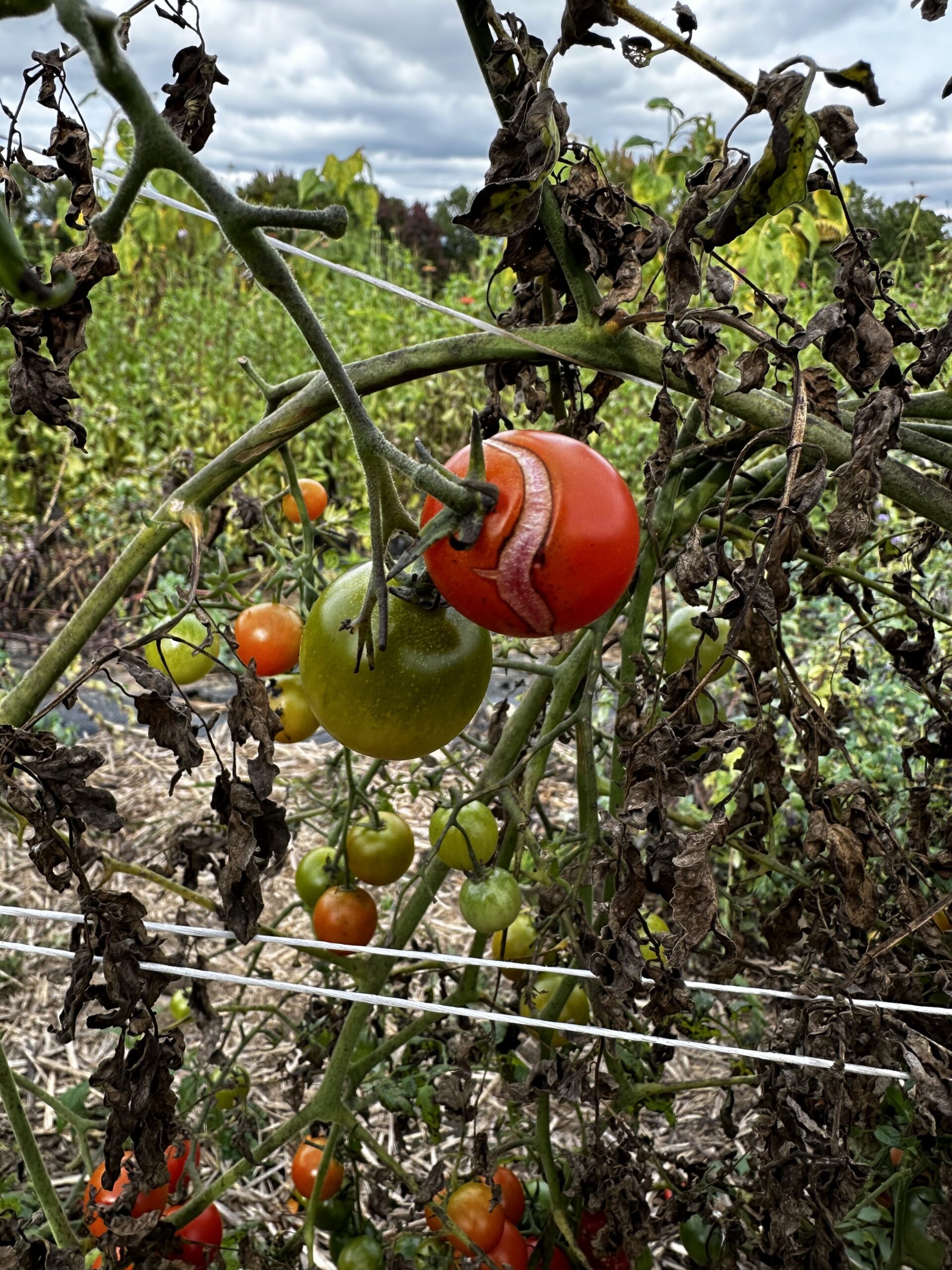
As a senior, I am still figuring out jobs and Things That Are After College. So when I have the opportunity to meet alumni from my college working in the sustainability field, I decide to go. Our group of students journeys to Boston, and when we get off the bus, the icy snow pinches our tender cheeks and exposed hands.

By ANNELL LÓPEZ
“Dark Vader” is excerpted from Annell López’s I’ll Give You a Reason, out now from Feminist Press.
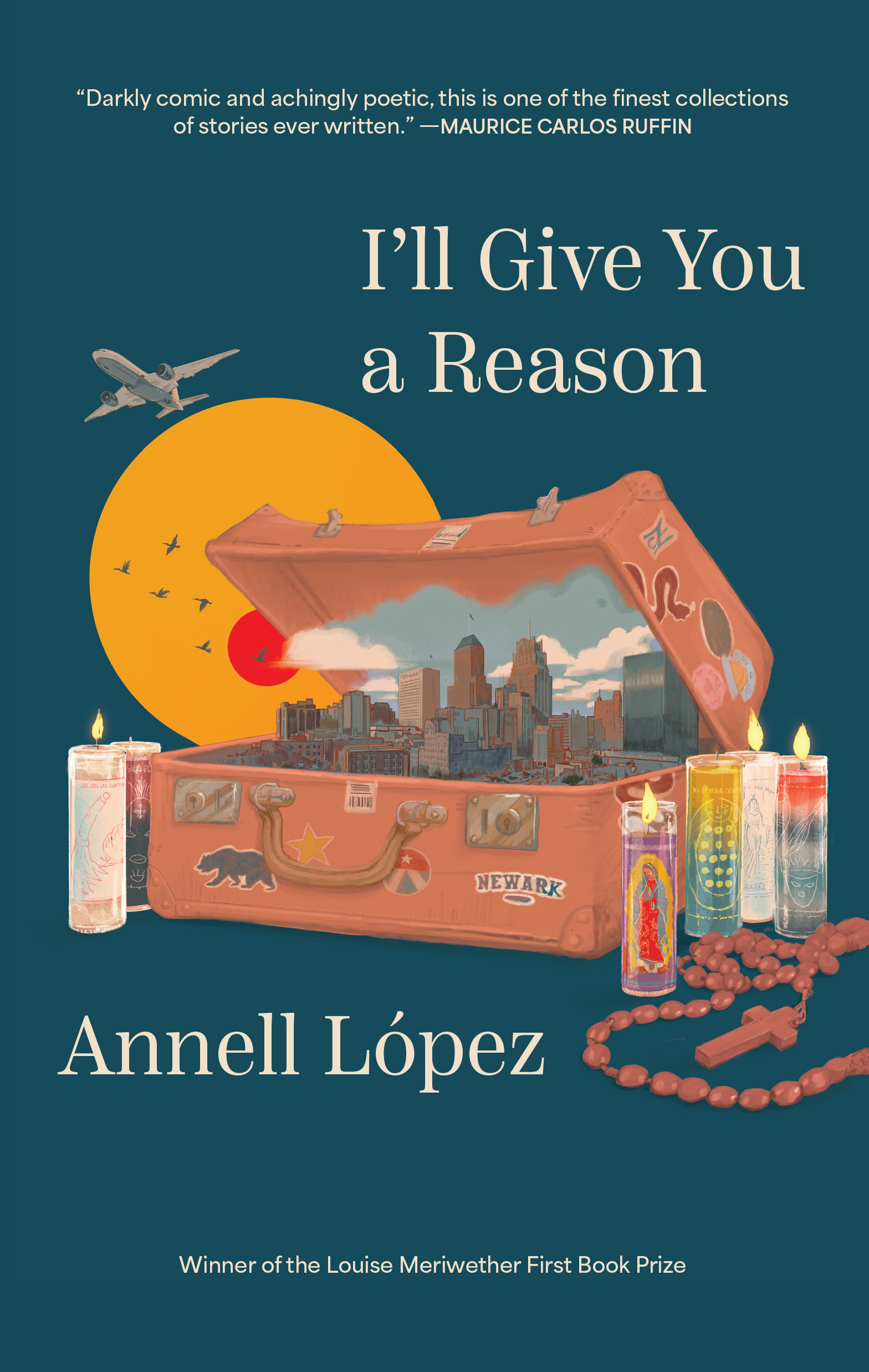
I was registering for the GED when Junie stormed into the house, slamming the door behind her. Her heavy Princess and the Frog backpack fell off her shoulder; the drop made the hardwood floors of our walk-up tremble.

By AINUR KARIM
Translated from the Russian by SLAVA FAYBYSH
Piece appears below in both English and the original Russian.

A typical apartment building in a residential area of Almaty.
Translator’s Note
There are probably many reasons why people in the West don’t know much about Qazaqstan. Not only do we not know much, but the little we do know is probably all wrong, as much of what we’ve heard is skewed by who told the story. Most people in the U.S. have never read a short story or seen a play or movie written by someone from Qazaqstan (not much is available, frankly). That’s why it was such a delight to be able to translate this excerpt from Ainur’s as yet unfinished novel.
I also imagine that many readers may not be aware of the existence of bride kidnapping, so my hope is that “Kidnapped” will not only introduce something new, but it will demystify the custom from the beginning. I myself did not know anything about this cultural practice until I sat down to translate the story. And now, being a translator means I get to share it with others. Bride kidnapping has been on the rise in Qazaqstan since the breakup of the Soviet Union. Having said that, Ainur made clear to me that the way it works in the real world varies, and it often doesn’t look quite like it does here.
—Slava Faybysh


Nayereh Doosti speaks to managing editor Emily Everett about her story “The Little One,” which appears in The Common’s most recent issue. Nayereh talks about the many inspirations behind this story, which follows an older Iranian man coming to America, where he feels out of place with his family members, the community, and the younger generations. Nayereh also discusses her time as an intern at The Common, her MFA program at BU, and her brand new Persian translation of Aleksandar Hemon’s The Book of my Lives, out now in Tehran.

Nayereh Doosti is an Iranian writer and translator based in Berkeley, California. Her writing has appeared or is forthcoming in Epiphany Magazine, The Massachusetts Review, and Nowruz Journal, among others. She holds an MFA from Boston University, and is a former intern at The Common.
Read Nayereh’s story “The Little One” in The Common at thecommonoline.org/the-little-one.
The Common is a print and online literary magazine publishing stories, essays, and poems that deepen our collective sense of place. On our podcast and in our pages, The Common features established and emerging writers from around the world. Read more and subscribe to the magazine at thecommononline.org, and follow us on Twitter @CommonMag.
Emily Everett is managing editor of the magazine and host of the podcast. Her debut novel is forthcoming from Putnam Books. Her stories appear in the Kenyon Review, Electric Literature, Tin House Online, and Mississippi Review. She was a 2022 Massachusetts Cultural Council Fellow in Fiction.

Translated from the Portuguese by HEATH WING
Translator’s Note:
Translating the poetry of Ana Carolina Assis can best be described as an ebb-and-flow process. By this I mean that her poetry seems to possess its own current, with waters that rise and recede from one line to the next. Tapping into this current is precisely what proved key to translating Ana’s poetry. Like many contemporary Brazilian poets, Ana largely favors the omission of punctuation, often creating ambiguity in how a line or stanza should flow. She also does not capitalize proper nouns. In English, I maintain the lack of capitalization, including

Transcript: Tom Sleigh Podcast
Tom Sleigh speaks to managing editor Emily Everett about his poems “Last Cigarette” and “Apology to My Daughter,” which appear in The Common’s fall issue. In this conversation, Tom talks about his time as a journalist in Syria, Lebanon, Somalia, Kenya, Iraq, and Libya, and how that experience comes out in his poetry. He also discusses the process of putting together his new poetry collection from Graywolf, The King’s Touch, and how he sees the current Ukrainian refugee crisis playing out differently than crises in other parts of the world with less established infrastructure.


By PATRICIA LIU
Yunnan Province, China
Paper is thin. In the beginning, still billows in the wind, still petal-like, still grounded in this world
of living. The incense is the only material that translates the viscera to mist. Early, the fog has not yet
lifted, and we move through the white drip as if through total darkness. Fish lost in the deep under-
water. It is easy for water to find home in our bodies. How wonderful it is to think my father’s
dead father a translation of our living selves, the water in-between my cells, the same water of
ghosts. Of women and Buddha, of lotus flower and palace, of lion. See the shine of fire, even
now. See the smoke, encapsulated by the fog. My father tells stories of the state’s inexorable beckoning,
the brothers, and the sisters, too, sent to the countryside. What they remember most is the truck
and the dust, the broad shoulders of horse, that first night and its stars, the mass exodus of dragonflies
following the monsoons—but no, exodus is uniquely a human endeavor. My father cannot bring
himself to anger; he knows it is shame that is the ugliest language. Somewhere, I have lost my place
in the life-wheel, and the only words I know in Chinese are our names. Jiayu is rain. Jialei is rosebud.
Only years later do I learn that Jiayu means jade. Only years later do I long for pure, unadulterated
fortune over the ritual of early rain. Somehow, turn face to sky. Here. In memory, to burn is to revere.

By SONYA CLARK

The Solidarity Book Project was envisioned by Professor of Art and Art History Sonya Clark, as one way for Amherst College, in its Bicentennial year, to recommit to a more equitable future by pushing against legacies of settler colonialism and anti-Black racism.

Poem by SYLVIE DURBEC, translated from the French by DENIS HIRSON
Sylvie Durbec was born in Marseille and lives in Provence, near Avignon. She writes texts in both prose and poetry, as well as painting and making collages. The many books she has published over the past twenty years include the prose-poetry memoire Marseille : éclats et quartiers (Marseille, fragments and quarters) which won the prestigious Jean Follain prize; Prendre place (Taking place) concerning the internment camp at Douadic in France and Soutine, a prose-poem about the painter, published in The Common. This year she has published 50 carrés du jour (50 squares of the day) and Ça qui me poursuit (That which pursues me).
Denis Hirson grew up in South Africa and has lived in France since 1975. He has published nine books, several concerning the memory of South Africa under apartheid. The latest, both published in 2017, are Footnotes for the Panther, ten conversations with William Kentridge, and Ma langue au chat, in French, concerning the torture and delight of speaking and writing in that language.
Table of Contents
The Ignorance of Beasts
I still don’t know how to type a tilde on a computer keyboard
when writing the name of a Spanish or Portuguese writer I love.
Nor do I know what poetry is.
Don’t miss an issue! Subscribe to The Common.
