By DALIA TAHA
Translated from the Arabic by SARA ELKAMEL
from Ramallah
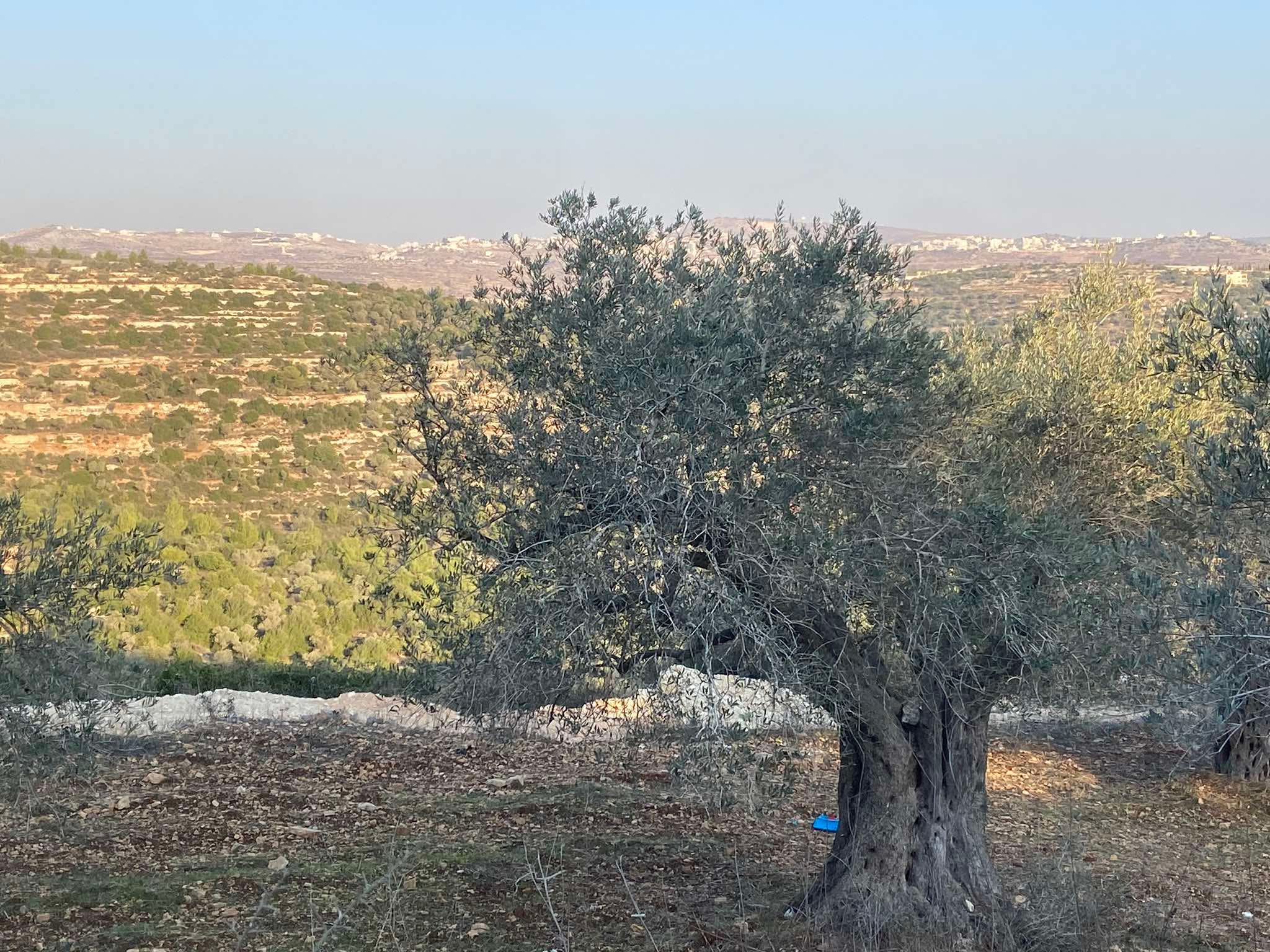
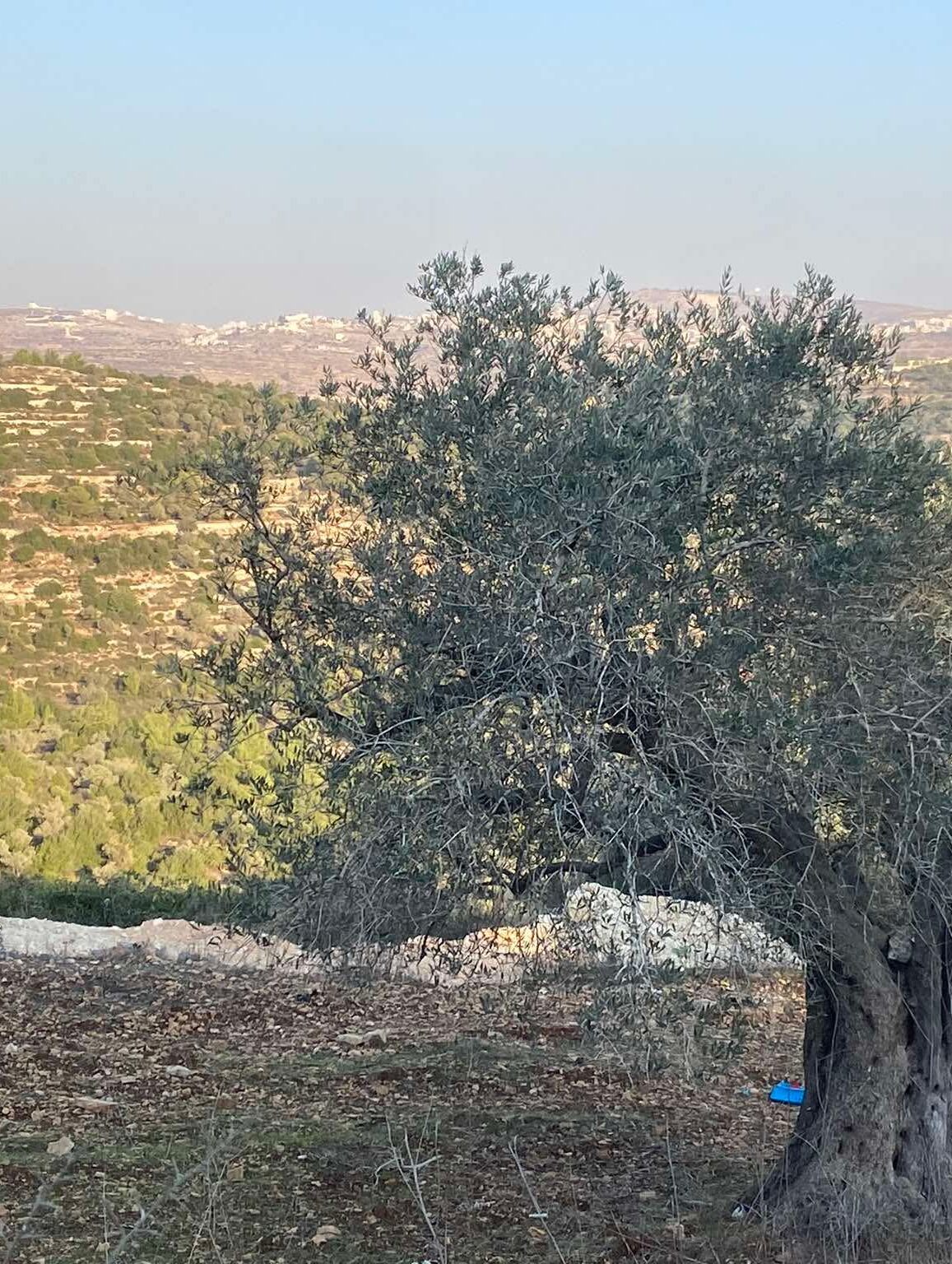
Ramallah Landscape, photograph by Dalia Taha
Enter Zakaria Mohammed’s Balcony
On Zakaria Mohammed’s balcony,”
we notice just how close
the settlement is.
Then we ignore it and drown
in conversation, its lights
swelling before us
the way a car’s headlights
flood your whole existence
before its body of steel crashes into you.
The settlement drives
toward us like a truck—crushes us
as we sit on the balcony of the poet
of rocks and flowers, surrounded
by his rocks and his flowers.
All we own are our lips
and the pupils of our eyes—the car
will plow into all of this.
And still, life is far too complex
for words like victory or defeat.
Life is Salma on the balcony
moving plants to bigger pots, in her eyes
the settlement’s lights.
Enter Fig Tree
There is not one poet
who has not tried to describe it.
Not one person can walk past it
without extending an arm to the fruit.
Even the sun, throughout time,
has tried to penetrate its dense leaves.
It attracts poets and vendors, pillagers and light—
but dew alone has touched its depths;
you will find its drops on the fruit
morning after morning.
In Palestine, the fruit vendors call out: “Figs!
Ripened by mist! Give no one else a taste!”
You would never look at it and think:
How lonely is the fig tree?
Like the writing room, it bursts with pages
and the secret of creation.
Abundant, like a poet.
Its large leaves crowd together
like coats on a hanger—
heavy with the world.
As beautiful as justice.
Note: These poems are forthcoming in Enter World by Dalia Taha; translated from the Arabic by Sara Elkamel (Graywolf Press, 2026).
Dalia Taha is a Palestinian poet and playwright based in Ramallah. The author of three poetry books, two plays, and a children’s poetry book, Taha was a Banipal Visiting Author Fellow and won the 2025 Norwegian Dramatists’ Association’s Solidarity Award. She holds an MFA in playwriting from Brown University and teaches at Birzeit University.
Sara Elkamel is the author of the poetry chapbooks Field of No Justice and Garden City, and the translator of Mona Kareem’s chapbook, I Will Not Fold These Maps. She holds an MA in arts journalism from Columbia University and an MFA in poetry from New York University. She lives in Cairo.