By CONSTANTINE P. CAVAFY
Translated from the Greek by CONSTANTINE CONTOGENIS
Poem appears in both English and Greek below.
Translator’s Note:
In translating Cavafy I was most absorbed and, at times, confused by his irony. People make ironic points—no confusion. But some of Cavafy’s irony does not come to a sharp point. I call this unresolved irony, which adds to but doesn’t settle the semantic and emotional atmosphere. The experience of reacting to the irony in the context of its poem can be frustrating. Instead of crystalizing our understanding, or, as a kind of compass, leading us to the author’s side, the irony works within a poem to help create an experience of widening awareness, giving us a touch of wisdom.
— Constantine Contogenis
Near destitute, I’m this close to homeless.
This killer of a city, Antioch,
it’s eaten all the money I have,
this killer and its cost of living.
But I’m young, in the best health.
I speak a marvelous Greek
(and I know, I mean “know,” my Aristotle, Plato,
the orators, poets, the—well, you name them).
As for soldiering, I can do a thing or two;
I’ve friends high up in the occupying armies;
I’ve even got an in with the government.
In Alexandria for six whole months last year,
I learned things (so useful now) about what goes on:
the “Incarcerator”’s schemes, the old corrupt ways, and the rest.
So I do believe I’m more than fully
qualified to serve this country,
my beloved fatherland, Syria.
Whatever mission they give me, I’ll do all I can
to be of some use to the nation. That’s my intention.
And if they block me again, with their endless procedures—
oh, I know all about them, those slick ones; why say more?
—if they do block me, well, what more can I do?
I’ll approach Zabina first,
and if that child can’t see what I offer,
I’ll go right over to his enemy, Grypus.
And if that idiot won’t appoint me to something,
I’m straight off to Hyrcanos.
I’m pretty sure to be picked by one out of three.
My conscience, it doesn’t bother me
leaving things to chance.
All three of them harm Syria the same.
But, beaten down like this, what more can I do?
I’m just trying, wretch that I am, to put my life together.
Now, had the ruling gods bothered, they could have
made a fourth, who was good.
I’d have followed him, with pleasure.
1930
ΑΣ ΦΡΟΝΤΙΖΑΝ
Κατήντησα σχεδὸν ἀνέστιος καὶ πένης.
Αὐτὴ ἡ μοιραία πόλις, ἡ Ἀτιόχεια
ὅλα τὰ χρήματά μου τά ᾽φαγε:
αὐτὴ ἡ μοιrαία μὲ τὸν δαπανηρό της βίο.
Ἀλλὰ εἶμαι νέος καὶ μὲ ὑγείαν ἀρίστην.
Κάτοχος τῆς ἑλληνικῆς θαυμάσιος
(ξέρω καὶ παραξέρω Ἀριστοτέλη, Πλάτωνα·
τί ρήτορας, τί ποιητάς, τί ὅ,τι κι ἂν πεῖς).
Ἀπὸ στρατιωτικὰ ἔχω μιὰν ἰδέα,
κ᾽ ἔχω φιλίες μὲ ἀρχηγοὺς τῶν μισθοφόρων.
Εἶμαι μπασμένος κάμποσο καὶ στὰ διοικητικά.
Στὴν Ἀλεξάνδρεια ἔμεινα ἕξι μῆνες, πέρσι·
κάπως γνωρίζω (κ᾽ εἶναι τοῦτο χρήσιμον) τὰ ἐχεῖ:
τοῦ Κακεργέτη βλέψεις, καὶ παληανθρωπιές, καὶ τὰ λοιπά.
Ὅθεν φρονῶ πὼς εἶμαι στὰ γεμάτα
ἐνδεδειγμένος γιὰ νὰ ὑπηρετήσω αὐτὴν τὴν χώρα,
τὴν προσφιλῆ πατρίδα μου Συρία.
Σ᾽ ὅ,τι δουλειὰ μὲ βάλουν θὰ πασχίσω
νὰ εἶμαι στὴν χώρα ὠφέλιμος. Αὐτὴ εἶν᾽ ἡ πρόθεσίς μου.
Ἄν πάλι μ᾽ ἐμποδίσουνε μὲ τὰ συστήματά τους —
τοὺς ξέρουμε τοὺς προκομένους: νὰ τὰ λέμε τώρα;
ἂν μ᾽ ἐμποδίσουνε, τί φταίω ἐγώ.
Θ᾽ ἀπευθυνθῶ πρὸς τὸν Ζαβίνα πρῶτα,
κι ἂν ὁ μωρὸς αὐτὸς δὲν μ᾽ ἐκτιμήσει,
θὰ πάγω στὸν ἀντίπαλό του, τὸν Γρυπό.
Κι ἂν ὁ ἠλίθιος κι αὐτὸς δὲν μὲ προσλάβει,
πηγαίνω παρευθὺς στὸν Ὑρκανό.
Θὰ μὲ θελήσει πάντως ἕνας ἀπ᾽ τοὺς τρεῖς.
Κ᾽ εἶν᾽ ἡ συνείδησίς μου ἥσυχη
γιὰ τὸ ἀψήφιστο τῆς ἐκλογῆς.
Βλάπτουν κ᾽ οἱ τρεῖς τους τὴν Συρία τὸ ἴδιο.
Ἀλλά, κατεστραμένος ἄνθρωπος, τί φταίω ἐγώ.
Ζητῶ ὁ ταλαίπωρος νὰ μπαλωθῶ.
῍Ας φρόντιζαν οἱ κραταιοὶ θεοὶ
νὰ δημιουργήσουν ἕναν τέταρτο καλό.
Μετὰ χαρᾶς θὰ πήγαινα μ᾽ αὐτόν.
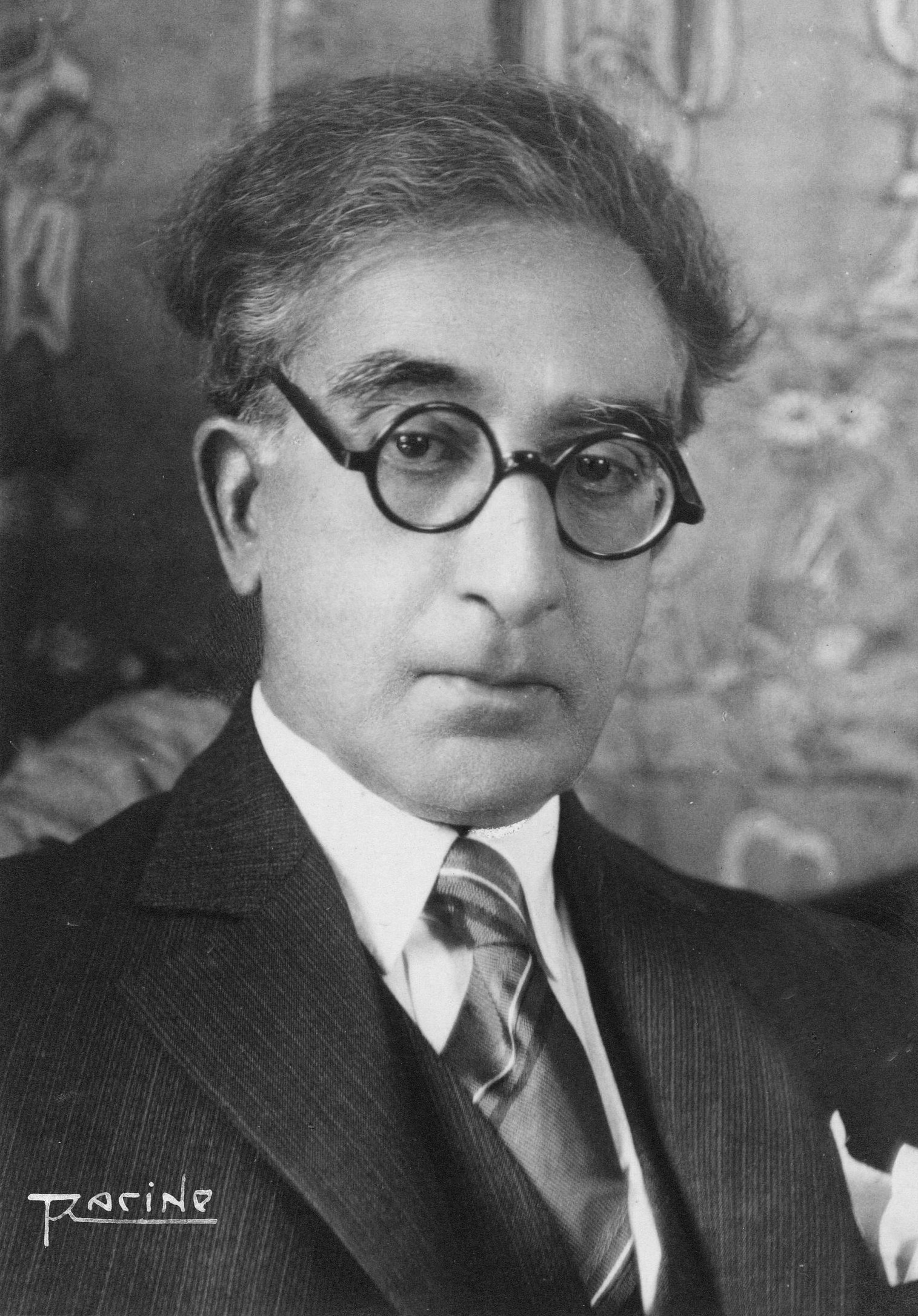
Constantine P. Cavafy, born in 1863, lived most of his rather private life in Alexandria, Egypt, dying there in 1933. When he was eight, his father died, precipitating the family’s decline in wealth and status. As an adult, he worked for 30 years as a lower-level manager of the Third Circle of Irrigation, the municipal water works. He wrote matter-of-factly about intense homoerotic desire. Such poems, in his day, were daring, even, conceivably, dangerous. With perhaps equal passion, Cavafy set many poems in obscure but important centuries of Greek culture, after Classical times. He lived above a brothel and played the commodities market with modest success. Never publishing a book, he gave his poems to friends and select readers in pamphlet, booklet, or pinned form. The first book of his collected work was published two years after his death.
Constantine Contogenis, poet and translator, was a finalist for 2024 Pablo Neruda Poetry Prize. Our Cavafy, his translations of CP Cavafy poems, and Between One Thing and Its Other, a poetry chapbook, are forthcoming (Finishing Line Press, 2026). Ikaros (Word Press, 2004)—a First Prize “Open Voice Poetry Award,” Writer’s Voice, and a Finalist, Paris Review Poetry Prize. Co-translated Songs of the Kisaeng: Courtesan Poetry of Last Korean Dynasty (BOA Editions, 1997). In Joining Music with Reason: 34 Poets, British and American, chosen by Christopher Ricks; and Pomegranate Seeds: Anthology of Greek-American Poetry, ed. Dean Kostos. Published by numerous journals and PSA’s Poetry in Motion.