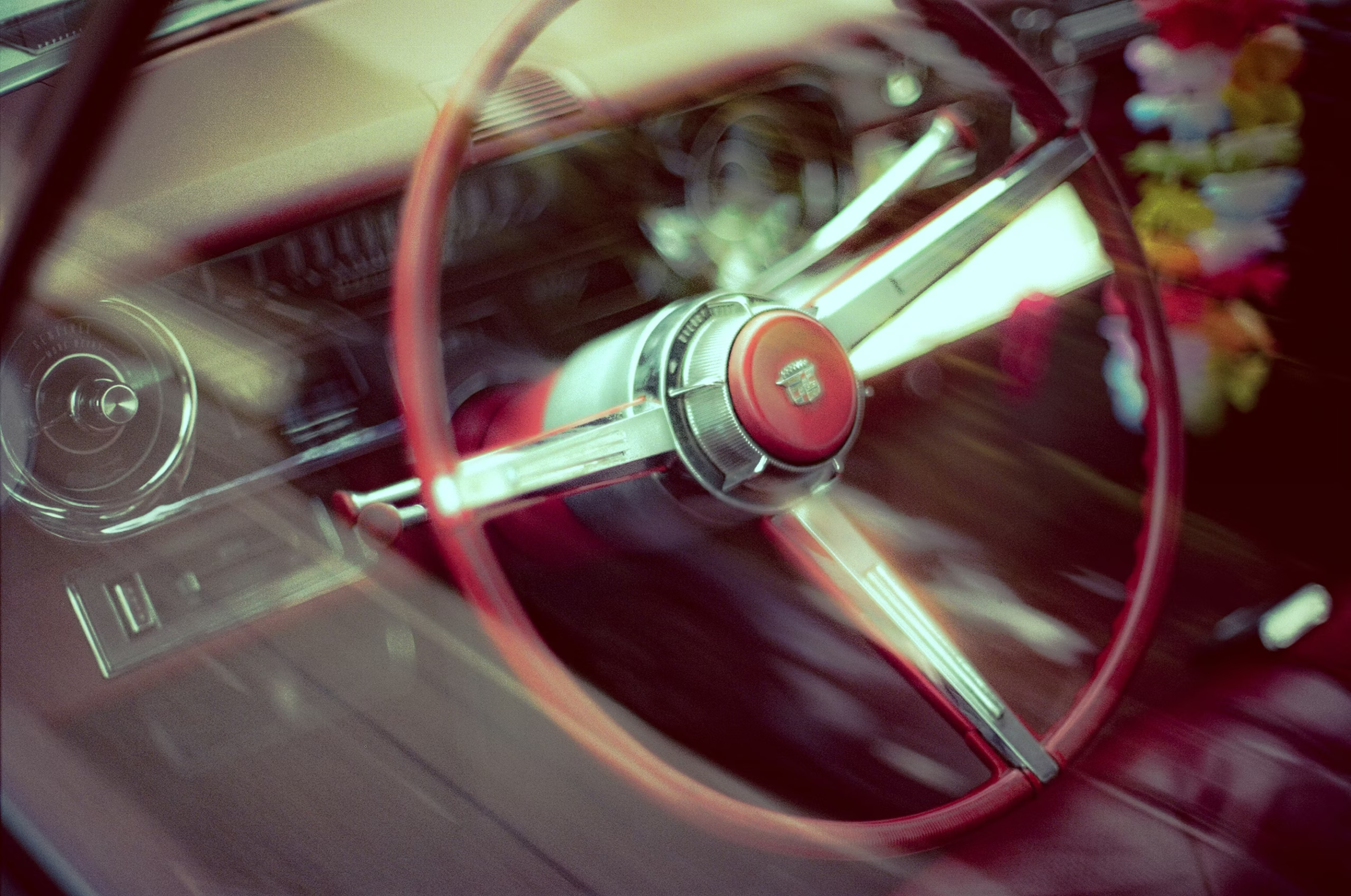
His left wrist dangled out the half-wound-down glass of a boxy brown Cadillac with red felt seats. Flies drifted in and out. He had a dip top cone in his hand. The place was famous for them. You’d think it would be melting in the heat, but the molten chocolate shell held the ice cream within firm and cold. The air reeked of gasoline. No one had thought to turn the engine off.
How was I going to explain this to my mother? She would be devastated. She had always invoked his name when I came home with new tattoos, piercings, mohawks, cornrows, growth spurts, scars from pocketknives and skateboarding, pimples. This is my body and Jesus’ body, she would grab my arm and say. What are you doing to it?
The line inched forward slowly, with everyone stopping to look at, well, you know. The ice cream shop marked the point between the two McDonalds in town. In the winter, it was boarded up, cork panels over every face of it. In the summer, as it was then, it opened at odd hours, as if on a whim. I think the employees were almost always fucking in there. How could they not be? The place was built like a box. So dim and cozy and damp, save for the sunlight that slipped through whirring fans above the slushie machines.
When I got to the register, I ordered two dip tops. It seemed like the right thing to do. The cashier coaxed the ice cream out from the machine in spools, glorious and towering, before dunking them into the vat of bubbling brown.
“There is nothing original about bravery. About martyrdom,” she said as she put the cones in my hands.
“How could that be?” I asked her.
“Well, that’s all you get,” she said and shut the screen door.
By then, the crowd was swollen in the heat, licking away. His dip top cone had at last fallen to the asphalt, where ants held communion in the dark slurry. I swept the mess away with my foot—someone had to do something. Close to his body, I noticed, with a start, he had a diamond stud in his ear, sleek and quiet. Now that would really upset my mother. This is Jesus’ body and my body, she would say, what has he done to it?
But my mother, it turns out, already knew, for that morning, my tattoos, my hair, my scars, my holes, the growth plates of my knees had danced off my body, and she had spent the day parenting them, one at a time until they were as big as I, watching them peel and crack in the heat, seeing them for something beautiful, taking them out to see the wonder of the world, so that by the time I came home, I found her gathering them all into my bed, chocolate and ice cream already smeared across their faces, the cones already bit to dust.
Stefan Bindley-Taylor is a Trinidadian American author born and raised in Maryland. His recent and forthcoming work can be found in several outlets, including Chautauqua, The Common, adda, and The Brooklyn Rail. Outside of writing, he is a musician, educator, and disgruntled Manchester United fan.