
Amaya Ranatunge

Egana Djabbarova’s My Dreadful Body: Exploring the Wounded Self and Belonging in Azerbaijani Diaspora Literature

By EGANA DJABBAROVA
Review by BRITTA STROMEYER
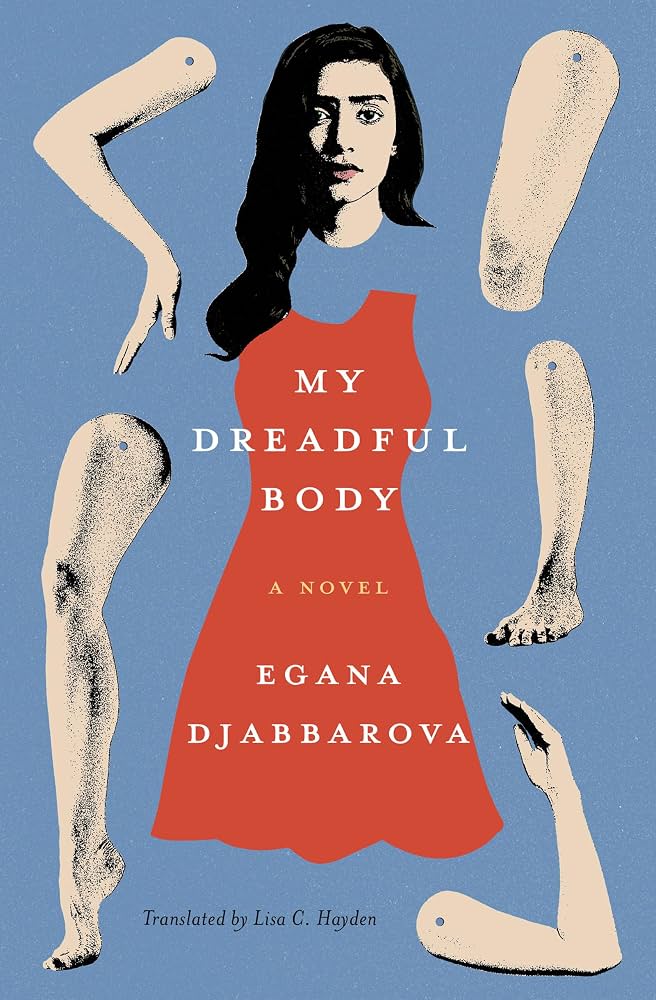
My Dreadful Body


Every now and then, a book is spawned that renders you speechless, demanding recognition for its searing vulnerability and astute cultural criticism. Egana Djabbarova’s My Dreadful Body, translated by Lisa C. Hayden, stands as one of those. The novel traces the lacerations of its largely unnamed narrator’s pain and grief bleeding into the suffering of an entire people by mapping a lineage of women—mothers, grandmothers, and aunts—whose identities are confined to roles as wives and caretakers, illustrating how societal expectations shape their lives and the lives of generations that follow.

Set in post-Soviet Yekaterinburg, Russia, the story follows the narrator’s upbringing within an Azerbaijani family, charting the cultural and societal challenges of life in the diaspora: “I don’t remember who it was and I don’t remember how long we ran; the only thing I remember is how much my shoulders ached from the heavy backpack, how the backpack hit my lower back, how I lost my breath, and how terrified I was. That was the first time I felt true primal danger and the proximity of death with my own skin. That was when I realized that being a stranger means being hated, being a vessel for rage.” The narrator’s toil with dystonia, a neurological movement disorder, serves as a visceral metaphor for this history; the illness not only robs her of speech and physical autonomy but mirrors the cultural constraints that have long stifled the women in her family. At its core, My Dreadful Body offers a piercing feminist critique of the systemic silencing and erasure of women’s agency, particularly within the context of the Azerbaijani diaspora.
Egana Djabbarova’s My Dreadful Body: Exploring the Wounded Self and Belonging in Azerbaijani Diaspora Literature
Read more...

The Kestrel

By ERNESTO PÉREZ ZÚÑIGA
Translated from the Spanish by OLIVIA BAES

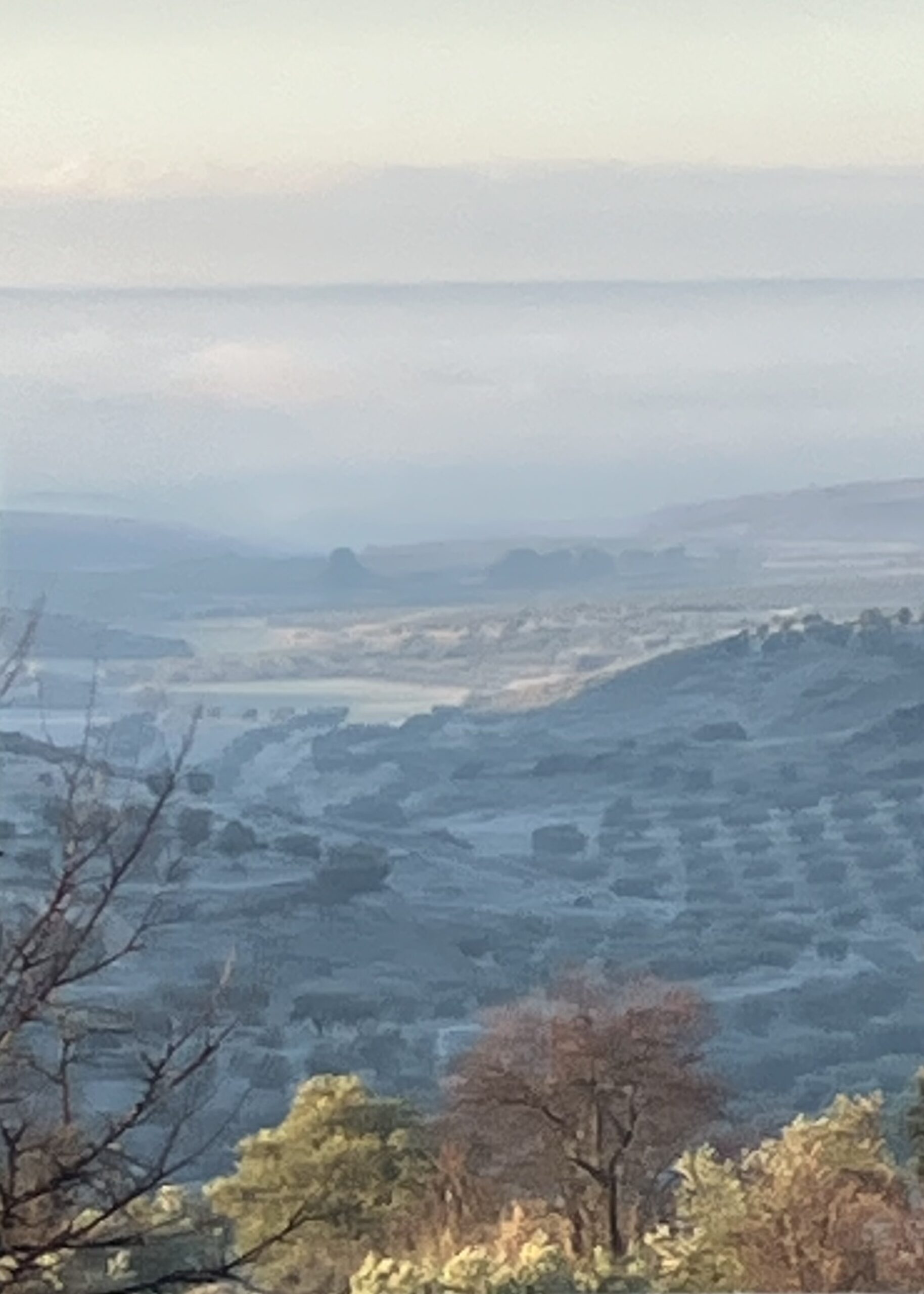
Valle_de_la_Salceda

Photo courtesy of the author.

Salceda Valley, Colmenar de Oreja, Madrid

I hear it sing after the solstice. A bird of prey, the little falcon with the beautiful song. A crystal line rising from the tree where it perches to the sky then plunging down abruptly. This is how the kestrel precedes its own flight to the zenith, as if it first needed to trace a path of fierce bells.

I am not the only one to hear it: the small birds flee to faraway trees.

This is the sound of winter, when the year begins in slumber, damp with secret rains in the dawn and combed by the blizzards which wait for the sun to set through a crack in the clouds.

It is during the day that the kestrel attacks the few sparrows cowering from the cold on the roof. Huddled together and silent, as if awaiting an airbus, they disperse in a daze as talons strike from somewhere in the sky.

The Kestrel
Read more...

Martyrs

By CHELSEA BOLAN

When I got home from school that day, my mother was clearly excited about something.  She must have been watching for me from the window, because she met me at the door, and behind her I could see something denim folded up on the table beside the teapot. “I have a special treat for you,” she said. My heart ballooned in my chest. Levis. All at once I wanted to hug her and rush past her to put them on, I wanted to dance around the apartment like I never did, and I wanted more things, too—for my father to emerge from where he had been hiding all my life, the closet, or the jungles of Africa or Mexico, stepping from the shadows, framed by the doorway. 

She took my hand and walked with me over to the table. My heart began to deflate the closer we got, for it was clear that what was folded up there wasn’t a pair of Levi’s, but a length of raw fabric that had been created to rival Western denim. My mother was so happy that she seemed to slip outside her own body, snapping out the fabric like a flag, running her hand down it, wrapping it around my waist, nearly singing her words, because she thought she had given me what I wanted, that this would then be enough for me: this apartment, this city, this country, and my mother.

Martyrs
Read more...