Kei Lim

The Ground That Walks

By ALAA ALQAISI


Gaza, Palestine

We stepped out with our eyes uncovered.
Gaza kept looking through them—
green tanks asleep on roofs, a stubborn gull,
water heavy with scales at dawn.

Nothing in us chose the hinges to slacken.
The latch turned without our hands.
Papers practiced the border’s breath.
On the bus, the glass held us—
a pond that would not name who stays.

We packed what the skin remembers:
jasmine bruised on the balcony,
a chipped tea glass,
the stairwell’s rain-smell,
a key cold against the tooth.

Soil under our nails would not wash;
we washed around it like a wound.
My mother’s cup cooled where she left it.
My father’s shoes faced the prayer rug, waiting.

An olive taught refusal—
roots clasping dark without asking.
We whispered that lesson and kept failing it,
step after step, leaf after leaf.

Streets rehearsed our names and went hoarse.
The school bell rang with no teacher to answer.
One window lifted its curtain all night,
watching the path we couldn’t return by.

If you meet our eyes, don’t move them.
Witness is a key left warm in the lock,
so the door won’t lie about what doors do.

We are not turning away.
We are leaving the way ground learns a step,
and the step keeps listening for that ground—
the sea keeping our outline in its light.


Alaa Alqaisi is a Palestinian translator, writer, and researcher from Gaza, and a PhD candidate at Trinity College Dublin. Holding an MA in Translation Studies, she explores how literature and storytelling bridge cultures and bear witness to lived realities. Her work appears in ArabLit, Literary Hub, Adi Magazine, and others.

The Ground That Walks
Read more...

Review: Stories From the Edge of the Sea

By OLGA ZILBERBOURG

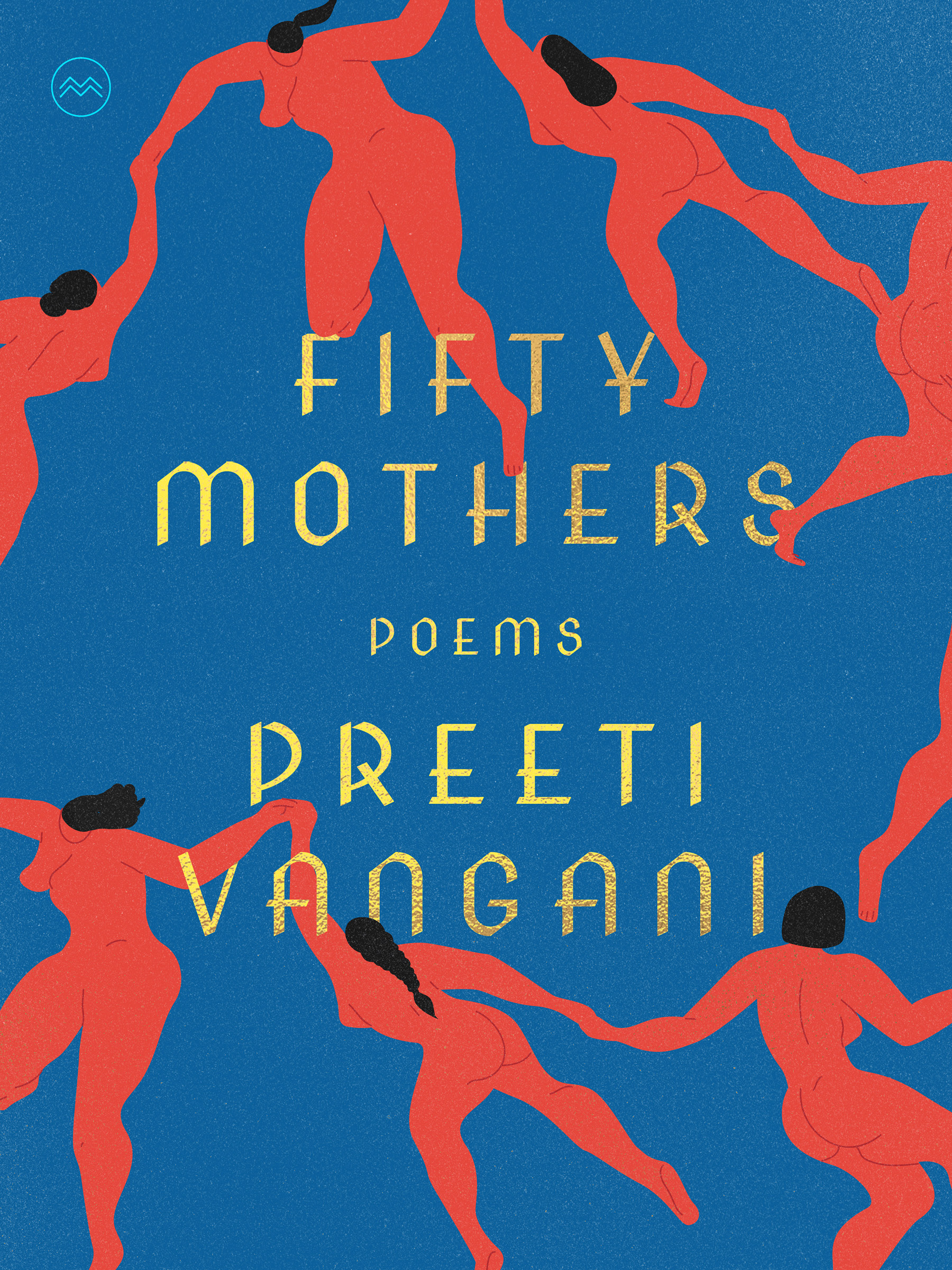
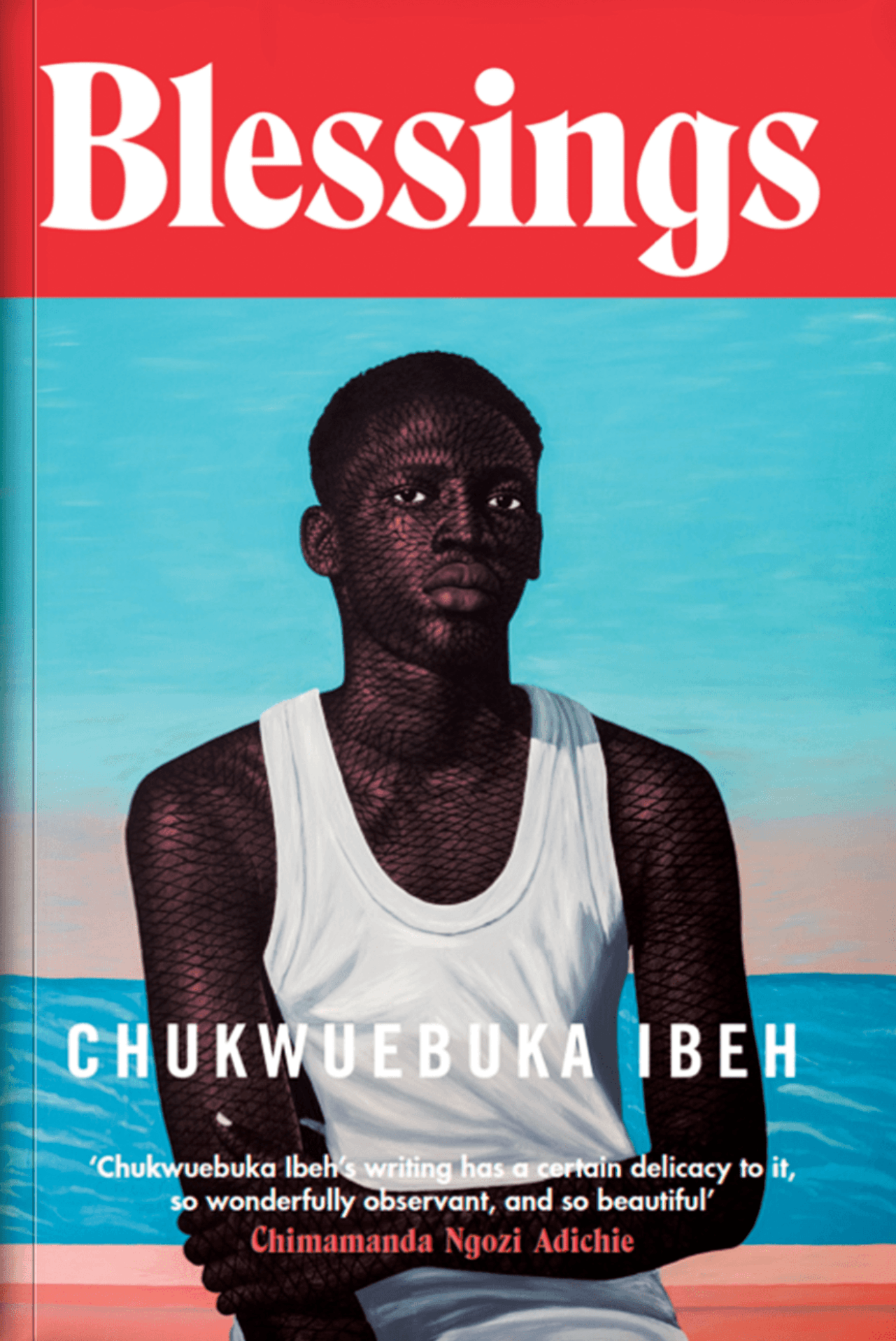
Book cover of Stories from the Edge of the Sea

Many fiction writers aspire to mastery of the short story form. From commercial offerings such as the “MasterClass” online series to college curricula, we are taught techniques to create a strong character and a plot leading to a resolution. The goal? “To uncover a single incidence or series of linked incidents, aiming to evoke a single effect or mood from the reader,” as phrased by Sughnen Yongo writing for Forbes. I’m convinced that this conventional attitude that expects singleness from the short story is selling it short.

In his latest collection Stories from the Edge of the Sea, Andrew Lam delivers work far beyond that narrow definition of the form. The settings are complex. Even a five-page story can encompass several decades of a character’s life. Though many pieces focus on a single protagonist, often the cast of characters is big enough for a multigenerational saga. Sometimes, the perspective shifts unexpectedly from one character to another across time and space, and in other stories a first-person narrator’s voice that begins a story disappears and the story continues in the third person, as though looking over the shoulder of the earlier first-person narrator. The emotional effects of these fourteen stories are layered; they leave us with no easy truths, but push us away from stable shores into the stormy seas of human experience.

Review: Stories From the Edge of the Sea
Read more...

December 2025 Poetry Feature: Rodrigo Toscano, Olena Jennings, Ezza Ahmed, and Wyatt Townley

New work from RODRIGO TOSCANO, OLENA JENNINGS, EZZA AHMED, and WYATT TOWNLEY

Table of Contents:
—Rodrigo Toscano, “One Like”
—Olena Jennings, “The Pine”
—Ezza Ahmed, “The River That Was and Wasn’t”
—Wyatt Townley, “The Longest View” and “Christina’s World”

Rodrigo Toscano's headshot

One Like
By Rodrigo Toscano 

“Couple Bach preludes, a binding ceasefire,
One Dickenson poem, and we’re all set”
That was the post, like a gleaming beach pier
Charming half way out, torn up at the tip
Battered by statecraft, departmental verse.
You Could Make This Day Wondrous—the poems
We know what we mean, the anthology
Not unlike that pier, holding on for dear life
And raking in five point one thousand likes—
While folks in this country are still snoozing—
The drones keep droning, raining down sulfur
Chopping up limbs with zero counterpoint—
And what to make of the could make line breaks?
Tab key diplomacy, farce on all fronts.
And we? Rock dashes with thorough bass lines.


Olena Jennings' headshot

The Pine
By Olena Jennings

The pine tree in front of our house
was visible
from the kitchen
window. It kept all our recipes secret.
It towered above the hostas.
Years later, I didn’t like to drive past
to see its absence.

My father didn’t want to see
the uncomfortable feelings surfacing
like foam on a glass of beer.
It was at Avenue Liquor
that I became an adult too soon.
Driving past the house,
he ignored the uncomfortable feelings.

The house was warm orange brick.
I would stand near the tree
with my lunch box waiting
to be picked up by the red car
with the tricky door handle.
Our thighs stuck to the seats,
as if convincing us we wanted to stay.

I wanted to curl back
in the yellow bedroom
of the house, wanting to be hidden
by the pine tree. I wanted to
stand in the shade, the set
for all our photos.

We buried a goldfish. Empty bottles
of wine were lined up
on the bookshelves. I had graduated
from the headscarf by then.
My grandmother still wore one,
but I was ready to be bare
against the cold.


Photo of Ezza Ahmed

The River that Was and Wasn’t
By Ezza Ahmed

I was running, the neighborhood
boy my secret guard. A cloud of dust and dirt
my shadow.

My stomach would hurt
from fresh cow’s milk,
a white film swimming to the top.

In a place of people who are
and aren’t, the kids are raised on cardamom milk
and kites. The rain trembles at who it’s about to touch.

I know nobody, not even myself
when I cut blunt bangs staring into the mirror
my eyes black even in the sun.

Words burn my throat, the tongue
behind my tongue splits open,
voice giving birth to voice, I love

everyone silently. I hold my grandmother’s hand
every morning for two months
trace her green veins and give them names.

From the rooftop I memorize his eyes,
gold and green like a dying leaf. I kiss
his kite with mine before cutting the string.

I meet aunts, uncles, cousins, cousin’s kids, dad’s cousins
singing songs about a honeyed sleep
nights before my sister’s wedding.

I’m gifted bangles and anklets,
red, gold with bells, blue, blue and silver sparkles.
My walk becomes beautiful.

Everyone is anxious here,
fingers clenching and unclenching
in the space of the unsaid.

My sister’s Henna night finishes after the old curfew.
Still, we walked quietly to my dad’s childhood home.
The pathway lit by the whites of our eyes.

Grief makes a beggar out of me,
my appetite aching
for all that is and isn’t.

In a few weeks I thin
with my grandmother.
Her past growing cold on my plate.

Yesterday, we visited the old river.
It was there
then it wasn’t.


Wyatt Townley's headshot

The Longest View
By Wyatt Townley

In art, they call it background.
In theatre, backdrop. Behind

the hands of the magician
and pointing politician, behind

the siren and skyline
is the long view, hypotenuse

of the woods that only birds
and our searching eyes can find.

Behind every barrier: vista.
Inside the tightest fist and turn

of the intestine—space—and time.
Since childhood you have carried it

on the schoolbus and into every
classroom where you married

the seat by the window. There it was,
unrolling beside you. On the subway

it was tucked in you like a token,
the most precious thing you owned.

The horizon always started
in your heart, unspooling

where you turn. Don’t let them
fool you. Hunt for it, fish for it,

bring it to the fore. It was never
background. It’s true north.
 

Paintings Christina's World and Wind from the Sea by Andrew Wyeth

Paintings by Andrew Wyeth: “Christina’s World” and “Wind From the Sea”

 
Christina’s World

By Wyatt Townley

1
It’s a short walk home
from the field where she lay,
her pale dress circling

her slenderness,
the urgency of her turning
back. A short walk, unless

you have to crawl.

2
Some are slower still.
She chose the best dress
in the closet, the purse

with all she’d saved.
She walked into the field.
She picked the best

spot, the best view. Under
the stars, the pills sang
in their bottles like maracas.

When she ran out of rum,
she chewed the nasty capsules,
chewed and swallowed,

swallowed and scribbled,
scribbled and retched.
But the last thing she did
was scream.

3
Fifty years
from that field
to this chair.

The scenic route:
a series of mountains,
of men, of rooms.

A series of shoes,
of roads, of clouds.
But just one field.

Fifty years
to find home, to get
on the right side

of a lace curtain.
I rode here on a pencil.
The rest was wind.


Ezza Ahmed is an educator and poet based in NYC. Her poetry is concerned with diaspora, memory, and water (rivers, creeks, lakes, etc.). Her work is in The Idaho Review, The Gingerbug Press, Sycamore Review, Apogee Journal, the Michigan Review, and Adi Magazine. 

Olena Jennings is the author of the poetry collection The Age of Secrets, the chapbook Memory Project, and the novel Temporary Shelter. She is the translator or co-translator of collections by Ukrainian poets Kateryna Kalytko (co-translated with Oksana Lutsyshyna), Iryna Shuvalova, Vasyl Makhno, and Yuliya Musakovska. Her translation of Anna Malihon’s Girl with a Bullet is forthcoming from World Poetry Books. She lives in Queens, New York where she founded and co-curates the Poets of Queens reading series and press.

Rodrigo Toscano is a poet based in New Orleans. He is the author of twelve books of poetry. His latest books are WHITMAN. CANNONBALL. PUEBLA. The Cut Point, The Charm & The Dread. His Collapsible Poetics Theater was a 2008 National Poetry Series winner. His poetry has appeared in over 25 anthologies, including, Best American Poetry and Best American Experimental Poetry. Toscano received a New York State Fellowship in Poetry. He won the Edwin Markham 2019 prize for poetry. He was an Honorable Mention for the 2023 International Latino Literary Awards. He works for the Labor Institute in conjunction with the United Steelworkers on educational projects that involve environmental and labor justice culture transformation. rodrigotoscano.com

Wyatt Townley is Poet Laureate of Kansas Emerita and the author of seven books. Her work has been read on NPR and published in journals of all stripes, from New Letters to Newsweek, North American Review to Paris Review, Yoga Journal to Scientific American. Commissioned poems hang in libraries including the Space Telescope Science Institute, home of the Hubble. The poems here appear in her next book, Making the Turn, forthcoming fall 2026 from Lost Horse Press

December 2025 Poetry Feature: Rodrigo Toscano, Olena Jennings, Ezza Ahmed, and Wyatt Townley
Read more...

Knives, Tongues

By SIMONÉ GOLDSCHMIDT-LECHNER

Translated from the German by MELODY MAKEDA LEDWON 

Translator’s Note

“I need you to translate my book. You’re the person I would ask,” Simoné said to me as we sat on a panel about intersectionality and translation at the Translationale Berlin in the winter of 2023. We laughed briefly at how she had managed to weave this translation proposal into her response to a question about challenges in the German translation industry. Honored, intrigued, a bit nervous, I accepted.

Messer, Zungen, written primarily in German, explores how the erasure of Black people and people of color from the culture of remembrance within the Cape Coloured community in South Africa, also known as Camissa, is intimately tied to their displacement from ancestral lands and historic communal sites. Resisting racial violence, reclaiming memory, history and language therefore involves both returning to lost places and being resilient in hostile spaces. I found the role of language in this context particularly fascinating. The characters speak, remember, and experience their worlds in multiple languages, including Sesotho, English and Afrikaans, creating a mosaic of languages. In my initial draft of “Choir” and “Motherness,” I focused on how to recreate this rich tapestry of language in translation. As I began to revise, and consult with SGL and several colleagues, I concluded that it was most important to respect the characters’ language choices. Above all, I sought to capture the commonplace reality of multilingual worlds and communities. SGL adeptly portrays these realities in her novel without explaining them or making them more palatable to an imagined external audience. In contrast to the original, where passages written in English stand out, in the translation they seamlessly blend into the main language of the text, resulting in a new language mosaic.

—Melody Makeda Ledwon

Knives, Tongues
Read more...

What We’re Reading: September 2025

Curated by KEI LIM

This month’s picks span extraordinary circumstances, yet tug at the rather ordinary, or perhaps most relatable, of emotions. AFTON MONTGOMERY recommends an investigative nonfiction book that interrogates people’s relationships to forever chemicals, VICTORIA KELLY recommends the 2024 Booker Prize Winner that abandons plot and follows a 24-hour period of astronauts orbiting Earth, and MONIKA CASSEL recommends a docupoetics collection that weaves the emotional aftermath of the Vietnam War with the defiance of women throughout history and literature.


What We’re Reading: September 2025
Read more...

Podcast: Lily Lloyd Burkhalter on “Raffia Memory”

Apple Podcasts logo

Listen on Apple Podcasts.

Spotify Logo Green

Listen on Spotify.

Transcript: Lily Lloyd Burkhalter

Lily Lloyd Burkhalter speaks to managing editor Emily Everett about her essay “Raffia Memory,” which appears in The Common’s spring issue. Lily talks about traveling to the Cameroon Grassfields to research the rituals and production of ndop, a traditional dyed cloth with an important role in both spiritual life and, increasingly, economic life as well. She also discusses the book-length project she’s working on, which explores loss, grief, fabric, sewing, and weaving.

Podcast: Lily Lloyd Burkhalter on “Raffia Memory”
Read more...

August 2025 Poetry Feature: Anna Malihon, translated by Olena Jennings

By ANNA MALIHON

Translated from the Ukrainian by OLENA JENNINGS

From Girl with a Bullet, forthcoming October 2025


Presented in Olena Jennings’ seamless translation, Anna Malihon’s new collection, Girl with a Bullet, is one of the most important books of the year for those with an interest in the fate of Ukraine, a gift to Anglophone readers.

                                                                        —John Hennessy, poetry editor


Anna Malihot and Olena Jenning's headshots


Table of Contents:

[The girl with a bullet in her stomach]

[Don’t go into that home]

[Now the only thing that you can do for her, Christ,]

[Unfold and dive into me, to my very bone,]


August 2025 Poetry Feature: Anna Malihon, translated by Olena Jennings
Read more...

Dispatch from New Madrid, Missouri

By MADELINE SIMMS

New Madrid, Missouri

I. Mississippi River, Dec. 16, 1811

After midnight, cottonwoods are inconsequential teeth, ripped from the ground by the Mississippi River. An elm snaps like a bird’s neck: an egret. The current betrays every fluttering heart and rages on. A rock becomes sepulcher to the uprooted nest. The river could be less cruel, the winter, more forgiving. Someone could have conceived of this world, but for days, no one but a pair of swans bears witness to the earthquake. The strange earth frees itself into unimaginable fissures. The bank splits and pools into the tall prairie, the way a pail of milk might spill across an oak table. Even water will stain the strongest wood. Supposedly, there is quaking, waking what’s left of the neighbors, small animals that somehow survive. What is survival to the breathless that can’t forget? How long was the egret chick left flinching? There are traces of disruption here: feathers without blood, nests without eggs. Devoid of particular destination, another will roost again.

Dispatch from New Madrid, Missouri
Read more...