New poems from AMIYA MORETTA, EMILY MARIE PASSOS DUFFY, JOSE HERNANDEZ DIAZ, and JOHN KINSELLA.
Table of Contents:
- Amiya Moretta, “Magnolia Prophets”
- Emily Marie Passos Duffy, “Corpus Luteum”
- Jose Hernandez Diaz, “Ode to Chicken Quesadillas”
- John Kinsella, “Limbo Sub-canto 4” and “Story of the Sparks”
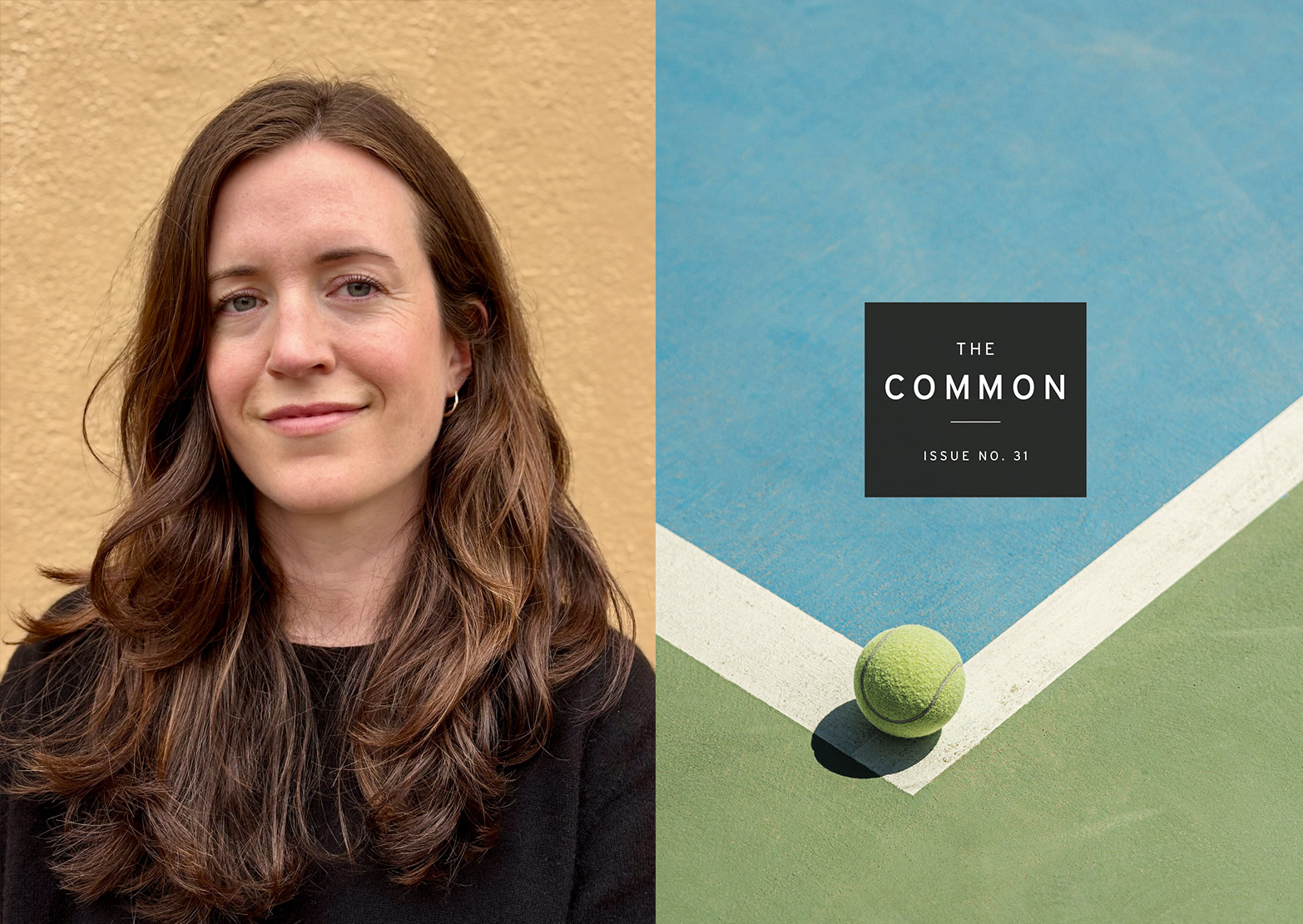
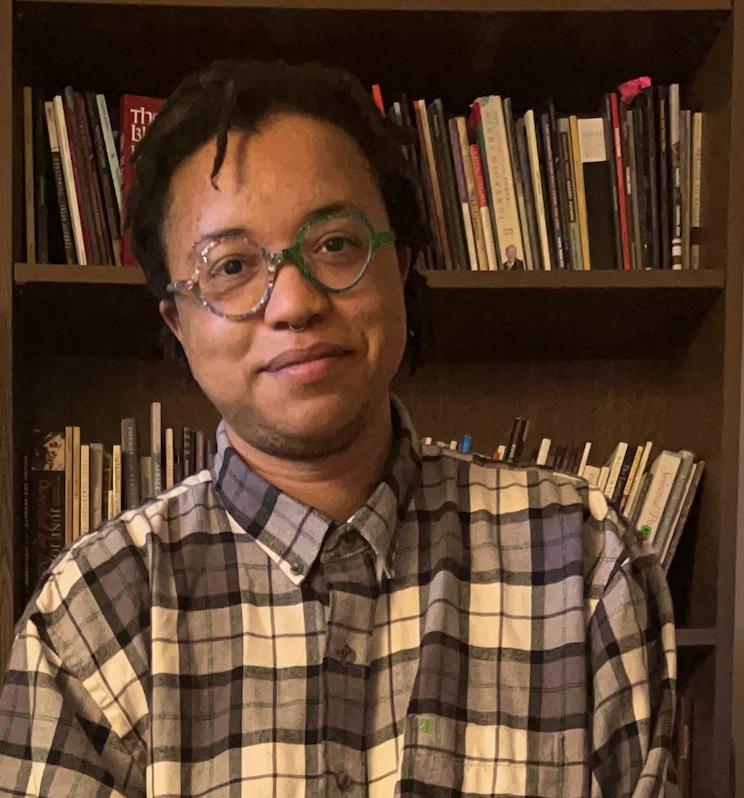
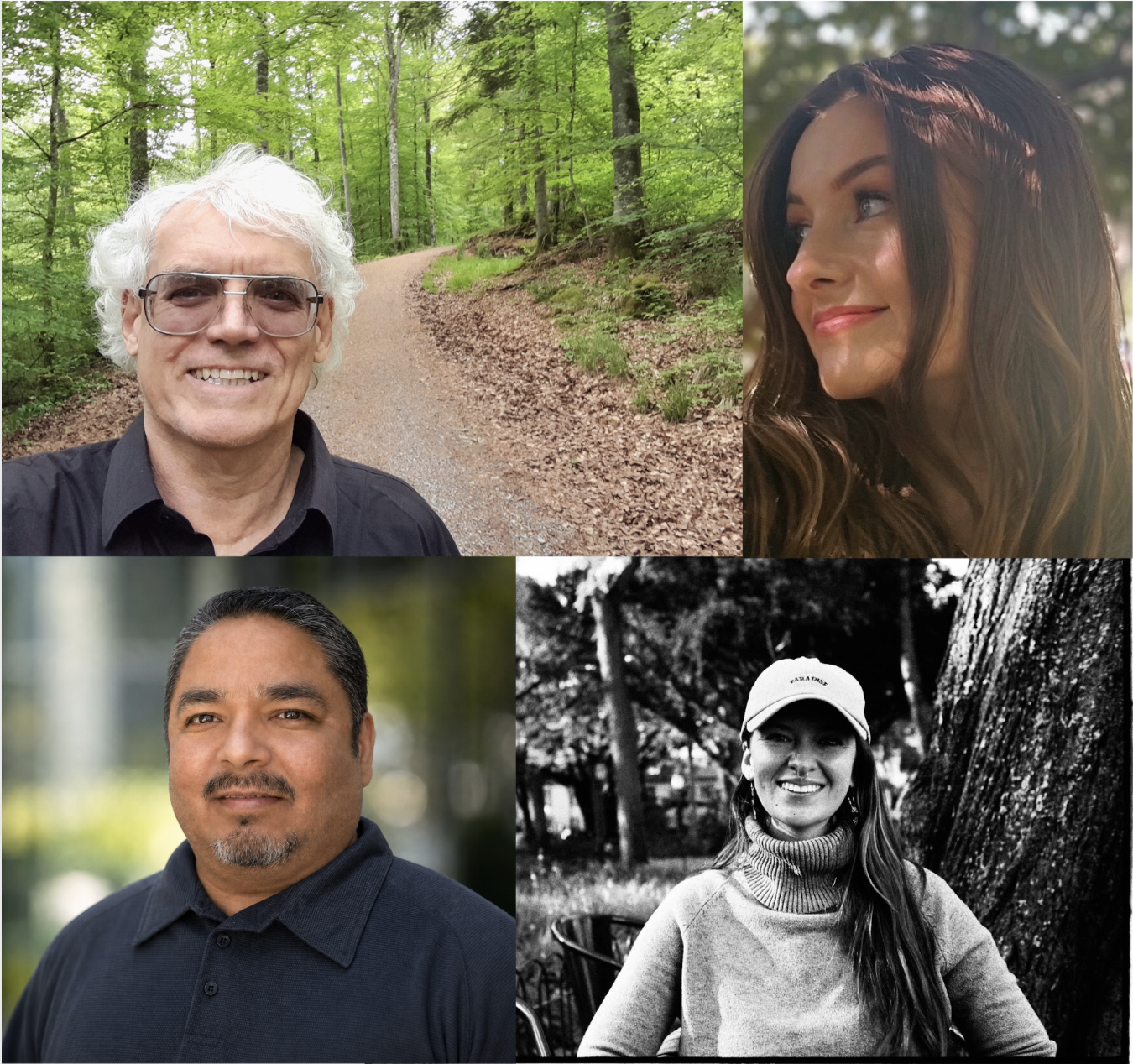
Top, left to right: John Kinsella and Amiya Moretta. Bottom, left to right: Jose Hernandez Diaz and Emily Marie Passos Duffy
Magnolia Prophets
By Amiya Moretta
Magnolia tree in the window, hammock,
a loop in hours, a cradle of light we swing inside,
naming what we’re afraid of.
In this version, he is from halfway around the world.
Some net caught the curve of us in the dark,
gathered what it could, his hand, my pulse.
We time travel.
I meet him as a child protecting a bird.
He meets my hornet’s nest.
Asks to go in.
I show him where the road begins.
He photographs the weather when I was five.
Says I woke him from hibernation.
Magnolia teardrops—that first day they open
mauve into pink, thick lipped
petals uncurling on a Saturday,
undressing until golden.
We are here, here, here,
wrist to wrist in this oak bed,
quilt overhead,
don’t know each other yet—
maybe not for ten years.
By then,we’ll be different.
I’ll spend my life beginning
all over again.
Before midnight, half the tree
erupts into pink; the other half starved
of light, remains, swelling inside hollows.
Corpus Luteum
By Emily Marie Passos Duffy
There are miracles that evidence
god’s activity on earth like
The rose, like Fátima
Virgin Mary appearing to some shepherd children
they built a mega shrine on that hill
Basilica compound with smooth surfaces
I went there once and felt compelled to masturbate
in the bathroom but bought a refrigerator magnet instead
I spend half my days wanting to die
A temporary endocrine house
revolts; the wallpaper peels
and my underworld contract plunges me
into certain darkness where loss is language
Give me grace
Give me latitude
Tobacco in my mouth
Fistful of flowers
Please, a way to measure my body against time
Pavement swollen after rain
Alette in the subway system
Persephone, eventually
Spitting red seeds like bloody teeth
ready another round
Ode to Chicken Quesadillas
By Jose Hernandez Diaz
So simple yet consistent, sure,
Carne asada would be nice, as well,
But trying to keep it lean, maybe
For special occasions or once a week,
As a reward for patience and discipline.
When I was a boy, my mother made
Quesadillas with homemade tortillas de harina—
A special treat, I’ll always cherish.
Nowadays, get them from drive-thru,
On the go, in the city, at the office.
When I think of chicken quesadillas,
I wonder: do they eat this in actual Mexico?
Or is it a Pocho meal, like a California burrito?
Either way, don’t care what people think.
Authentic, not authentic, for children, messy meal:
It’s a necessity for me, like iced coffee,
like southern California sunshine,
like fog and rain come winter.
Limbo Sub-canto 4
By John Kinsella
This minority report of my fall down in the city —
tripping over a concrete parking block
covered by a scrimmage of bark and dry leaves
before the path opened to scraps of my past.
This falling through on the Irish thin day
of the year like famine migrants’ escapism
that ended, eventually for some, in parks watered
from deep underground. Face driven into the rising
dirt, asphalt and concrete event horizon,
the pages I had left to proof a scripted
performance — in medias res — translated
into ‘cause of death’. But I rose, shaky, disorientated,
punctured by shadows and splinters of sunlight.
I heard a red wattlebird’s warning before I remembered
to call it ‘djankang’. I heard those who love me alarm-
calling, and lifted myself onto that path of… righteousness?
Story of the Sparks
By John Kinsella
Yesterday, driving between Toodyay and Northam,
we were behind a minibus dragging an old trailer.
I noticed the jockey wheel was down and impacting
the road every time the asphalt lifted or dipped,
and said to Tracy that sooner or later the wheel
would fly off and shoot through our windscreen.
So I dropped back a few hundred metres,
and within seconds the wheel was airborne,
bouncing in front of us, veering off into the dry grass
and scrub of the long paddock. Then, as the script goes —
action lines stripped of imagery — I added, The metal
forks of the jockey will be impacting the asphalt
and soon there’ll be sparks — just as happened on the Hume
Highway a week ago with a trailer, setting off a fire
that has changed the reality for large swathes of Victoria,
that has illustrated the denials into disaster
where all outcomes strip life from a future.
In the unfurling of event, I remember some comments
doubting a mere trailer could lead to such annihilation,
and yet here and now, we are in a region that burns
so easily, a region where we constantly negotiate fire
and ‘surrealism’ becomes the ordinary — a deadly
fusing of the conscious and unconscious, of dream
and a fire preparedness reality. I need to draw attention,
alert the driver, stop the vehicle, or a conflagration
will consume the district. Past the heady wheatbins,
late garnerings of harvest still arriving, stacks
blue-tarped triangular prisms or open to the blue
sky heat rising. The fire danger rating for the day
is high — not extreme or catastrophic, but high
nonetheless. Into the outskirts of town, they turn
off down past Northam hospital to join up
with the spur road to the Great Eastern Highway.
I follow, and sparks are already showering out
from beneath the trailer — now a molten signature.
Flashing my headlights, constantly blasting the horn,
waving a hand out the window, as through the dry
road-verges the minibus and trailer continue oblivious
or in denial. Reaching a stop sign, I pull up behind
the trailer and run to the driver’s window.
In slowed-down time each detail matters as if already
in retrospect. The driver stares at me, decides
to drive off. I block the car with my body and insist,
Your trailer is throwing sparks, mate — you’ll set
fire to the whole district. You’ve got to stop! There’s
little to no register of what I am saying, so I suggest
they get out and see what I am talking about.
It’s at that point I expect either epiphany or assault —
Tracy and I had just been talking about how making
contact with someone on the road is often risking life.
I realise that the driver is stoned off his face,
which accounts for why the wheel was left down
after hitching the trailer, not locked safely out of the way.
Realtime. Slowed time. Modes of awareness in a crisis,
an instant. He slowly emerges and I rapidly ‘lead’ him
to the issue as his passenger joins him, also stoned,
and they both stare bewildered at the damage. You’ve
got to get the metal off the road, I say. And they start
to mess with things, now caught up in their own deliberations,
cutting the rest of the world out of the issue. I pause,
then go back to our car, driving around trailer, minibus, people…
processing action and imagery, processing the fires
that didn’t take hold, the world as they might have rewritten it,
the joining of sparks into a narrative, a plot, a signature.
Amiya Moretta is the winner of the 2026 Disquiet Poetry Prize, a graduate of the Iowa Writers’ Workshop, and a Fulbright fellow. She lives and writes in Iowa City, Iowa.
Emily Marie Passos Duffy is a Lisbon-based poet, performer, and translator. She is the author of the poetry collection Hemorrhaging Want & Water (Perennial Press, 2023) and co-founder of Working Girls Press. She was a finalist for the Noemi Press Book Award and a finalist of the Inverted Syntax Sublingua Prize for Poetry judged by Khadijah Queen. She was a 2020 Disquiet International Luso-American fellow, and her chapbook, Miradouros, was a finalist in the 2023 Adrift Chapbook Contest. She is a PhD candidate in Translation Studies at The Catholic University of Portugal (UCP) where she holds a scholarship from FCT.
Jose Hernandez Diaz is a 2017 NEA Poetry Fellow. He is the author of The Fire Eater (Texas Review Press, 2020) Bad Mexican, Bad American (Acre Books, 2024) The Parachutist (Sundress Publications, 2025) Portrait of the Artist as a Brown Man (Red Hen Press, 2025) and the forthcoming, The Lighthouse Tattoo (Acre Books, 2026). He has taught creative writing at the University of California at Riverside, and at the University of Tennessee where he was the Poet in Residence.
John Kinsella‘s recent books of poetry include The Darkest Pastoral: Selected Poems (WW Norton, 2025) and Aporia (Turtle Point Press, 2025). The three volumes of his collected poems are The Ascension of Sheep (2022), Harsh Hakea (2023) and Spirals (2024) all from the University of Western Australia Press.