By AIDAN CAHILL
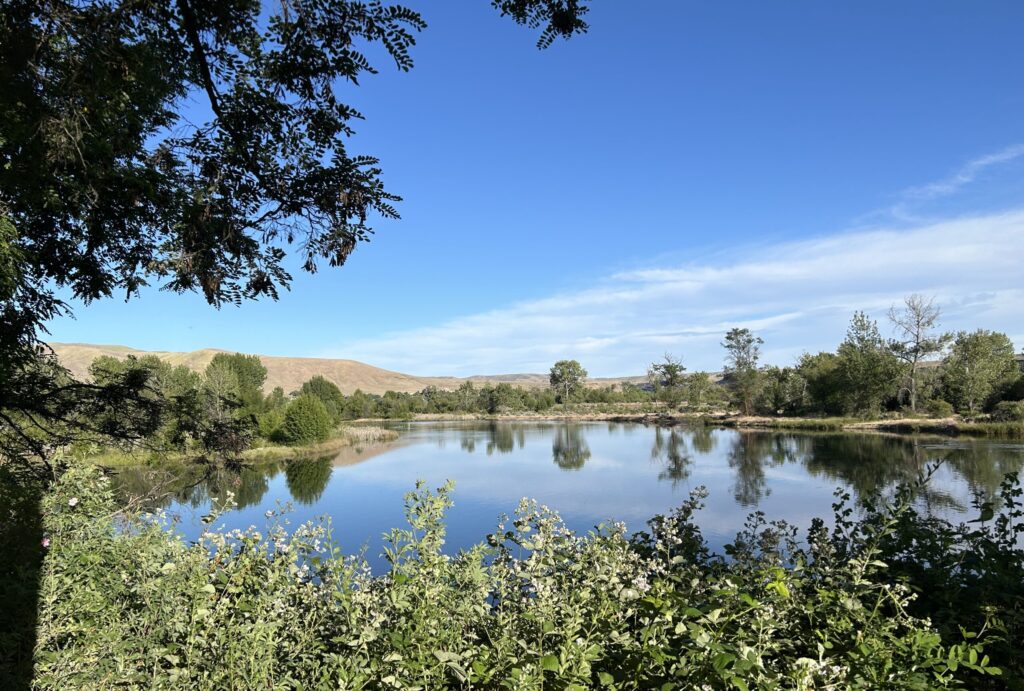
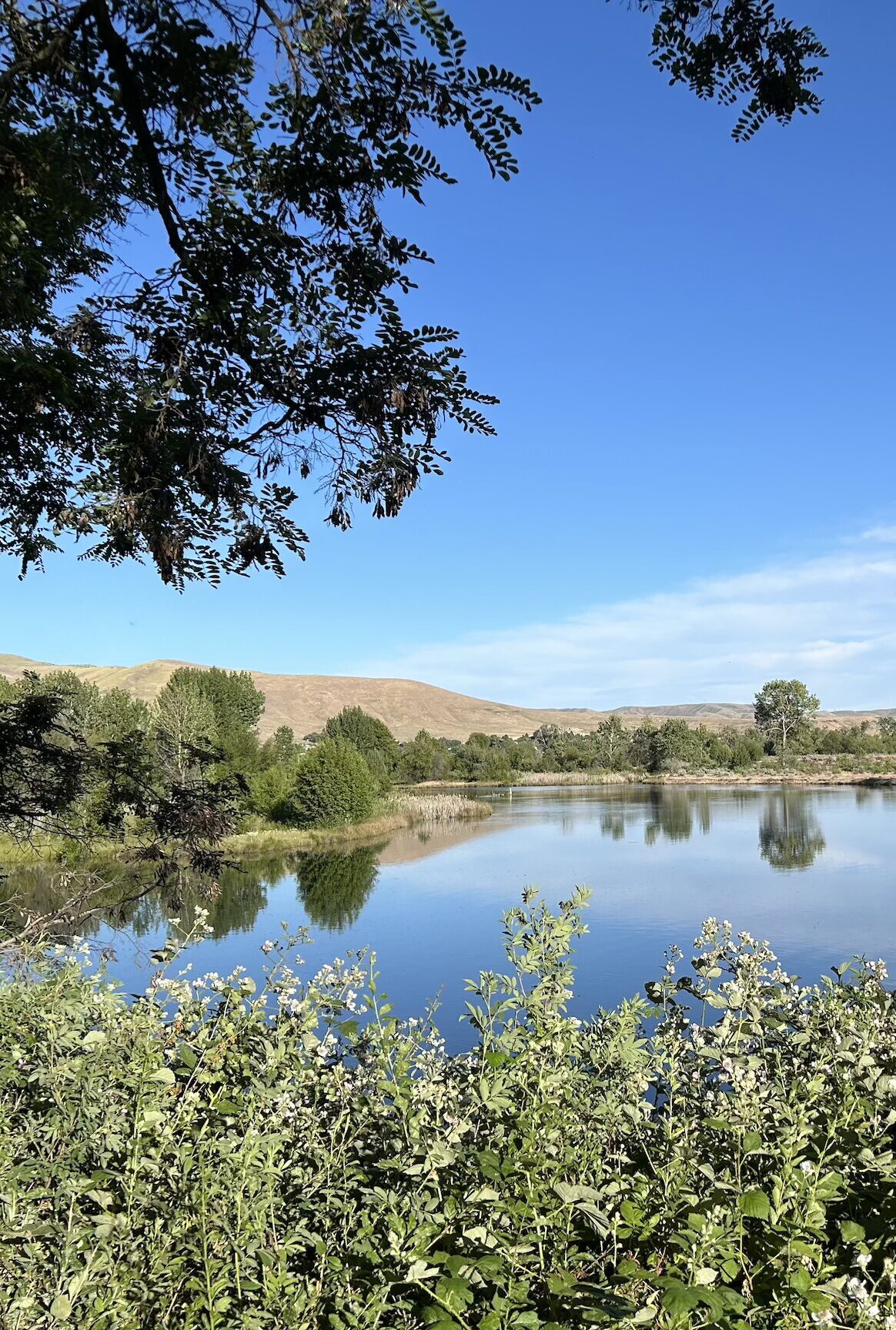
Photo courtesy of the author.
Boise, Idaho
It is late afternoon, and the June sun flirts with descent like a nervous pool diver. The foothills to my back are sprayed white-gold, as is Riverstone, my old K-12 school just across the cheatgrass field to my right. Its concrete panel walls and sawtoothed roof are a familiar reminder of years subjected to exam booklets and wormish spaghetti. From above, Riverstone looks like a proud X, and since I graduated two years ago, that is the only angle I have witnessed it from. I catch it for fleeting seconds before my plane plunges into the clouds, destined for college 3,000 miles east.
I am not here to revisit my old school, though; that would be confronting my past head-on. Instead, I approach the neighboring Idaho Shakespeare Festival, its crescent-moon amphitheater rising over a leafy canopy. My family and I pay for our tickets at a squat booth and are confronted with a fork in our path: to the left, the theater; to the right, an all-too-familiar nature trail. The path follows an isthmus between the languid Boise River and an algae-choked pond for barely half a mile. Framing the trail are black cottonwoods and raspberry brambles, their lean roots sunk into a lawn of suburban-cut grass. In contrast to the rugged sagebrush hills that encircle the Treasure Valley, the preserve is tame, indistinguishable from your local neighborhood park if not for the occasional call of shrill waterfowl.
I do not hesitate to turn right into the Shakespeare preserve. Macbeth starts in forty minutes, and unlike my old school, the trail feels like a palatable visit to my old life. I am quick to follow it into the trees, my parents in tow not far behind. I crunch on onyx soil through cool, gentle shadows, only to resurface moments later in balmy ether. In the sunlight, the twisted boughs glow spectrally. To the right stands a crop of boulders that my math class walked to on the first day of tenth grade. I had been away at Catholic school for an ill-fated year, and it was the first time I had reconnected with my closest friends from middle school. We talked sweetly of things that I forgot within hours, but in whatever we said, there was hope for the future. To the left stands a solitary stone event space, the last structure before the trail plunges entirely into riparian green. There I had dragged in canvas backdrops and cardboard pine trees to set up my sophomore personal project, for which, in naive teenage ambition, I drafted a screenplay, auditioned actors, and hosted a performance to be witnessed by a mighty crowd of twelve. The friends from the boulders were not among them.
Further down the path lies another cluster of stones, flatter, intended for sitting. They overlook the Boise River, and though this is supposed to be a quick walk, I slow. The waterway looks no different from how it did years ago: an ageless watch glass expertly reflective of the pale sky. Today it is a mirror to the blankness of the world, unblemished even by geese or paddling muskrats, although on past walks I had witnessed both. I snap a photograph even though there are dozens of identical ones hiding somewhere in my camera roll. In high school, I would walk to this spot almost once a week after school, when I had scarcely anything to do before bus pickup at 4pm. Here I doomscrolled on my phone, read awful YA books, struggled on math worksheets, but more often than not, simply sat and took in the view, whether it was dressed in hard autumnal umbers or mournful December grays.
It is strange: I expect nostalgia today, but only a longing, lonesome quiet reaches me, a kind of inner hollowing that burns sour on my tongue. None of my past visits here were accompanied. I would wander alone, the breeze an expressive speaker in my ear but certainly a poor listener. For whatever color the honeybees or wood ducks gave my high school days, I missed out on vibrancy elsewhere: glittery after-school hangouts, parties, drives to late-night diners. Isolation is my fault and it is not; yes, I sought out quiet spaces like this trail whenever I could. But while sometimes my pilgrimage here was for leisure, other times it was because I could not be myself anywhere else.
As the shadows of the cottonwoods grow longer, memories of school inevitably trickle in: fluorescent strip lights, tidal waves of homework, cliques fringed with teeth. My middle school friends joined a group of guys devoted to phone games and 9/11 conspiracies, joking freely and hitting on one another because queer boys like me deserved mockery. Local conservatism had not led me to expect more. Already half-invisible, eating lunches with headphones clamped tight, I plunged deeper. I ignored people, passed up new chances. I sought comfort in schoolwork, and when that burned me dry, I found moments alone, where no one else could make me think I was made wrong. Among the Shakespeare preserve’s desolation, I disrobed my melancholy as best I could.
The nature trail gently curves away from the river. It passes under drooping branches and ends at a short stone wall overlooking the murky lake. From here the verdant canopy finally recedes, and a window to the world opens. Facing back towards the theater, the golden foothills climb to a solitary mountain peak roofed by skinny pines. It is buggy here, as it always was: mosquitoes descend like warplanes, poking my neck with miniature explosives. But my parents—momentarily abandoned along my trail of memories—are keen to point out something new: a row of houses, recently built, stretching across the lowest ridge. This is the latest symptom of the growing malady in the Treasure Valley. First developers came for the valley floor, pushing out sagebrush and cows for boxy cookie-cutters and, when that was not enough, four- to five-story apartment complexes. Now it appears they have come for the hills, one step closer to burying every inch of Idaho soil under plywood.
I am saddened yet numb to the scarring of another untouched place. It would seem the Earth is always in flux, whether it be the monthly succumbings of the cabbage white butterflies or the water with its winter sleep, yet for the longest time I had challenged this. In the wake of blurring seasons and rotations of the sun, I had come back here, ages 15, 16, 17, now 19, always to the same place, always to repeat the same exercises of loneliness. For as much as the Shakespeare preserve felt sacred then, now it only feels like another part of my defeat: a hiding place where I burned time, time that I could have salvaged if I had just tried to escape. In a place of comings and goings—papery leaves, swallow migrations, wind currents—I was rooted to the soil. I did not, could not, change.
The walk back feels lighter, though, because while I sympathize with my younger self, I know in my heart that things have changed. I think of my new life 3,000 miles away and how I will return there soon for summer work. There I have friends worth keeping, deserving of love for a hundred reasons but most importantly because I can be myself with them. I think of memories already made and new ones that will present themselves to me on weekend road trips and Pride festivals and by dumb luck. But there will be time for lonely walks, too. I can see them now: strolls through meadows ignited with fireflies like drops of gold, visits to marshes with beavers lazy and well-fed. The walks will just not be pilgrimages. There can be no such thing as pilgrimage when every place is sacred.
As I return to the intersection and step towards the theater, I finally find fondness for my afternoons here. At a time of sabertoothed teens and unsavory noodles, the Shakespeare preserve was a nucleus of warmth, not unlike a friend. Yet an unmooring is not felt until minutes after an anchor is pulled, and so I feel us pull apart now, two years late.
I slide into my seat for Macbeth, and it is terrific. Our star completes its dive and submerges for the night.
On the walk back, I forget to give the trail a last glance. I am too occupied looking at the headlights of all the cars before me. With the sun burned out, theirs is the only light I see.
Aidan Cahill is a junior at Amherst College and an editorial assistant at The Common.