When I got home from school that day, my mother was clearly excited about something. She must have been watching for me from the window, because she met me at the door, and behind her I could see something denim folded up on the table beside the teapot. “I have a special treat for you,” she said. My heart ballooned in my chest. Levi’s. All at once I wanted to hug her and rush past her to put them on, I wanted to dance around the apartment like I never did, and I wanted more things, too—for my father to emerge from where he had been hiding all my life, the closet, or the jungles of Africa or Mexico, stepping from the shadows, framed by the doorway.
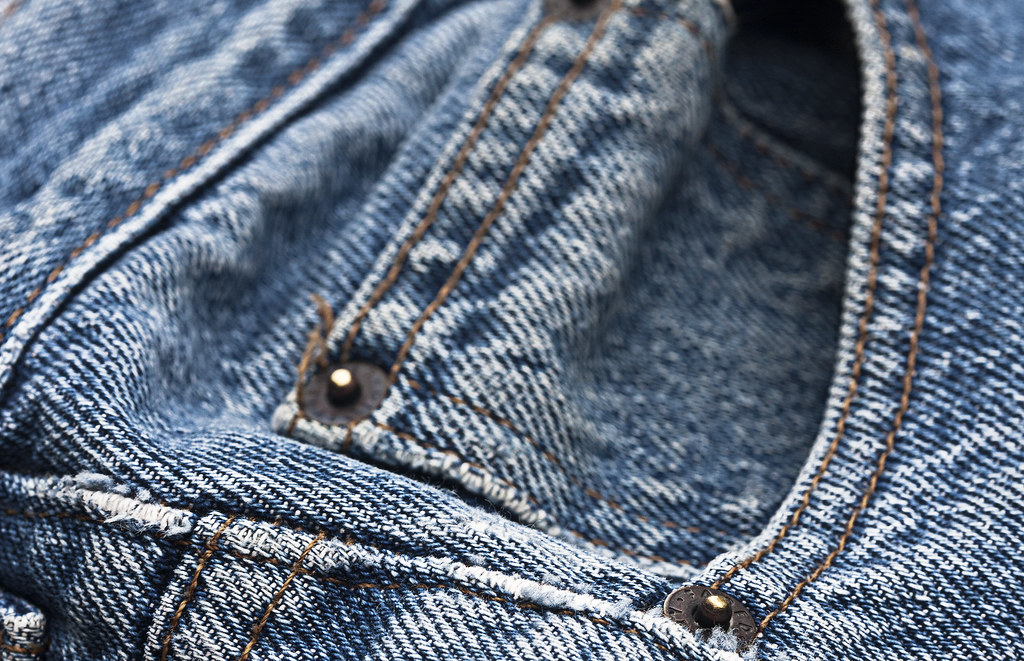
She took my hand and walked with me over to the table. My heart began to deflate the closer we got, for it was clear that what was folded up there wasn’t a pair of Levi’s, but a length of raw fabric that had been created to rival Western denim. My mother was so happy that she seemed to slip outside her own body, snapping out the fabric like a flag, running her hand down it, wrapping it around my waist, nearly singing her words, because she thought she had given me what I wanted, that this would then be enough for me: this apartment, this city, this country, and my mother.
My mother worked in one of the few textile factories scattered across the city. I never saw her leave in the mornings—she was gone by the time I woke to get ready for school—but I imagined it clearly, how she would button her coat to the top, adjust her headscarf, and turn the key in the lock without making a sound. She’d disappear into the darkness, into the mysterious guts of the city, swallowed up by trams and busses and the doors of the factory, which I always pictured out near the jammed-up radio tower. I don’t know why. I didn’t really know where the factory was, but when I looked out over cramped, sooty Prague, I would see the tower, and I knew it was far away and I knew my mother was too. I hoped that if I thought hard enough, I could transmit my thoughts to the tower, and the antennae would broadcast them to her.
Each day when I returned from school, after climbing up three flights of creaky stairs, my mother would be there in a haze of afternoon light, waiting for me with cake or koláč and a cup of tea, her hair unveiled from the headscarf and loosened from its pins. She would look at me knowingly, as though we shared a secret, as though she did hear all the things I told her from afar, and many times I expected she would answer me.
But I forgot the government had jammed up that radio tower, so of course our messages would be jammed up too.
The fabric scarcely felt like fabric at all. It was too stiff and crisp, coated with something resinous. It was more like a stage prop, a piece of heavy paper painted to look like real denim, though the color was off—blue, but to the point of gray, as if the East couldn’t figure out the science of indigo and cotton thread, or as if indigo simply could not exist here. They hoped that these fake jeans were what would make us quit thinking about climbing over wire or digging under fences or flying hot air balloons over the line to the West, where there were Levi’s—real jeans.
I stood there quietly while my mother measured me. She’d found a pattern in a state magazine, which she had drawn out on newspaper, then cut the long pieces of the fabric to my size. It took her a long time, and she had to pause now and again to shake the cramps out of her hand. I sat with her at the table and cast my eyes downward to my books, pretending to study. My notebook was open to a blank page where I would copy Russian letters over and over again, holding their sounds in my mouth. She told me to stand up now and again so she could press the pinned-together jeans against my backside, smoothing them down my legs, adjusting a pin here and there.
Finally, she got to the point where she could sew. She had a heavy, nearly industrial sewing machine that vibrated the table. My Cyrillic letters became shaky as she put the fabric through, the sound of the machine replacing the sounds the letters and words made. If I listened hard enough, I could hear my mother humming a melody.
The next morning, when I woke for school, I saw the jeans folded up on the chair across the room, and I thought for a moment, one gorgeous moment still full of dream, that they were the Levi’s after all, that my mother had tricked me into thinking I had to wear those terrible ones. I had imagined it many times, how I would shake them out and put them on the way Americans did—half-asleep, habitually.
The dream dulled and gave way to morning light. I saw the way things really were: my mother had finished sewing the jeans, and I would put them on, which is what I did.
My mother was a good seamstress, and one could say the jeans fit well. But not even the most talented could make this fabric behave. However she had tried to smooth the inside seams with thread and a good pressing, by the time I put them on, they had already begun to pop back up. The jeans accordioned at the bends of my hips and knees, sometimes pinching when I walked. It was as though they’d purposely made the fabric this way—not the rebelliousness of it, but the way that it hurt—because the people who would buy jeans made from it were the ones who coveted the West. They had to be punished.
I was concentrating on walking. Walking like a normal kid in socialist jeans on his way to school—and trying to ignore the chafing that was happening on my inner thighs. At Šverma Bridge, just past the statue of a man in a suit, I had to stop. Though I couldn’t see the radio tower from there, I screamed for my mother in my head, I demanded that she leave work now, that she pick me up in her arms like I knew she did when I was baby, and take me home. Of course she didn’t hear me. I leaned against the cold metal rail and looked into the river below, the lazy flow of the Vltava. I wanted to leap into it to put out the fire, to soothe my legs.
But I walked on, glad when I finally arrived at school and was able to sit at my desk. Mr. Pavlova had his back turned, writing on the blackboard, as he did every morning. The boys who did have Levi’s pointed at my jeans and laughed—but the others, so many others did not, because theirs were worse. Old-style Commie jeans, some people called them: ill-fitting, blue-painted fabric that made us feel ashamed for even trying. “Shut up,” I mumbled, opening my notebook. The boy next to me, Miroslav, who had the worst clothes in the class, leaned over and said that my jeans weren’t so bad—pretty cool actually. “Where’d you get them?” he asked.
“Shut up,” I said to him too.
I stared into the gutter of my notebook. I imagined what my wounds might look like—the skin rubbed raw, red and angry; then I imagined them growing paler, healing, the scars growing into the seamless casing that held my body together. I advanced the time forward, so that not only did my wounds heal but my body grew into a man’s, a man sitting at an elementary school desk. His hands had black hair on the knuckles and were calloused with adventure. His legs were so long that they wouldn’t fit beneath the desk, which would be lifted up on his knees, floating.
“Well?” my mother asked when I stepped through the door. The walk home had been slow-going, and getting up all those stairs set the sores on my legs on fire, but I managed to mumble something agreeable. She put her palm to the teapot, then poured us both mugs of tea. I dropped my bag at the door and sat with her at the table, trying to act natural, hoping she didn’t notice anything. She pushed a plate of koláč to me. I took a bite of one and nearly choked when I saw that my mother had brought home more of that dreadful denim. What I had assumed were scraps from the jeans was a clean slate, intact, one long road. She snapped it out, draped it over the edge of the table.
Then I began to notice all kinds of things—a pattern half-drawn on newspaper, a state magazine broken open to a specific page. Needles and thread, the sewing machine out of its box, the pedal on the floor. In a panic, I shoved more pastry into my mouth, ended up choking again. She put her hand on my arm, crinkled her forehead. “Honey,” she said, “you’re acting like you’re starving! Slow down.”
I chewed deliberately, swallowed, and sipped tea to wash it down. The worry lifted from her face, and she smiled. She was happy again. “I’m going to make you a matching jacket, Jan. I found a good pattern.”
And I smiled, too, when she turned the magazine so I could see it better, carefully watching my face. There it was, the terrible jacket that was my fate, worn by an equally terrible model. The jacket fit the model like a house, and both were out of date by a decade—even as an eleven year old kid, I knew this. And I told her so. “Mom, that man looks like he’s from—from a different time.”
She nodded thoughtfully, looking down at the model. “I know,” she said, “it’s like we’re looking right into the future.”
I shook my head. “The future? But look at his hair!” It had nothing to do with the future, nor the present—it was a sixties mop-top. But for once she was not overly attentive to me. She was looking at the model in the magazine. She ran her finger over his hair, then pressed her fingertip to his face.
It occurred to me that my mother was lonely, as lonely as I was, and that maybe she always had been. That I could not curb her loneliness.
My mother had cut out the pieces of the jacket from the pattern and matched the notches. She pinned it together, taking the pins one at a time out of her mouth, where she had stored them. She was humming again. I don’t know if it was a particular song or a tune she made up, or one fed to her from the radio tower. I sat at the table, my books open, but I was looking at the fabric, or rather, at the empty shapes that had been cut out of it. I could see the cut-out of an arm, a shoulder. I saw a panel in the solid shape of a back. I saw the breast bone, the muscles forming over it; I saw ribs, and a stomach like a fist. I saw flesh and black hair growing over the skin. My mother just kept on humming.
Days passed before my mother finished the jacket. The jeans she was able to make in a single night, staying up late to finish them, or not sleeping at all. The jacket was more complicated. Every night I closed my books and left her at the table pushing the fabric through the machine. I walked the few short steps to my bedroom, which opened from the main room. Even with the door closed, I could hear the pummeling of the needle. I drifted off to sleep in the cradle of its vibrations, the window panes rattling.
I was still battling with the jeans. I wore them two days in a row, the seams rubbing parts of my thighs raw, and longed for the time before the jeans, when I ran in the school yard and played soccer. I didn’t feel pain. Nothing worried me, or so it seemed. I remembered one particular time after school, when I ran through the streets with a few of the boys. When we became bored throwing trash off the bridge into the river, we went by the overpriced Tuzex store, where they sold coveted items from the West. Pressing through the black market men and the crowd of people that always seemed to be in front of the Tuzex, we soon found ourselves staring into the windows at the Legos, Levi’s and Wranglers, stereos and speakers, and, deeper into the store, the gleam of Swiss watches.
“Legos,” Miroslav whispered, as if they were a holy sight.
“Yeah, I got those.” This was Ivan, who had Levi’s and a father—so of course he’d have Legos, too.
I bit my lip. “Yeah, me, too,” I said, though I didn’t. Ivan laughed with a snort and elbowed me in the ribs—he knew I was lying. I elbowed him back, determined to keep up my lie.
“Can I come over and play?” Miroslav asked.
“No,” we both said.
My mother would not buy anything at the Tuzex store. It was too expensive. She said that what we had out here was better than anything in there. If I lingered too long at the window, she’d drag me away, tight-lipped, plowing a furrow through the crowd and past the black market men. I looked at those men the way I looked at the things in the store window, but my mother didn’t even glance at them.
Eventually my schoolmates and I pried ourselves from the window to make our separate ways home, leaving our ghost traces on the glass.
When the dull light came into my room one morning, I could see a human shape, someone broad-shouldered slouching in my chair. Then I realized it was the jacket, finally finished, hanging on the back of the chair upon which the jeans were folded: a genuine uniform, the steely fabric soaking up what was left of the darkness. It looked like a paper doll’s jacket, two dimensions, a flat plain with edges. But I was a boy, not a piece of cardboard. I was real, I had flesh and bones, I had mysterious organs, things that had no shape. This jacket would not fit me; it had not even fit the magazine model, and he was a piece of paper.
The jacket, at least, could be slung over my arm, or possibly coerced into my book bag. I didn’t have to put it on until the end of the day, just before I turned down the street where we lived, in case she were watching for me from the window. I considered doing the same with the jeans—bring them to school to change into before going home—but the thought of tricking my mother twice over caused such a rise of anxiety in me that I decided to tough it out. Bandages were the answer. I taped them over the oozing wounds, elated with this solution, for I would be all right and my mother’s feelings would not be hurt.
This seemed to work, at first. I did not feel pain. It came on slowly as I walked—dull, throbbing aches from somewhere deep inside, rising to the surface, absorbed into the gauze of the bandages. The pain did not seem to originate from the wounds at all, but from my internal organs, as though they had been chafed and bruised. I could not walk very fast, and I’d already left the apartment late—I’d be late for school. Already I could see Mr. Pavlova shaking his head.
On the bridge, the statue of the man in a suit frowned in disapproval. I limped by it and leaned against the rail. Traffic rushed behind me. The Vltava snaked through huddled red roofs and frothy trees, crowned by bridges and a gauze of smog, under which boats drifted without a care. Again, it seemed like a good idea to jump into the river. The water would be cool, and I would be whisked downstream through the colorful, crumbling buildings of Prague all the way to the blocky new housing developments on the outskirts of the city. I’d drift under the arcs and flat undersides of bridges—bridges loaded with people of flesh and martyrs of stone—and I’d look up at all those faces staring down at me, ones I didn’t know, astonished at the boy in the river, who cut through their reflections in the water.
I wouldn’t see the face of the person who would save me, plucking me from the water just in time, flying me through the air in his arms—but I could see his arms, strong and hairy. I could feel his heart beating and I could hear his voice, telling me a story, something that was true. We would be so high in the sky Petřín Hill would look like a bump, the castle would be a toy, the radio tower would be nothing but a tangled bit of wire, and my mother’s factory would be so small it would fit in the palm of my hand.
I was late for school that day. As I walked through the door, everyone turned to stare at me. Someone—probably Ivan—snickered from the back of the room. Mr. Pavlova turned from the blackboard. He folded his arms and demanded that I explain myself. I did not know how. I could feel my classmates’ eyes bore into me, but I could not look at them, so I stared at Mr. Pavlova, noticing his slender, pale fingers, his pockmarked cheeks, his bright blue eyes and dark hair. For the first time my teacher took on qualities. His anger was an extra layer over his features, like a varnish. I saw him walk toward me and I felt his hand on my shoulder, leading me to the front of the class, to the blackboard, where he’d written something. He took my hand and put the chalk in it. He raised it to the board. After that, I was on my own, and I didn’t know what I was supposed to write, numbers or letters, so I drew a picture of a man with a cape and a mask, his Levi’s tucked into his boots. Mr. Pavlova slapped the chalk out of my hand so hard it shattered and obliterated my drawing with one swipe of the eraser. Later, he called my mother at the factory.
When school let out, she was waiting for me in her uniform, her headscarf still on. Her face was worn, jaw set, her eyes staring me into silence. She was my mother, but she didn’t look like my mother. It was the first time I’d seen her wear the uniform, though I’d seen it hanging to dry, a slate-gray rectangle of a dress that had a tie around the middle to give it a human shape. I wondered if the dress hurt her, and that’s why she seemed so severe to me.
I took her hand when she held it out. We walked like that out of the school yard and onto the sidewalk. I lagged behind. For a while she did not notice she was pulling me, but eventually she stopped. She knelt to me. “What’s the matter, Jan?” It was then I realized I no longer had the jacket.
Which would have been a convenient excuse, one handed to me from out of the sky—that I had lost the jacket on the way to school, and that’s why I was late, that’s why I had something the matter. But I was so struck with the shame of losing it, as though it only proved how ungrateful I was to my mother for how hard she worked for me, that I couldn’t even look at her. I studied the cobblestones beneath our feet, the dented-up squares stuck together with earth. She put her forehead against mine, and I could feel her worry moving into my skull.
“Jan,” she said, “there is nothing that we can’t solve.” I shook my head because it wasn’t true; I kept shaking my head so that she had to shake her head, too, either that or break from me. Then she grabbed my head and brought my face to meet hers. I could see myself in her eyes, a boy who hardly looked like me, maybe a boy who was older and wiser. I saw the passing of a tram, also reflected in her eyes—I saw it before I heard it, and I began to see other things, too. I saw a deep sadness running through her like a hallway, dimly-lit, linking all the rooms whose doors were closed to me. The world inside was disconnected from the world outside, just as the sound of the tram didn’t seem to be connected to the tram, just as my face seemed to be someone else’s face.
My mother noticed that I was limping. I pretended that I’d always walked this way, that everything was as it always had been. We went immediately to the metro tunnel, deep underground, and took the train. When we got home, she ordered me to take off the jeans right there in the main room so she could examine my legs, find out why they weren’t working right. I refused. For the first time in my life, I disobeyed my mother.
I said to her, “I’m not a little boy anymore,” and I said, “I can take care of myself.” I might’ve even said, “I don’t need you to baby me,” or “I don’t need you”—anything to distract her, but she was not fazed, or at least, not much fazed. If I hurt her, she didn’t show it. She replied that clearly I couldn’t take care of myself, that I did need her, because I was completely helpless on my own. Just as I was about to run to my room and shut the door, barricade it, for I did not have a lock, my mother surprised me. She tackled me.
She may have even surprised herself, for the breath was knocked from both of us. She pinned me to the floor and pulled the jeans until they came off in her hand. The air was cold, hitting my legs with a sting. Everything I tried to keep from her was suddenly exposed, and I couldn’t help it, I started to cry.
I felt her hand on my leg, lifting it to her knee; I heard her say, “Oh, Jan,” as though she were disappointed in me. I felt tape peeled up from my skin, a bandage removed. I heard that Oh, Jan over and over in my head like a refrain from a song, though she only said it the one time. “You didn’t tell me,” she said. “You should’ve told me.”
I stared at the ceiling, which was blank, white, with shadows tucked into the edges. There was a faint scar where a light fixture had once been. “You should’ve told me,” she said again. “Why didn’t you tell me?”
I shook my head, which meant that I didn’t know, but I realized that she wasn’t really asking me.
Later, she helped me up off the floor, or maybe I helped her up. Either way, we were both standing. We walked into the bathroom and she showed me how to apply iodine so the wounds wouldn’t get infected. In the mirror I saw the fiery red-orange seams running down the insides and the outsides of my legs all the way to my ankles, as though my mother had sewn me together, too. The wounds were from pins and the perforated punches of the machine. She had made me herself; there had been no need for a father.
I put on a pair of men’s pants that she’d handed to me after digging through the kitchen cabinet where she stored her sewing things. They were much too long and too big around the waist, but we rolled up the bottoms and cinched the waist with a belt. She said that she would alter them for me if I wanted. They were comfortable, and I told her I liked them as they were. “I’ll grow into them,” I said.
That night we went out to the alley to burn the trash, which is what all of us in our building did at the end of the week. We were later than everyone else, and smoke rose from all the barrels around us, fetid and chemical. We dumped the usual garbage into one of the barrels. In it, I also saw the jeans, and then I saw the pages of the state magazine, torn out, loose, some crumpled and some flat. I saw the patterns she had used, and I saw the jacket model—his flank, the crook of his arm. My mother was watching me. When I looked up at her, she smiled and winked. She handed me a box of wooden matches, and told me to catch the pages first. She’d never let me do this before—she had always been in charge of lighting the fire.
My mother must’ve put floor paste or some other flammable substance on the jeans, or maybe it was the nature of the fabric to catch fire so easily—maybe it was made especially for martyrs. The flames leapt all over the jeans and shot up over the rim of the barrel in a soundless explosion so both my mother and I had to jump back.
She cried out. At first I thought she’d caught fire. I was ready to run at her, bring her down to the dirt—but she was laughing, her mouth ajar, her teeth little white squares. When the fire calmed down to a pulse, we moved closer to the barrel, hands out, like people trying to find their way through the dark.
Chelsea Bolan is the author of the novel The Good Sister, which won the HarperCollins/UBC Prize for Best New Fiction. Born in Spokane, Washington, she earned a BA in English Literature from the University of Washington and an MFA from the University of British Columbia. Her work has been featured in The Kenyon Review, Borderlands, CutBank, and Seattle Weekly, among other publications. She was a Milkwood International Artist-in-Residence in Český Krumlov, Czechia. She currently lives in Seattle and teaches Creative Writing at North Seattle College.