All posts tagged: 2026

My Cousin Thinks I Gave Her Nazr

By EZZA AMHED

Because I didn’t say Mashallah when she swapped her nose stud for a hoop and two days later I’m met by the bursting bulb of blood and pus which seals the fibrous innards of her nose cartilage on the outside sits the bulb pulsing expanding as if it’s breathing looks like a red evil eye ornament white pupil right at the center she has a nose growing out of her nose

My Cousin Thinks I Gave Her Nazr
Read more...

The Strays

By RUSSELL BRAKEFIELD

Reggie pulled his truck up the driveway and past the old goat pasture, a field of knee-high brome that now fed only a rusted tractor, not a buck or a nanny in sight. The only good thing about his wife’s death all those years ago—he could finally let go of the shaggy herd she had loved so much, fill the freezer, and focus on the more agreeable ruminants.

Reggie killed the ignition next to the house. One coal-colored cloud floated like a top hat above his yellow lopsided rancher. Past that, the afternoon sun painted the foothills a fiery mauve. In the distance a trio of bluffs gave way to an abstract canvas, just cattle and rust-red desert smudging south to New Mexico and on into the Navajo Nation.

The Strays
Read more...

U N C O N T A I N A B L E

By L. S. KLATT

I leave the house unlocked & walk to the garage jacked to
The White Stripes. My mouth is a guitar; snow is in the sound hole.
Spring. I think it’s spring. The automatic door leaps

in its tracks & is music again. I record on my phone a soundwave
as the GTO convertible wheels out of its tomb, the driveway
chartreuse with maple wings. Tell White I’ll cut some garlic

U N C O N T A I N A B L E
Read more...

Ex Situ

By LIZ DEWOLF

The buzzer rattles the empty room. Nearly empty—there’s the bed behind the wooden screen, the couch where Laurel sits in her underwear. Since Arda’s text that afternoon, she’s waited restlessly for him to arrive, imagining his route from where she lived with him on the Asian side of Istanbul to her new apartment on the European side: the narrow streets down to the ferry station, the boat churning through silver water, the near-vertical climb to her sixth-floor walkup in Beyoğlu. She presses the button that unlocks the building’s entrance and decides not to get dressed.

Arda enters her apartment without knocking. “Mutlu yıllar,” he says, though it’s now several weeks into 2013. For the first time since Laurel’s lived in Turkey, they didn’t celebrate the New Year together.

Ex Situ
Read more...

*** 

By J. J. STARR 

in faith             i pray for you… 
i wasn’t            aware of you 

i think of you free 
a song     a night           you… 

pieces, i can share  
just some with you… 

*** 
Read more...

April 2026 Poetry Feature #2: Sharon Dolin, Kerry James Evans, Andrew Hudgins, and Maria Terrone

April brings new poems by our contributors: SHARON DOLIN, KERRY JAMES EVANS, ANDREW HUDGINS, AND MARIA TERRONE!

Headshots of poets Sharon Dolin, Kerry James Evans, Andrew Hudgins, and Maria Terrone

Sharon Dolin, Kerry James Evans, Andrew Hudgins, Maria Terrone (from left to right)


Table of Contents:

—Sharon Dolin, “Savor”

—Kerry James Evans, “Smoky”

—Andrew Hudgins, “After Death”

—Maria Terrone, “Alchemy”

April 2026 Poetry Feature #2: Sharon Dolin, Kerry James Evans, Andrew Hudgins, and Maria Terrone
Read more...

Book Review: Exemplary Humans

By JULIANA LEITE
Translated by ZOË PERRY

Reviewed by JAY BOSS RUBIN

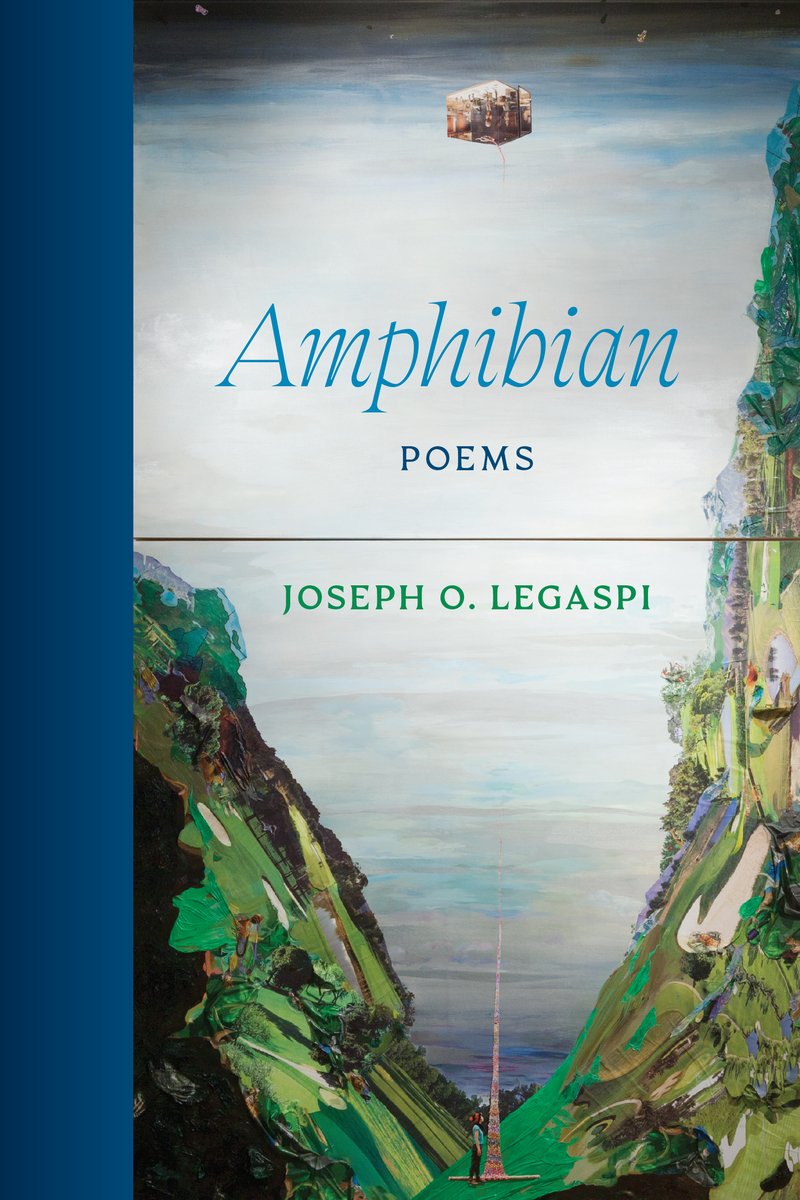
Book cover of Exemplary Humans

In the opening chapter of this subtle epic, the centenarian narrator Natalia confides: “At this point in life, I’d say that going on forever or for too long is a bad decision, a very bad one; what’s nice is to exist and then stop existing, to exist for a while and then be able to change the subject.” In other words, if the transition between life and death is an abrupt one, then so be it. “[L]et’s be done with it,” she says, “though it would be nice to have the time to spritz on some perfume beforehand.”

When I first encountered this sentiment in Juliana Leite’s Exemplary Humans, translated from the Portuguese by Zoë Perry, I took it be a bit of a bluff. It reminded me of a bumper sticker I saw a couple of years ago in Portland, Oregon, that read: “I ♥ AGING & DYING” (which I interpreted as an existentialist rejoinder to proclamations of commercial allegiance—“I ♥ Mr Plywood” and so on—so common in my hometown). But by the end of Leite’s novel, which takes place primarily in Rio de Janeiro and Petrópolis, Brazil, and spans that country’s lengthy dictatorship, I was convinced that Natalia’s breezy acceptance of her own mortality was absolutely serious. It is not only possible, but strongly advised to love aging and dying. It isn’t easy, though. To transcend dread, and transform it into something more palatable, a unique kind of emotional intelligence is required, and so is a talent for adjusting one’s perspectives. Natalia is the novel’s exemplar of both these qualities.

Book Review: Exemplary Humans
Read more...