Deaccessioning

By RACHEL HADAS

The old woman with the art 
paces through her silent rooms,
sunlight reflecting off the frames.
Adult children live downstairs 
in the basement. Whose is the art? 
Is it the world’s or hers or theirs? 

Sunlight moves across the wall. 
Rosenquist, Rauschenberg, Marisol 
prints, flat and deadpan, do not say
how to live from day to day. 
Four Wolf Kahn landscapes give back light 
and air, hay-scented. What is art? 

What fills the frame, then empties out, 
is kept by giving it away. 
Take the paintings off the wall. 
Open the door and let them all 
find homes in some imagined place. 
Motion and change. No sacrifice. 


[Purchase Issue 31 here.]


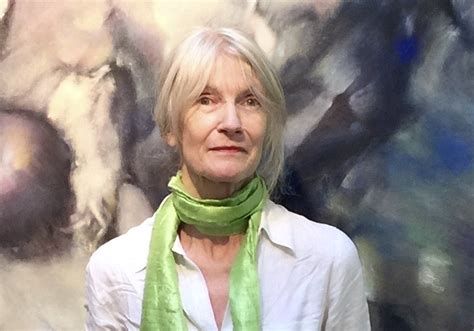
Rachel Hadas‘s many books of poetry, essays, and translations include, most recently, a collection of short prose pieces, Pastorals. Professor emerita of English at Rutgers University–Newark and the recipient of many honors and awards, she divides her time between New York City and Vermont.

From the beginning, The Common has brought you transportive writing and exciting new voices. We are committed to supporting writers and maintaining free, unrestricted access to our website, but we can’t do it without you. Become an integral part of our global community of readers and writers by donating today. No amount is too small. Thank you!

Deaccessioning

Related Posts

May 2026 Poetry Feature: Arielle Hebert, from Bottom Feeders

ARIELLE HEBERT
Home again at the water’s edge, / palms dancing in salt breeze. / I take a too-deep breath / and the air prickles my lungs / like an unfiltered cigarette. / Only the tourists are swimming, / coughing through the algal bloom, / eyes bloodshot and skin burning.

Book cover of Cece

Review of Cécé by by Emmelie Prophète

SAM SPRATFORD
Uncle Frédo lies in the dark, water dripping through the sheet-metal roof. His American Dream crushed by the reality of existence as a non-white, non-citizen in the U.S., he returns to Haiti for the remainder of his life. He rarely speaks and is nearly always drunk. He spends his days in a dreamless twilight zone between sleep and wakefulness.

U.S. Space and Rocket Center

Rocket City Rising

BETHANY BRUNO
Outside my office window, trucks rumbled past loaded with pallets of equipment. The air always smelled faintly of dust and jet fuel. I thought about how this patch of land in northern Alabama, once a cotton field, then a proving ground, then a missile test site, was about to become home to something even bigger.