
All posts tagged: December 2025

What We’re Reading: December 2025

Curated by KEI LIM

If you’re looking for a book to wrap your year’s reading, look no further! December recommendations from Issue 30 contributors A.J. BERMUDEZ and CASEY WALKER and Managing Editor EMILY EVERETT think back to old favorites and old memories.


Francis Ford Coppola’s The Godfather Notebook, recommended by Issue 30 Contributor A. J. Bermudez

Book cover of The Godfather Notebook

When I was a little girl and my classmates were all hung up on Charlotte’s Web, my favorite book was The Godfather. It was a weird choice––the book is rife with problematic elements, and I wasn’t exactly the target demo (unless one could predict my forthcoming career writing books and movies)––but I loved it. It was expansive, emotive, richly textured, vividly written, and downright awesome.

To this day, I’m grateful to the small-town librarians who let me check it out, again and again, when I could barely see over the counter. And I’m grateful to my present-day big-city librarians, with whom I chat about books, movies, and recently my latest literary squeeze: The Godfather Notebook.

This 784-page tome is, in one sense, a very impressive coffee table book. In another, arguably truer sense, it’s an in-depth artifact of the literary notion of palimpsest. Modeled after the “prompt books” endemic to stage managing (Coppola picked up the form during his early theater arts training), the notebook features each individual page of the original book (razor-cut and pasted onto larger pages) with the margins then meticulously populated by scribbled notes, timestamps, and the like.

Coppola called the notebook a “multilayered roadmap,” and it is just that: a conglomeration of charts, maps, drawings, photos, scene and page numbers, strike-throughs, question marks, typewriter smears, and handwritten notes in multiple colors (often on top of one another). It is, at its crux, a sort of geological cross-section––an overlay of ideas, of meanings, of media. It’s a book about a film about a book about fictional narratives inspired by nonfictional narratives informed by journalism, photography, memoir, theater, history, and curation.

The book is, incidentally, rife with good ideas for writers, irrespective of medium. At the beginning of each section, Coppola lays out five areas of consideration: (1) synopsis [what literally happens, plot-wise]; (2) the times [setting, worldbuilding, prevailing values, et al.]; (3) imagery and tone [vibes]; (4) the core [what a particular scene is really about]; and (5) pitfalls [relatable flags, at least for me, regarding sentimentality, momentum, and the like].

As a kid, around the time I was holed up reading The Godfather, I was, perhaps unshockingly, kind of a loner. It wasn’t until years later that I’d realize the best work is formed not in isolation but in community. This goes for books, films, books turned into films, music, theater, visual art, cross-disciplinary experimentation, and (as far as I can tell) just about everything else.

As intimate as it is informative, The Godfather Notebook is evidence of story-building as intrinsically collaborative. I recommend it to anyone who likes to take things apart and put them back together; to anyone who harbors a secret love of bad handwriting; and to anyone who, like a true critic, is poised to be as horrified by my literary tastes as my third-grade teacher. Ultimately, it’s a reminder that books are often how weird loners like me (and maybe you) find each other.


Aja Gabel’s Lightbreakers, recommended by Managing Editor Emily Everett

Book cover of Lightbreakers

The best books are the ones you have to wait for. Aja Gabel’s 2018 debut novel, a look behind the curtain into the world of top-tier classical musicians, showcased her talent for sitting in complex relationships without trying to solve or simplify them. Seven years later, her new novel Lightbreakers takes that to the next level—letting the marriage and grief at the heart of the story ebb and flow in ways that feel nuanced and natural, not in service of a clean narrative structure. It’s also a treat to pull back the curtain on two more unusual worlds; the main characters, husband and wife Noah and Maya, work in quantum physics and modern art, respectively. The central hook of the book is a heartbreaking thought experiment—what if you could travel years back into your memories and change the outcome—that (happily for me) feels less like time-travel and more like an excavation of how memory and mourning operate, and how loss can both bind people together and drive them apart. I have never read an accounting of grief that makes room for so much messiness—all the ungenerous things we do to ourselves, and to other people, in that state, and all the ugly and odd and inconsequential things we latch onto in order to make a story we can understand, a story that explains the loss and somehow holds it. There’s a lot at work in Lightbreakers, big moves and big concepts, and Gabel pulls off every one. But I know it’s the novel’s quieter questions I’ll be thinking about the longest. 


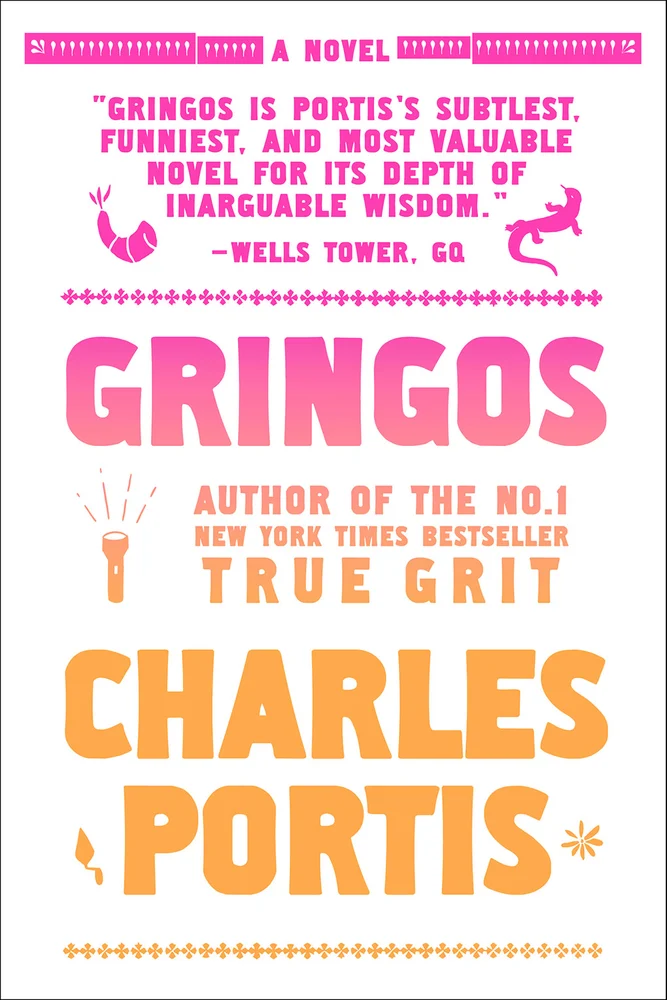
Charles Portis’ Gringos, recommended by Issue 30 Contributor Casey Walker

Book cover of Gringos

Every year when winter comes, and the days are short and dark, I get the first lines of Charles Portis’s novel, Gringos, stuck in my head:

Christmas again in Yucatán. Another year gone by and I was still scratching around this limestone peninsula. I woke at eight, late for me, wondering where I might find something to eat. Once again there had been no scramble among the hostesses of Mérida to see who could get me for Christmas dinner. Would the Astro Café be open? The Cocina Económica? The Express? I couldn’t remember from one holiday to the next about these things. A wasp, I saw, was building a nest under my window sill. It was a gray blossom on a stem. Go off for a few days and nature starts creeping back into your little clearing.

The great spiritual weariness here is immaculate but, importantly, it’s funny—Christmas dinner at the Astro Cafe and, again, I wasn’t even invited.

Portis is best known for his novel True Grit, and its various movie adaptations, but he also wrote four other novels, two of which are among my very favorites—The Dog of the South and Gringos. Both books are about Americans on shaky ground venturing headlong into Mexico, where they encounter all manner of other Americans of their rough type—petty cons, loquacious weirdos, and autodidact philosophers. Portis’s characters seldom have dreams any bigger than winning back a beloved stolen automobile or making a small living trafficking on the disreputable side of the antiquities trade (though, really, is there a reputable trade in cultural artifacts?). And yet, even the most modest plan in a Portis novel is subject to ruin—life is figured as a rather endless series of kicked over sandcastles.

There’s a weary sense in Portis’s books that maybe we could accept the wreckage caused by waves and tides—at least, there’s no use complaining about a nature beyond human control—but there remains a real gall in dealing with the bullies and brutes who come stomping through whatever small things we do manage to build.

But don’t misunderstand: these are funny books, not cynical ones, and they are tight and propulsive, not sagging or perambulatory. There’s always a dignity to continuing to pursue your errands, however fruitless. You meet a lot of oddballs along the way, for one. Very often, Portis will seem like he’s building you up to a big writerly thought about life, only to deflate it: “You put things off and then one morning you wake up and say—today I will change the oil in my truck.”

I think a lot about that wasp under the window sill at the end of the first paragraph of Gringos. “It was a gray blossom on a stem,” Portis writes. “Go off for a few days and nature starts creeping back into your little clearing.”

Those lines are Portis, perfectly distilled. Crisp description bending into a cosmic metaphor without doing much more than describing exactly what the narrator sees out his window. There’s a statement of principles here: you’re going to work as hard as you can to make your little place, your little clearing, and despite it all, the world outside your window is always coming to fill it all in again. This doesn’t mean quit, but it does mean don’t be surprised by the wasps.

What We’re Reading: December 2025
Read more...

Raid on the Roma Camp

By THEODORA BAUER
Translated by AARON CARPENTER

Piece appears below in English and the original German


Translator Note

Theodora Bauer’s novel Chikago (2017) follows two sisters from the Croatian minority in Burgenland, Austria. In this stand-alone chapter we learn that the family was ostracized from the small community in one of the poorest, but also most ethnically diverse regions in Austria. Burgenland was part of Hungary while under Hapsburg rule and is still home to Hungarian and Croatian minorities. This chapter begins with an idyllic trip that the father and his youngest daughter take to the village to do some business. When they hear a group of drunken townspeople plan on raiding the Roma camp just outside of town, where the father’s smithy is, they race back home to warn them.

Raid on the Roma Camp
Read more...

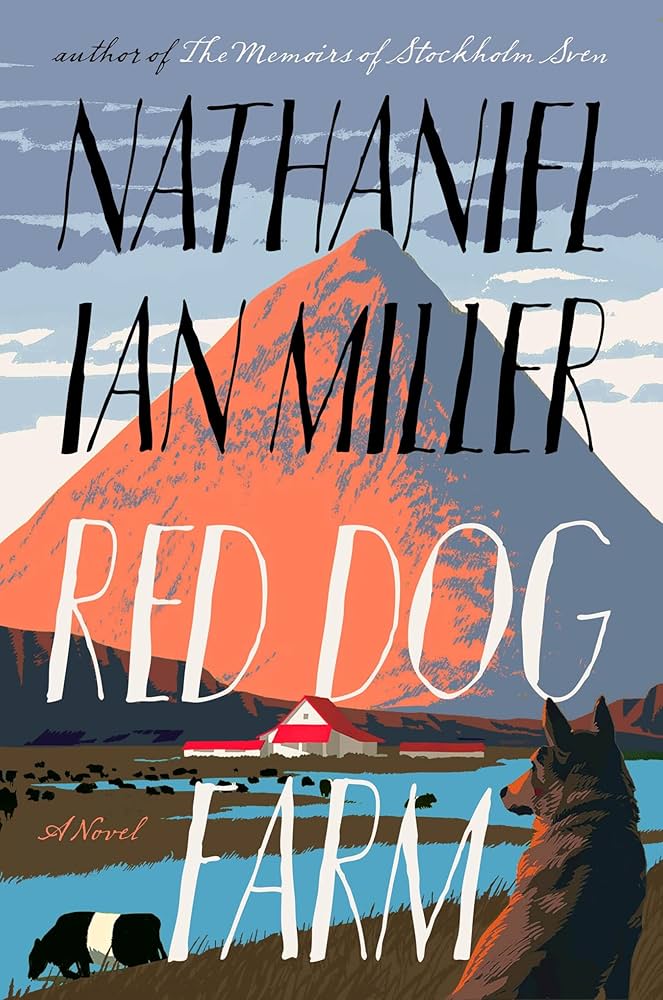
Northern Spaces, Idiosyncratic Characters, and the Beguiling Icelandic Landscape: Jenna Grace Sciuto interviews Nathaniel Ian Miller

Headshots of Jenna Grace Sciuto (left) and Nathaniel Ian Miller (right)

Jenna Grace Sciuto (left) and Nathaniel Ian Miller (right)

NATHANIEL IAN MILLER has always been intrigued by northern spaces, a link that connects his acclaimed first novel, The Memoirs of Stockholm Sven, to his latest work, Red Dog Farm. Red Dog Farm is a wonderfully engaging coming-of-age tale about a young Icelander named Orri and his relationships with family, friends, and the farm where he was raised. Miller’s ability to write characters—whether human or animal—that are, in his words, “emphatically (and believably) themselves,” is a unique strength. JENNA GRACE SCIUTO discussed the book with Miller, touching on what writing about northern spaces enables in his novels, his influences (Icelandic and more broadly), and the versions of himself that have gone into this story.

Northern Spaces, Idiosyncratic Characters, and the Beguiling Icelandic Landscape: Jenna Grace Sciuto interviews Nathaniel Ian Miller
Read more...

December 2025 Poetry Feature: Rodrigo Toscano, Olena Jennings, Ezza Ahmed, and Wyatt Townley

New work from RODRIGO TOSCANO, OLENA JENNINGS, EZZA AHMED, and WYATT TOWNLEY

Table of Contents:
—Rodrigo Toscano, “One Like”
—Olena Jennings, “The Pine”
—Ezza Ahmed, “The River That Was and Wasn’t”
—Wyatt Townley, “The Longest View” and “Christina’s World”

Rodrigo Toscano's headshot

One Like
By Rodrigo Toscano 

“Couple Bach preludes, a binding ceasefire,
One Dickenson poem, and we’re all set”
That was the post, like a gleaming beach pier
Charming half way out, torn up at the tip
Battered by statecraft, departmental verse.
You Could Make This Day Wondrous—the poems
We know what we mean, the anthology
Not unlike that pier, holding on for dear life
And raking in five point one thousand likes—
While folks in this country are still snoozing—
The drones keep droning, raining down sulfur
Chopping up limbs with zero counterpoint—
And what to make of the could make line breaks?
Tab key diplomacy, farce on all fronts.
And we? Rock dashes with thorough bass lines.


Olena Jennings' headshot

The Pine
By Olena Jennings

The pine tree in front of our house
was visible
from the kitchen
window. It kept all our recipes secret.
It towered above the hostas.
Years later, I didn’t like to drive past
to see its absence.

My father didn’t want to see
the uncomfortable feelings surfacing
like foam on a glass of beer.
It was at Avenue Liquor
that I became an adult too soon.
Driving past the house,
he ignored the uncomfortable feelings.

The house was warm orange brick.
I would stand near the tree
with my lunch box waiting
to be picked up by the red car
with the tricky door handle.
Our thighs stuck to the seats,
as if convincing us we wanted to stay.

I wanted to curl back
in the yellow bedroom
of the house, wanting to be hidden
by the pine tree. I wanted to
stand in the shade, the set
for all our photos.

We buried a goldfish. Empty bottles
of wine were lined up
on the bookshelves. I had graduated
from the headscarf by then.
My grandmother still wore one,
but I was ready to be bare
against the cold.


Photo of Ezza Ahmed

The River that Was and Wasn’t
By Ezza Ahmed

I was running, the neighborhood
boy my secret guard. A cloud of dust and dirt
my shadow.

My stomach would hurt
from fresh cow’s milk,
a white film swimming to the top.

In a place of people who are
and aren’t, the kids are raised on cardamom milk
and kites. The rain trembles at who it’s about to touch.

I know nobody, not even myself
when I cut blunt bangs staring into the mirror
my eyes black even in the sun.

Words burn my throat, the tongue
behind my tongue splits open,
voice giving birth to voice, I love

everyone silently. I hold my grandmother’s hand
every morning for two months
trace her green veins and give them names.

From the rooftop I memorize his eyes,
gold and green like a dying leaf. I kiss
his kite with mine before cutting the string.

I meet aunts, uncles, cousins, cousin’s kids, dad’s cousins
singing songs about a honeyed sleep
nights before my sister’s wedding.

I’m gifted bangles and anklets,
red, gold with bells, blue, blue and silver sparkles.
My walk becomes beautiful.

Everyone is anxious here,
fingers clenching and unclenching
in the space of the unsaid.

My sister’s Henna night finishes after the old curfew.
Still, we walked quietly to my dad’s childhood home.
The pathway lit by the whites of our eyes.

Grief makes a beggar out of me,
my appetite aching
for all that is and isn’t.

In a few weeks I thin
with my grandmother.
Her past growing cold on my plate.

Yesterday, we visited the old river.
It was there
then it wasn’t.


Wyatt Townley's headshot

The Longest View
By Wyatt Townley

In art, they call it background.
In theatre, backdrop. Behind

the hands of the magician
and pointing politician, behind

the siren and skyline
is the long view, hypotenuse

of the woods that only birds
and our searching eyes can find.

Behind every barrier: vista.
Inside the tightest fist and turn

of the intestine—space—and time.
Since childhood you have carried it

on the schoolbus and into every
classroom where you married

the seat by the window. There it was,
unrolling beside you. On the subway

it was tucked in you like a token,
the most precious thing you owned.

The horizon always started
in your heart, unspooling

where you turn. Don’t let them
fool you. Hunt for it, fish for it,

bring it to the fore. It was never
background. It’s true north.
 

Paintings Christina's World and Wind from the Sea by Andrew Wyeth

Paintings by Andrew Wyeth: “Christina’s World” and “Wind From the Sea”

 
Christina’s World

By Wyatt Townley

1
It’s a short walk home
from the field where she lay,
her pale dress circling

her slenderness,
the urgency of her turning
back. A short walk, unless

you have to crawl.

2
Some are slower still.
She chose the best dress
in the closet, the purse

with all she’d saved.
She walked into the field.
She picked the best

spot, the best view. Under
the stars, the pills sang
in their bottles like maracas.

When she ran out of rum,
she chewed the nasty capsules,
chewed and swallowed,

swallowed and scribbled,
scribbled and retched.
But the last thing she did
was scream.

3
Fifty years
from that field
to this chair.

The scenic route:
a series of mountains,
of men, of rooms.

A series of shoes,
of roads, of clouds.
But just one field.

Fifty years
to find home, to get
on the right side

of a lace curtain.
I rode here on a pencil.
The rest was wind.


Ezza Ahmed is an educator and poet based in NYC. Her poetry is concerned with diaspora, memory, and water (rivers, creeks, lakes, etc.). Her work is in The Idaho Review, The Gingerbug Press, Sycamore Review, Apogee Journal, the Michigan Review, and Adi Magazine. 

Olena Jennings is the author of the poetry collection The Age of Secrets, the chapbook Memory Project, and the novel Temporary Shelter. She is the translator or co-translator of collections by Ukrainian poets Kateryna Kalytko (co-translated with Oksana Lutsyshyna), Iryna Shuvalova, Vasyl Makhno, and Yuliya Musakovska. Her translation of Anna Malihon’s Girl with a Bullet is forthcoming from World Poetry Books. She lives in Queens, New York where she founded and co-curates the Poets of Queens reading series and press.

Rodrigo Toscano is a poet based in New Orleans. He is the author of twelve books of poetry. His latest books are WHITMAN. CANNONBALL. PUEBLA. The Cut Point, The Charm & The Dread. His Collapsible Poetics Theater was a 2008 National Poetry Series winner. His poetry has appeared in over 25 anthologies, including, Best American Poetry and Best American Experimental Poetry. Toscano received a New York State Fellowship in Poetry. He won the Edwin Markham 2019 prize for poetry. He was an Honorable Mention for the 2023 International Latino Literary Awards. He works for the Labor Institute in conjunction with the United Steelworkers on educational projects that involve environmental and labor justice culture transformation. rodrigotoscano.com

Wyatt Townley is Poet Laureate of Kansas Emerita and the author of seven books. Her work has been read on NPR and published in journals of all stripes, from New Letters to Newsweek, North American Review to Paris Review, Yoga Journal to Scientific American. Commissioned poems hang in libraries including the Space Telescope Science Institute, home of the Hubble. The poems here appear in her next book, Making the Turn, forthcoming fall 2026 from Lost Horse Press

December 2025 Poetry Feature: Rodrigo Toscano, Olena Jennings, Ezza Ahmed, and Wyatt Townley
Read more...

Dispatches from Søgne, Ditmas Park, and Temple

By JULIA TOLO 

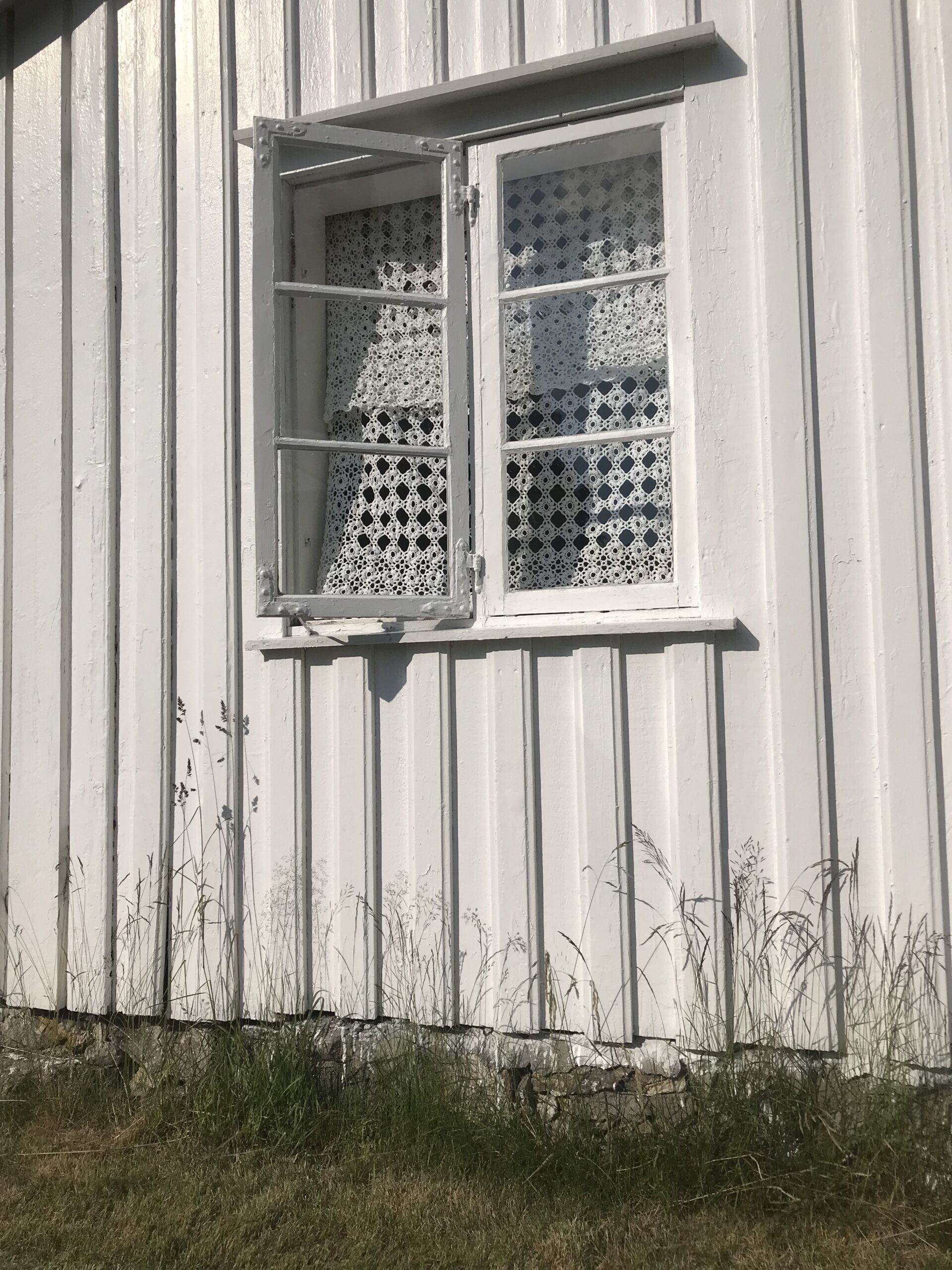
A window on the side of a white building in Temple, New Hampshire

Søgne, Norway, July 8, 2018

Sitting around the white painted wood and metal table
that hosted the best dinners of my childhood
my uncle is sharing
his many theories of the world
the complexities of his thoughts are
reserved for Norwegian, with some words here and there
to keep his English-speaking audience engaged

I don’t translate, don’t want to
repeat those thoughts
in any language

but we have a nice time
there’s a cheesecake with macerated peaches
and mint

the sun is low and through the window to my grandma’s house
the heavy lace curtains are catching the light

Dispatches from Søgne, Ditmas Park, and Temple
Read more...