





Excerpted from the essay collection FREEDOM.
I arrive in Johannesburg, South Africa, on December 2, 2013. My father will join me in two weeks, with my brother to follow a week later. In one month, we will unveil my mother’s headstone in the township where she grew up, one year after her death. Weeks before my arrival, a report detailing unlawful expenditure of taxpayer money in the form of $20 million of “security improvements” to President Jacob Zuma’s lavish compound, is leaked to the press. Nine years ago, the country’s first all-race elections were held and South Africa finally regained freedom from apartheid rule.
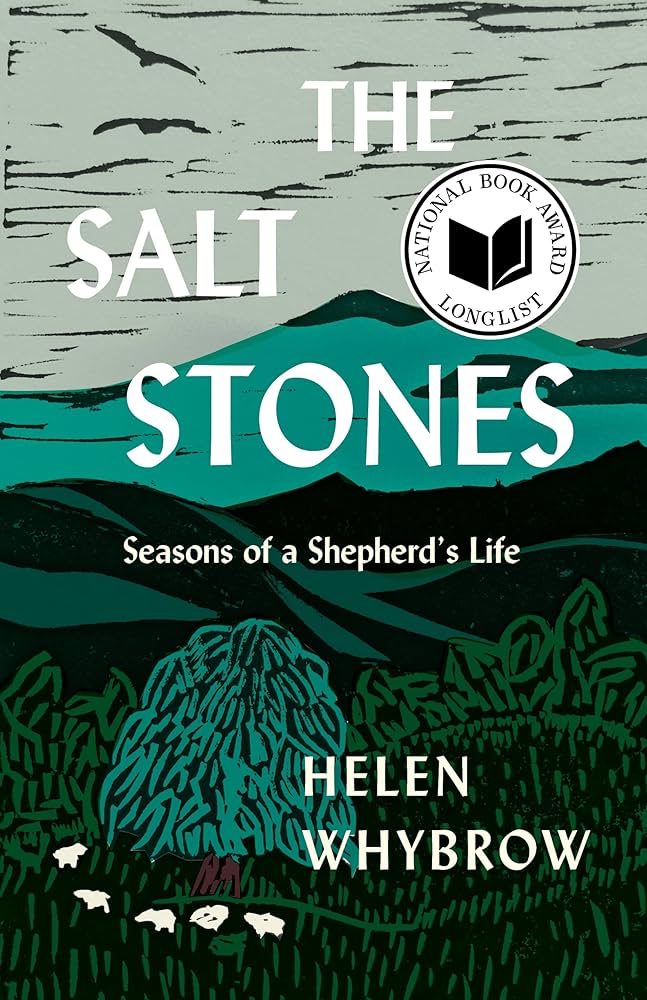
This piece is excerpted from the memoir The Salt Stones: Seasons of a Shepherd’s Life by Helen Whybrow, a guest at Amherst College’s eleventh annual literary festival. Register and see the full list of for LitFest 2026 events here.
A bird is not born knowing how to fly. Not exactly. Leaping off a rafter and opening two perfectly constructed aerodynamic wings will get a fledgling only so far—usually to another rafter, or a spot on the ground, or sometimes to a confusing corner of a window where an invisible cobweb will wrap its sticky strands around a beating wing and mangle the delicate microzippered fibers ever so slightly so that the wing no longer beats at all.

By DAN CHIASSON

This piece is excerpted from the book Bernie for Burlington: The Rise of the People’s Politician by Dan Chiasson, a guest at Amherst College’s eleventh annual literary festival. Register and see the full list of for LitFest 2026 events here.
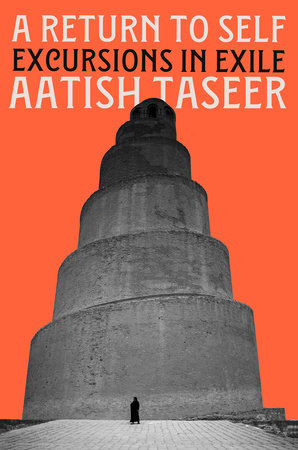
This piece is excerpted from the memoir A Return To Self by Aatish Taseer, a guest at Amherst College’s eleventh annual literary festival. Register and see the full list of for LitFest 2026 events here.
At 9:05 a.m. on the tenth of November, 2020, a hush fell over the leaden turbulence of the Bosporus. All activity on the strait ceased. Coast Guard ships, ferries, and caïques, like the younger members of a tribe of large marine mammals, drew close in a circle. Behind them, a Turkish destroyer kept vigil, the blue of its gunmetal merging with the strait’s frigid waters. A red-bottomed freighter marked with the words iraqi line hulked in the background. That cityscape of sea-blackened buildings, broad panes glazed silver in the daytime darkness, was no ordinary Left Bank, no mere farther shore. The silhouette of low domes and pencil-thin minarets piercing a nimbus of pale sky above was the continent of Asia. The wonder of looking at it, with my feet still planted on the shores of Europe, was not lost on me. I had been in Istanbul for less than seventy-two hours. The air grew heavy with anticipation, and then, low and deep and melancholy as whale song, came the first moan of a ship’s horn.
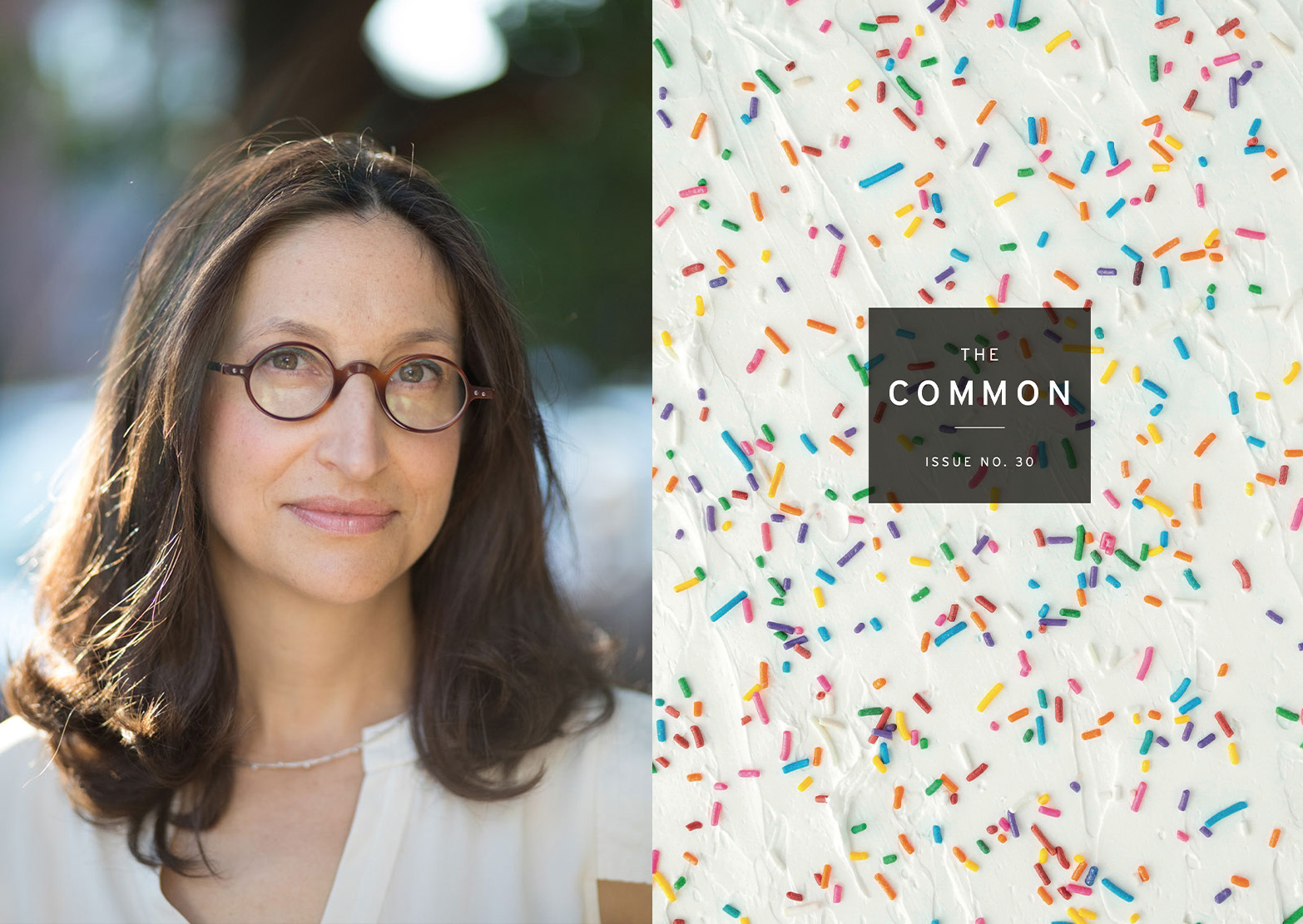
JENNIFER ACKER, founder and editor in chief of The Common, speaks to EMILY EVERETT about her essay “On 15 Years of The Common,” which appears in The Common’s recent fall issue. The piece is a reflection on the hard work and stick-to-itiveness it takes to train a horse—and keep a literary magazine running. Jennifer talks about how The Common has grown and expanded since its early days—when it was only her and a few student interns and section editors—including some highlights like favorite portfolios and a new film adaptation of a story from Issue 16.
Jennifer also discusses her forthcoming novel, Surrender, out in April 2026 from Delphinium. The book explores smalltown life, following a woman who returns to her family’s farm to raise goats, and encounters life challenges that extend far beyond farmwork.
The Reading Life is a special 15th-anniversary essay series reflecting on close reading and re-reading, written by The Common’s Editorial Board.
Consider not teaching, cancelling class, staying at home in bed.
Force yourself to go to campus anyway.
Remind the twelve undergraduates gathered around the seminar table that after the 2016 election, the historian Timothy Snyder published a tiny book called On Tyranny about how democracies fail and authoritarian systems thrive. Present your comments as a reminder. Recognize the pettiness of your annoyance that they haven’t heard of this book. Recognize that it may be misdirected. Understand that fist grabbing your heart as anger.

The Reading Life is a special 15th-anniversary essay series reflecting on close reading and re-reading, written by The Common’s Editorial Board.
“Always do what you are afraid to do.”
―Ralph Waldo Emerson
In a letter of February 20, 1997, to a humorist, Oliver Sacks says that one of his favorite words is APOCOPE. “I love its sound, its explosiveness (as do some of my Tourettic friends—for whom it becomes a 4-syllable verbal tic which can be impacted or imploded into a tenth of a second) and the fact that it compresses 4 vowels and 4 syllables into a mere seven letters.” This is the type of response I adore: succinct, passionate, informed, all around a single, transient word. The quote appears in Dr. Sacks’ Letters (Knopf, 2024, 726 pages), edited by his long-time assistant and researcher Kate Edgar. Notice the length of the volume: it is massive, even though, as Edgar mentions, it only comprises about a tenth of all of the letters Dr. Sacks wrote; he was an inveterate, compulsive logophile who wrote nonstop on napkins, pads, notebooks, and anything else within reach. (W. H. Auden, an early champion and long-time friend of Sacks, addressed him in print with the honorific “Dr.”; I gladly follow it here.)

By JIM SHEPARD
The Reading Life is a special 15th-anniversary essay series reflecting on close reading and re-reading, written by The Common’s Editorial Board.
I always thought that one of the quieter sadnesses of my father’s life—and there were plenty of noisy ones, even given that everyone, myself included, acknowledged that he was a delight to be around—was his relationship to his own education and to reading itself. Shep—everyone including his kids and his wife called him Shep—only got as far as high school before World War II intervened, and then worked at Sikorsky Aircraft, a company that built helicopters, after returning home. He’d flown ground attack missions in Burma as a dorsal turret gunner in a B-25 and resupply missions as a cargo officer in a C-47 through the Himalayas to China, and the latter missions, referred to as going ‘over the hump’ in flyboy speak, were so lethal that the aircraft and crews suffered a twenty percent loss rate. When he got home, he needed to decompress, what I now realize was his version of PTSD. His account of the seven or eight postwar months in which he just lay around worrying his mother—the details of which always seemed to me to eerily echo Hemingway’s great short story “Soldier’s Home”—always included as a sad self-indictment, “I thought I might read, but I never had the concentration for it.”

Transcript: Lily Lloyd Burkhalter
LILY LLOYD BURKHALTER speaks to managing editor EMILY EVERETT about her essay “Raffia Memory,” which appears in The Common’s spring issue. Lily talks about traveling to the Cameroon Grassfields to research the rituals and production of ndop, a traditional dyed cloth with an important role in both spiritual life and, increasingly, economic life as well. She also discusses the book-length project she’s working on, which explores loss, grief, fabric, sewing, and weaving.

Don’t miss an issue! Subscribe to The Common.