By LIZ DEWOLF
The buzzer rattles the empty room. Nearly empty—there’s the bed behind the wooden screen, the couch where Laurel sits in her underwear. Since Arda’s text that afternoon, she’s waited restlessly for him to arrive, imagining his route from where she lived with him on the Asian side of Istanbul to her new apartment on the European side: the narrow streets down to the ferry station, the boat churning through silver water, the near-vertical climb to her sixth-floor walkup in Beyoğlu. She presses the button that unlocks the building’s entrance and decides not to get dressed.
Arda enters her apartment without knocking. “Mutlu yıllar,” he says, though it’s now several weeks into 2013. For the first time since Laurel’s lived in Turkey, they didn’t celebrate the New Year together.
“Aren’t you freezing?” he says, taking off his coat. “You’re, like, naked.” He kisses her cheeks, his beard pressing the outside weather into her skin, and drops a plastic bag on the couch. Laurel thanks him without looking inside. By now she can guess: a book, maybe a sweater she left behind at their old place, his latest excuse for a visit. She takes his cold hands in her warm ones and moves him to the bed, but when he starts to take his shirt off, she says, “Don’t.”
So he fucks her with his clothes on, and the only tattoos she can see are the flowers on his neck, not the one in progress on his chest—the chrysanthemum in black—because she doesn’t want to see that one; she wants there to be new parts of him she doesn’t know. On the parts of her that grind against him now, she imagines little stars.
When her alarm goes off in the morning, Laurel lets it echo longer than necessary against the bare walls.
“Hassiktir,” Arda curses.
Satisfied he’s awake, she shuffles to the bathroom to shower, but when she comes back, wrapped in a towel, he’s asleep again, his legs tangled in the sheets.
“The next ferry’s in half an hour,” Laurel says, nudging his shoulder. If he leaves before she does, she can pretend he hasn’t been there at all. But Arda makes a soft sound in his throat and pulls her back to bed. He finds an opening in her towel and maneuvers a hand between her breasts, and this motion, the ease of it, rouses in her the wisp-like sense they’re still together, that her efforts to leave him, the months of tending to her doubt and then her certainty, have all been undone, and she wonders whether he wants her to feel this, whether he comes here and fucks her to remind her he’s not someone to be left.
“It’ll take you ten minutes to get to the station,” she says, sitting up and adjusting her towel.
“I know how long it takes.”
They primarily communicate in English, though Laurel’s lived in Turkey for three years. Part habit, part self-consciousness—she still sometimes says “sikildim” (I’m fucked) when she means “sıkıldım” (I’m bored). He teases her for her timidity, chalking it up to the infantilization of Americans, to a declining empire that has never bothered teaching its children about anything but themselves. Arda learned English from movies but was formally taught in French, his immersion high school a holdover from before his own empire declined.
Laurel goes to the kitchenette and switches on the hot plate for coffee. She does often feel like a baby in the world; she even gets paid to play stupid—the school where she teaches English to mid-career professionals makes her pretend she doesn’t know Turkish. Her coworker Elif, a Turkish Australian woman born in Sydney, was hired on the condition she change her name to Elise. Laurel’s unsure whether she’ll renew her contract when it’s up again in May. Many of her students already speak English, most of them paid by their employers to be there. She applied for the position from the States after graduating into the tail end of the Great Recession, and a year after moving to Turkey, on the couch with Arda one September evening after a day of classes that felt particularly useless, she watched the footage of people gathering in Zuccotti Park and considered she might have stayed, might have thought to demand more from her own country. Now she’s not sure she has a good reason not to go back.
“Are you in a hurry?” Arda calls now from the bed. He knows her classes don’t start until afternoon.
“I have an appointment.” She doesn’t want to tell him about the extra lesson she’s taken on to afford living alone; withholding information is her way of wedging space between them. Moving out was supposed to do it, but she ruined that the first time he came by, wanting to see what their familiar bodies felt like across that new distance. She was relieved to find they felt different, that the sex was strange, new furniture requiring new angles, but it bothers her now that, in this warped way, her apartment has become yet another thing they share.
She’ll need to leave soon to get to her lesson on time. It’s in Maslak, a business district north of her new neighborhood where the buildings are especially high. A clause in her contract forbids private lessons to students outside the school, but when Ebru, a kind woman in her Friday advanced class, asked whether Laurel could provide conversation lessons at the architecture firm where she worked, it felt like a sign. She was still living with Arda then.
“It’s burning,” he says, finally out of bed, and then Laurel smells it, coffee left on heat too long.
“Shit.” She grabs the moka pot and fills two mugs—it would be rude not to offer—but, to her relief, he takes one sip of the burnt liquid and abandons the rest on the counter. Another thing she hasn’t told him: She knows he was sleeping with someone else.
“Thanks again for bringing my stuff,” she says, to hurry him along.
“That reminds me.” From his bag he pulls out one of her sketchbooks and flips it open to a portrait she drew of him in graphite, half his face in shadow. She used to love drawing him, the bold curve where his brow meets his nose, the defined bow of his upper lip. In this sketch, though, made shortly before she moved out, his eyes are too close together, the circles beneath them exaggerated, as if she’d resisted the particular beauty of his face.
“You never showed me this one,” he says. “I look tired.”
“It’s a bad drawing.”
“Not your best,” he agrees, tossing the sketchbook on the couch. His frankness startles her, excites her for some reason, and she folds her arms over her towel.
Arda pulls on his coat and says, “Come by sometime,” meaning the bar where he works, where they first met. “Everyone misses you.”
“Maybe.” In her mind, the bar is his turf, their old neighborhood is too; all their friends are really his friends.
“Görüşürüz,” he says, putting on his shoes, and she says it back, though she decides for the hundredth time not to see him again.
At the architecture firm, Laurel follows Ebru to the conference room where they’ll have their lessons. The building is tall enough to see the Bosphorus from the windows, its cold blue surface almost motionless at that height. A woman comes in with a laptop and introduces herself as Zeynep, Ebru’s colleague, and Laurel is briefly unsettled to realize she’s around her own age. Her students tend to be older, more established in their careers, like Ebru; when Laurel is the youngest in the room, she can imagine her own waywardness as charming. They take their seats at one end of the conference table, and, as an older man comes in to bring them glasses of steaming amber tea, Ebru explains why she wants more English practice: “We are working with an international team to design the new Yenikapı metro station.”
“Really?” Laurel says. In her class at the language school, Ebru never mentioned the specifics of her work. The metro expansion has been all over the news, one of the prime minister’s favorite talking points. The project will connect the European and Asian sides of Istanbul via the longest underwater tunnel in the world. Laurel has learned from her friends—Arda’s friends—to be suspicious of the city’s new infrastructure projects. Megaprojects, they call them. Sure, they provide public goods, but who gets the construction contracts? these friends would ask. Where does the money go? Laurel would nod along, then look up the details later, learning the answers to their questions, adding to the list of ways she knows a government can let its people down. Some of these friends are making plans to relocate. They’ll become students again, or seek temporary work permits in Europe.
“You know about this project?” Zeynep asks.
Laurel lies and says, “Not much.” In her short tenure teaching English, she’s learned that feigning ignorance is the fastest way to get her students talking. She keeps meaning to find a new strategy, one that doesn’t require her to pretend to exist on a separate plane of reality. She takes a sip of her tea too early and burns her tongue.
“Our firm won the competition for design the new station,” Ebru says.
“To design the station,” Laurel says. She notices neither woman has touched her tea.
Zeynep turns her laptop in Laurel’s direction and shows her a rendering: an expanse of columns supporting a translucent roof, daylight pouring onto crowds of simulated commuters. “It will be one of the main transfer points in the city.” Thanks to the new tunnel, she explains, passengers will be able to cross between continents in under five minutes. Laurel imagines Arda on the metro, hurtling toward her at unprecedented speed. Then she remembers she decided to stop sleeping with him.
Arda is not among those who plan to leave. He has his grievances but finds life here more tenable. Thanks to his bartending job, he meets people from all over the world—people, like Laurel, who left their own countries for his. Why should he go somewhere else when somewhere else keeps coming to him?
“But this project is a kind of mess,” Ebru says.
“How so?” Laurel’s been in Turkey long enough to infer, based on style of dress, that Ebru and Zeynep might share her friends’ concerns, but she also knows these topics can’t be discussed in all settings; it’s not clear to her what kind of setting an architecture firm is.
But the complications Ebru raises surprise her. She explains that the construction site had once been a Byzantine harbor, and when the team broke ground, they found dozens of old ships preserved in the soil. While Ebru speaks, Zeynep pulls up images of the dig site: hulls of ships in packed mud, their rust-colored ribs curving out from the keels still stabilizing their centers. Inside these ships, Ebru goes on, were mounds of artifacts, tools and wooden slippers and cookware. In another image, pottery fragments spread across a blue tarp in gradations of terracotta, pale peach to deep brown.
“That is a mess,” Laurel says. “Did you have to change sites?”
Ebru seems surprised by the question. “Our firm joined the project after this discovery.” She explains that the competition they won had called for design proposals that were part station, part park, part archaeological museum—an “archaeopark” is what she calls it. Over the past decade a team of archaeologists has been cataloguing the objects they find. “We are there to—uyarlamak?”
Laurel looks to Zeynep for help.
“Adapt,” Zeynep says.
“Yes. Our design should adapt to the new context. And we hired Zeynep because already she was understanding the site very well.”
Zeynep flushes, perhaps with pride. She shows Laurel another rendering of the station, in which commuters gaze at three dark shapes, ships suspended from the ceiling like mobiles. “It was my thesis project at the architecture faculty.”
Laurel feels a flicker in her chest, the onset of envy. To have such clarity, so early in life, and to know how to use it.
“But the government is now rushing the project,” Ebru says, lowering her voice. “They don’t want us to take time to do it in a right way.”
“Do it the right way,” Laurel says. “Why not?” Even as she asks this, she suspects she knows the answer.
Ebru glances at the door. “Because they want it finished before elections. And they want to spend the money now, for their construction friends.”
“That sounds very fraught,” Laurel says, then defines and spells the word, which the architects write down.
“This kind of project is difficult here,” Zeynep says. “I studied one semester in Germany and was thinking to go back.”
“Why didn’t you?” Laurel wants to know how someone decides to stay. Was it a sensation Zeynep experienced, like physical desire?
“One day Ebru came to my class to tell about the competition. She told about the job of architects and archaeologists, that we are needing to stay where we are and work with the difficult things. And I was so interesting in this. And I wanted to learn to do it.”
Laurel has been listening so intently she almost forgets to correct her. “Interested,” she says, and then there’s a knock at the door, a man in wire-rimmed glasses who tells Ebru someone has arrived for her next meeting. Surprised the hour has already passed, Laurel finds she doesn’t want to leave. She wants to hear more about the challenges they’re dealing with, how Ebru has taught Zeynep to surmount them, but her time there is up. From a small stack of papers in her hand, Ebru presents Laurel with an envelope. “For today’s lesson.”
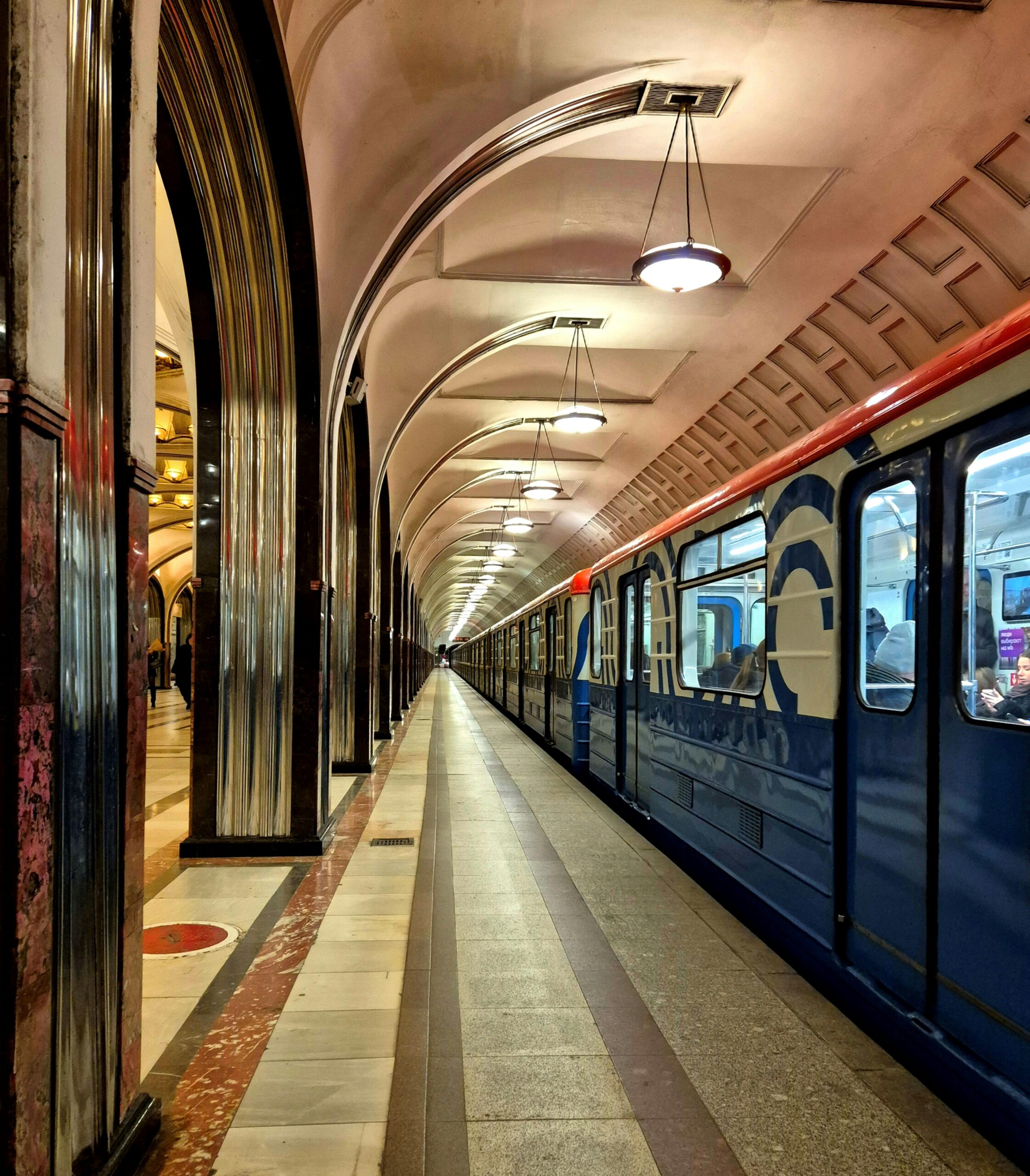
At the metro station, the map shows that the train goes all the way down to the dig site at Yenikapı. There are several hours until Laurel’s afternoon class, and when the doors open at her stop, she doesn’t get off.
“You finally put stuff up,” Arda says in her apartment weeks later, when he stops by to drop off a forgotten pair of socks. He’s looking at the pages Laurel has torn from her sketchbook and taped to her walls, all drawings of the dig site. After her lessons with the architects, she’s been taking the metro down and sketching the archaeologists as they clear the space for construction to start again.
“I thought I’d make it homier in here,” she says, though the drawings aren’t very inviting. In one, three shapes crouch to peer into a rectangular hole she’s shaded in so deeply the graphite shines. Another, with lighter, finer marks, depicts the stacks of plastic boxes used to catalog the artifacts once they’re cleaned. Laurel likes that every time she goes to Yenikapı, the stacks are a little higher, more clutter from the ground arranged to be dealt with. As she draws the archaeologists at work, she fantasizes she’s there to help them, that she’s been hired by Ebru and Zeynep’s firm—as some kind of assistant maybe, someone learning to make do with mess instead of leave. She imagines a fresh work permit, a new purpose, a good reason to stay where she is.
“You’re settling in, then,” Arda says.
“Evet,” Laurel confirms. If she stays in Turkey, she decides, she’ll commit to always speaking Turkish.
“Tebrikler,” he says, though his congratulations are half-hearted. He kisses her, and it’s not long before they’re on the couch with their clothes off. She notices the chrysanthemum on his chest is further along now, the shading of the petals more complex, but she no longer finds this knowledge threatening. Its progress strikes her now as evidence—of things he does without her, of detachment by gradation, that she’s made it to spring.
She lowers herself on top of him, and from his grip on her thighs she knows he wants to flip her over. The couch is small, uncomfortable, but she likes the position they’re in, how she can control the speed and friction, so she presses her knees into the cushion to resist. He shifts his hips and the couch forces him into a strange contortion, making him look funny, and she feels a flash of heat at the sense that he is someone else, that he contains more than just the version of him she knows best, which means she does too, and not just the one whose foreign solitude made her too eager for fast attachments, who moved in too quickly with a man whose rootedness seemed like a home, and who, when she glimpsed the jagged, buried fact that she did not love him, fled not only their apartment but their entire neighborhood, the whole continent, abandoning all that had become familiar because she couldn’t fathom how else to dig herself out. As Arda drags his fingers along her ribs, she imagines the bones as dark wood, arcing away from her spine. Then he pushes her sideways, overturning her, and makes her come from behind like he used to.
After, with her feet in his lap, he says, “I still don’t get why you moved here.”
“You know why. For the job.”
“I mean Beyoğlu. You didn’t have to move across the city because we broke up.”
“This is where I want to live,” she says, a ridiculous statement in her tiny, still-barren apartment, from which, on warm nights, she can hear people laughing at the bars below her window, hostile sounds that remind her of everyone in her old neighborhood across the water.
“But you’re so alone here,” Arda says, filling Laurel with shame. She sits up and finds her underwear, unwilling now to be naked.
“It would’ve been easier for you if I’d stayed,” she says, so as not to admit he’s right. “You’d be able to see me and İrem in the same afternoon.”
He sits back like he’s been pushed. “What does that mean?”
Laurel sees the opportunity to drop it, to say never mind, but part of her craves destruction, their reconfigured relationship having finally lost its appeal. She picks up her laptop from the floor and hands it to him.
“Open it,” she says, to her own disbelief, and directs him to the folder. His face reddens as he clicks open the files, recognizing the screenshots as messages, the words as his own.
“What the fuck?” he says. “How did you get these?”
“You left your thing logged in.” When they lived together, he used her computer all the time, signing in to his accounts as if it were his own, and once, while he was at work, she’d gone to her inbox and found his instead, the messages at the top with a woman she didn’t know. The most recent said, “I’ll meet you there,” and how could she not be curious? She took screenshots so she could read them later, with time to translate. By now, she’s gone through the exchange enough times she could recount it entirely. She’s looked at enough photos of İrem that she’d recognize her anywhere.
The messages start before Laurel and Arda meet. İrem asks him how work’s going, and he tells her the bar is fine but he’s hopeful about an interview at a film production studio, a job Laurel knows he later didn’t get. İrem tells him about her classes, how she regrets choosing business administration as her major. Then Arda tells her he met an American girl who sometimes says “I’m fucked” when she means “I’m bored.” He tells her that when his roommate moved out he asked Laurel to move in, and İrem warns him they’re moving too fast. He tells her his friends gave them cast-off furniture to replace what his roommate took, that Laurel was so moved by this she almost cried. He tells İrem what kind of food he cooks for her, how she finishes everything on the plate, about their walks together and how seeing his city through her eyes makes him more proud of it, proud of not wanting to leave. Later, he tells İrem they’ve been having sex less and less, and İrem says she told him so. He tells her he misses her, the time they spent together that one summer. He’s been thinking about the shape of her ass, the little star tattoos she has, so close to her pussy, how he remembers looking at them while eating her out in the bathroom of the bar that time—does she remember that? İrem asks whether they can meet one day while Laurel’s at work.
“Hassiktir.” Arda slams the laptop shut. “We were just talking. We never met.”
Laurel knew he’d say this. It’s why she didn’t tell him about the messages in the first place, why she regrets showing him now.
“So that’s why you ended it? I thought it was because we didn’t feel right anymore, or whatever you said.” A smile tugs at the corner of his mouth. She’s given him a problem he can try to fix, a theory he can work to disprove, if not because he wants her back—she doesn’t think he believes they were so in love—then to at least soften the blow of her rejection. “If you’d told me, I could’ve explained. We weren’t fucking anymore, remember? I just wanted attention. I never met her. I was never going to meet her.”
Looking at the face she knows so well, Laurel’s surprised to find she believes him. She’s just as surprised, heartened even, that this belief changes nothing. It doesn’t undo the fact that when she found the messages, she also found relief. That she’d come across a challenge to the life they’d cocreated and, after the initial shock of betrayal, realized she had no urge to protect it.
“That’s not why I ended it.” It would be too harsh to say they probably never should have been together. “Does it even matter now?” She can’t find the words, in any language, to explain what she feels certain of in that moment: that they’re different now, they’ve fucked each other into new versions of themselves, not the ones burdened by the failure to make a life together but ones who can live among old associations and begin to make new ones. He’s right, she’s ready to admit, they can coexist. If not in the neighborhood, then the city, even if it’s all his turf. I’m going to stay where I am this time, she almost says. I’m learning to work with difficult things. But Arda gets up and starts pulling on his clothes.
“Aynen,” he agrees. “It doesn’t matter.” He pauses by her door for what may finally be the last time and then shuts it behind him, hard enough to set off a dog somewhere deep in the building.
On a sunny morning in mid-April, Laurel waits for the architects in the usual conference room. She’s placed on the table three copies of a recent article from one of Turkey’s English-language newspapers, a prompt for the day’s lesson. The headline reads: “Neolithic Dwelling Found at Yenikapı Dig Site.” In the archaeologists’ final check before approving construction of the metro station, they made another discovery: part of a hut they believe dates from 6000 BC. Laurel’s eager to hear how Ebru and Zeynep will incorporate this development into their designs. In her sketchbook, which she carries with her everywhere, she’s even drawn out an idea herself, a glass rotunda through which to view the dwelling. She might show them her drawings if there’s time.
But the architects are late. People glance at Laurel as they pass by the conference room. Someone comes in to offer her tea. Sitting there, exposed inside a glass display case of her own, she has the feeling they all know something she doesn’t. Just when she’s about to look for them, Ebru comes to the door.
“Laurel, so sorry.” Her eyes are dim with exhaustion. “We forgot to cancel the lesson.”
“Oh.” Laurel stands up. “Okay. No problem.”
“There are big developments in the project. Every day we’re having long meetings.”
“Totally understand.” Laurel gathers the copies of the article, feeling silly now for having brought them. They would have been talking about this issue nonstop for days; they wouldn’t want to explain it all again to her. She doesn’t really work there; she’s just someone they talk to for practice, like a game. Ebru walks her to the elevator, where Zeynep appears, holding a stack of papers with images Laurel can’t make out. Zeynep tells Ebru the archaeology museum called while she was away from her desk.
“Sorry, Laurel,” Zeynep says. “This week is going terrible.”
“Is this about the dwelling?” Laurel wants, absurdly, to show how much she understands.
“Yes,” Zeynep says, but there’s no indication Laurel’s understanding means anything to her. “They must dig more, to find everything. And now we’re changing everything, again. It’s delaying too much.”
“I’m sure the new designs will be even better,” Laurel says.
Zeynep shrugs. “After a few months, I will live in Germany.”
“You decided to go?” The elevator arrives, and Laurel holds the door.
“I decided to go. But not because of this. Things here are getting worst.”
Worse, Laurel thinks but doesn’t say, because it doesn’t matter.
“But will we continue our lessons? At least until you leave?” The desperation in her voice embarrasses her, as does the idea that they were ever going to involve her in a more significant way, her hope that this would make it easier to stay, to make a new life amid the mess of her old one.
“I hope so,” Ebru says. “We will send you a mail.”
For the rest of the week, Laurel gets through her classes on autopilot. She has the curriculum memorized, knows how to ask questions to get her students to tell her about, for example, their daily routines. She’s both bored and soothed by the predictability of their responses, how everyone gets up, takes a shower, and goes to work. Her Friday advanced class, the one Ebru used to come to, is her last before the weekend. For an hour the group discusses their plans, and when someone asks about Laurel’s, she makes some up to spare herself their pity. She thinks of a place she’s always wanted to go, one of the Princes’ Islands, and tells them she’ll spend the weekend there, and when they ask more follow-up questions than expected, she surprises herself by going big with the lie, by telling them the trip is for a wedding, that she’s traveling with friends; they’ll take the ferry over together and stay at an inn on the shore. Her students recommend things to do while she’s there, if she has time, and she thanks them and says, “Let’s move on,” feeling guilty for bringing them with her onto her separate plane of reality.
She leaves the school later excruciatingly free. The swarm of pedestrians on İstiklal grows thicker by the second, forming the shape of the evening. She thinks of Arda’s bar across the water, filling up now with her friends—Arda’s friends—taking their drinks to the garden, where they’ll smoke and dance, loosening their bodies from the grip of the week. Before the nostalgia can subside, she texts him: I’m coming by the bar. It’s been weeks since they’ve spoken, but he was the one who suggested it, who said everyone missed her, that they could coexist.
On the ferry, the cool air makes it easy to find a seat outside. She pulls her coat around herself and wonders if she’ll still be here when the benches are full again in summer, how many people will still take the ferry once the new metro line opens. Her nerves start halfway across the Bosphorus, and she steadies herself by counting the shipping containers gliding by on barges: five red, seven yellow, three blue. By the time they pass the lighthouse near the Asian shore, the sun has dipped, and everything in their wake is the same silvery purple, the domed European skyline one great, monumental mound. The ferry bumps against the dock, and she begins the zigzag ascent to Bar Street, glad the incline from the shore is more gradual on this side of the city. Her pulse quickens when she sees the wooden door. There’s nothing left to do but push it open.
Arda isn’t behind the bar. His coworker Cemil is wiping down the back counter, the patch of scalp on the back of his head sweetly familiar. When he turns and sees her, he looks surprised.
“Hoşgeldin,” he welcomes her. “Naber?”
Laurel isn’t sure which updates to share, whether Arda’s told him anything about her since she left. She opts for the neutral response: “Iyi, senden naber?”
Cemil nods. He’s been good too, nothing new. He grabs a pint glass and fills it with Efes, scoops a little dish full of corn nuts. She’s touched that he remembers her order, though it’s what almost everyone gets. She thanks him too profusely and asks where Arda is.
“You don’t know?” he says in Turkish. “He got that job at the studio.”
Laurel scans her memory and turns up nothing. In their time at her place, Arda never mentioned applying for another job, though she hadn’t asked.
“I knew,” she says, taking a sip of beer. “I didn’t know he’d started.”
“I figured that’s why you came back. Since he’s gone.”
“No,” she says defensively. “We’re past that.”
“Okay,” Cemil says. “Still teaching?”
“For now.” She looks away from him, toward the garden, where people stand in clusters smoking, on a separate plane of reality. “But just on the side,” she says. “I started architecture school.” She feels her face warm at the lie, bolder than the one she’d told her students.
“For real?” Cemil grabs a lemon to slice into wedges. “What are you working on?”
She hesitates before pulling her sketchbook from her bag.
“In one of my classes, we’re making designs for the new metro station at Yenikapı.” She flips through her drawings, staring at the pages to avoid Cemil’s face, and she’s gratified to look at all the marks she’s made, the many versions of the station she’s dreamed up. “It’s going to be part station, part park, part archaeological museum. We call it an archaeopark.”
Cemil glances over. “Cool.”
Laurel’s relieved he doesn’t seem that interested, that he won’t ask further questions. He won’t mention it to Arda when he sees him, though, for all Arda knows, it could be true. Cemil fills two shot glasses with whiskey.
“Welcome back,” he says, holding one out to her.
She doesn’t want the whiskey, but his gesture moves her, so she takes the glass, clinks it against his, taps it on the bar, and tosses the burning liquid down her throat. She suppresses a gag, she’s not really a shot person, but as the disgust fades to warmth in her insides, and the door to the bar opens, and Arda and İrem walk in, hand in hand, stiff in the doorway at the sight of her, she greets them with a smile and thinks: She could be anyone at all.
Liz DeWolf is a writer and editor based in Los Angeles. Her fiction has appeared in The Missouri Review, The Common, and elsewhere. She is at work on a novel and a collection of short stories.