By JEFFREY WOLF
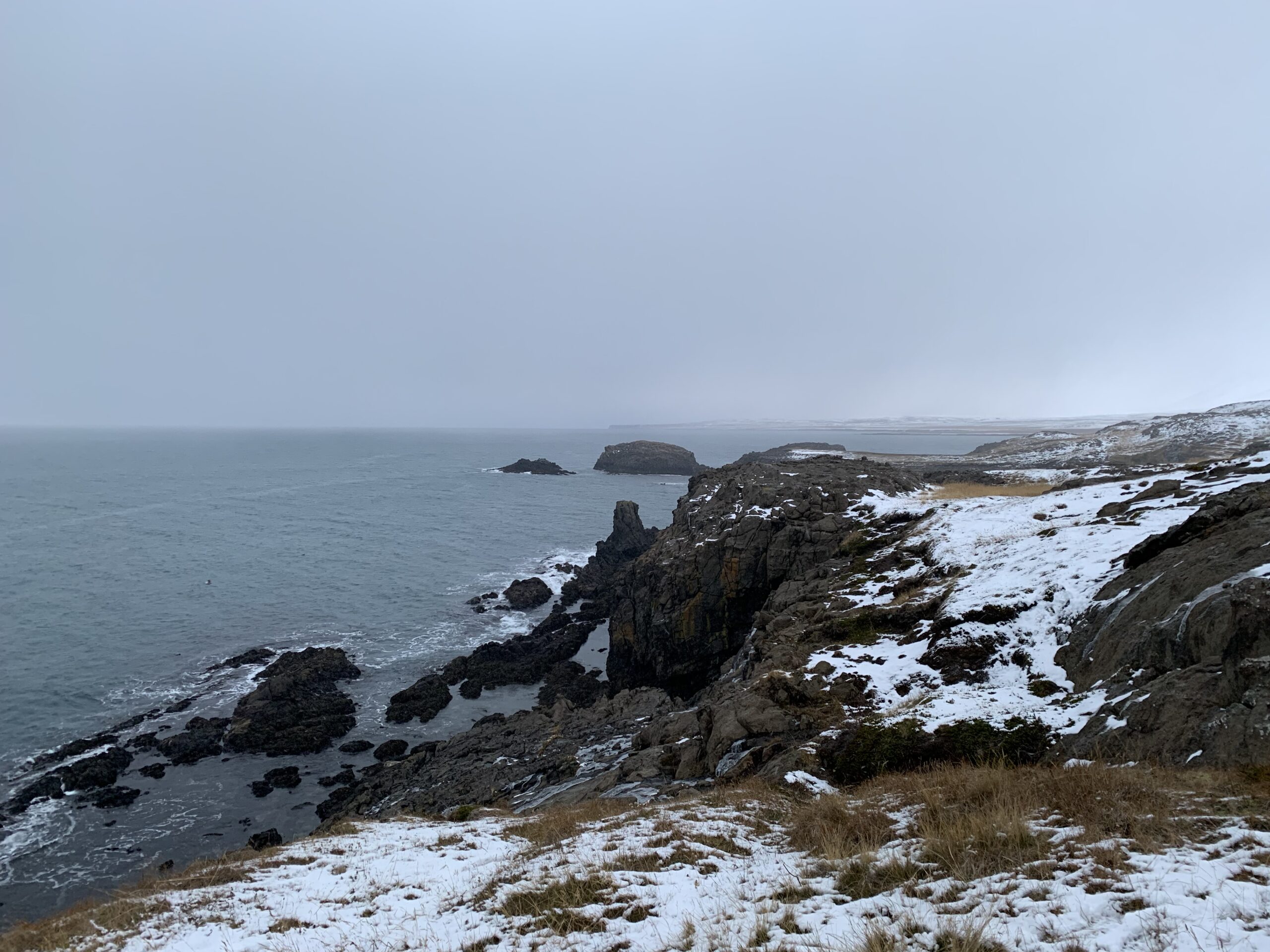
The Westfjords. Iceland’s necrotic hand. Gnarled fingers reaching for the icy water. This is my interlude. A day between artist residencies, a rental car from Hertz. Just a short detour off my route. I may never have the chance again.
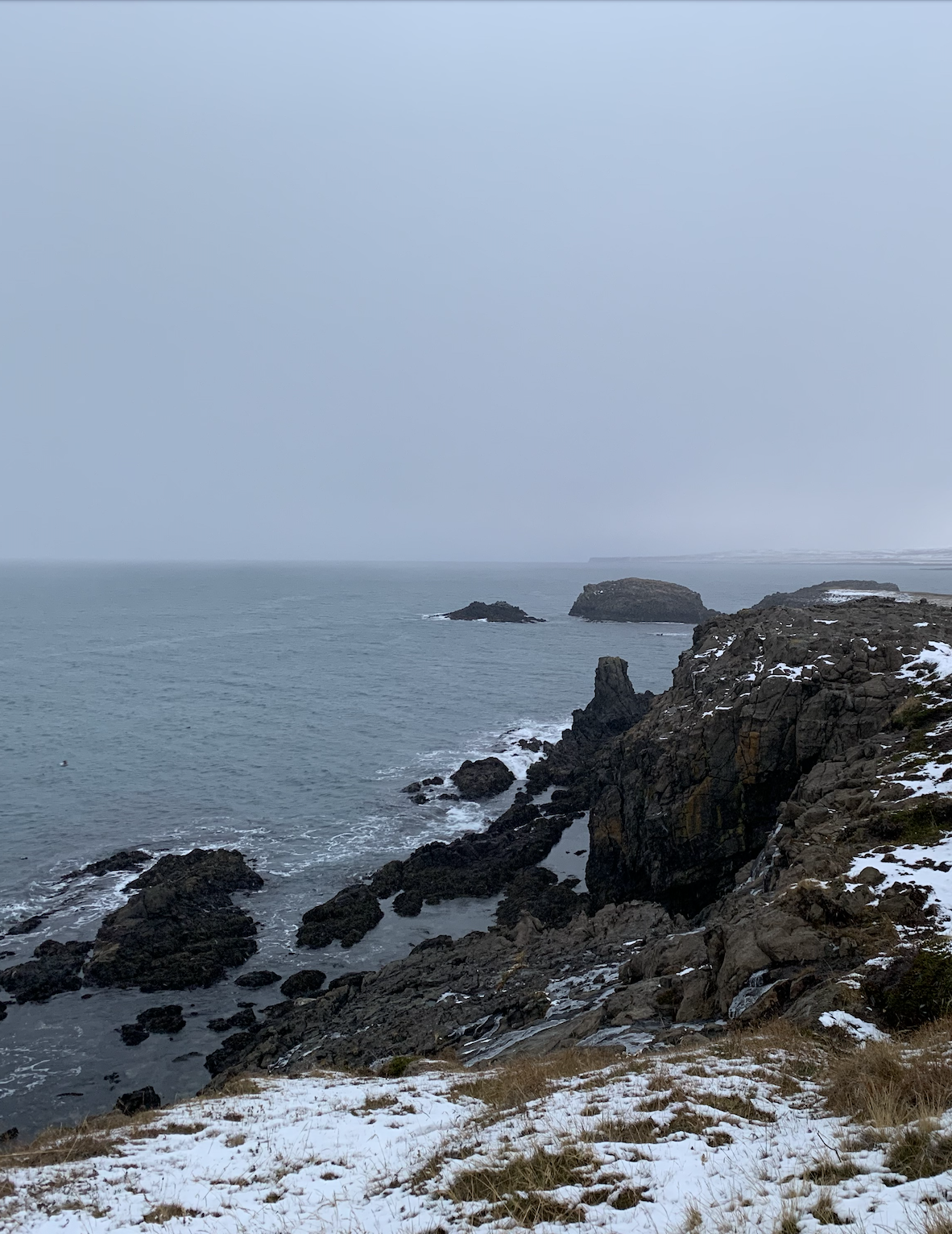
The fjords sit back and cast their spell. They rise from the ocean like the backs of sleeping beasts. For eons, they’ve waited. Layer after layer, gray upon gray, so deep and infinite that I start to feel afraid. Surely this is where the darkness lives.
A short detour isn’t so short. The land wanders, the roads double back. Time warps in the hypnosis. I’ve driven for hours and made no progress. Suddenly I’ve crested a mountain, and I’m staring down like a king. Then I’m low along the beach, small and insignificant. Then the mist rolls in, and it’s anybody’s guess.
This eastern coast of the Westfjords is known for hot pots. Think volcanic pools, not dinners—though maybe just as brothy. Drangsnesvegur plunges from the height of the fjord cliffs to the rock-strewn shore and a hot pot appears, three meters off the road. Its laid stone feels ancient, built up from the rock like an unholy altar. Cold waves crash at the far edge, but the pool itself steams and bubbles, its shallow depths sickly with reds and yellows, mosses and molds and fleshy seaweed. A witch’s cauldron, a poisoned brew. When the wind subsides, I can smell the sulfur.
No people here, but plenty of birds. They bob in the middle distance, dark specks on the bay. Ducks and cormorants inanely chattering. Then a loon’s call pierces the mist, long and low like a howl.
I spend the night in Hólmavík, a small town nested below the cliffs. There are several bed-and-breakfasts, fishing boats in the harbor. There’s also a brewery. Inside, the walls are painted solid black and cast over with runes. Giant sprawling symbols, each a multiplicity of circles and arrows. Unsettling in their precision, powerful in their mystery.
This coast was once a seat of witchcraft. A few steps from the brewery sits the Museum of Icelandic Sorcery, where featured displays include the Necro Pants, the seamless skinned legs of a human man, and the Rib Baby, a sticky-fingered creature grown from an exhumed human rib. Each a waxy mix between recreation and legend. Outside, a monument honors the victims of Iceland’s seventeenth-century witch trials.
These days, the locals are exclusively brewing beer, and it’s quite good. The black IPA is my favorite, malty and rich. I let its spell settle over me. I’m alone, eager to lose myself. I buy a four-pack to go.
They call this area Strandir, the Driftwood Coast. Every beach is a graveyard. Massive bleached logs, twisted and smooth, litter the sand. They look like whale bones. Like shipwrecks. It goes on for miles.
The kicker, though, is that trees don’t grow here. They never have. Is this more witchcraft? A land so barren, its every resource must be conjured, brought forth from the grave. What must the first settlers have thought, arriving to endless lumber—but only from the sea.
Today, we know that the wood comes from Siberia, pulled thousands of miles by the Arctic currents. An unfathomable pilgrimage. The ghosts of dead forests called to haunt this dead land.
And to those early settlers, driftwood was their salvation. Used to build sturdy huts and seaworthy ships. As tempered and tested as the people who used it. A gift from nature. But such benevolence surely had a cost.
In Icelandic, strand simply means “beach.” But it’s hard not to dwell in the cognate. The lonely driftwood stranded on the shoreline. The fields of bare rock repeating for miles. The empty gravel roads. The utter silence. The lack of cell service if anything goes wrong.
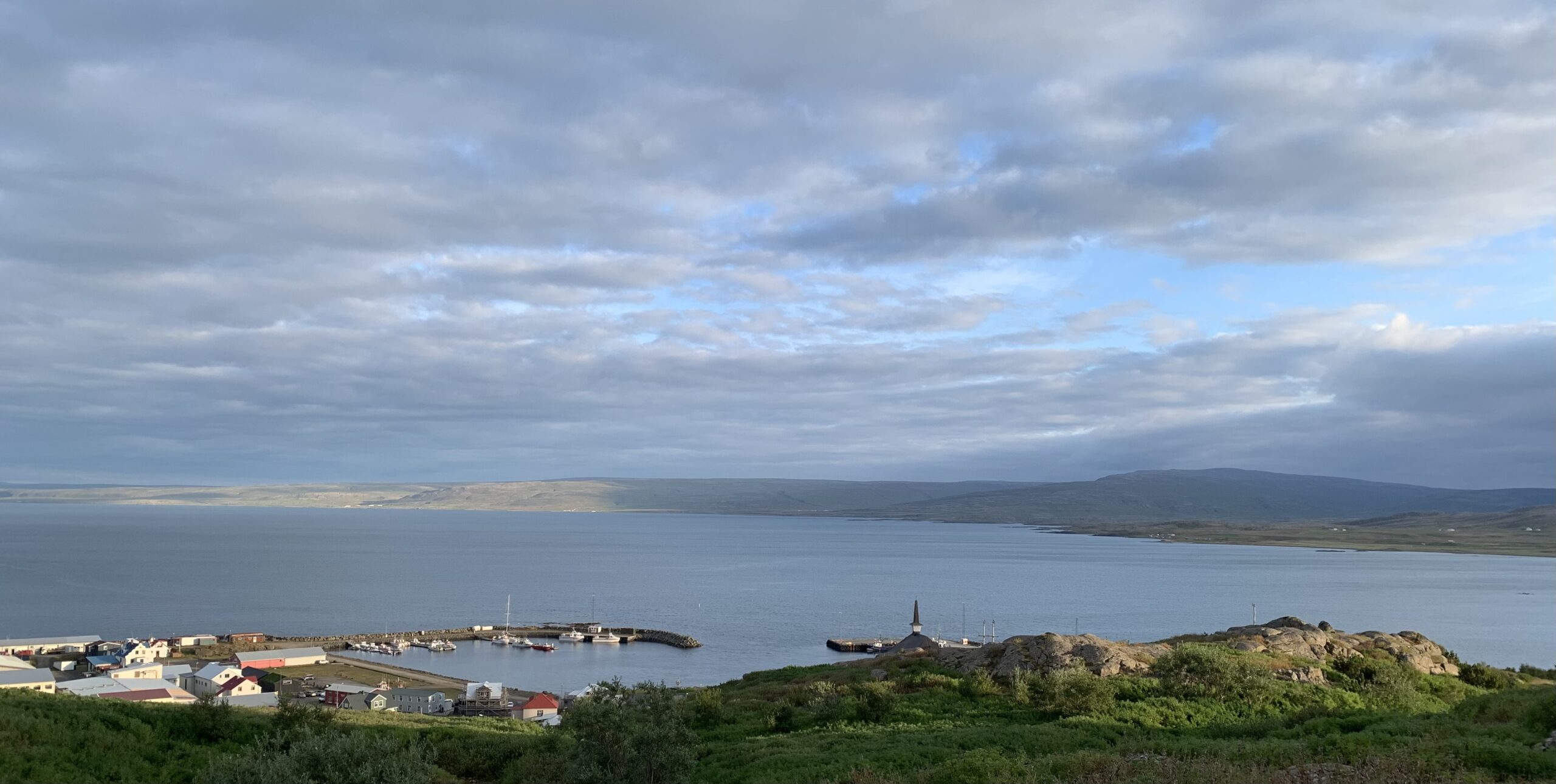
As twilight descends, I hike up from the town to stretch my legs. I follow painted stone steps past wild grasses and shrubs to a strange concrete cylinder. The entire bay stretches out below.
The clouds shift, and yellow sunlight bursts through, casting sudden, brilliant life upon the land. Bold colors and thick, meaty shadows. The world lengthens out. Every rock and leaf vibrates. Magic hour, we call it.
Tomorrow, I drive to the next residency. I’m no prophet, but I do think I’m ready. I stand above Hólmavík and watch the light disappear. The loon’s call rises from the bay.
Jeffrey Wolf is the author of And Even This. His fiction and nonfiction have appeared in Conjunctions, Prairie Schooner, The Florida Review, Chicago Quarterly Review, and elsewhere. He has been awarded a Special Mention from the Pushcart Prize and artist residencies in Iceland, Finland, and Sweden. He teaches Creative Writing at the University of Chicago.