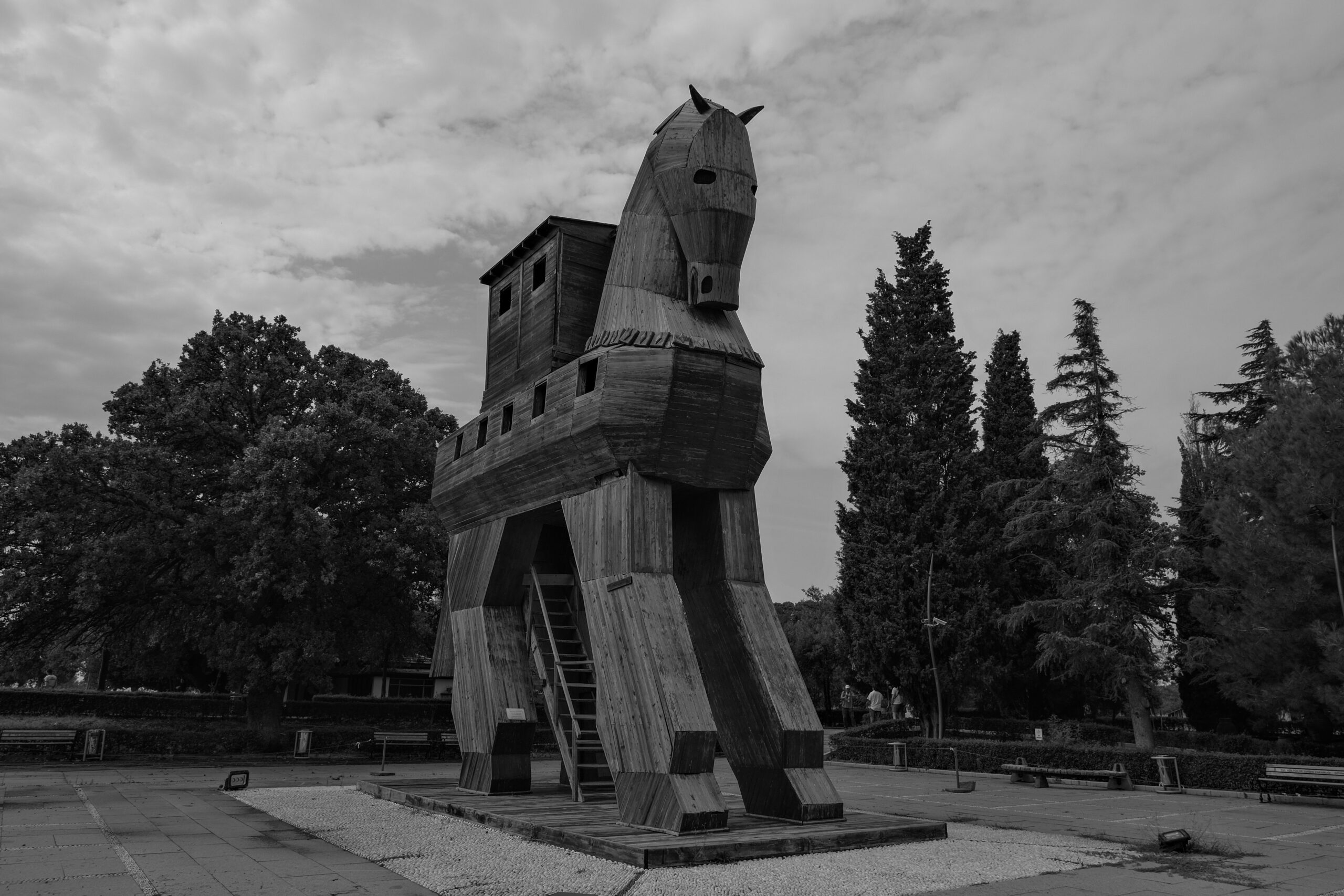
It was a gold-seal ruse. A double-
dealing so sublime the gods ordained
it. Settled into their stadium seats,
they wagered on their favorites. Helen,
the imposter bride, circling and circling
the gifted horse. Her Central Casting
lines to the shadows inside. The numbing
non-reply. War-weary, she fastened her
hair in gold and dressed for a city
ablaze. Nothing to do but wait.
I conjured a horse on wheels, your city
in flames. Your essay too beautiful
to ignore: a waterfall of self-assured
claims; the neat appraisal of ancient
Greece. Even a summoning from the
grave—faceless and without names—
mentors in whose guardian light as a
student like you, I died. My rebirth:
years of shedding an ancestral hide,
habits of thought, pursuit of the crown.
A history you could not have known.
Songs of siege lines. Ruinous open gates.
War’s grim gains. Achilles and Hector lying
lifeless in the same wet clay. In my hand,
a poised pen. Helen’s hairpins.
A beautiful conceit. Her trust to leave it
to the gods mid-play. Closure as prologue.
Or, as you say—too old for your age—
the difference she makes in walking away.
In academia, a “Trojan horse” refers to a professor embedding a hidden phrase within an assignment prompt to help detect plagiarism in the use of AI.
M.B. McClatchey is the author of six books, including The Lame God, winner of the May Swenson Poetry Award. She earned a graduate degree in comparative literature from Harvard University and teaches at Embry-Riddle Aeronautical University. Her poetry has received many honors including the American Poet Prize.