Things have taken a strange turn since my husband uprooted our family. First I quit my job. Then I stopped eating. And now I’ve begun to receive messages from the dead.
Four months ago, we moved from rural, pastoral Northern California, a place I loved, to southwest Virginia. Over the summer, smoke from the West Coast wildfires has followed us, traveling east across the country, shrouding the Blue Ridge Mountains in a haze made heavier by humidity. I like to look out the window, air purifiers humming behind me, and watch the microscopic remnants of home suspended in air, thinking they’ve been sent here just for me.
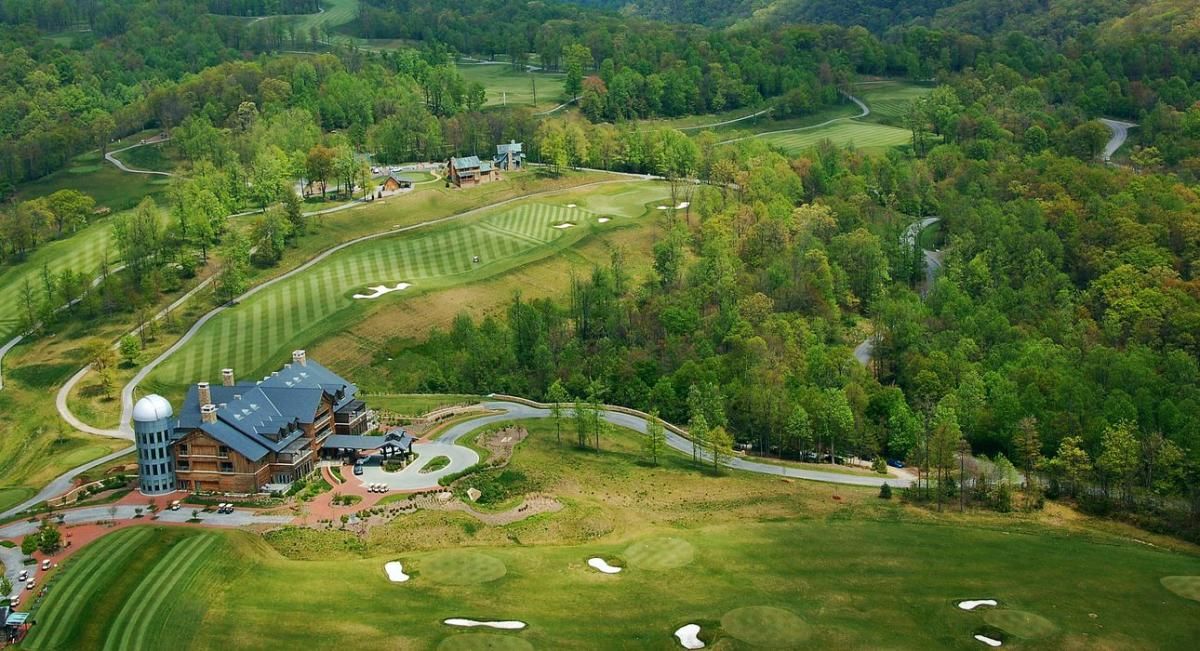
Johnny works for a company that offered him a high-paying position at a newly acquired property, so we packed our things in the spring and relocated. The same day we landed, he began running a luxury resort that emerged amidst sprawling, remote forest land.
“We have the state’s highest-ranked golf course,” he pointed out on a day I’d gone to tour the grounds.
The resort felt uncanny: wild land manicured into green fairways, hunting grounds, and trails for ATVs. Rings of rifle shots and hums of various motors simmered with the rattle of cicadas. The staff everywhere smiled those saccharine smiles of Southern hospitality, polite but plastic. Gracie, the girl working the counter at the golf shop, told Johnny I was “so pretty—so exotic!” He didn’t say anything to correct it. After all this time, whenever he’s caught between me and a white person, he still struggles to say the word Pakistani properly—doesn’t know whether to shorten or soften the a’s, whom to appease, me or them. Gracie’s left hand was missing half its index finger. Johnny told me later she’d blown it off with a shotgun when she was fourteen. I couldn’t remember the last time I’d spoken about myself and he had listened.
He’s almost always out of the house all day. The move and his work have exacerbated a combination of pain from chronic kidney stones and a habit of drinking whiskey after dinner until he falls asleep. The rare occasions when I look at him, I see a vacant space I dream of leaving. His world revolves only around him, the job, his needs. On our third wedding anniversary, we had dinner at one of the restaurants at the resort, and I realized that, during our entire meal, he hadn’t asked me anything. While I rearranged the food on my plate, he had pointed out the staff, their names, whether or not he liked them. Gracie from the golf shop was learning how to bartend. I watched her attempt to stir a drink, the bar spoon spinning clumsily against the stump of her finger.
That night as we undressed for bed, I thought, Does he know what it’s been like for me to move? How it feels to be treated like a new species around these people?
“You know,” I said out loud, “I wonder sometimes what it would be like if we hadn’t ended up with each other.”
He looked at me. Started to open his mouth, then turned away.
“And what about Maggie?” He almost said it to the wall, but my eyes caught his in the mirrored doors of our closet.
Maggie. Our almost-four-year-old. She isn’t mute, but hardly ever speaks. Johnny said once that he was the same way at her age, and I nodded while replaying his many moments of impossible, impenetrable silence. It’s easier to blame him than acknowledge the possibility I may have had something to do with how she is.
Two weeks ago, when the fires first started, my mother packed up the house I was raised in and flew out to Virginia. She’s been staying in a small cabin next to ours on the grounds and often takes Maggie in the afternoons. Part of me resents her for following us here. She can linger like an unwanted shadow. But I’m grateful for my free time. Mostly I stare into space or hunt online for antique jewelry and wedding gowns, my favorite items to source for my shop before I’d sold it. The boutique was absorbed into the plans of a big-city fashion designer who’d just moved to town and used its following to support her own designs. She folded her line in slowly, deftly curating around the shop’s offerings. I hate to admit it, but I like what she’s done and wonder why I never thought to do the same.
A profound silence permeates those afternoon hours. My mind travels back to California, where tinny refrains from a dusty pink ice cream truck would have drifted down the street and through the windows. The display of popsicles and ice cream cones for purchase was a beaten-up plywood board, behind which the off-key chiming of “Deck the Halls” colored bright summer days with an uneasy pallor. A handsome Sikh with a graying beard looked out through the window. I used to find him slightly sinister, but now, something has changed.
When I see the Sikh in my memories, he becomes my cousin Amir; a distinct echo in their facial features merging into one. Amir and I were told we were meant to marry from a young age. As children, we’d been running on the deck of his home one warm afternoon when I split my big toe open on an errant nail. The blood came fast, and I crumpled, crying, to the ground. His eyes grew wide as he dropped to his knees beside me, grabbing my foot. Almost as if in a trance, he took my toe into his mouth. He had just lost his two front teeth—one that morning—and I remember the smooth, soft feeling of his gums, our blood mingling. Our Nanijan found us like that. She was staying at his house. Sun bright in her eyes, she told us that, from then on, we were bound to each other.
Ours is a family of quietly cruel, long-stretching jokes, but the proclaimed intended marriage felt like only half of one. Plenty of my cousins have arranged marriages, including Amir’s oldest sister. I saw them often growing up. Amir almost always brought me a piece of fruit: a green apple, a clementine. Once he had a pomegranate that we cracked open on the ground and ate together, laughing as the juice from broken seeds trickled down our arms, streaking our skin in ruby rivulets. When I was fifteen, his family moved back to Karachi, and I wondered how we’d find our way to each other again. We exchanged messages occasionally. Stupid jokes in passing, like, How do you get plants to grow in the dark? Plant light bulbs. But two years after leaving, Amir died at the age of nineteen from a heart attack caused by a poorly documented fatal drug interaction.
For weeks, I wondered what his last moments were like. He’d had severe asthma, and on more than one night I’d awaken to the ghost of his lungs wheezing for air. Did the medicine he took offer relief before it killed him? I felt restless and tired at the same time, trapped in thought. In another world. One day I came home with a math quiz marked D, and my mother slapped me hard across the face.
There’s a word my family uses, budqismat, that seems to haunt us: bad fortune. It seemed a farce that someone as good as Amir existed in our sphere. I knew after he died I’d never meet anyone like him again. I vowed to close my mind to the past, found a short string of convenient relationships, and told myself I could still go on to marry for love… or something adjacent. It’s a lie to say I’m surprised he’s resurfaced in my mind. He’s always been there, hiding.
At the end of July, I get news that the fires are approaching the hills my mother vacated. As her presence here looms, indefinite, the world around me shrinks. The air hangs heavy, saturated with smoke. It’s then I stop eating. Smells and textures from food become repulsive. The tomatoes grown in the resort’s vegetable garden, the bread baked on-site, the fish flown in from the coast all taste mealy, ashen, rubbery… as though they’ve traveled here from the scorched land of California.
Time passes differently on an empty stomach. Hunger stretches minutes and hours long like the late-day shadows. I’m cloaked in constant queasiness. The one thing I’m able to keep down sometimes is ice cream; its coolness abates the heat, though I’m not sure if it’s relief from the fires back home or the oppressive situation here. I think of Amir often as an acute loneliness envelops me. I wonder what space he occupies now, if any, and begin to write him one day while an approaching storm darkens the sky.
Dear Amir,
Do you remember hearing the story of when your mother stabbed mine in the foot with an ice pick? They must’ve been children, maybe teenagers then. She told me the blood spurted up like a fountain; she’d been hit right in the vein. I wonder what your mother felt then. Sometimes I think mine is incapable of remorse. Meanwhile, I’ve done many things I regret, and the one constant is the thought just after, when my heart pounds from my chest to my ears: If only I could take that one second back… if only I could make a different decision.
Then there are decisions that creep into your life so slowly you don’t realize you’ve made a mistake until it’s too late. There’s no one moment to take back. Too many exist, knit tight into the fabric that is your life. How could you undo what’s been done? If you tried, would it even matter, or would things end up the same? Do you believe in fate?
They say fires can start on their own: a dry spark, a pileup of dead matter. It can be a good thing, to clear out rot and waste, make room for healthier trees. But the one at home started because someone threw a cigarette into the brush while they were driving.
I wonder if that moment haunts them. If they even know it was their doing. Just like I wonder if your mother replays the moment when she found you dead, or the realization it could have been prevented.
Do you?
The email sits in my drafts for a few hours as veins of lightning erupt in the sky and claps of thunder roll in. Then, suddenly, I want it to be free. I type in the last email address of Amir’s I remember. Just before sending, I think, Was it .com? .net? before realizing it doesn’t matter and pressing the arrow. The lights flicker; the air grows thin. The front door slams, and I look up to see Johnny with my mother and Maggie.
“Batten down the hatches,” he says.
———
I had spent years trying to get Johnny to love me. I existed for his eyes to turn and notice me. Even once we were together. He paid so little attention to detail; never told me he liked my hair or what I was wearing. Hardly ever on time. But I saw how the world turned for men like him. He was beautiful, blond, almost like James Dean, and I wanted him to belong to me. Then, one day, it seemed he did. Not in the way where things suddenly click or fit like the right puzzle piece. Maybe it was closer to resignation. He used to take my hand and wrap it around his shoulders, press my fingers into his skin.
“Soothe me,” he’d say.
And I obeyed. Kneading his muscles, pressing closer and closer to bone. Our connection felt unspoken. Now I realize there’s only dullness behind what I mistook as brooding mystery. I question if our connection ever truly existed, or if I always projected a deeper one onto what only manifested physically. Lately I can’t stand it when he presses against me with desire. His entitled erections, sprung out of nowhere. His touch revolts me. But I let it happen, because somewhere I still hold my old desperation.
———
My mother returns from one of her days with Maggie, looking anxious.
“She’s running a fever. Go to have her looked at. And not by some second-rate country doctor here. Find one in the city.”
“How could she have gotten sick?” I ask, annoyed. Maggie won’t start pre-K until fall and barely sees anyone outside her family, but it is just like my mother to invent an illness, its diagnosis, some inconvenient solution. Amir’s mother, my khala, once told me my mother wanted to become a nurse, but my father forbade it. I was always coming down with something as a child, or so my mother would say. I was “difficult” and “too sensitive.” These illnesses were proof that I was born with bad in me, she said. We went to endless appointments; I was poked with needles, speculums, probes… she did this until I was old enough to suspect I wasn’t sick. That she’d been altering my reality. An extreme version of make-believe.
My mother looks at Maggie, who has settled on the living room floor with one of her dolls. It looks like her miniature—their outfits a similar shade of yellow and their hair matching curls, all askew. Instead of answering me, my mother says, “She doesn’t look like you.”
I steel myself for whatever nasty thing will come next.
But my mother’s voice gets softer, almost scared. “She looks like your Nani.” She shudders. “Wicked woman.”
I stare. “She looks like Johnny,” I correct her.
She clucks her tongue. “Nahi, gadhi. Not like Johnny.” She draws his name out with disdain, the way she always does. So ashamed her daughter married an uncultured American. What makes it worse is that I know what she means now. “You don’t remember how your own Nani looked?”
I close my eyes and inhale, steeling against the red-hot instinct to smack her for calling me stupid. Only one of us is allowed blows in this relationship, and it’s not me. I narrow my eyes and reply in a condescending voice, “Nani wasn’t white.”
My mother scowls at me. “No.” She cocks her head, mocking my tone. “She wasn’t white, thank God. She had light eyes and skin. Us aurat mein koi garbar thi.”
“What do you mean something was wrong with her?”
She moves her face closer to mine. “Unnatural in those eyes. And always trouble. Just like you.”
I shift away from her.
“You should go to the doctor, too.” She nods toward me. Then reaches out and pinches the skin on my arm, hard enough to bruise. “Getting so skinny. Are you trying to disappear?”
Desperate to leave the house, I schedule a guided ATV ride the next week. We’ve just finished a five-day course of antibiotics for what was deemed an infection in Maggie’s left ear. She nods when I ask if she’s feeling better. When I ask if it hurt, she puckers her mouth and shrugs.
“Will you tell me next time?” I ask.
She stares at me.
“It would be very helpful if you did. Then it won’t have to hurt for so long.”
Two blinks.
I sigh inwardly. Postpartum had been murky and troubled, perhaps never left. There was a lake we visited a few months after her birth. The first trip we took as a family. We walked out over a pier and stopped to watch the sunset. My eyes traveled the length of the platform supporting our bodies over the water as I held my baby, looking below. An urge swept me so sudden and strong I knew to step back but was frozen in place: What if you dropped her into the water? What if you just let go? My fingers dug into her, fighting a loosening grip. It was horrifying, but what’s worse, it wasn’t the first time. As a newborn she cried, screams unrelenting. Sometimes all I could do was stare, holding her out in front of me, wondering what would happen if I just—
I shake my head to focus in the bright sunlight. Driving to the activity center takes fifteen minutes on winding, unmarked roads. Inside, taxidermy bobcats chase petrified pheasants. I sign a release form and say hello to the guide, a young man with wraparound sunglasses, a baseball cap, and a toothy smile. Our ATVs rumble through steep paths of rocky terrain, climb dusty hills, crash over passes flooded with water. After careening across miles of serpentine trails, we pull aside at the top of a clearing. I feel lightheaded most of the time, occasionally delirious by the second half of the day, but the adrenaline hits like a reset. I watch a vulture pass, wings outstretched, gliding overhead. The guide follows my eyes.
“So long as you stay alive, won’t nothin’ out here getcha. That’s why everything on this property’s guided.” He turns his attention to our surroundings. “Now in fact the canopy here should be way higher. ’Bout a hundred years ago, the chestnut oaks died from a fungus. Killed everything, infected them straight through the hearts.” He shakes his head, looking across miles of thick, deciduous forest. “Never thought anything’d grow again, but plenty other species came back.”
“The oaks never regrew?” I ask. The air blowing past carries a strange, sweet-damp smell.
The guide shakes his head again. “Interesting thing is, those chestnut oak roots’re still alive underground. Shoot up saplings all the time. Just can’t survive above with that fungus. Same species grows real well down south in the swamp, though.” He glances at his watch. “Best be headed out ’fore they’re likely to send out a search helicopter.”
Back at the house, the sun’s glare is heavy. I think about the trees burning in California, hardly different than the ones that can’t survive here. A vague spell of nausea falls over me. My mother returns with Maggie close to an hour later.
“She feels warm again,” she says.
I touch her forehead. She feels fine to me.
“Maggie,” I say, “are you chilly?”
She shakes her head. “Hhh…” she starts. Then stops.
I wait expectantly, but nothing follows. “Hot?” I ask.
She nods.
“I’ll keep an eye on her,” I tell my mother.
She turns toward me. “And you?”
“And me what?”
“What did your doctor say about your weight.”
I take a breath and say through my teeth, “Hyperthyroidism. I took a blood test.” I don’t mention not eating. I’ve learned the hard way that lying to my mother is the easiest solution.
She closes her eyes and looks very grave. Shakes her head back and forth. “Your Nanijan’s sister had this. Got very ill. She would see things that weren’t real, had to stay in the house for years before she died.”
I try to control the irritation in my voice. “There’s medication. We can talk about it later, I’m tired.”
Her expression grows even more solemn. “Ah, yes. The chronic fatigue.”
Christ, I think.
When Maggie goes down for a nap, I go to my computer and stare at the screen. There, in my inbox, is an unread email from a random string of numbers: 0021879425800119437652. I hardly ever get spam, and when I do, I hit delete before opening out of habit, but something stops me and compels me to click.
Yes, it says. I do.
That’s it.
———
I’ve been thinking about what it must be like to burn, I write Amir. Because everything around me seems to be. My old home, my marriage, my child… fire has to suffocate to die, doesn’t it? That’s how I feel these days with my mother. I wonder if my daughter will feel that way about me. When I look at her, I see so much of her father. Fair skin and light eyes. Can a mother hate her child because they remind her of her mistakes? Can that ever get reconciled? My mother said Maggie looks like Nani. Maybe one day I’ll see myself in her, too.
You said, Yes, you do. Did you mean that you think about what it was like to find you dead? Or that it could have been prevented, or that you believe in fate? I guess it doesn’t matter much anyway. But I wonder if this burning surrounding me has a purpose. I feel a deep desire to go underground, find some hidden root system, move forward on my own terms.
What do you think?
———
My phone rings one afternoon. Strange. No one calls me, especially since we moved here. Mostly what I use the phone for is alarms, or reminders about Maggie. Looking down, I see a scrolling marquee of numbers: 0021879425800… it keeps going while I choke on nothing but air.
“Hello?”
No response.
“Hello?”
There’s a noise on the other end that sounds like hissing.
“Amir,” I say.
The hissing grows louder. SssssSsssSsst… then clicks.
For four days, each afternoon at four o’clock, my phone rings. Each day, the same. My anxiety is so high everything around me feels like it’s buzzing with electricity. I barely notice the usual dizziness from not eating. But, on the fifth day, nothing. Four o’clock comes and goes, turns into five.
What could it mean? I pace the room, racking my brain, grasping for meaning, the electric buzz, while the weight of late-day delirium falls over me. Four days, four o’clock, the hissing, sssssssssttt… four days, four… hissing, ssssssttt… four, four, sssssttttt… I stop in my tracks.
Forest.
That night I sleep and have a series of dreams—a rare occurrence. It starts up at the resort. I’m walking through rooms when I see, through a doorway, Johnny and Gracie deep in conversation at one of the bars. When I squint, I see their hands are touching, overlaid. Johnny turns my way, and his eyes are blank. Glazed over, the way they are after his long nights of drinking. In that moment, like all those moments when he’s wasted, I hate him. How absent he is. How weak.
I turn from the doorway to find I’m in my childhood home with my mother, both of us wearing dark gray saris and headscarves. Maggie is younger, maybe just under two, wrapped in a blue blanket in my arms.
“Our family are darakht,” my mother says.
“Trees?” I ask. “How?” The words fly out of my mouth without permission.
“When one becomes diseased, we must seal off so the rest can live.”
I shake my head, confused. The air around us fills with what sounds like a giant fire crackling. “I don’t know what that means!” I shout above the noise.
“The child is the key,” she replies.
I look down at my daughter in my arms. When I raise my eyes to look at my mother, I see hers are blank with the same shining glaze as Johnny’s. Her face morphs into a deformed glare.
“GET OUT!” she yells.
I back away against the force of her voice and the commotion surrounding us. My legs collide with something large behind me. And then I’m falling…
When I land, I’m in my childhood room, sitting on the bed’s duvet covered in white eyelet lace, staring at Amir’s high school graduation photo. But it isn’t him from high school. It’s him at this age, my age—our age—his beard gray, his face even more like that of the Sikh in the ice cream truck.
“What have you been doing?” I ask his picture.
Waiting for you, it replies without moving.
“But where are you?” I shake my head, confused.
On the other side.
“How do I get there?!” I cry.
Use the key.
My eyes fly open. The key… the key… echoing as I struggle to make sense of where I am, hands racing across the bed, scanning for the tiny holes of eyelet lace.
Before I can place myself, my mother’s voice envelops me: The child is the key.
———
When Amir died, I wondered why it wasn’t me. I’d been on plenty of medications and was certainly a worse human than he was—lustful, jealous. Johnny and I had been together for less than a year when I found out I was pregnant. Our relationship had been casual until only a few months before, and my first thought was, This is how you get to keep him. I was shocked when he agreed we should get married. I thought it was proof he loved me. But it turns out he’s just a rule-follower. After Maggie was born and the postpartum hit, it occurred to me that maybe this was how fate made its way to me. A kind of death while living. Complete disconnect.
I haven’t seen Johnny in days. He’s been at the resort, tending to some manager crisis. Aside from the empty glasses left overnight, rimmed with the smell of liquor, it’s as if he’s ceased to exist.
The guide’s words drift around me in my afternoon hazes: fungus, infect, straight through the heart… still alive underground. I want to be given another chance, but not here. Hadn’t Amir done it? Made it to the other side, shooting up saplings of life underground. If Maggie is the key to getting there, I just have to figure out how.
Two days after the phone calls end, I find a box in the attic that I’d forgotten I shipped over with items from my shop. Cream and ivory swaths of fabric, a veil of delicate lace. I hold it up to the light. Sun filters through, creating patterns on the floor. When I squint, they look like the feathery structures weaving through the bottoms of mushrooms or rotting fruit. Fungus. Feeling a spark, I go for a walk the next day, retracing the path to the activity center, knowing it’s nestled on the edge of the deep forest. I examine the soil, looking for fingerlike structures, anything pointing upward, indicating they’d like to be noticed. I gather one or two, beige and flat, growing out of a fallen tree, but they aren’t what I’m looking for. The activity center is dark inside. I wonder if they’ve closed for renovations.
Finally, after almost an hour, I see them: golden-hued, emerging with heads covered in feathery white spots, even more bespeckled in the patches of sunlight falling between tree leaves. Almost invisible amidst a thin white structure covering a sliver of the forest floor, reminding me of the lace veil, my eyelet duvet cover. I kneel down and press my face close to them, breathing in their particles, the mossy ground, a layer of ash that still clings to spidery webs woven through fallen leaves. The strange, sweet-damp smell from the day on the ATVs fills my nose. The sun overhead grows brighter as I breathe in, and when I raise my head, I see stars. Time comes to a crawl. I stare at the cluster of mushrooms, waiting for their shadows to grow. Nothing changes, even as the sun begins its descent toward the horizon.
Yes, I think. This is it.
———
“Our house is burning,” my mother tells me the next day, over breakfast.
I turn toward her. “I thought the fires were getting contained.”
“That was last week. The winds have changed.”
I look out the window and see the deep orange morning sun, shrouded by a layer of smoke. Something in her statement prods the back of my brain, to the dream from the other night. It has lingered with me, feeling as real as a memory. Her deafening scream: GET OUT!
“Maggie kuch nahin bolti, woh gungi hai,” she says, unprompted.
A protective feeling surges inside me. “She’ll speak when she’s ready,” I snap at her.
She shakes her head. “Something is strange. You remember how your Nani’s eyes would flicker in the dark? Hers are the same. And always with these fevers, like you.” She spits on the floor. “Allah bachaye.”
I close my eyes so she doesn’t see me roll them. As if God has ever protected either of us, I think.
Out loud, I struggle to keep my voice low, seething. “Then you don’t need to watch her. Starting tomorrow, you’ll leave her with me.”
I turn a large satchel wrapped in cheesecloth in my hands, inhaling the smell of sweet-damp earth. Beneath my face, steam rises from a saucepan simmering milk. Maggie sits in a chair, hair clammy around the edges, swinging her legs, watching me. I promised her a tea party in the attic, which is what I tend to now—the tea. I drop the satchel in and turn the heat down so it won’t boil over, then watch it steep into the milk, slowly turning it cream, then yellow. There has been no more contact from Amir, but a deep knowing informs me he’s waiting. I simply need to lead us in. I’m still not sure why I can’t do it alone, why Maggie is the key, yet something feels distinctly right.
I turn off the burner and look to her.
“Ready to go upstairs?”
In the attic, I’ve laid out a table with several of Maggie’s favorite playthings: dolls, stuffed animals, wrapped in white fabric. For her and me, I’ve chosen a matching white wedding set for a bride and flower girl with identical full skirts and veils. We take our seats next to each other. She’s sweaty from her ongoing fever and the heat that pours through the sun-drenched windows in the attic. The air is still. I pour the milky mushroom tea. We each take a sip.
“Maggie,” I say. She looks at me. “If you could go anywhere, where would it be?”
She furrows her brow and opens her mouth. “Hhh…” she breathes out. Then, almost in a whisper, exhales, “Home.”
I inhale, surprised. “Home where?”
Maggie blinks as I look at her questioningly.
“Whose home?”
She shrugs. We both take another sip of tea and sit in silence, our surroundings growing hazy. My stomach growls.
“How about our friends at the table?” I ask. “Can you tell me what their names are?”
She shakes her head.
“Well, what’s your name?” I ask.
She smiles. “Muggey,” she murmurs softly.
I nod. “Very good. And what’s my name?”
Her expression turns perplexed for a moment. She swallows a large gulp of tea. Then, with unnerving clarity, “Laila.”
My mouth opens in surprise.
“Laila,” Maggie repeats, her eyes meeting mine.
Something rattles loose inside me. Maggie occasionally engages, but she has never said my name. There’s a fire in her eyes—one I recognize.
My heart pounds.
Time changes, slows, comes to almost a halt. The saliva in my mouth grows thicker. Slowly, a memory comes back to me.
Maggie was crying in one of her unending fits. Wrapped in the blue blanket, the same age as in the dream. At the edge of sanity, I’d picked her up, holding her close, both of us sobbing. I moved to hold her in front of me, staring at her, desperately wishing our souls could leave. For us to find some peace. Then, my arms jolted out. It was over so fast, I almost thought it hadn’t happened. But it did. I shook Maggie. After, she finally fell silent. Her eyes held mine the whole time, pale and flickering. Lit as though from behind, like they are now.
Then I remember Nani’s eyes from that day she found me and Amir. But the memory is clearer now: the day is cloudy, the deck slick from rain. The nail I split my toe on had pushed out from bloated wood, and I’d slipped before hitting it. So the brightness in her eyes was not from the sun.
Just like the flickering in Maggie’s eyes, I realize. My mother wasn’t lying.
I turn back to Maggie. “We don’t belong here, do we?”
She smiles, alight with the same flame as Nani.
Struggling to breathe, I whisper: “Have you been trying to take us home?”
“Home,” she repeats, her voice low and wheezing. “Burning. Go home.”
Her hand grasps mine as a gust of wind blows in. Both are blazing hot.
Where we’re going, I think, we belong together. Nani can guide us both back to Amir.
The air smells faintly of smoke. I hand Maggie her teacup, and hold mine up.
“Allah bachaye,” I say.
Allyson Noman is a first-generation Pakistani-Korean writer and artist from the Bay Area. Her work examines women navigating addiction, desire, and survival. She is currently completing a collection of short stories and querying a novel.