All posts tagged: Nonfiction

Excerpt from The Salt Stones: Seasons of a Shepherd’s Life

By HELEN WHYBROW

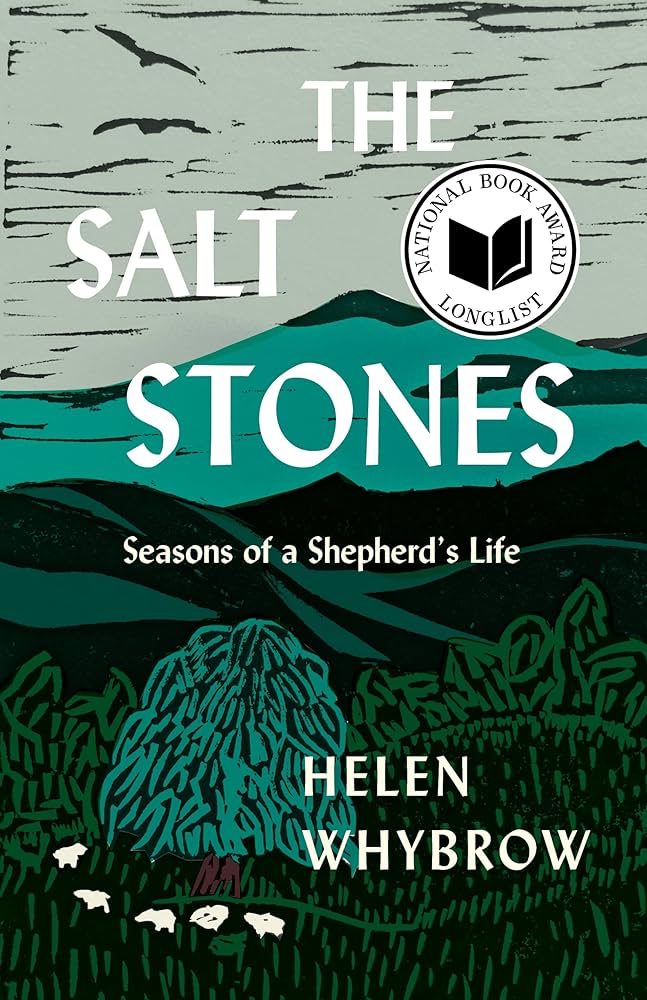
Book cover of The Salt Stones by Helen Whybrow


This piece is excerpted from the memoir The Salt Stones: Seasons of a Shepherd’s Life by Helen Whybrow, a guest at Amherst College’s eleventh annual literary festival. Register and see the full list of for LitFest 2026 events here.

A bird is not born knowing how to fly. Not exactly. Leaping off a rafter and opening two perfectly constructed aerodynamic wings will get a fledgling only so far—usually to another rafter, or a spot on the ground, or sometimes to a confusing corner of a window where an invisible cobweb will wrap its sticky strands around a beating wing and mangle the delicate microzippered fibers ever so slightly so that the wing no longer beats at all.

Excerpt from The Salt Stones: Seasons of a Shepherd’s Life
Read more...

Excerpt from A Return To Self

By AATISH TASEER

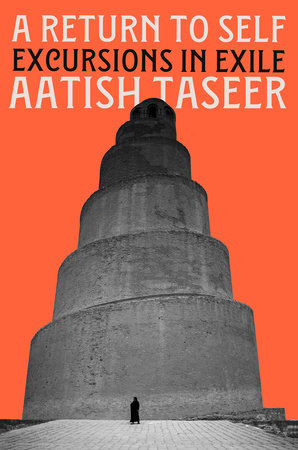
Book cover for A Return to Self

This piece is excerpted from the memoir A Return To Self by Aatish Taseer, a guest at Amherst College’s eleventh annual literary festival. Register and see the full list of for LitFest 2026 events here.                                                                                              

At 9:05 a.m. on the tenth of November, 2020, a hush fell over the leaden turbulence of the Bosporus. All activity on the strait ceased. Coast Guard ships, ferries, and caïques, like the younger members of a tribe of large marine mammals, drew close in a circle. Behind them, a Turkish destroyer kept vigil, the blue of its gunmetal merging with the strait’s frigid waters. A red-bottomed freighter marked with the words iraqi line hulked in the background. That cityscape of sea-blackened buildings, broad panes glazed silver in the daytime darkness, was no ordinary Left Bank, no mere farther shore. The silhouette of low domes and pencil-thin minarets piercing a nimbus of pale sky above was the continent of Asia. The wonder of looking at it, with my feet still planted on the shores of Europe, was not lost on me. I had been in Istanbul for less than seventy-two hours. The air grew heavy with anticipation, and then, low and deep and melancholy as whale song, came the first moan of a ship’s horn.

Excerpt from A Return To Self
Read more...

Thirty-Seven Theses on Time and Memory

By SVEN BIRKERTS

Drawing of author when young, by his grandfather

Grandfather’s drawing of author when young

1.

Memory, that elusive quicksilver running through our lives. How at first, at birth, there is nothing, really, almost nothing, and how slowly it develops after that, all the years when there is no visible shadow on the ground behind us. And how it is that, for those years, we accept our lives as the steady panorama of whatever is right in front of us, moment to moment.

I’m trying to think when any memory worth remarking arrived. Did I have memories when I was ten years old? I know that in sixth grade, when we were all leaving behind Walnut Lake, our red-brick school, there was some inkling. Not a procession of memories, not yet, but rather an inchoate nostalgia, a definite sense of something being lost. There came an awareness of the past, and with it the realization that there is a kind of timeline, a sense of futurity that had not really been there before.

Thirty-Seven Theses on Time and Memory
Read more...

Excerpt from Who Is the City For?

By BLAIR KAMIN

This piece is excerpted from Who Is the City For? Architecture, Equity, and the Public Realm in Chicago by Blair Kamin ’79, a guest at Amherst College’s LitFest 2024. Register for this exciting celebration of Amherst’s literary legacy and life.

Who Is the City For?: Architecture, Equity, and the Public Realm in Chicago

By Blair Kamin with Photographs by Lee Bey

Title in bold, white Sans Serif font behind a photo of Chicago's The Bean sculpture. Art Deco high-rises fill the background.

Looking back on nearly thirty years of architecture criticism at the Chicago Tribune, I realize that I have borne witness to a dramatic transformation of Chicago, from a declining industrial colossus to a dynamic yet deeply troubled postindustrial powerhouse, whose favored emblem is a jellybean-shaped sculpture of highly polished steel. The mirrorlike surface of that sculpture, officially titled Cloud Gate but widely known as “the Bean,” reflects the striking skyline of the city’s ever-growing downtown, now home to $10 million condominiums, Michelin-starred restaurants, and an elegant promenade that rims the once badly polluted Chicago River. But the Bean does not reflect the reality of a very different Chicago. That Chicago, though not without distinguished buildings and untapped economic potential, is also a place of weed-strewn vacant lots, empty storefronts, and unceasing gun violence. Indeed, Cloud Gate may be the ultimate shiny, distracting object. While the 2020 census revealed that Chicago’s population grew by nearly 2 percent during the previous decade, to 2.7 million, the dramatic disconnect between the two Chicagos prompts the question: Is this a good city, a just city? Absolutely not. Which prompts a second query: Can those responsible for building the city advance the fortunes of neighborhoods devastated by decades of discrimination, disinvestment, and deindustrialization? On that crucial matter, the jury is still out.
Excerpt from Who Is the City For?
Read more...

Excerpt from The Healing Stage

By LISA BIGGS

This piece is excerpted from The Healing Stage: Black Women, Incarceration, and the Art of Transformation by Lisa Biggs ’93, a guest at Amherst College’s LitFest 2024. Register for this exciting celebration of Amherst’s literary legacy and life.

Book cover of The Healing Stage. Black and white text reading "Lisa Biggs; The Healing Stage; Black women, incarceration, and the art of transformation" on a tan background.


Stage healing as a practice of self-repair is generated and sustained by women behind bars in collaboration with the volunteer theater artists who direct their drama clubs. The term is deeply indebted to Cara Page and the Kindred Healing Justice Collective, who characterized healing justice as “how we can holistically respond to and intervene in generational trauma and violence … to bring collective practices that can impact and transform the consequences of oppression on our bodies, hearts and minds.” This “active intervention,” writes Prentiss Hemphill, makes listening to and collaborating with people who are “imagining transformative responses to harm” other than “feeding Black incarceration” foundational, not only to healing work but also to Black community organizing—in their case, specifically the Black Lives Matter movement.25 Healing justice recognizes that locating alternative, noncarceral responses to harmdoing requires finding ways to “develop and to honor practitioners of many different disciplines and modalities with capacities and skills to be with trauma, who know themselves well enough to navigate the complex terrain of emotion and guide others towards change.”26

Excerpt from The Healing Stage
Read more...

Fatigue Can Shatter A Person

By ED YONG 

This piece originally appeared in The Atlantic. Journalist Ed Yong will be a guest at Amherst College’s LitFest 2024. Register for this exciting celebration of Amherst’s literary legacy and life.  

headshot of journalist ed yong


Alexis Misko’s health has improved enough that, once a month, she can leave her house for a few hours. First, she needs to build up her energy by lying in a dark room for the better part of two days, doing little more than listening to audiobooks. Then she needs a driver, a quiet destination where she can lie down, and days of rest to recover afterward. The brief outdoor joy “never quite feels like enough,” she told me, but it’s so much more than what she managed in her first year of long COVID, when she couldn’t sit upright for more than an hour or stand for more than 10 minutes. Now, at least, she can watch TV on the same day she takes a shower.

Fatigue Can Shatter A Person
Read more...

Cosecha: Harvest of Truths

By TERESA ELGUÉZABAL 

This feature is part of our print and online portfolio of writing from the immigrant farmworker community. Read more online or in Issue 26.


1.           

A moaning by the labor camp dump caught my attention. Inside a junked car with no doors, our neighbor, Diana, was hugging and kissing a big boy not quite a man. I never knew his name, so I call him Novio—boyfriend. In the tangle of arms and hands, her white, ruffled dress slid off her shoulder. From a near distance, her husband, Rogelio, in full Sunday clothes right up to his Panama hat, made a beeline toward the car, his hands in fists. 

Cosecha: Harvest of Truths
Read more...

Excerpt from Radio Big Mouth

By ANA HEBRA FLASTER 

An excerpt from Radio Big Mouth. 


Juanelo, Cuba, November 1967

In our barrio, any kid worth her café con leche knew what the rumble of a motorcycle meant. Another family was about to disappear.

Until that night, I ran fast and free over Juanelo’s crumbling streets, hunting crinkly brown lizards in the dusty yards, gossiping with the omnipresent abuelas. The old women took care of us while our parents worked at places like the school on the corner or the canning factory down by the river. Four generations of my family lived all around me. No one shut her windows or doors. Everybody knew everything about everyone.

Excerpt from Radio Big Mouth
Read more...