Monrovia, Liberia
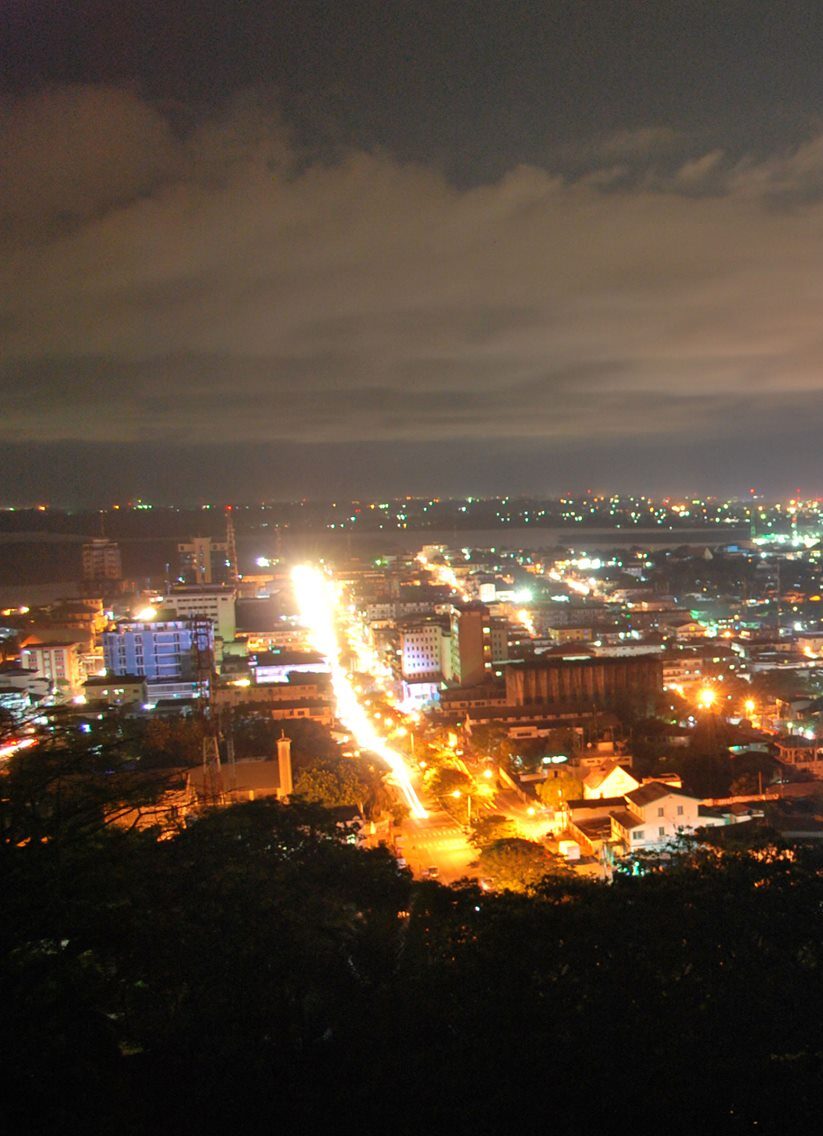
At night, Monrovia hums differently. The city does not sleep; it simply waits for current, for rain, for something brighter than the day’s promises. The fans stand still, as if they are guards unable to protect anyone. Refrigerators sigh into silence. Somewhere in the distance, a generator coughs to life, and the sound ripples through the neighborhoods like a tired prayer being repeated by many.
When the lights go off, time feels different. Conversations are shorter and tempers rise. Lovers lie together, listening to mosquitoes in the dark. Children use their notebooks as fans. The old sit by the window and remember the war, when darkness was more than an inconvenience. The generator’s cough seems to echo these memories, a reminder of struggles old and new. The city holds its breath, waiting for the miracle of power. Yet even in the moments of rejoicing, there’s an unspoken understanding—a fleeting reminder—that the light will not stay. The sweetness of the electricity’s return is sharpened by the knowledge of its inevitable departure, leaving behind shadows that are as familiar as the light itself.
Sometimes, it comes in the middle of the night. A sudden hum, a soft pulse through the walls, and the bulbs bloom again: white, merciful, blinding, as if mercy itself has switched on the lights. You can hear the city rejoice. Someone shouts, “Current don come!” Radios click on. Pots clatter. Even the roosters seem to crow out of turn. The sound of the generator fades, its duties relieved. The city glows, not because it is rich, but because its struggles are momentarily eased, a brief forgiveness before the next darkness.
By dawn, the current may be gone again. For a few hours, refrigerators sing and chargers blink red. The barber sharpens his clippers. The ice seller fills his cooler. Hope comes back to every house, humming with fragile rhythm. We pretend this is normal, this trade between darkness and light. Sometimes it feels like the city blames you for forgetting your prayers. You strike a match. You watch the flame tremble. Its courage and weakness are both clear. Somewhere, a street preacher’s voice drifts by, promising blessings to those who endure. Endurance is our only luxury.
On my street, we call the power company “LEC Jesus”—because, just as people say Jesus brings the dead back to life, LEC brings back our silent appliances, but not every day. We speak of electricity like grace: something given to us even though we don’t earn it, unexpected and never quite on time but always returning eventually. We complain, but when the light comes, we dance.
Once, during a three-day blackout, I saw a neighbor sitting outside with his radio on his lap. The batteries were dying, and the music slowed until the singer’s voice became a whisper. Still, he listened to the silence between the words. “It’s the best part,” he said. “The quiet tells you what the music means.”
Maybe we truly realize the importance of light only after living in darkness for a long time. The city teaches patience by forcing us to adapt. You learn to cook early, iron quickly, sleep with the window open, and dream only lightly. You learn that surviving is not just about strength—it’s about adjusting to moments when things consistently fail. Adaptation is the heart’s wisdom—embracing change as constant, finding strength in flexibility.
When the electricity comes in the morning, it feels like morning itself. It is new, undeserved, and kind. The bulbs flicker on, giving every room its purpose back. The shopkeeper rushes to freeze her drinks before the light goes out again. The hairdresser switches on her dryer with joy. Children return to their homework.
And then, just as easily, it goes.
The air thickens. Silence returns. Someone shouts a curse. A baby cries. Life continues, exactly as before.
Still, the city never learns to stop hoping. Each outage begins a new vigil, like a watchful night of waiting. Each faint hum of power is like being forgiven after a hard night. We measure progress in minutes of current, in the brief mercy shown by a working bulb.
And yet, every return of light feels like a reunion—with comfort, with faith, with the small miracle of being seen.
Electricity comes in the morning, and we forgive the night.
Marvin Garbeh Davis, Sr. is a Liberian writer, poet, and pastor whose work explores place, memory, faith, and survival in West Africa. Rooted in the lived landscapes of rubber plantations, rural villages, and the resilient urban communities of Monrovia, his writing documents ordinary lives shaped by extraordinary histories. His stories and essays have appeared in Barrelhouse, Deadlands, Terrain.org, Multiplicity Magazine, Full Bleed, Rawhead, Rooted and Rising: African Anthology, The Quest: Journal of the Theosophical Society in America, and other publications. He is the author of the novel Man, Rubber and the Devil and lives with his wife, Angea, in Liberia.