
Aidan Cooper

How to Read Sanskrit in Morningside Heights

By STEPHEN NARAIN

Excerpted from The Church of Mastery, a finalist for the Restless Books Prize for New Immigrant Writing 2025

Or, to use some expressions which are nearest the heart of the Masters, it is necessary for the archer to become, in spite of himself, an unmoved center. Then comes the supreme and ultimate miracle: art becoming “artless,” shooting becomes not-shooting, a shooting without bow and arrow; the teacher becomes a pupil again, the Master a beginner, the end a beginning, and the beginning perfection.

—Eugen Herrigel, Zen in the Art of Archery

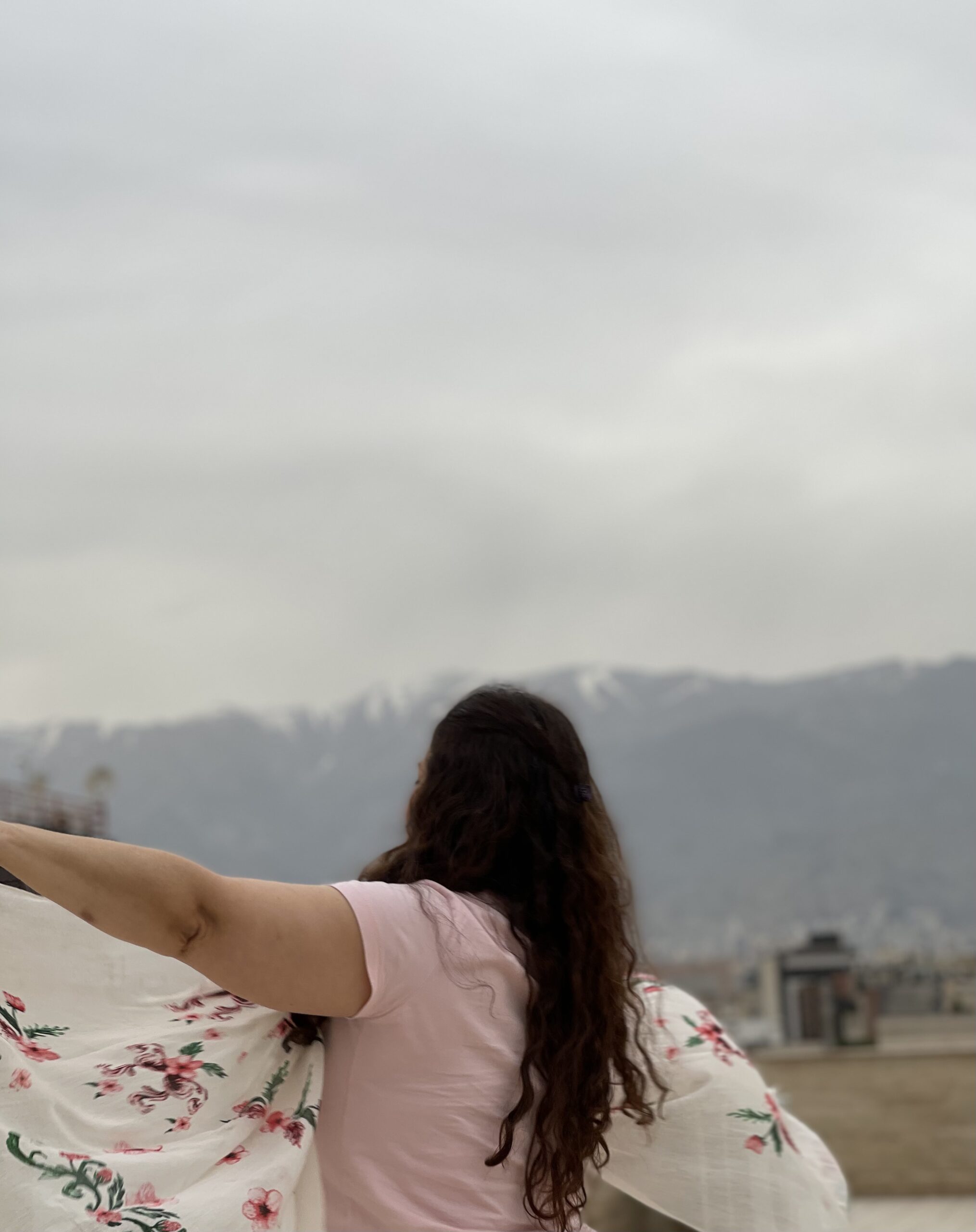
Given all their invisible stresses, all their accumulated ambitions, and the narrowness of their paths, the Freedom Riders in Pursuit of Veracity agreed they needed to relax to prepare for their journey down South; relaxation is not a luxury, it is a requirement. America has a problem with Black people relaxing. Or behaving like a boss. That’s why William would spend an entire day now and again by himself like Jesus in the wilderness. He’d meander through the weirdest stacks of a downtown bookstore just to wander. Who knows what Language was destined to change you? That’s why he took up cricket with René from Port of Spain. Why he’d take Rowena out to restaurants they could not afford to order dishes he could not pronounce—spine straight, risking glares. 

How to Read Sanskrit in Morningside Heights
Read more...

Translating Toward Possibility: Sarah Faux Interviews Mariam Rahmani

Headshots of Sarah Faux and Mariam Rahmani

Sarah Faux (left) and Mariam Rahmani (right)


Friends for over a decade, MARIAM RAHMANI and SARAH FAUX have been connecting for years about their respective artistic practices. They recently spoke over Zoom for The Common: Sarah from her painting studio, and Mariam from her office in Vermont. In the following conversation, they discuss Mariam’s novel, Liquid, published earlier this year, which centers a queer Muslim woman who navigates 100 dates in one summer. They speak on how translating others’ work has served Mariam’s own voice in writing, and how messiness and uncertainty are at the heart of good literature.

Translating Toward Possibility: Sarah Faux Interviews Mariam Rahmani
Read more...

Lawrence Joseph: New Poems

By LAWRENCE JOSEPH

Ontologies

The love the love that massively seizes me,

                                 the typewriter’s
ribbon needs replacing,

                                 the great imperial
power game the price of oil,

a call, a response, I know you know
how precious to care is, the voice on the record on

the turntable is singing.

Lawrence Joseph: New Poems
Read more...

Late Orison

By REBECCA FOUST

Let ours be the most boring of love stories, the happy-ending kind,
the obnoxiously-spooning-in-public kind,

the kind with a long denouement, tedious for everyone not actually
living it. This time around, let the only fireworks

Late Orison
Read more...

Future Remains: The Mysterious Allure of a Town in Ruins

By CUSH RODRÍGUEZ MOZ

“… [C]atastrophe is not something awaiting as in the future, something that can be avoided with well-thought-out strategy. Catastrophe in (not only) its most basic ontological sense is something that always-already happened, and we, the surviving humans, are what remains …. Our normality is by definition post-apocalyptic.” 

Slavoj Žižek  
Apocalyptica, “From Catastrophe to Apocalypse… and Back” 

Two trees next to graveyard

Turntables coated in rust and salt. 

Illuminated beneath halogen lamps and stacked on one another like the layers of a wedding cake, the vintage record players boast a thick icing of sodium chloride and iron oxide, the granularity of which almost perfectly emulates the breading of a recently fried chicken finger. 

Instead of occupying a warehouse shelf, a basement box, or a landfill, these outdated music makers ended up in a museum display case as witnesses to a singular event that some would define as catastrophic, others tragic, others fascinating. The museum, installed in a train station that hasn’t housed a locomotive for decades, commemorates the flooding and destruction of the town where it is located: Villa Epecuén. 

Future Remains: The Mysterious Allure of a Town in Ruins
Read more...

Vermeer

By ALBERTO DE LACERDA
Translated by MARIA DE CALDAS ANTÃO


            To John McEwan

The architecture of the sleeves—
White—
As she composes her response
To a letter
(On the marble floor
The seal
Jumps
From the crumpled letter)

Vermeer
Read more...

Small Mariners

By LAUREN CAMP


What is it like to be found? All these years on, I’ve never before been
to the edge of this rocky square state. I drive 41 through aura and wither
and slip into Golden then out to Stanley and right on 60.

Beside the road, dust chafes and three shapes of mountains.
Keen winds fold in and exasperate. The radio sputters its beats.
Assigned to be at a school as the sun has left its felicity

to lead young grades in how to find and trust a poem, but I can’t
see the entrance apart from the fences. I cede to another end
while the sky stays to its razoring blue. I am late. I reimagine late.

And then I am taken, finally, into the gym, late and flummoxed.
I swallow. Set my eyes on 122 tender children, much smaller
than never-ending. At this age they are all swish and unconquerable

hope. A stunned mic waits like a nest below the fluorescents
and I am pointed to use it, to woo the kids into words. I go up—
to the empty middle of the gymnasium, put my teeth to the mesh

and invent a direction. I discard what I intended and ask
these little lighthouses to beam their vibrant lights to the page.
Beam what no one has asked them to find before. Where have you been

lost? They listen for rules but I give none. They tremble
with their little power. Say many lives lead nowhere. Say they huddle
within this town. Its pious blue. Say the verdict of future is here where

hawks skirl and transport. The children’s worries
are the thinnest lessons. There are stories they are moving toward.
Was it chance they had almost all been lost in Wal-Mart in the wipe-out

fluorescence and worshipped wings: Seasonal, Sewing, Tires,
the skittering intersections? Aisles, they ask me
to spell—and they write it, elongating the letters. The energy increases.

They shine as they explain the town’s slickest business as the world
of gone children. At last and thank goodness, they are lit up.
Telling the waves of fear. The breath wet. Their words nervous,

their sinews redefining. Life goes in a blink.
They were all clenched back to parents.
Without embellishment, they were saved.


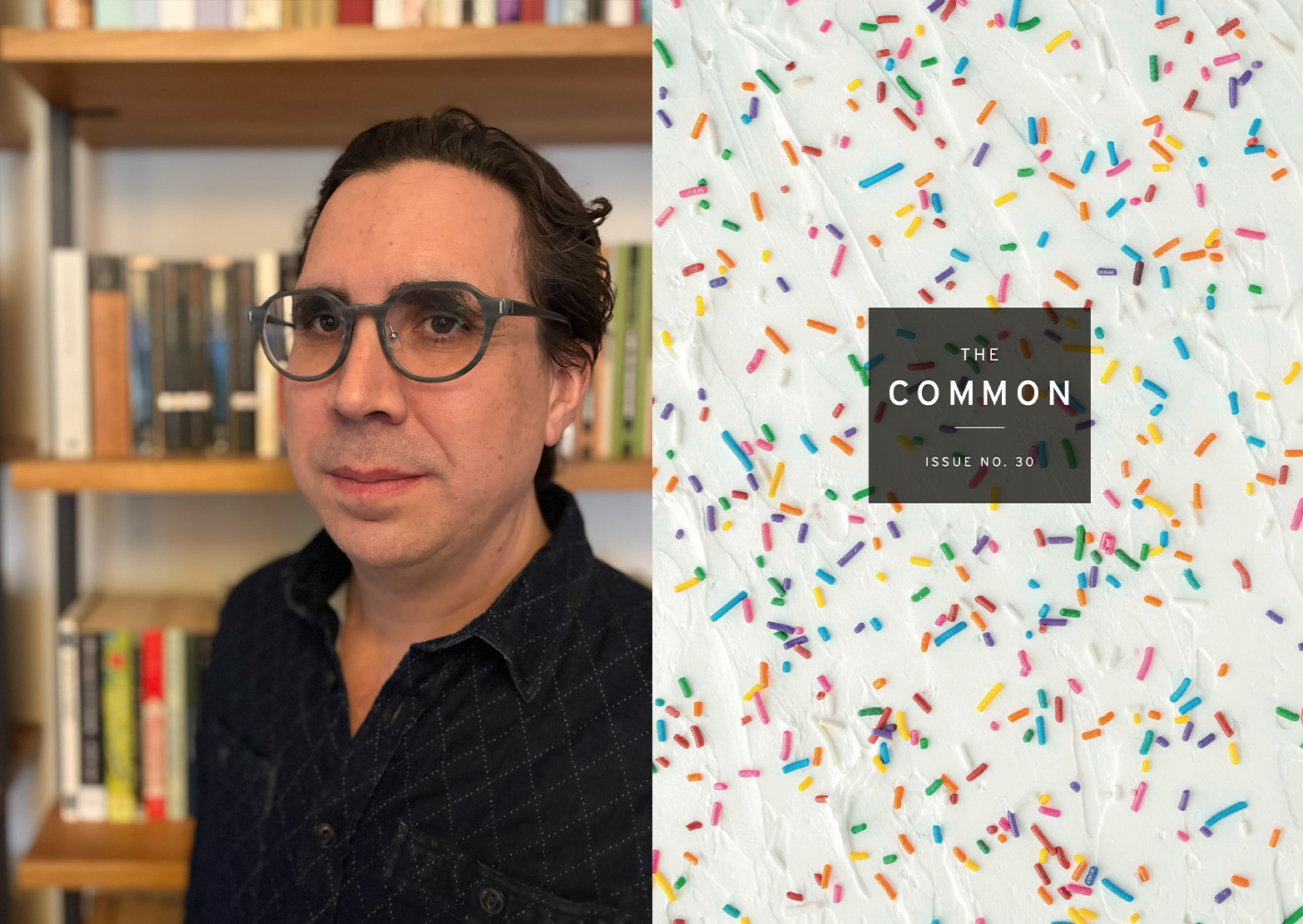
[Purchase Issue 30 here.]


Lauren Camp is the author of eight books, including In Old Sky, which grew from her experience as astronomer in residence at Grand Canyon National Park. She received a Dorset Prize and was an Arab American Book Award finalist. Camp served as poet laureate of New Mexico from 2022 to 2025. Visit LaurenCamp.com.

Small Mariners
Read more...