The sign painted on the truck is a phrase
I contemplate under a vine-covered pergola.
You might call this walled city garden
my hermitage—the faint notes
of a live flute from an open window
harmonizing with a robin’s song.
Sirens break my reverie.
All posts tagged: Maria Terrone
April 2026 Poetry Feature #2: Sharon Dolin, Kerry James Evans, Andrew Hudgins, and Maria Terrone
April brings new poems by our contributors: SHARON DOLIN, KERRY JAMES EVANS, ANDREW HUDGINS, AND MARIA TERRONE!

Sharon Dolin, Kerry James Evans, Andrew Hudgins, Maria Terrone (from left to right)
Table of Contents:
—Sharon Dolin, “Savor”
—Kerry James Evans, “Smoky”
—Andrew Hudgins, “After Death”
—Maria Terrone, “Alchemy”
Double Infinity
|
On 88th, the street where I lived as a girl when an hour could seem an eternity, it would be years before I met the young man who pointed out that those numbers, turned on their sides, had a special meaning. What meaning? I wondered and pondered the two unbroken loops pinched at their centers, forever returning to themselves like a pair of ice skaters tracing figure eights into a state of bliss. I wondered if he thought that love is infinite, that our souls will live forever, that sky even on crystalline days moves into unseeable endless space. I was thinking that the iris of his hazel eyes pulled me into a place where I could feel lost or float before thought was possible, as if in vitro. I no longer live on 88th Street, having left double infinity in its impossible realm. Because infinity cannot be multiplied or divided—infinity just is. Still, I was grateful that I didn’t live on Main Street or Elm, and the young man I married found meaning on that finite block in Queens where he found me. |
Bird Man
“You were only waiting for this moment to be free.”
Lennon/McCartney, “Blackbird”
As a Bronx kid at a homeless shelter, he watched
a peregrine falcon devour a pigeon on the windowsill,
and what began in violence leapt to awe,
and awe begat beauty.
A Walk Inside the Epicenter

Jackson Heights, Queens
By the time you read this, more of my neighbors will be dead.
And yet, on this sunny spring day that belies the grim headlines, I need to go for a walk, that most mundane of human activities. I need to pretend that life is normal. To forget that just a short distance from my apartment stands Elmhurst Hospital, the epicenter of the coronavirus within New York City, itself America’s epicenter.
Review: Hurtling in the Same Direction – At Home in the New World
Book by MARIA TERRONE
Review by SUSAN TACENT

Maria Terrone’s grandparents were among the estimated nine million people who emigrated from Italy between 1881 and 1927. While her parents were born in the United States, her connection to Italy is deep, informing her identity and experiences as much as being a lifelong New Yorker has.
The Cloak Room

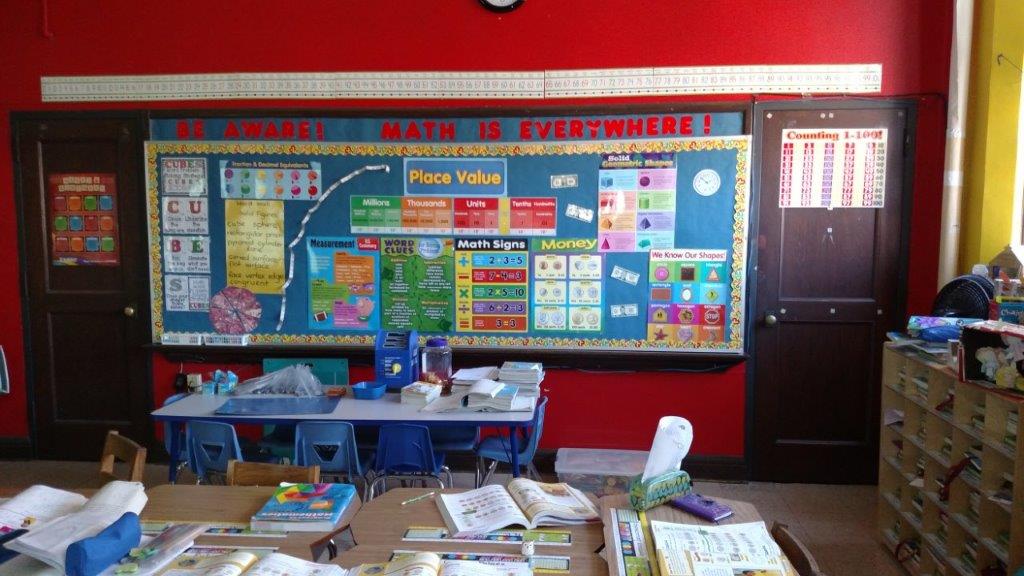
St. Joan of Arc classroom and cloakroom revisited, 2018
Queens, New York
The very sound of it was foreign to our ears. Who wore cloaks? Vampires. Stealthy spies with hidden daggers. And men in top hats who appeared in movies and old-fashioned story books. Certainly no one we knew as first-graders at St. Joan of Arc—except, perhaps, for the nuns whose sleeveless black capes swirled in their hurried winter walks through the schoolyard to the convent. But their habits covered every inch of skin up to their necks; even their brows were partially obscured by fabric stiff as cardboard and white as their bony hands—the only other flesh exposed. So, on second thought, we couldn’t really say we “knew” the nuns when their very bodies were concealed and their lives outside the classroom a mystery.
New Wave: Post Op
Such an adrenaline rush to find
myself alive
this seventh time, injected
with glee on the stretcher,
making my usual “I’m o.k.” calls,
The Children’s Wing
Not a place to take flight but where downy-skinned
children can sometimes heal like fallen sparrows
in a shoe box, a place I found myself at nine,
concussed. The child in the rail-rimmed bed
The Chemical Company
Long Island City, Queens, New York, US

Even if the day was sunny, the air would seem to darken the longer we drove and the farther we bore into the industrial zone. The red brick factories built early in the 20th century were still holding on then, producing staples, electrical circuits, distributor caps and who knows what else. Yet I recall no workers on the streets. There were no stores, no streets, no sidewalks, just ruts. It’s as if the factories were run by ghosts and the only evidence of life was an occasional wisp of smoke rising into gray haze.