Review by ASHLEY HONEYSETT
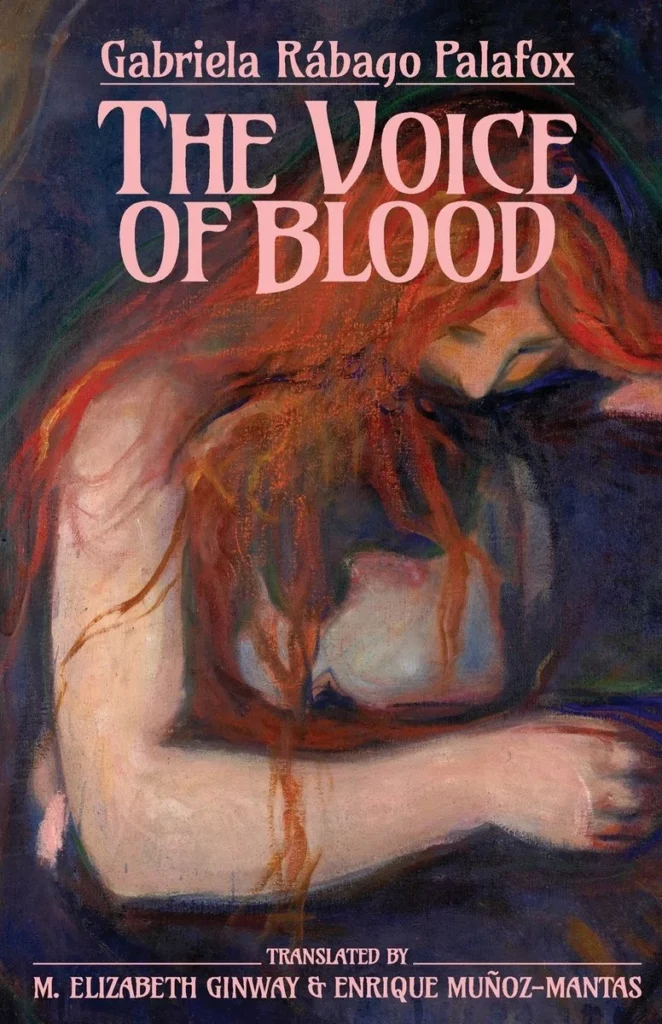
The Voice of Blood cover
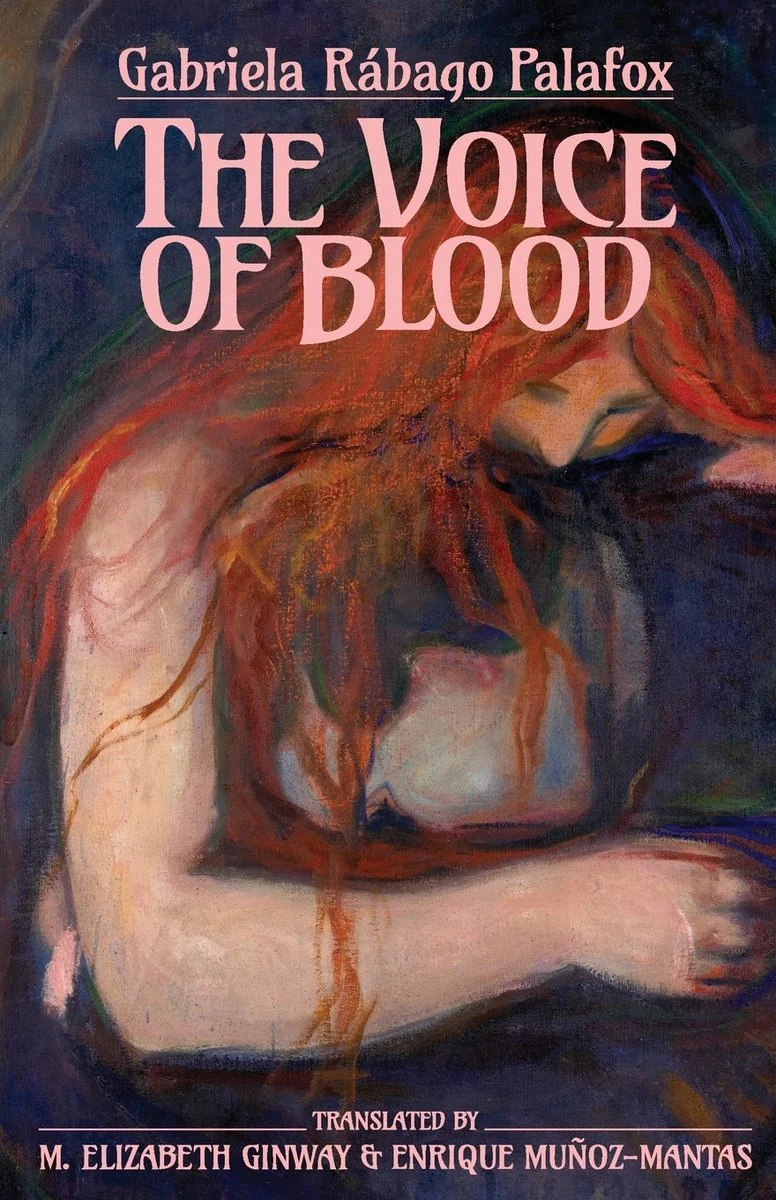
The short story collection The Voice of Blood is the first book by Mexican writer Gabriela Rábago Palafox to be translated into English, 35 years after its original publication. Rábago Palafox achieved some recognition in Mexico, winning a number of awards including the prestigious Puebla prize, but was not widely recognized in her lifetime. Interviews and biographical information are limited. The blurbs on the book refer to her as “the secret ‘cool aunt’ of a few Mexican writers,” and say that her work was almost impossible to find. She wanted an international readership, which her translators say was an unorthodox ambition in Mexico, which had insular, nationalistic literary and publication traditions. They speculate that, had she lived, her star would have continued to rise. But Rábago Palafox died in 1995, at age 47.
The translators, M. Elizabeth Ginway and Enrique Muñoz-Mantas, who specialize in speculative, sci-fi, and horror fiction from Latin America, argue in their introduction to The Voice of Blood that this work anticipated the current wave of Latin American horror championed by Mariana Enriquez. Enriquez’s argument in 2018 was that there had been very little horror fiction written in Latin America—that authors had been more likely to default to the magical realism that the region is so known for. She said this was because the Catholic church had destroyed indigenous beliefs, and those that remained “were considered superstitious belief of the illiterate. Probably this is true for any other society but that contempt didn’t even have the sparks of curiosity. I insist: it’s not that there isn’t any horror in our life in Argentina. But a tradition is something different. A tradition is a place to go to, to find other writers that share your history, your imagination, your language, and your little national traits. When you don’t have that tradition you are a little lost. You have to reinvent or, better yet, search for your own tradition with the guide of those very few pioneers or examples who went there before.”
Enriquez’s essay is about her search for her own tradition, for the subjects, motifs, and themes that would appear in the genre horror she longed to write. An early one she landed on was the disappearances of many people in Argentina during that country’s military dictatorship—the abduction and murder of political dissidents; the adoptions of their children to families who were aligned with the dictatorship. Later, Enriquez argued that whatever genre a Latin American writer is working in, and whatever country they come from, violence, and therefore horror, “is something that has permeated us as Latin Americans.”
But Rábago Palafox’s materials are different. In The Voice of Blood, Rábago Palafox uses the vampire, a figure familiar to us from existing horror fiction. In other words, she seemed comfortable working with the European tropes that did not provide the grounding Enriquez was looking for. Vampirism is different in the different stories—sometimes literal, sometimes figurative, sometimes oppressive (as when the wealthy prey on the poor, or men prey on women), and sometimes liberatory (as when blood drinking represents sexual desire and queerness).
And Rábago Palafox doesn’t deal much with societal violence. 1990 was pre-NAFTA. People still ate tortillas that were not made out of Maseca. Ciudad Juarez was not a maquiladora town known as the City of Murdered Women. The twelve stories in The Voice of Blood, published in the original Spanish 28 years before Enriquez’s essay, often lack time markers other than the occasional dilapidated Volkswagen.
The Catholic church and the socioeconomic elites hold unchecked power, and when someone comes to feast on their blood, the poor and the congregants have nowhere to run. The timelessness of these stories makes that situation feel permanent, like a natural order of things.
The translators mention a few times in their introduction that tension exists between traditional beliefs and Catholic cosmology in these stories, but I thought those instances were pretty slim. Cultural references to Spain are much more common in this book than references to indigenous traditions. There is one story, “Creatures of the Night,” about the local priest and his acolyte trying to deal with a plague of vampires in a rural town with a Nahuatl name, and it’s clear that their authority is not helpful for the villagers. At one point, one of the villagers says, about a vampire, “We should eat his heart like our ancestors did,” but it’s just one line. Is it possible that, if the villagers could have dealt with this vampire without guidance from Catholic ideas and authority, they could have done a better job?
So, if these stories are forerunners of present-day Latin American horror, I think it is more because they are a perhaps rare example of someone writing in the genre at all, rather than because they are explicitly concerned with discovering or inventing a new horror tradition and responding to national traumas.
The translators refer several times in their introduction to “the gothic,” rather than horror, as the medium for some of these stories, and that seems right to me. I think of gothic novels as being claustrophobic—someone is trapped somewhere, trying to fit in with the way that things are done there, and is oppressed by it. In Mexican fiction I’ve read (Pedro Páramo, The Old Gringo), the hacienda serves this function. Exploitative hacendados rule the lives of the poor people who live on their land, who have no way out. Several of the stories in The Voice of Blood also feature poor people who are trapped in their rural or urban environments and are fed upon where they are.
What does it mean for people who don’t read in Spanish and who might not have been part of the whisper network of people who considered Rábago Palafox a “cool aunt” to now have access to these stories?
Well, the stories themselves come from an admirably strange mind. The logic that brings us to horror, and the language in which it is conveyed, is not forced. I had the feeling in many of these stories that the vision in my left eye and the vision in my right eye were never quite cohering into a single picture of the world. Instead, I was seeing two things at once, two images that overlapped but remained separate, and that the author’s mind naturally sat in that place at all times. For example, “A Boy With Red Hair” seems to be about a young boy’s terrible encounter with a vampire on the road, but then ends up being a story about how that boy’s aunt is also a vampire, and the place of refuge where he has gone after escaping death is just another trap. In “Duplication,” a child literally sees a dual entity in the single figure of her mother. The mother she loves is kind and sweet, but a cruel, exhausted mother seems to be badly attached to her, like Peter Pan’s shadow, repeating everything she says. The reader’s struggle to keep up with these strange perceptions is complicated by the author’s way of changing tenses mid-story from past to present, or changing points of view without following the usual rules about POV changes. At times I found this difficult to follow, and sometimes never quite figured out the answers to the questions I was asking about the stories (and I don’t feel confident in the summaries I’ve given, in case I’m misunderstanding). But the slippage between different versions of reality could make me feel actual nausea, like I was on a roller coaster, which makes for a very effective horror story. And the strangeness never felt forced. Sometimes when I read horror or weird fiction, the fantastical elements and the development of the plot can feel strained, or like the author generated the ideas through free association. These stories felt whole, and perfectly logical on their own terms.
And the Mexico they are grappling with, if not the contemporary one and not on the terms of the current wave of Latin American horror, is an interesting place. The way that the Catholic church sets the terms of things is interesting. People participate in the church in one way or another as a matter of course—the church sets the terms of their lives because the church gets to do that. A character in “Life Sentence” wanted to have sex with his aunt, did so, and then entered the priesthood without guilt, as if going into the priesthood is a career like any other, and whether you have lived your life according to its precepts is immaterial. “First Communion” is set in a convent, where two of the nuns are having an affair with each other. And it makes sense to me that, in a society where becoming a nun might be expected, two nuns would develop a relationship with each other without qualms about breaking their vows, because the decision to take those vows might not have come from a personal conviction but from external pressure. If the church is a fact of life, you find a way to deal with that fact while still trying to live the life you want to live. The self beats against its boundaries, and that is the premise for the horror in these stories. That horror is sometimes liberatory.
What did it mean for me to have access to this book in English? I’m not like Enriquez, trying to find my own grounding as a horror writer. When I read Beloved in college it set my brain on fire because it was a ghost story, and I’d never encountered anything so artistically ambitious that drew on the visceral power of horror. I love horror, especially vampires, and am always on the lookout for vampire stories that do the same thing. I don’t think this is that book, but I do appreciate the way the vampires in it expand my imagination. For example, in “First Communion,” the nun at the center of the story imagines the crucifix in her church falling from its chains and crashing to the floor, and the body of Jesus on it bleeding from the fall. In her fantasy, she goes to him where he’s fallen and licks the blood from his wounds. The hallucinatory fantasies this nun experiences throughout the story are all based in Catholic imagery, and the idea that Catholic imagery could be so foundational in a person’s life that it forms the basis of her sexual imagination is new to me, and a way of understanding the world through the terms of this book that I don’t think I could have learned to understand in another way.
I like the idea of Rábago Palafox becoming a cool aunt to readers and writers outside of Mexico. These stories are little dreams, worthy of taking up our own headspace and shaping our imaginations. I would like them to enter our culture and become references that everyone knows, that become part of our idea of the vampire and dictate some of what we think of when we think of vampires. I hope you read this book and then talk to me about the bits of it you can’t get out of your head.
Ashley Honeysett‘s debut book, Fictions, won the Miami University Press Novella Prize and the Chicago Writers Association Book of the Year Award, and was a finalist for the Foreword Indies prize in literary fiction. She lives in the Chicago area and works as a fundraiser for environmental nonprofits.