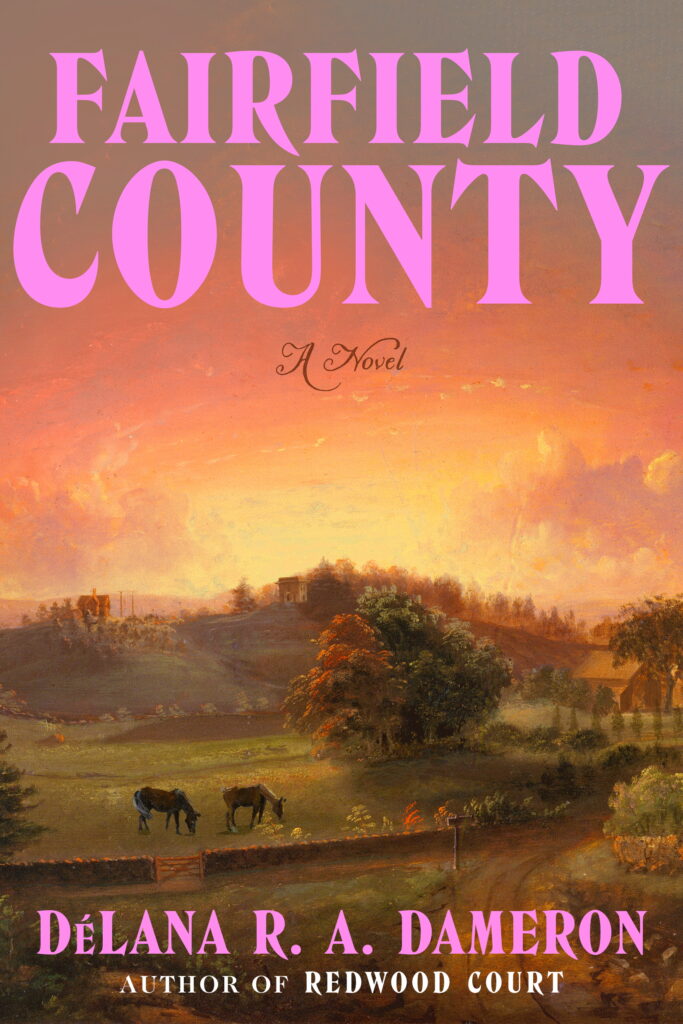
Excerpted from Fairfield County
When asked what number Pal O Mine should run under, Moses had said, “Number seven or number three. Them’s divine numbers, alright. God made this whole world in seven days. And He’s a trinity: Father, Son, Holy Ghost. Cain’t go wrong with three neither.”
It wasn’t often that a Negro at the racetrack was asked his opinion such as this, but Moses was respected by the horse’s owner, so when it came time to prepare for the 1938 Carolina Jessamine Invitational, Mrs. Pynchon-Grant went right up to Moses and told him to pick the number.
The number seven would have put the stallion too far right of the field and closer to the stands of crowds, and so would have caused further distraction that would have leaked through Pal’s blinders and earplugs. That far out in the field and the thunder of the spectator’s cheers would drown out the footfalls of Pal’s competitors, and so the number three would put the colt closer to the center of action and increase the odds of victory—should he be able to run.
He had come to the track with slim odds: fifty to one. In fact, Pal was on the bench the whole week leading up to the big race, only being used to breeze the contenders as a pacing bunny, and it wasn’t until favored-to-win Blazing Time was inspected and it was determined that his right-hind hock was warm to the touch did they decide to scratch the gray colt from the race.
The backstretch, where the stables and the people whose hands made sure the horses were ready for the big day—the night watchmen, the hot-walkers, the stall cleaners, the grooms, many of them Black—was quiet but moving how a tributary moves: rolling, rolling.
When the news came that a horse had scratched, a great stir rose, and several of the groomsmen who were sitting in the stalls with their horse wards scurried to start their brisk brushing to get the pine shavings off and used their jute sacks to spit-shine the coats slick. Hoping their horse would be the one picked. It could be anyone’s chance.
Moses had asked, “Which horse?” His question rose above the stalls like steam. Someone yelled out, “Blazing Time,” and he whispered in Pal’s ear, “That’s ’cause they bought that horse off looks alone. His little dapple-gray coat shole is pretty and all, but it hid the fact that his back leg ’bout cripple as a farmer’s scythe, ain’t it?”
Moses chuckled, and Pal jerked his head up, seeming in response, right at that moment, even though, to the untrained eye, you’d think it was because Moses was running the jute sack right at the base of the neck, in the crease where the neck met the shoulders, and it felt good to the horse, but Moses knew when a movement was a movement versus a response. Could feel it. Pal agreed.
It could be anybody’s chance, but Moses’s gut started to twist with anticipation. Only a superstitious man when it came to race day, he couldn’t make any grand gestures, or else Pal might sense his excitement and use all of his energy getting to the starting gate.
If they were to be chosen at this late hour, Pal would be walking the Valley of Roses—what the fancy called the path from the backstretch to the front—by himself, since Moses knew the imaginary line marking where he could move freely and where he couldn’t at the racecourse. Where the horse passed from the care of one to the other. For all intents and purposes, Pal would be walking onto the field alone. Yes. Pal would have the jockey. Of course. But the jockey saw Pal almost like a piece of equipment. Like the saddle. Or the reins. The jockey, to Pal, was another thing to carry from the start to the finish. Pal would have to do it alone until he crossed the line again to the backstretch, where Moses would be the one to see to it that Pal returned to himself. Check in. Check the body. Walk him until his nostrils unflare. Scratch him behind the ears and say Good boy over and over so the horse might tire of hearing it, but Pal never would, crunching his peppermint in sweet victory—even defeat. Moses always rewarded the try. It was Moses’s race as much as it was Jockey What’s-His-Name’s, and Mrs. Pynchon-Grant’s.
Moses breathed deeply and prayed number three would be drawn up. It didn’t matter how many times he made it to the backstretch over the years. Each time was like the first time. He was fifty years old and had practically been born in a stable not unlike this.
The weekend of his birth had been a race weekend, and Moses’s father, Ezekiel, concerned that his mother, Maryam, would face complications if she went into labor alone, insisted she camp out with him at the track. Won’t no amount of protest on her part would change his mind. So she laid up in the stall with Ezekiel and his horse ward on top of an extra layer of wood shavings.
Even from the womb, Moses felt it then, the importance of the day. The story was he waited to be born after the horse left the stables, and since Ezekiel couldn’t go to the track to watch and he had a very pregnant wife, he returned to the stall to find Maryam’s water had broken and she had started to push just as he walked back to check on her.
His horse won’t a winner that day, but Ezekiel was.
The labor was quick. It had to be. Ezekiel was due to receive his horse after the race, but someone stepped up for the cooldown and cold wash to give him more time. After they checked for vitals, counted all the fingers and toes, waited for the wail, Ezekiel and another groom, who helped by wringing the hot towels and cleaning his paring knife for the umbilical cord, brought the baby boy back to Maryam. He was wrapped in a jute sack, and someone else scrounged up some clean straw bedding. When she saw it was a boy in a basket, she chuckled and said, “Well, I might as well name him Moses.”
Having literally been born into this whole thing, horses, Moses couldn’t imagine what other life he was supposed to have. Sure, the government called him up to fight, and like the rest of the world, he stopped his life to serve, but he knew every day in the trenches, in the mess hall, in the rocking ocean liner crossing the Atlantic, what he was coming back to: a life of horses. That’s what kept his head on straight in the trenches, even when his socks got bogged down with mud and soldiers flanked on either side of him caught shrapnel or pneumonia. The thought of a horse’s warm body beneath him, breathing when he breathed, galloping through a field, or wrapping his grand neck around Moses’s back while grooming—that’s what kept him whole and brought him home.
Like a game of telephone, Pal O Mine’s name rung out on the backstretch until it reached Moses’s ears. It was Pal’s time to race. Moses could put his real game face on and settle into his pre-race routine—even if a bit rushed—to get Pal in the zone, and then send him off into the Valley of Roses to pick up his jockey, then on to the starting gate.
Pal lined up in the number six position—on account of his late addition, he took the empty spot rather than having to shuffle the rest of the horses already lined up, waiting. Moses watched from the fence.
“Give him his face,” Moses had said to the jockey—a cautionary warning to not hold the horse back with the reins before the race even started—even though won’t no way the jockey could hear him where he stood. Even if he could hear him, the jockey would not be looking for his opinion. Usually, they would at least come gather their mounts for call time, but Jockey What’s-His-Name got someone else to gather Pal from the Valley of Roses. Never once did the jockey have even a glance of greeting for Moses, but it won’t Moses’s business to mind. Pal was his business. That Mrs. Pynchon-Grant was happy with him and so still paid his wages was his business. Whether a handsy jockey, who hung on a horse’s mouth rather than riding him, paid him any mind was the least of his worries. Thankfully Pal was forgiving, and didn’t hold a grudge for poor riding.
“Give him his face,” Moses said again. This time, Jimmy, who also had a horse in the race, hummed in agreement, then commented on his own jockey’s performance.
“Get out the middle you get stuck there. Make a move,” Jimmy said.
“You don’t want him too tired—they barely halfway in,” another groom said.
“His face! He needs it—you jamming him up, holding him back!” That was all Moses could focus on. That was all Pal needed to separate from the pack. The ability to balance himself with each stride—for the jockey to get out the way.
During practices, when Moses breezed Pal on the track against the pacesetter, every time he let the reins get a little drape—let go, give Pal his face—Pal O Mine dug deeper into the turf and blazed past the pacesetter, even though they were supposed to stay just to the setter’s hip. Never pass. Of course, Moses knew the whole purpose of the exercise, but he also knew what it meant to allow the horse to know his own powers, that he could do it, go faster, be the fastest horse out on the field. Most often what kept Pal out of the money won’t the training or the fitness or the readiness, but conductor error. How you can set a steam engine on a track and let it run, but if the conductor don’t apply the breaks then let them go at the right time around a curve, well, that’s how we get derailments.
Pal rounded the last half mile of the course, and it was the closest on the whole racetrack Pal would be to Moses. Jockey What’s-His-Name had let up some, but not enough. Pal had moved up a few places. Near the front-middle of the pack. Moses could hear and see from the footfall, and how clean or not they landed the jumps, that the horses in the front were getting tired.
“They must only ever run the course or less,” Moses said out loud. “Don’t know how to tuck away some energy for the last bit.”
He shook his head, but saw that Pal’s cadence remained steady, and as the horse got closer, Moses noticed he had pulled more reins from the jockey’s hands, freeing up his face. But still not enough.
Now Moses was jumping and yelling. “FACE! He needs his face!” That was for the jockey.
“PAL O MINE! Take ’em to church!” That was for the horse.
Moses slapped the fence and hollered and stomped his feet, figuring if a horse could feel a fly land on its back, surely Pal would know the weight of him, the full weight of him, pounding the earth through the turf, the way his heart had sped up as if he were in the race with Pal. He’d feel it.
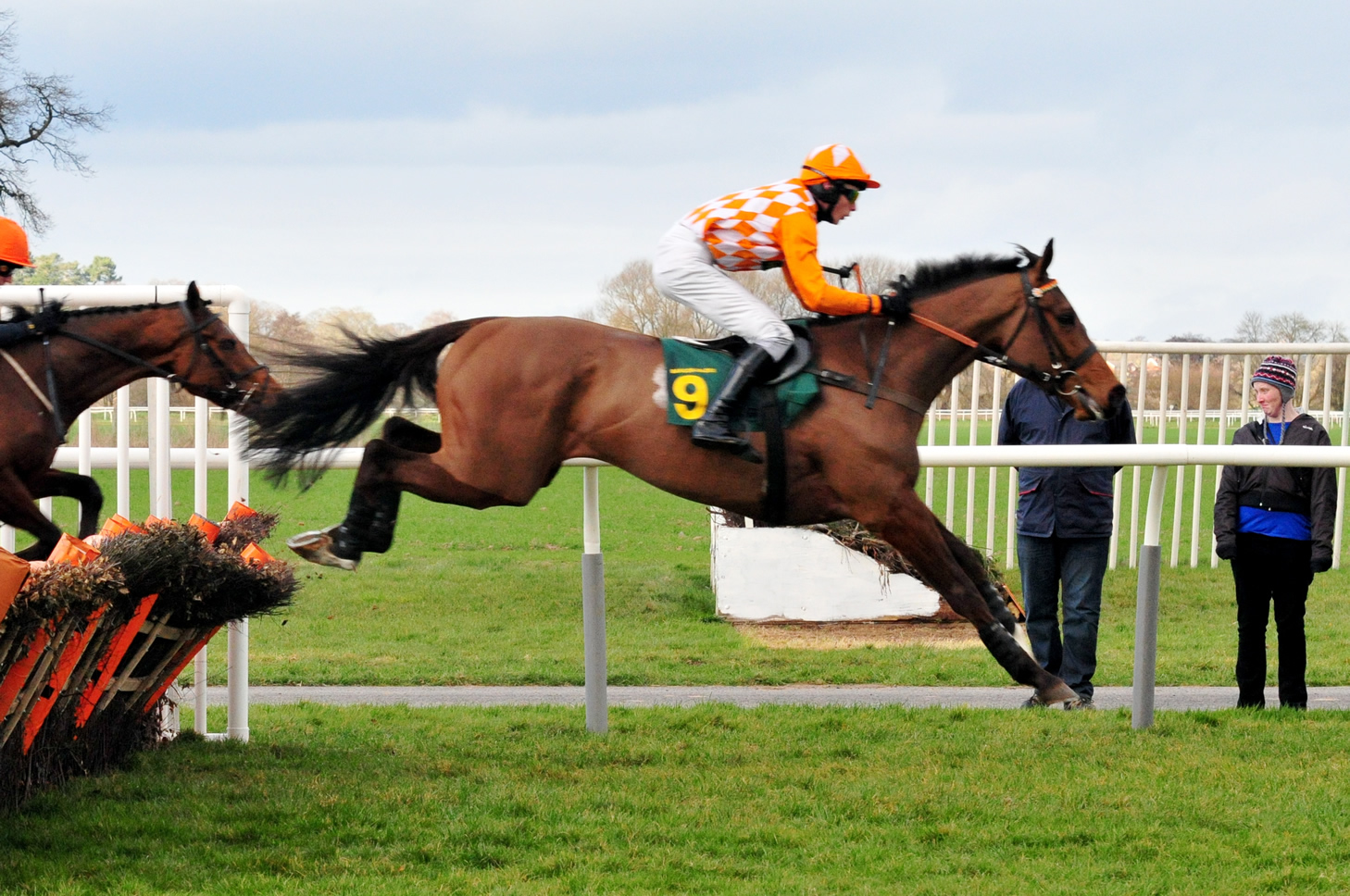
Finally he had his face. Moses sent his intentions to the finish line and watched Pal O Mine’s neck lengthen—his stride triple in length as he passed fifth, passed fourth, stayed steady on with the third for too many paces. The announcer and crowd started to go wild.
“Odd-chancer Pal O Mine snuck out of the stables and is giving the podium racers their paces! He’s gunning for it! Neck and neck with number three. Now look: his jockey found the seventh gear and he’s caught the hip of number two—this was a horse on the sidelines, I mean on the bench, only fifteen minutes ago, and now he’s a contender!”
“Been a contender!” Moses called back.
“He’s vying for the winner’s circle. He’s running. He’s digging. He’s second place. He’s second place. A minute ago, he wasn’t a contender, and now he’s a contender—Oh my God—”
“My God—” Moses echoed. Pal O Mine was doing it. He couldn’t imagine how Mrs. Pynchon-Grant was handling watching this. He pulled himself over the top of the fence so he’d have an unobstructed view. Pal O Mine’s nose caught the tail of the front-runner.
“My God!”
Pal O Mine was at the haunches. Only five breaths to the end of the course. Five reaches. Pal O Mine was head to the other jockey’s chest. And that jockey was flapping and flapping about the top of his horse, lookin’ like a chicken—elbows jumping this way an’ that, but the horse was spent. He was cruising on the last gear as best he could, trying not to lose any steam. Couldn’t go no faster no matter what. Jockey What’s-His-Name finally realized Pal O Mine could take him home. He grabbed mane and held on.
“Finally” was all Moses could say as Pal took over the lead for the last three lengths of the course.
Then Moses lost it. He absolutely lost it. His colleagues on the backstretch had already been creeping up to the fence—not unlike Pal making his way to the finish line, into first place—with a feed bucket of ice-cold water. Who cared that it was a chilly April 2, and an ice water bath would surely lead to a sickness? This was tradition. His horse had won. Pal had come off the bench. And was victorious.
“We won! We won!” Moses shouted before they dumped the ice water over his shoulders. It was too cold for ice water clothes, even if it was early April. Moses had a slight shiver on his way to bring Pal O Mine to the winner’s circle for photos.
“We won,” he whispered into Pal O Mine’s ears when he retrieved the horse from the Valley of Roses.
“We won,” he said again, when Mrs. Pynchon-Grant pulled him just to the edge of the frame of the photo op for the County Chronicle. Moses had been there to collect the horse; had crossed the invisible racial line so that Pal O Mine could get his breath post-race, and rest. Mrs. Pynchon-Grant pulled him into the moment and, with that gesture, acknowledged his Negro self as part of her team. What a gesture. They had won. He had repeated it to the journalist—“We won”—who went on to name all of the players he thought made the win possible. Except Moses. It didn’t matter. Moses was the victor with Pal O Mine; no one could take that from him.
Look, he’d say, showing off the article with its photo: Everyone else in that photo was looking at the cameraman as the light bulb flashed to capture the moment.
Moses was looking at his horse.
From the book FAIRFIELD COUNTY by DéLana R. A. Dameron. Copyright © by the Estate of DéLana R. A. Dameron. Published in June 2026 by The Dial Press, an imprint of Random House, a division of Penguin Random House LLC. All rights reserved.
DéLana R. A. Dameron is the author of the novels Fairfield County and Redwood Court, a Reese’s Book Club pick and a New York Times Book Review Editors’ Choice, and two prize-winning poetry books: How God Ends Us and Weary Kingdom. Dameron also founded Saloma Acres, an equestrian and cultural space in her home state of South Carolina. She passed away in 2025.