2025 was a momentous year for The Common: our fifteenth anniversary, our 30th issue, even a major motion picture based on a story in the magazine. We’re more grateful than ever for our readers, contributors, donors, and friends.
Before we close out this busy year of publishing, we wanted to take a moment to reflect on the unique, resonant, and transporting pieces that made 2025 memorable. The Common published 269 contributors this year. Below, you can browse a list of the ten most-read new pieces of 2025 to get a taste of what left an impact on readers.
*
Candy and Layer Cake: Zack Strait in Conversation with Richard Siken (and Five Poems)

“The whole world seemed like a five-paragraph essay but poetry rubbed against that. It was contrary and rebellious. That summer it rained a lot, and hard. We had a 100-year flood. It washed out bridges. I saw a house on the edge of a swollen wash lose its backyard and then get swept away. I didn’t want to talk about it, I wanted to make somebody feel it. I started writing every day. I was very bad at it. ”
—Richard Siken
Excerpt from Lamentations of Nezahualcóyotl: Nahuatl Poems by Nezahualcóyotl retold by Ilan Stavans
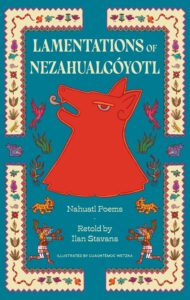
I built a penal code / that embarrassed / criminals, / persuading the dwellers of Texcoco / to choose the right path.
Dispatch from New Madrid, Missouri by Madeline Simms
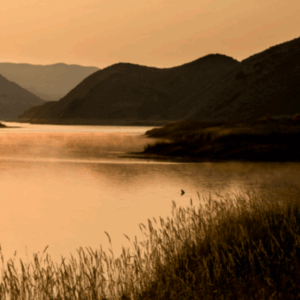
Is this the end? I might have asked, had I watched the river reverse its own current. Split rafters pierce the sky like the savior’s flesh. Surely, I would have prayed. Shingles spill like the broken teeth of those cottonwoods above. Someone is scared, someone fearless. I was both when I came across the open prairie for the first time. I can only imagine survival in a land where the sky is the only grounding force.
Cedar Park Café by Terra Oliveira
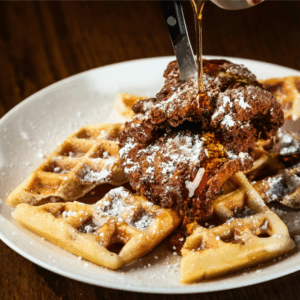
at cedar park café, praised for their chicken & waffles, / i sit at the corner table, & a young blonde child / with their family in front of me takes a sip of water, / looks right at their parents, raises their right hand, / back straight: i commit to not look at my phone, / even when it’s right in front of me. /
February 2025 Poetry Feature: New Poems by Our Contributors with work from Elizabeth Metzger, Matt W. Miller, Annie Schumacher, and Marc Vincenz
Maybe it’s just that I am scarping into old age, / rolling down some hill to that last great lake. / Maybe I feel like a river famous for catching fire / more than a few times. Or am I a city that was once / something but is not that anymore, that tries / in fits and starts to be something again, reborn / as new and beautiful?
— “Cleveland” by Matt W. Miller
Target Island by Mariah Rigg
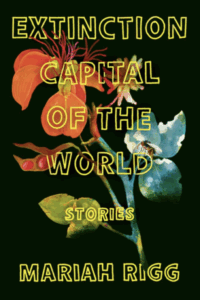
Fifty-one years before his granddaughter is born, Harrison finds his first missile washed up on the sands of Ke Ono O’ Polo. It is the day after a storm, and the beach has become the ocean’s junkyard, its sand covered in glass balls left over from Japanese fishermen’s floats, broken heads of coral and halved cowries hauled from the ocean floor.
The Garden of the Gods by Eli Rodriguez Fielder
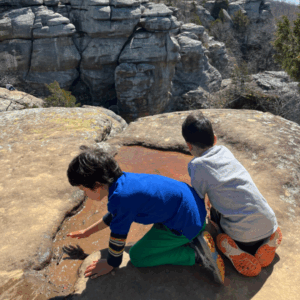
The gods must have been giant children squeezing drip sandcastles from their palms, back when this land was at the edge of a sea. This used to be a mouth, I say. It feels impossible that this peculiar landscape should suddenly emerge among farms and Dairy Queens
Covanta Incinerator, Newark, New Jersey by Nicole Cooley
Out my kitchen window, no pink corridor of smoke. / Along my daughters’ walk to school, redbud trees, native to this state, also known as flamethrowers. / Five miles away, in Newark, the sky above Raymond Boulevard blooms with the discard, the abandoned, rubbish—/ No, those are not the right words.
Tuesday by Lucas Schaefer
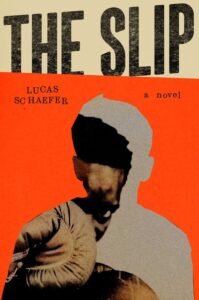
No one had ever shown up at his house before, though, and it was this, combined with the note’s puzzling content, which meant that as soon as Bob left the gym, he would take the folded paper, stowed in his glove compartment, to Austin Police headquarters, a time-suck in building form, where, if he had to guess, he’d rehash the story of his missing nephew, Nathaniel Rothstein, without coming any closer to finding him.
Raffia Memory by Lily Lloyd Burkhalter
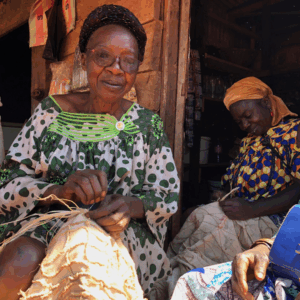
The story goes: near Mount Bambouto, a German colonial official asked his guide, from a town called Bali, the name of the people in this region. According to the Grassfields custom of referring to their neighbors based on their relative altitude, the guide responded in the Bali tongue: “those who live below.” This expression, mbalekeo, became, in time, Bamiléké. Today, the term is standard, often used without second thought, but embedded in its history is the concept of relational existence.
Thanks for a great year! We’re excited to continue sharing work by writers all over the world with you in 2026. Keep up with the art, prose, and poetry we publish each week by subscribing to our newsletter!